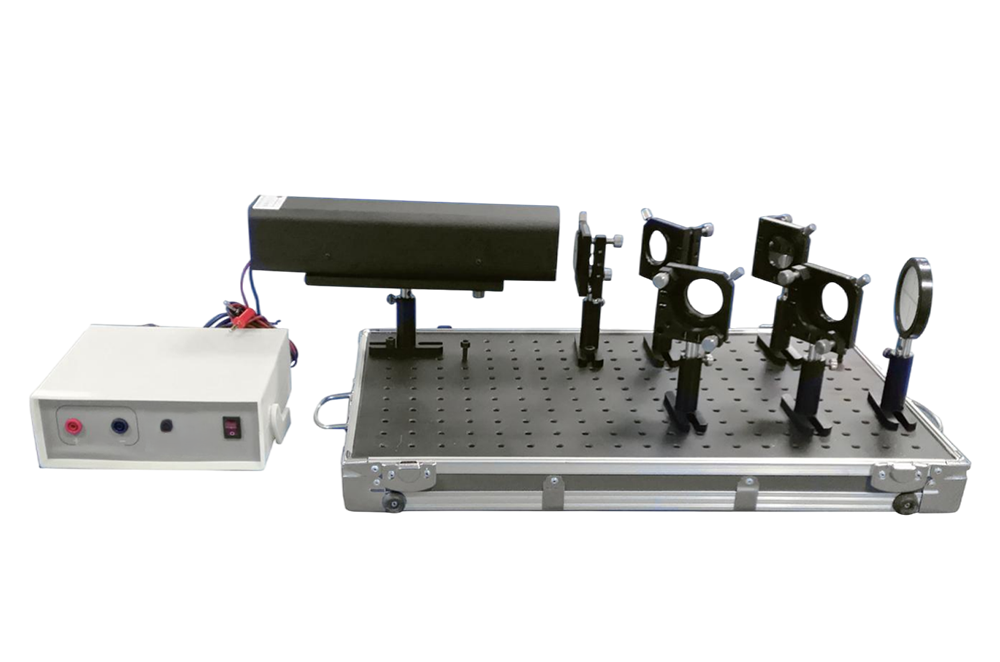
Atomfair DBI-739 Dual-Beam Interference Experiment System
1. Product Overview
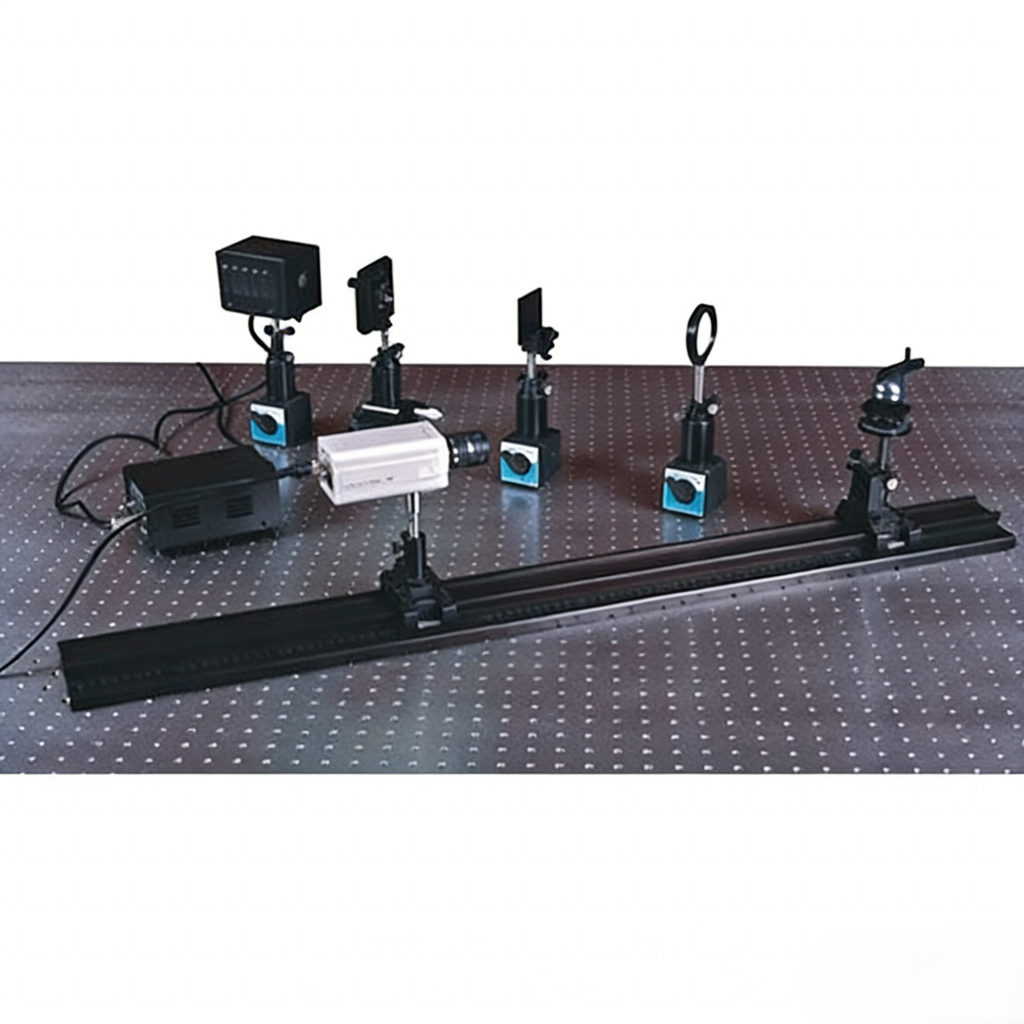
Atomfair DBI-739 Dual-Beam Interference Experiment System is a demonstration instrument specially designed for physics/optics professional teaching. It adopts an aluminum base plate and portable experiment box design, which is convenient to place and saves space. It supports students to adjust the optical path by hand, helping them understand the principles and applications of various interferometers, and is suitable for undergraduate experiments in optoelectronic majors.
2. Core Features
-
- Adopts aluminum base plate with portable experiment box, flexible layout, space-saving, easy to store and move;
-
- Supports students to adjust the optical path by hand, with strong interactivity, deepening the understanding of interference principles;
-
- Experiments cover a variety of classic interference types, adapting to the core teaching needs of physics/optics majors.
3. Main Experimental Content
-
- Mach-Zehnder interference experiment: Observe the stability of the interferometer and learn the method of making holographic gratings;
-
- Sagnac interference experiment: Observe the sensitivity of the interferometer;
-
- Michelson interference experiment: Estimate the coherence length of the laser, observe non-localized interference fringes and the change of fringe contrast with optical path difference.
4. Specification Parameters (International Standard)
-
- Base plate material: Aluminum, lightweight and ensuring structural stability;
-
- Supporting light source: Helium-Neon (He-Ne) laser, including dedicated power supply;
-
- Accuracy of optical components: Meet the standards of teaching-level interference experiments to ensure experimental effects;
-
- Experiment box type: Portable, suitable for laboratory and classroom teaching scenarios.
5. Main Configuration
Core components of Atomfair DBI-739 Dual-Beam Interference Experiment System (plane mirror, convex lens, beam splitter, ground glass, white screen, etc.), GY-11 Helium-Neon (He-Ne) laser (including power supply).
Configuration parameters can be customized according to different customer requirements.
If youe interested, have any questions, or have specific customization requirements, please feel free to contact us at inquiry@atomfair.com.
What specific interference experiments are included in the Atomfair DBI-739 system and what key concepts do they teach?
The system includes Mach-Zehnder, Sagnac, and Michelson interference experiments. The Mach-Zehnder experiment teaches interferometer stability and holographic grating fabrication; the Sagnac experiment demonstrates interferometer sensitivity; and the Michelson experiment allows estimation of laser coherence length and observation of fringe contrast changes with optical path difference.
Why does the Atomfair DBI-739 system use a Helium-Neon (He-Ne) laser as its light source?
The system is specified with a He-Ne laser and dedicated power supply, which provides coherent, monochromatic output essential for generating stable interference patterns in teaching-level experiments. The Michelson experiment specifically uses the laser's coherence length to estimate fringe contrast variation.
How does the DBI-739 system's design support hands-on student learning in optics?
The system features an aluminum base plate and a portable experiment box for flexible, space-saving layout. It is explicitly designed for students to manually adjust the optical path, increasing interactivity and deepening understanding of interference principles.
The Atomfair DBI-739 is a teaching-grade dual-beam interference system on an aluminum base plate, supporting Mach-Zehnder, Sagnac, and Michelson experiments with a He-Ne laser source. Its manual optical path adjustment and portable design suit undergraduate optoelectronics labs, though it requires a stable optical table and careful handling of the included GY-11 laser.
Positive
- Aluminum base plate for stability: The aluminum base plate provides a lightweight yet stable platform, ensuring structural integrity during manual optical path adjustments and reducing vibration-induced fringe drift in teaching environments.
- Covers three classic interferometer types: Supports Mach-Zehnder, Sagnac, and Michelson experiments, enabling students to compare stability, sensitivity, and coherence length estimation within a single system, aligning with core physics/optics curricula.
Trade-offs
- Requires stable optical table: The system's manual adjustments and interferometric sensitivity demand a vibration-isolated optical table; without it, fringe stability and measurement accuracy may be compromised in typical classroom settings.
- He-Ne laser handling and safety: The included GY-11 He-Ne laser requires proper alignment and safety protocols; exposure to the beam can cause eye injury, and the laser tube is fragile, necessitating careful handling and storage.
Every advanced material, component, equipment, and instrument in our catalog is backed by rigorous testing. We maintain strict internal quality management frameworks and align with CE conformity metrics to deliver transparent, reproducible performance data via our public open-science repository.
To request raw batch performance data, submit formal vendor registration paperwork, or execute a fast-turnaround R&D manufacturing loop, contact us at inquiry@atomfair.com.
Item is dispatched under the Atomfair Shipping & Delivery Framework (Free worldwide shipping on orders over $59 USD excl. heavy equipment). Return is governed by the Atomfair Return & Refund Policy (7-day technical return window).