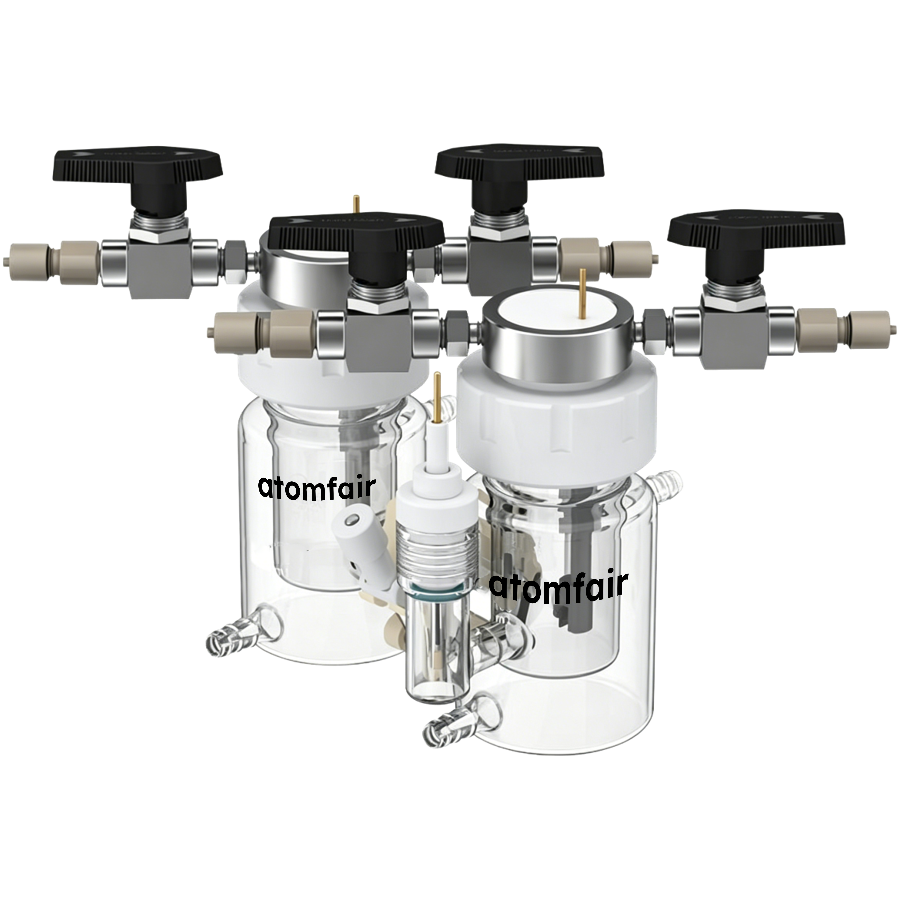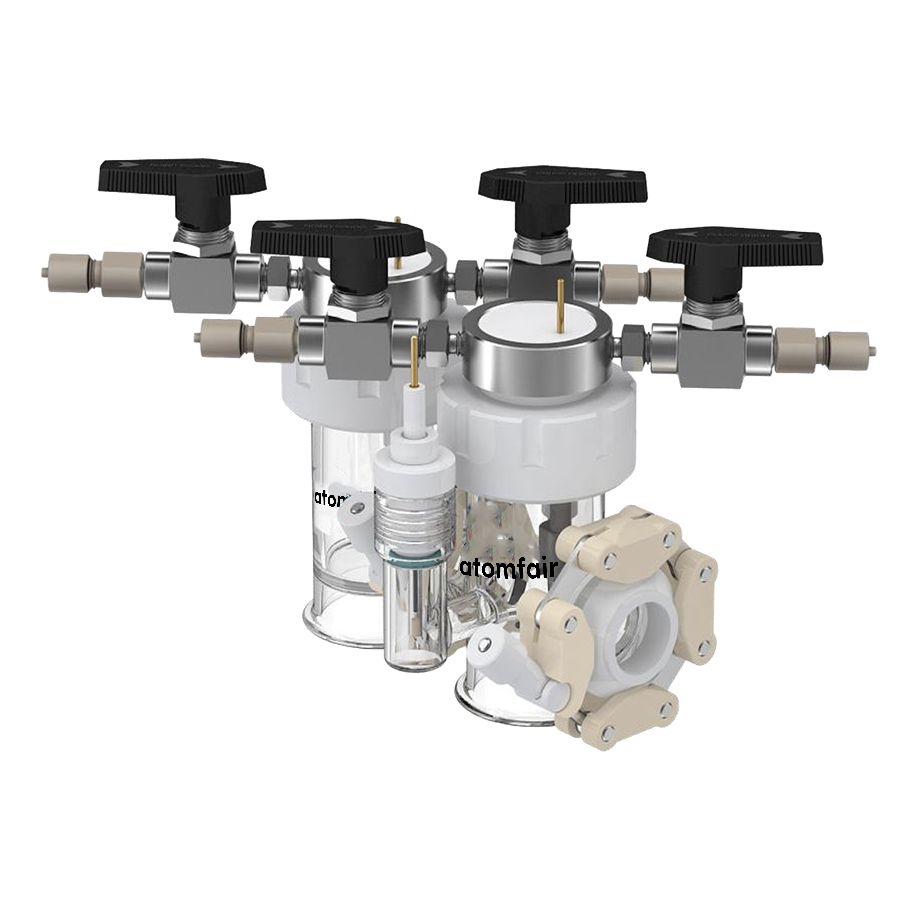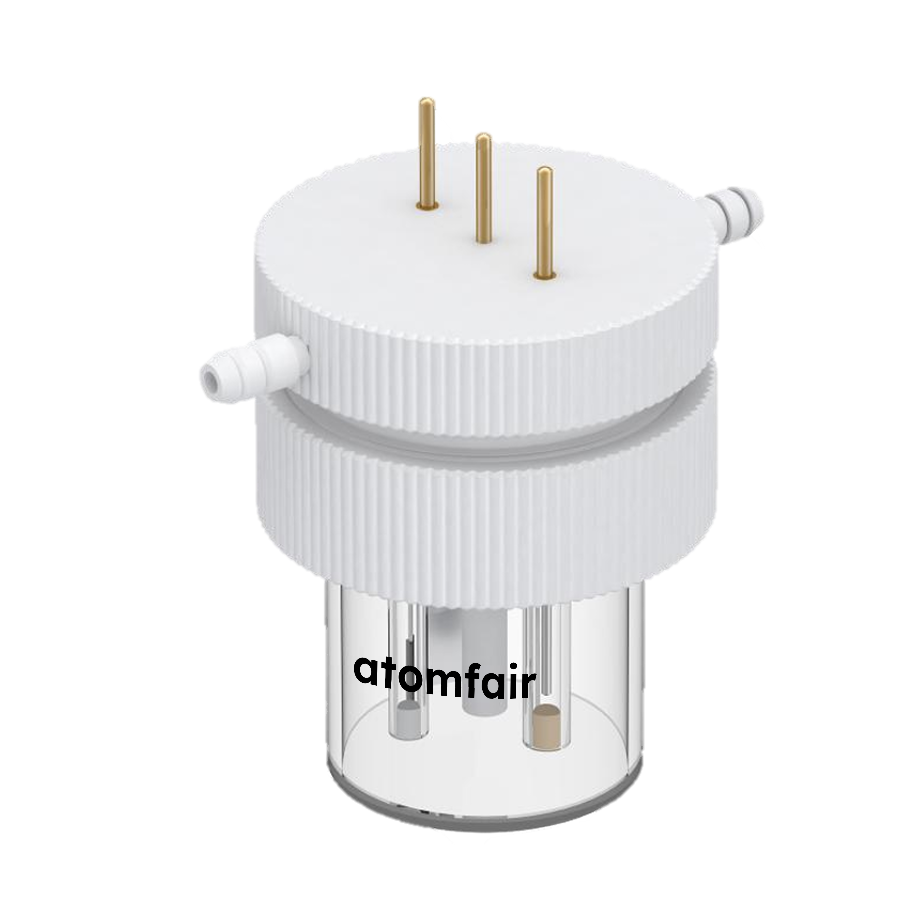
Cylindrical Quartz Electrochemical Cell, Absolute Sealed | ATOMFAIRProduct Type: Electrochemical cell
Research-grade laboratory product
|
|||||||||||||||||||||||||||
|
|||||||||||||||||||||||||||
|
LABORATORY PROCUREMENT SUPPORT
For model selection, accessory matching, platform compatibility or configuration confirmation, contact our technical sales team.
E-MAIL: inquiry@atomfair.com
|
|||||||||||||||||||||||||||
|
Manufacturer: Atomfair LLC
Brand: ATOMFAIR®
|
Manufacturer: Atomfair LLC
Brand: ATOMFAIR®
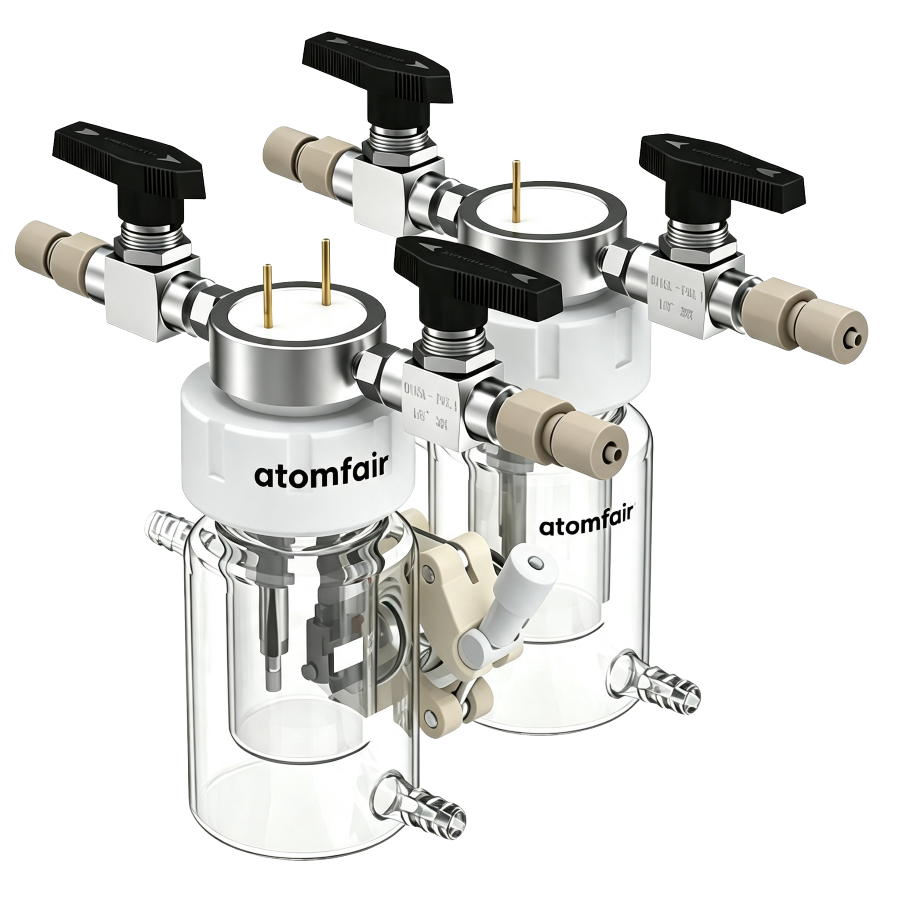
This quartz electrochemical cell requires custom-matched electrodes and absolute sealing for anaerobic and gas-sensitive experiments. Proper handling is essential to avoid optical window scratches, thermal shock, and seal failure.
- Electrode Compatibility: Electrodes must be custom-matched to this cell and are not included.
- Seal Integrity: Verify seal integrity before gas or vacuum operation using the flange and PTFE cap compression mechanism.
- Thermal Shock Avoidance: Avoid rapid temperature changes to prevent quartz body damage.
- Chemical Compatibility: Verify chemical compatibility of all reagents with quartz before use.
- Optical Window Care: Handle the quartz body with care to avoid scratches on optical windows.
Assemble the cell with PTFE caps and sealing rings, then insert custom-matched electrodes. Verify seal integrity and chemical compatibility before introducing gas or vacuum.
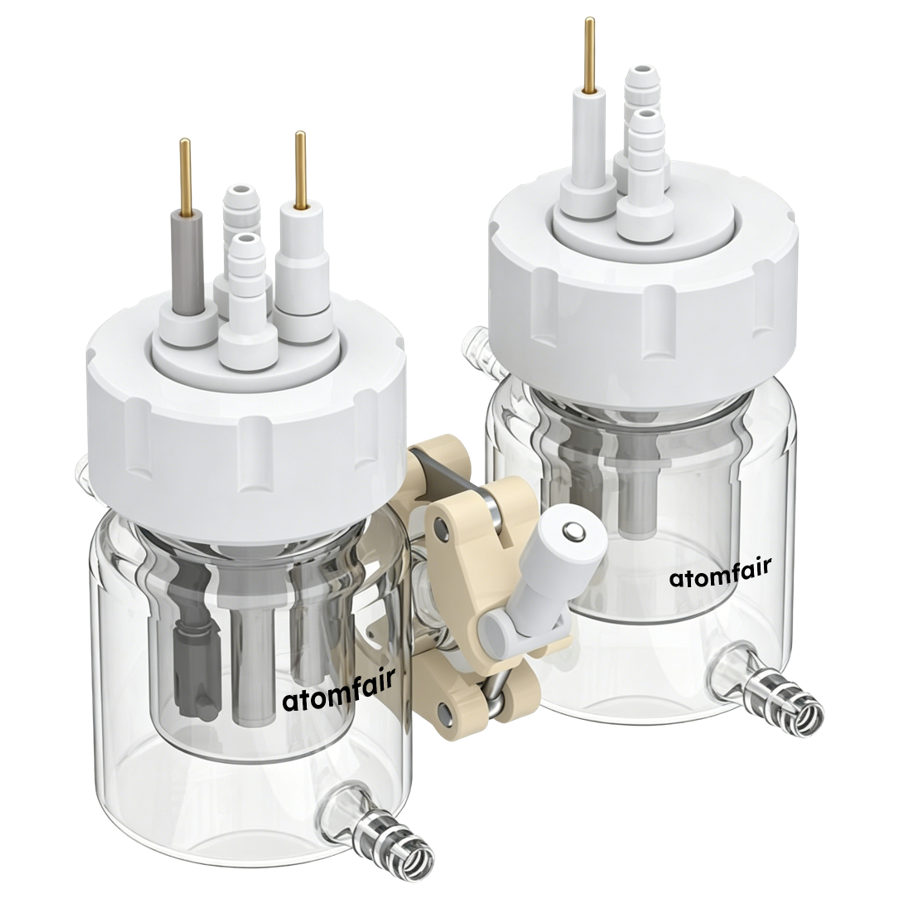
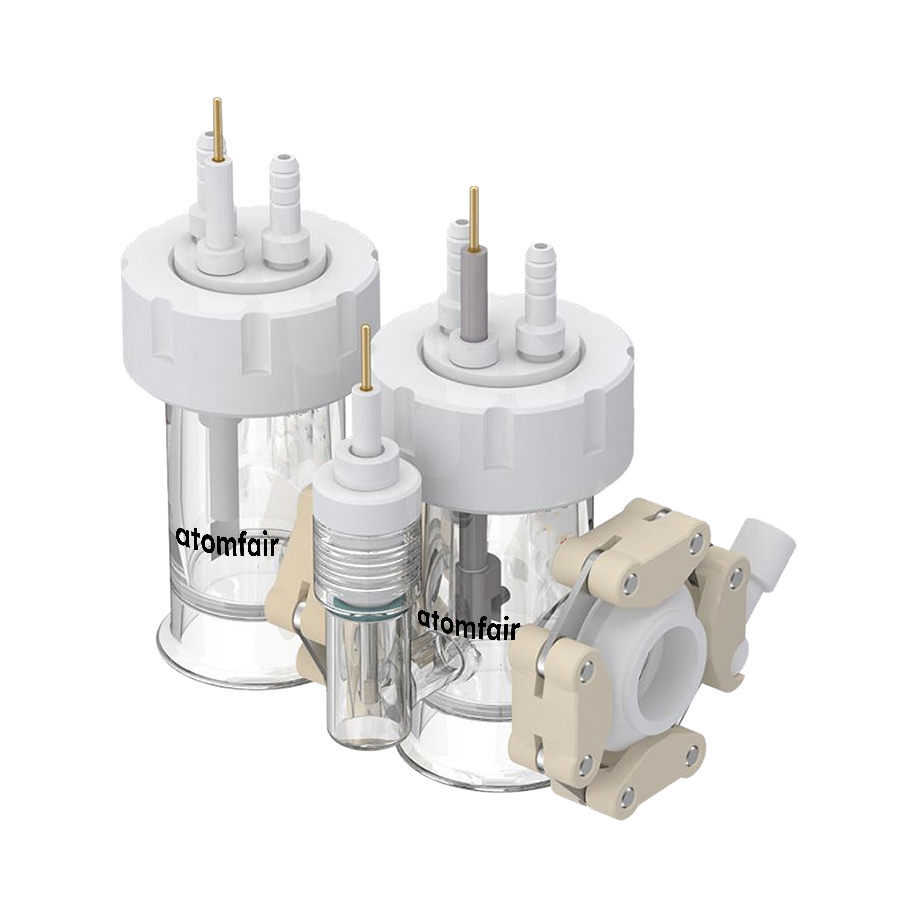
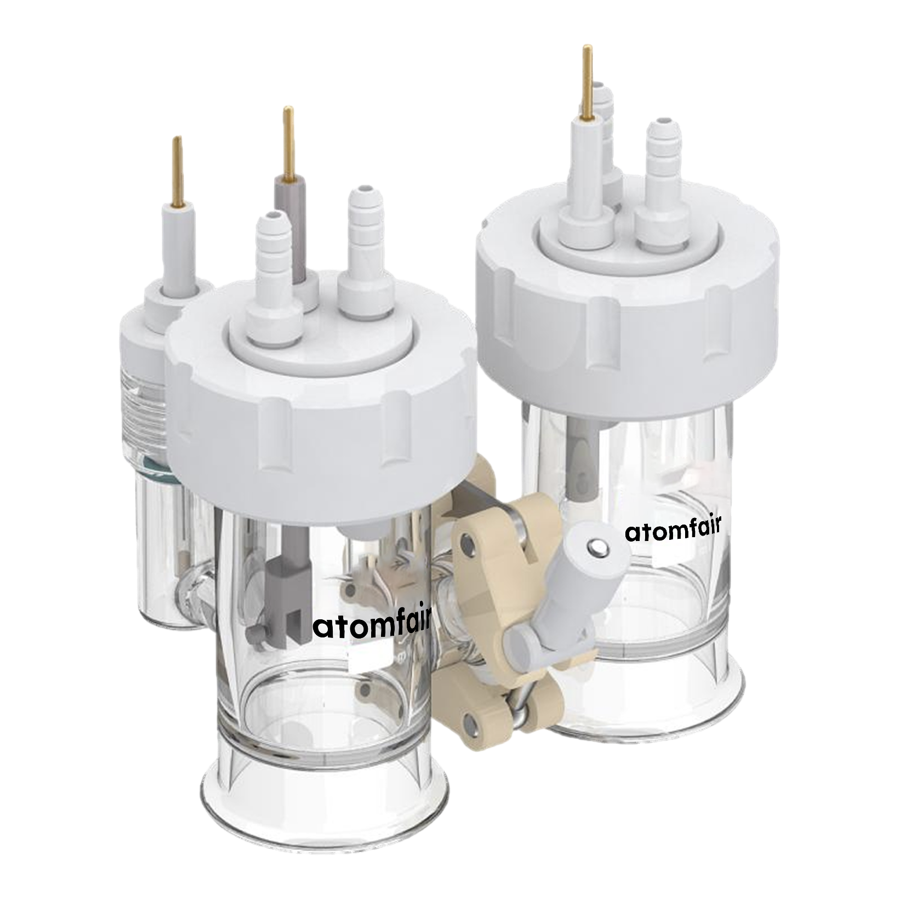
Required Equipment: Quartz cell body, PTFE lid with built-in electrode jacks, PTFE caps and sealing rings, Gas inlet/outlet ports (optional)
- Inspect cell body
Inspect the quartz cell body for scratches or damage before use. - Assemble sealing components
Assemble the PTFE caps and sealing rings onto the quartz flange to create the seal. - Insert electrodes
Insert custom-matched electrodes into the built-in jacks on the PTFE lid. - Connect gas ports
Connect gas inlet and outlet ports if atmosphere control is required. - Verify seal integrity
Verify seal integrity by pressurizing with inert gas or applying vacuum. - Verify chemical compatibility
Verify chemical compatibility of all reagents with quartz before introducing them. - Avoid thermal shock
Avoid thermal shock by allowing the cell to equilibrate to experimental temperature gradually.
Why does the AF-C015-020-STD quartz electrochemical cell use fusion-welded (non-bonded) construction instead of bonded quartz?
Fusion welding eliminates organic adhesives that can degrade, outgas, or absorb analytes, ensuring long-term optical clarity with ≥95% light transmittance and chemical inertness. This is critical for anaerobic spectroelectrochemistry and gas-sensitive UV-Vis measurements where contamination or signal interference must be minimized.
What electrode specifications are required for the absolute sealed cylindrical quartz cell, and why must they be custom-matched?
The cell requires factory-matched electrodes: an Ag/AgCl reference electrode with a diameter of 3.8 mm, a platinum wire counter electrode at 0.5 mm, and a 3 mm glassy carbon working electrode (other 3 mm disc materials available). Custom matching is necessary because the built-in electrode jacks in the PTFE lid require precise diameters to achieve absolute sealing and reliable electrical contact for anaerobic or gas-sensitive experiments.
What critical handling and operational precautions must be observed to maintain the performance and sealing of this quartz electrochemical cell?
The quartz body must be handled carefully to avoid scratches on the optical windows; scratches reduce light transmittance below the specified ≥95% and compromise spectroelectrochemical measurements. Prior to gas or vacuum operation, verify seal integrity of the flange assembly and PTFE caps. Avoid thermal shock, which can crack quartz, and confirm chemical compatibility with quartz before use to prevent etching or failure.
The ATOMFAIR Absolute Sealed Cylindrical Quartz Electrochemical Cell uses a fusion-welded quartz body with ≥95% light transmittance and a PTFE lid with flange sealing for absolute sealing, enabling anaerobic spectroelectrochemistry. However, electrodes must be custom-matched and purchased separately, and the quartz body requires careful handling to avoid scratches and thermal shock.
Positive
- Fusion-welded quartz body: The all-quartz body is fusion welded (non-bonded) providing superior durability and optical clarity with ≥95% light transmittance for spectroelectrochemical measurements.
- Absolute sealing integrity: Flange design with PTFE caps and built-in electrode jacks ensures complete sealing for gas-sensitive and anaerobic experiments, with optional gas inlet/outlet ports.
Trade-offs
- Electrodes not included and must be custom-matched: Electrodes are not included and must be purchased separately; they require custom matching to this cell, adding procurement complexity and potential compatibility issues.
- Quartz body fragility and thermal sensitivity: Quartz body is susceptible to scratches on optical windows and requires careful handling; avoid thermal shock to prevent damage. Chemical compatibility must be verified before use.
Every advanced material, component, equipment, and instrument in our catalog is backed by rigorous testing. We maintain strict internal quality management frameworks and align with CE conformity metrics to deliver transparent, reproducible performance data via our public open-science repository.
To request raw batch performance data, submit formal vendor registration paperwork, or execute a fast-turnaround R&D manufacturing loop, contact us at inquiry@atomfair.com.
Item is dispatched under the Atomfair Shipping & Delivery Framework (Free worldwide shipping on orders over $59 USD excl. heavy equipment). Return is governed by the Atomfair Return & Refund Policy (7-day technical return window).