Spherical Corrosion Test Cell, Single-Layer | ATOMFAIRProduct Type: Electrochemical cell
Research-grade laboratory product
|
|||||||||||||||||||
|
|||||||||||||||||||
|
LABORATORY PROCUREMENT SUPPORT
For model selection, accessory matching, platform compatibility or configuration confirmation, contact our technical sales team.
E-MAIL: inquiry@atomfair.com
|
|||||||||||||||||||
|
Manufacturer: Atomfair LLC
Brand: ATOMFAIR®
|
Manufacturer: Atomfair LLC
Brand: ATOMFAIR®
This cell is incompatible with hydrofluoric acid and must not be exposed to chloride contamination in the salt bridge. Seal integrity must be verified before each use, and gas purging must be switched to overhead-only during measurements.
- HF Incompatibility: Do not use this cell with hydrofluoric acid or in environments containing HF.
- Chloride Contamination Avoidance: Fill the salt bridge only with saturated potassium nitrate solution to prevent chloride ion interference.
- Gas Purging Procedure: During measurements, stop sub-surface purging and maintain only overhead purging through the F-type inlet.
- Seal Integrity Verification: Inspect all seals and connections before each experiment to ensure a leak-free assembly.
Assemble the cell components, fill the salt bridge with saturated KNO3, and insert the working electrode sample. Adjust the Luggin capillary position, connect gas purging, and verify seal integrity before starting measurements.
Required Equipment: F-type gas inlet tube, Salt bridge with Luggin capillary, Sample holder for 15 mm diameter electrodes, Graphite rod counter electrode
- Fill the salt bridge
Fill the salt bridge with saturated potassium nitrate solution to avoid chloride contamination. - Insert the working electrode
Place the 15 mm diameter sample into the sample holder and secure it to expose a fixed 1 cm² surface area. - Adjust the Luggin capillary
Position the adjustable-angle Luggin capillary toward the corrosion sample to minimize uncompensated resistance. - Connect gas purging
Attach the F-type gas inlet tube and initiate sub-surface purging before measurements. - Verify seal integrity
Inspect all seals and connections to confirm a leak-free assembly before starting the experiment. - Switch to overhead purging during measurements
Stop sub-surface purging and maintain only overhead purging through the F-type inlet during data acquisition.
How does the adjustable-angle Luggin capillary in the ATOMFAIR Spherical Corrosion Test Cell reduce uncompensated resistance (iR drop)?
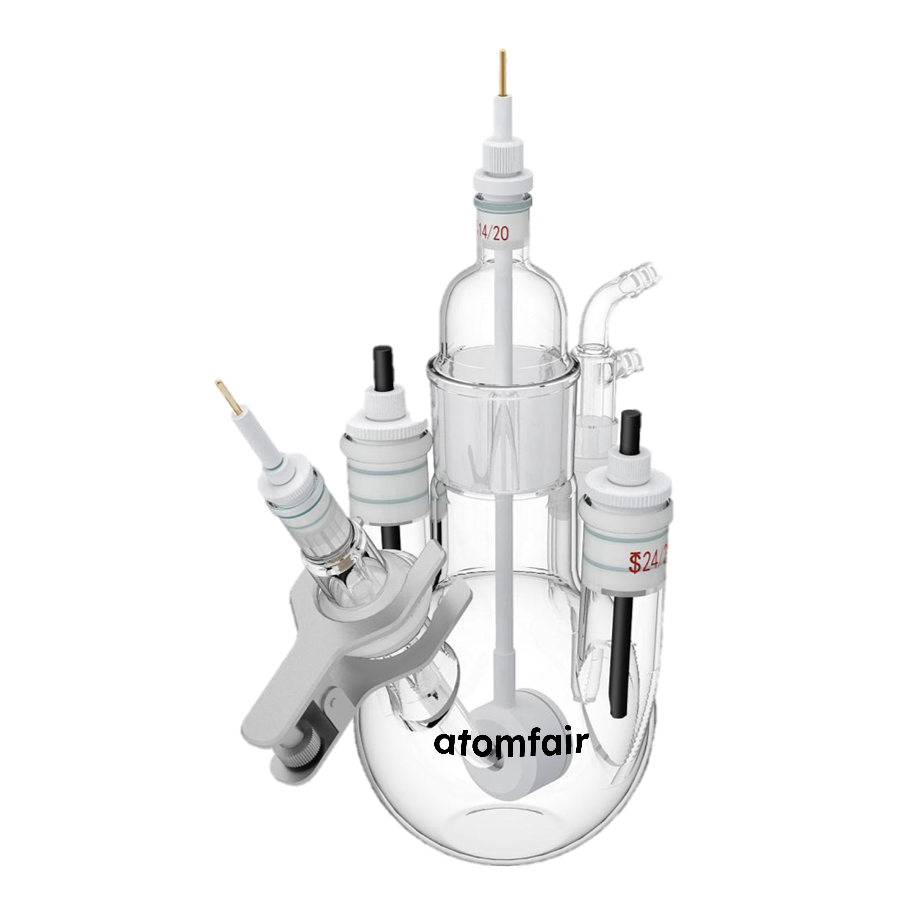
The adjustable-angle Luggin capillary (salt bridge) allows precise positioning of the reference electrode directly toward the corrosion sample. This minimizes the distance between the reference and working electrode, effectively reducing uncompensated resistance (iR drop) for more accurate electrochemical measurements. The salt bridge is filled with saturated KNO₃ solution to avoid chloride ion interference.
What are the critical compatibility constraints for the ATOMFAIR Single-Layer Spherical Corrosion Test Cell regarding electrolyte and gas purging?
The cell is compatible with most corrosive environments except hydrofluoric acid (HF). The salt bridge must be filled with saturated KNO₃ solution—chloride contamination must be strictly avoided. For gas management, the F-type inlet supports both sub-surface and overhead purging, but during measurements only overhead purging should be maintained; sub-surface purging must be stopped to avoid interference.
What sample size and surface area does the ATOMFAIR Spherical Corrosion Test Cell working electrode accommodate, and how is sample replacement handled?
The working electrode sample holder accommodates 15 mm diameter samples with a fixed exposed surface area of 1 cm². The holder is designed for convenient sample replacement, allowing rapid exchange between tests. Standard cell volumes are 500 mL and 1000 mL, with custom capacities available upon request.
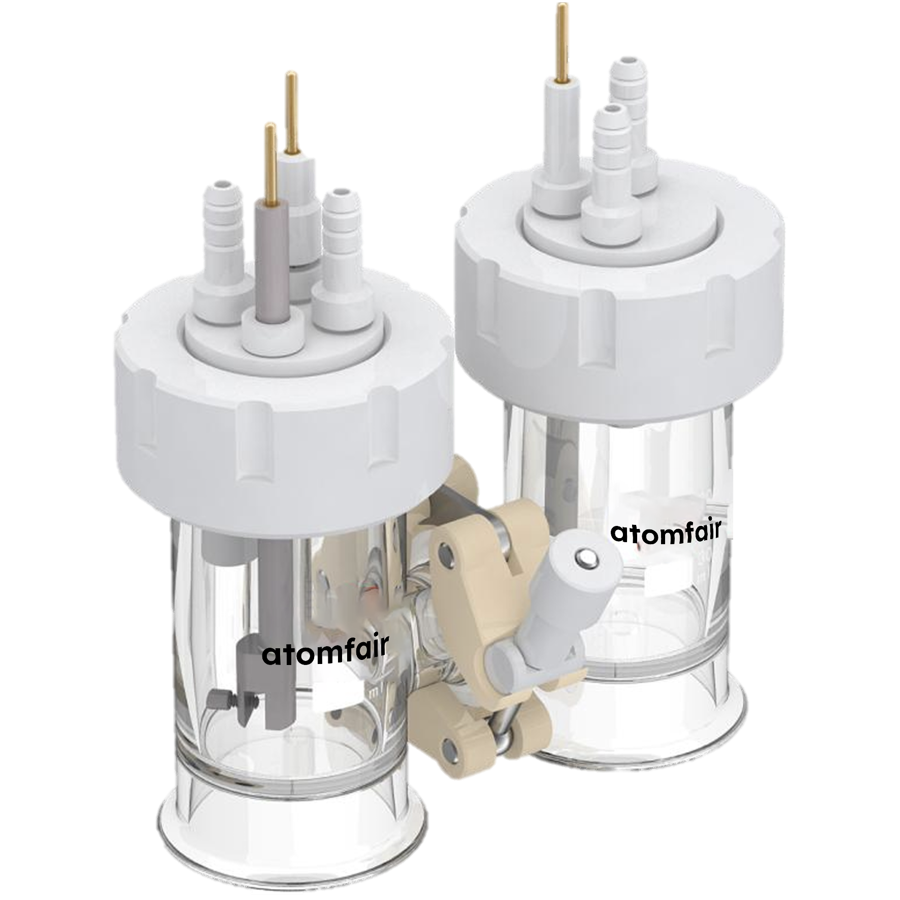
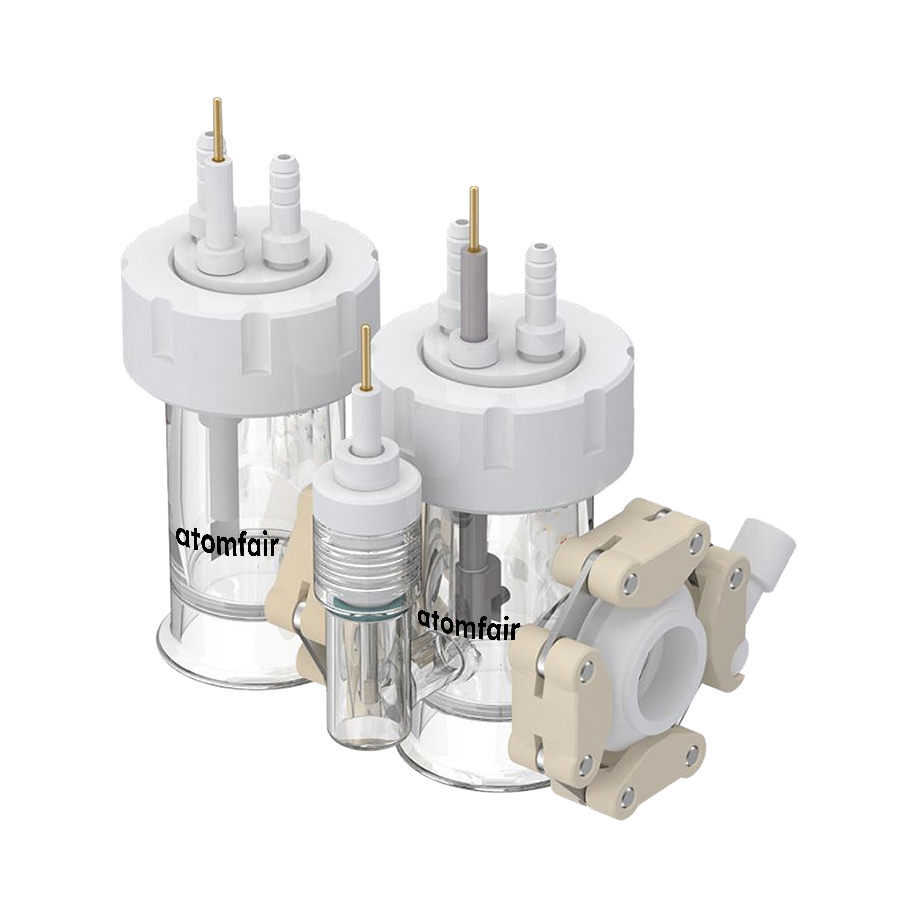
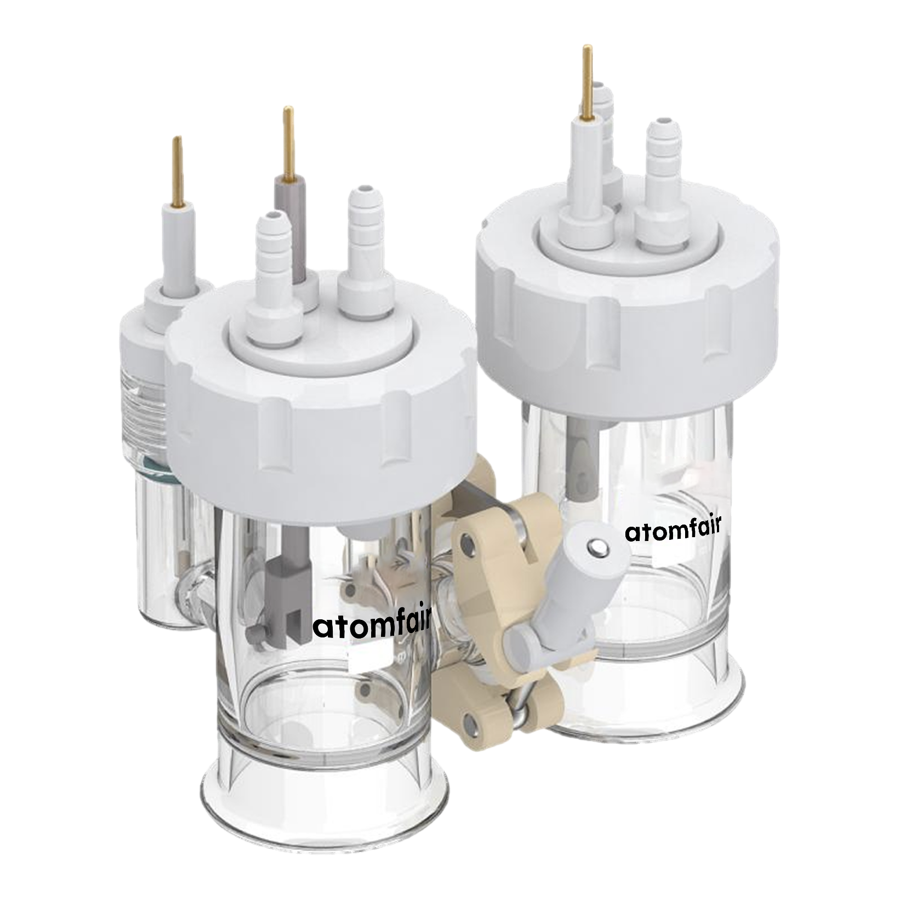
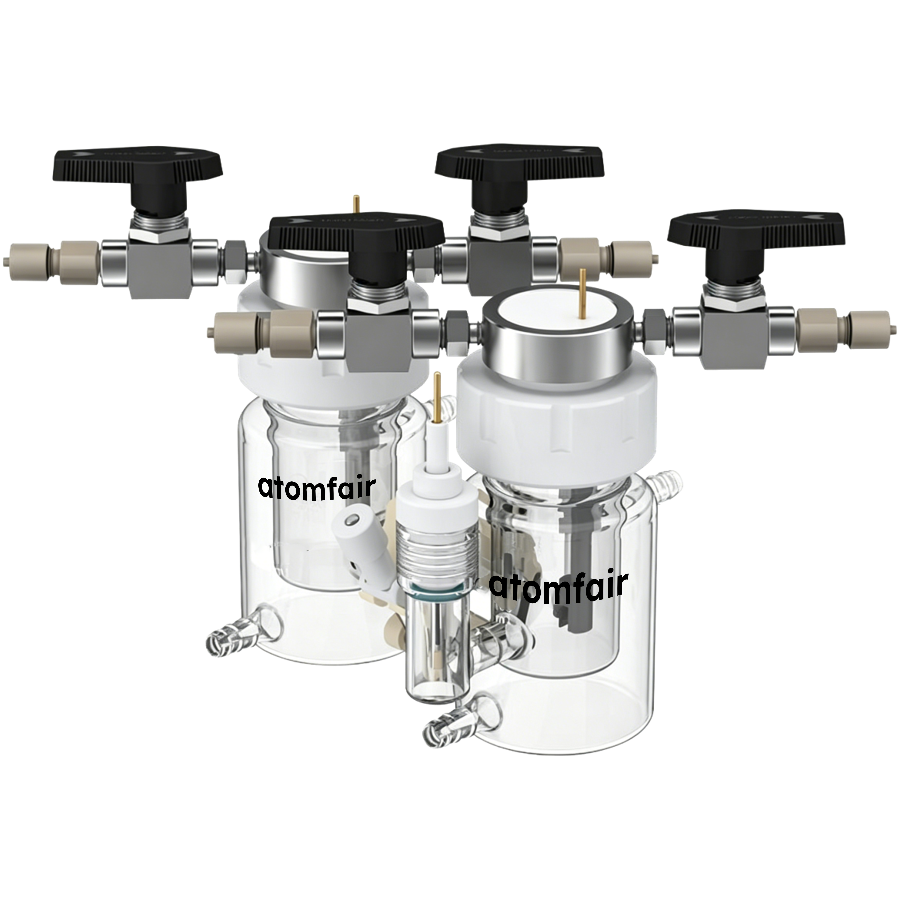
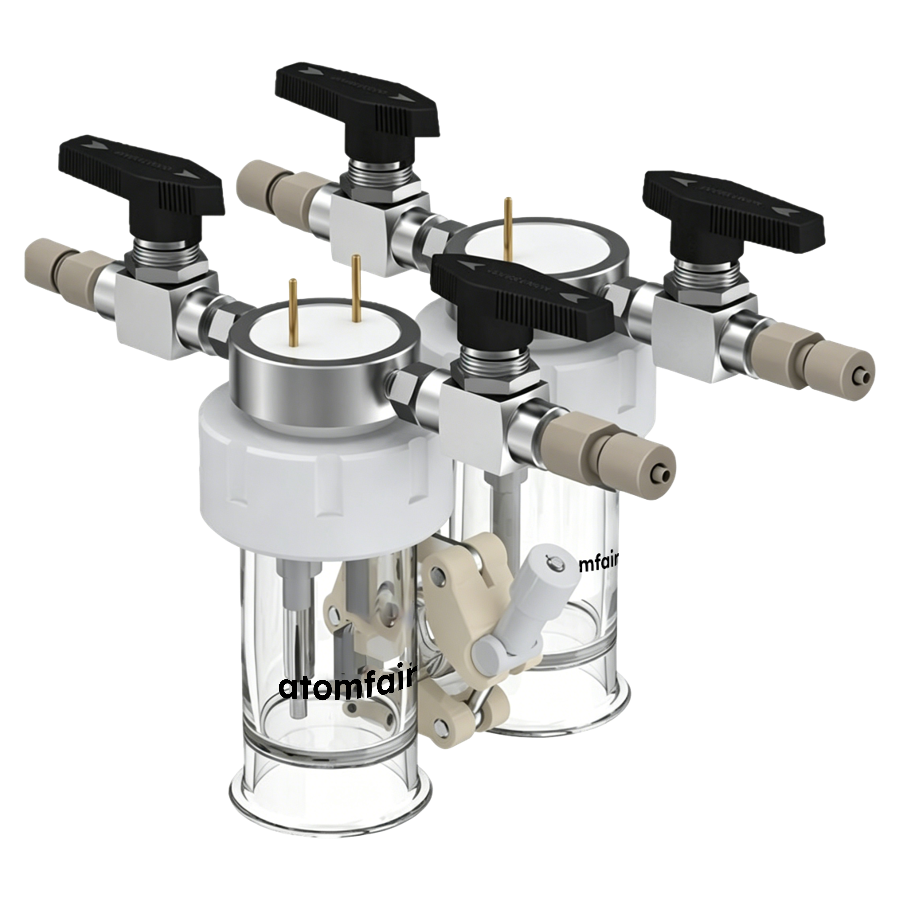
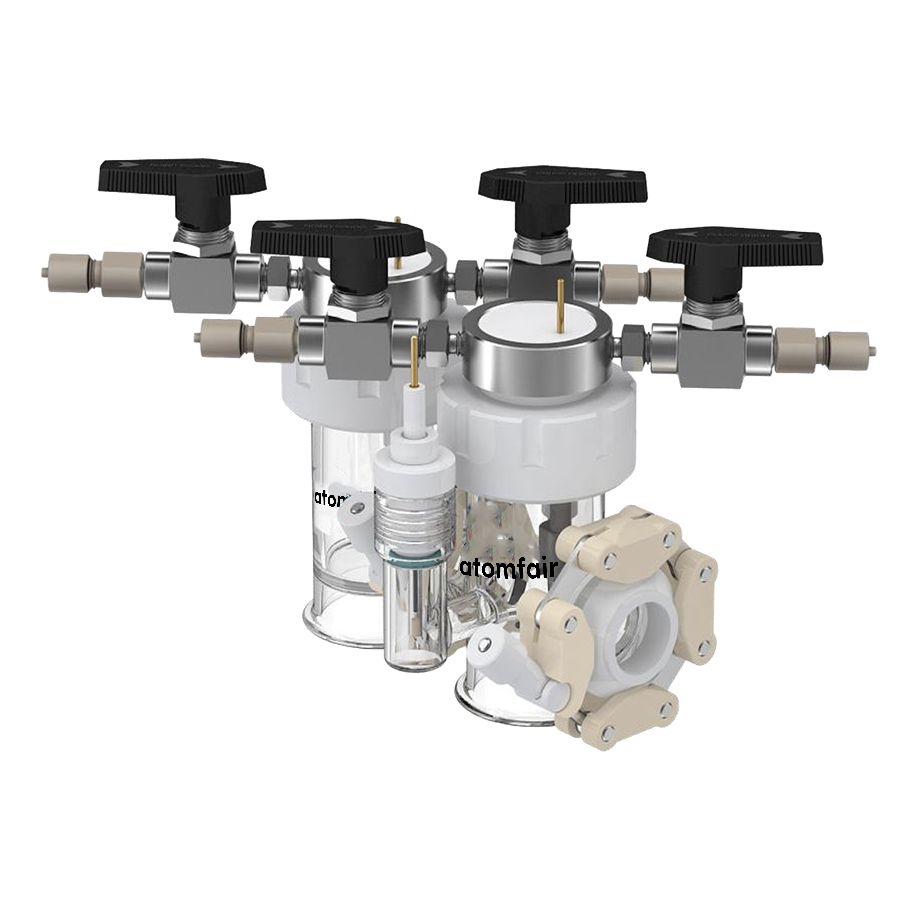
The ATOMFAIR Single-Layer Spherical Corrosion Test Cell is a high-borosilicate glass, semi-sealed three-electrode cell with an adjustable-angle Luggin capillary for minimized iR drop, designed for corrosion testing in most environments except HF. Operational constraints include dedicated gas purging protocol and avoidance of chloride contamination in the salt bridge.
Positive
- Adjustable-angle Luggin capillary: Allows precise positioning of the reference electrode toward the corrosion sample, reducing uncompensated resistance (iR drop) for accurate electrochemical measurements.
- Chloride-free salt bridge design: Uses saturated KNO₃ solution to avoid chloride ion interference, critical for reliable corrosion studies.
Trade-offs
- Not compatible with HF: High-borosilicate glass and salt bridge components are not resistant to hydrofluoric acid, limiting use in HF-containing environments.
- Gas purging protocol required: Sub-surface purging must be stopped during measurements; only overhead purging should be maintained, requiring careful operator attention to avoid measurement artifacts.
Every advanced material, component, equipment, and instrument in our catalog is backed by rigorous testing. We maintain strict internal quality management frameworks and align with CE conformity metrics to deliver transparent, reproducible performance data via our public open-science repository.
To request raw batch performance data, submit formal vendor registration paperwork, or execute a fast-turnaround R&D manufacturing loop, contact us at inquiry@atomfair.com.
Item is dispatched under the Atomfair Shipping & Delivery Framework (Free worldwide shipping on orders over $59 USD excl. heavy equipment). Return is governed by the Atomfair Return & Refund Policy (7-day technical return window).