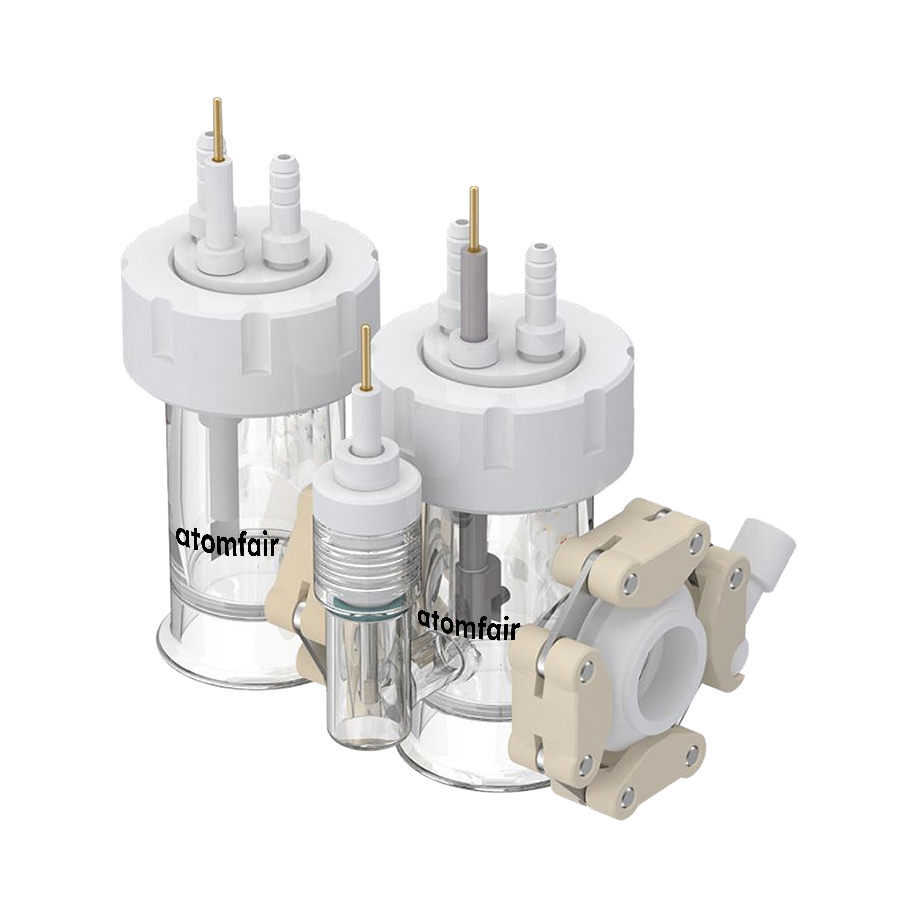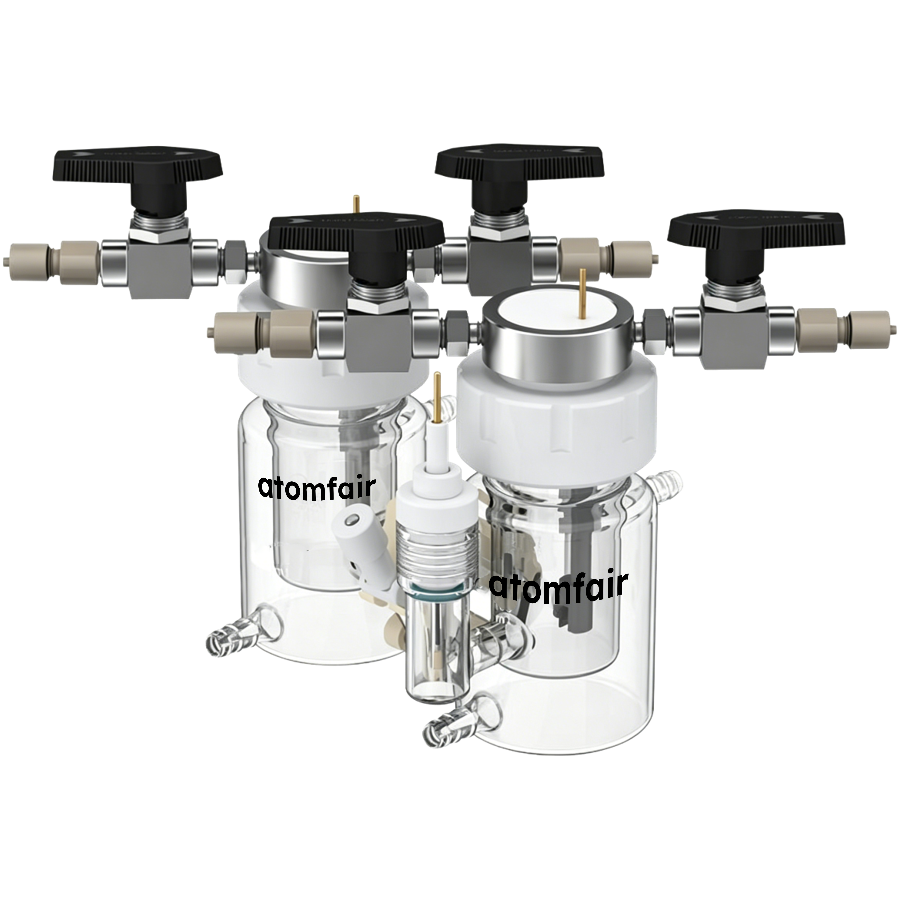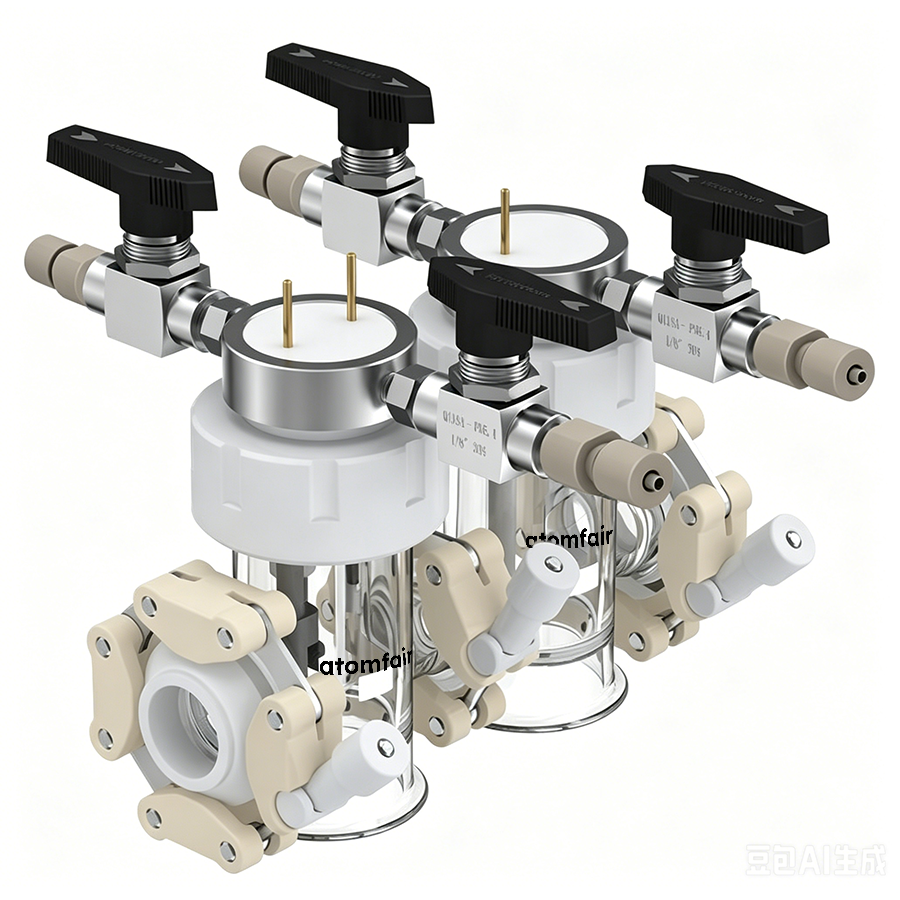
Double-Window H-Type Replaceable-Membrane Photoelectrochemical Cell, Absolute Sealing, Single-Layer | ATOMFAIRProduct Type: Electrochemical cell
Research-grade laboratory product
|
|||||||||||||||||||||||||||||||||||
|
|||||||||||||||||||||||||||||||||||
|
LABORATORY PROCUREMENT SUPPORT
For model selection, accessory matching, platform compatibility or configuration confirmation, contact our technical sales team.
E-MAIL: inquiry@atomfair.com
|
|||||||||||||||||||||||||||||||||||
|
Manufacturer: Atomfair LLC
Brand: ATOMFAIR®
|
Manufacturer: Atomfair LLC
Brand: ATOMFAIR®
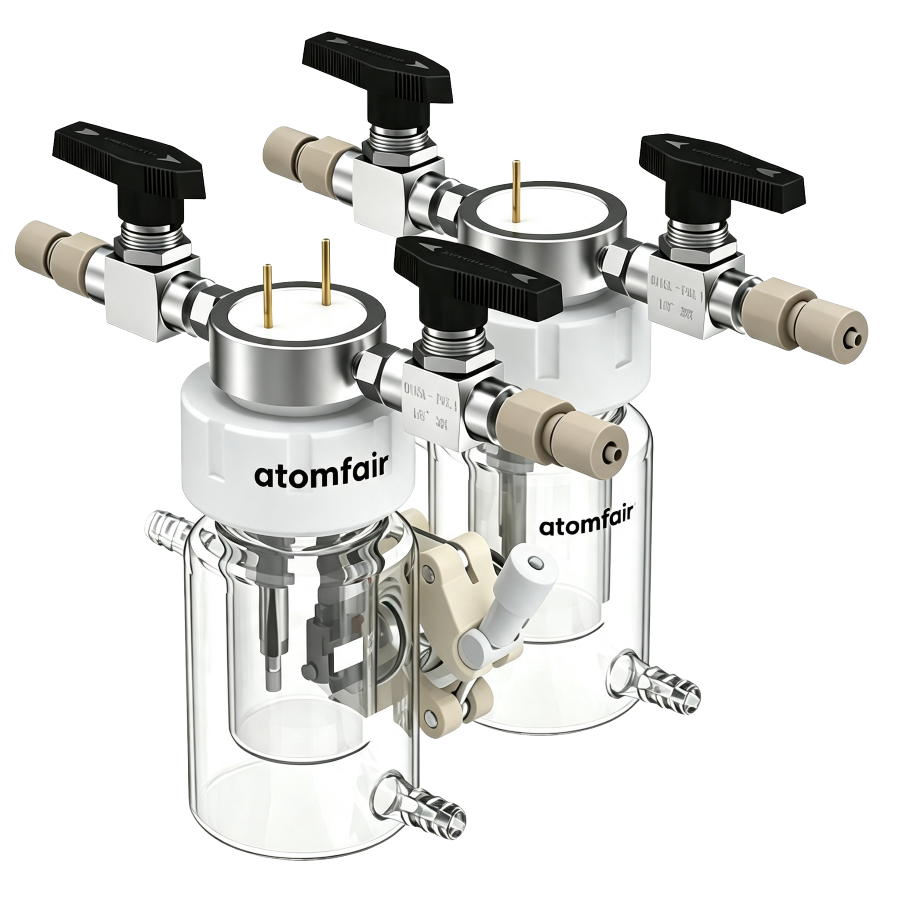
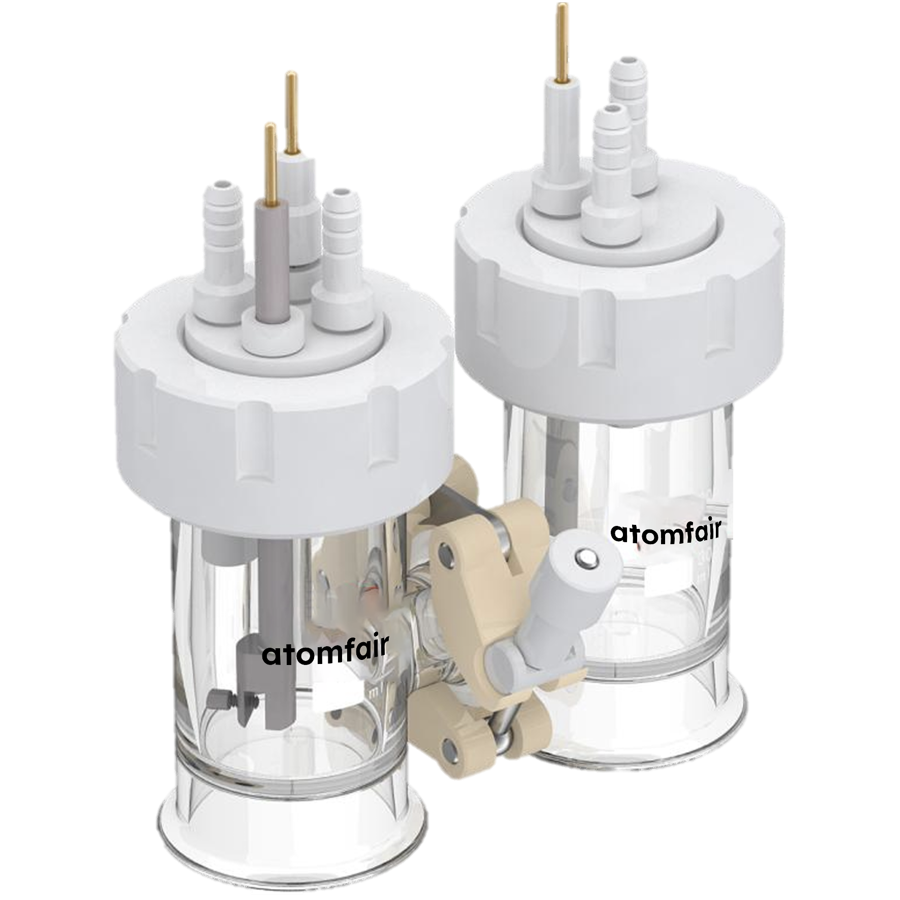
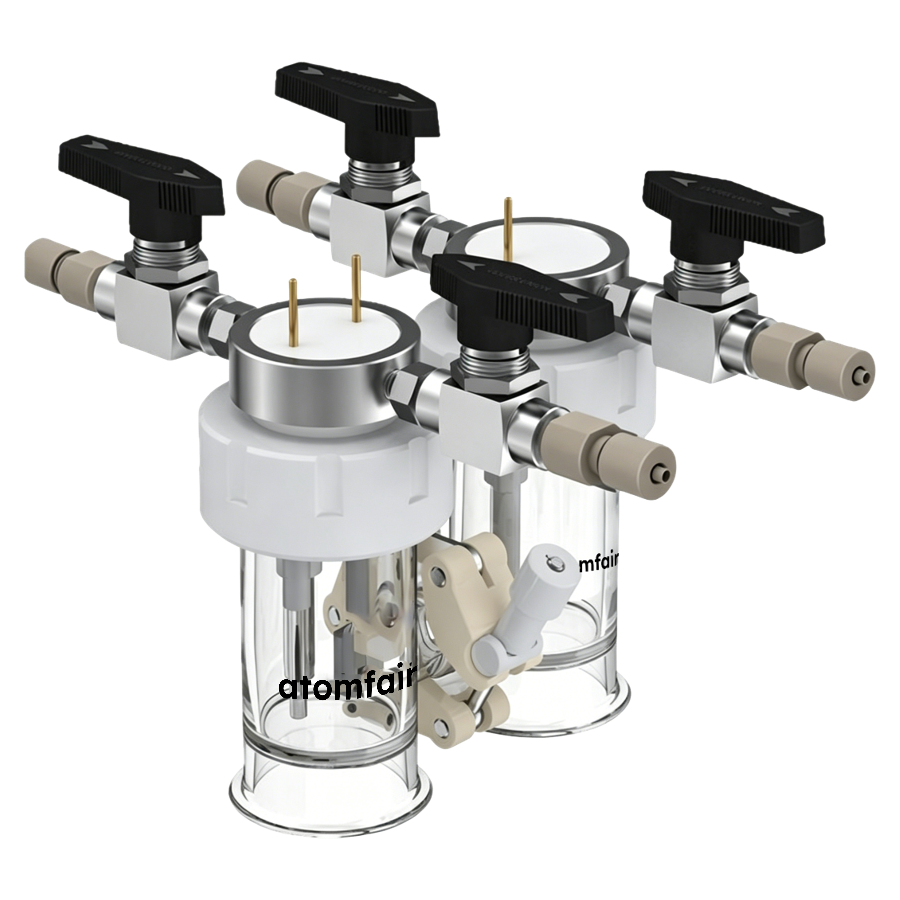
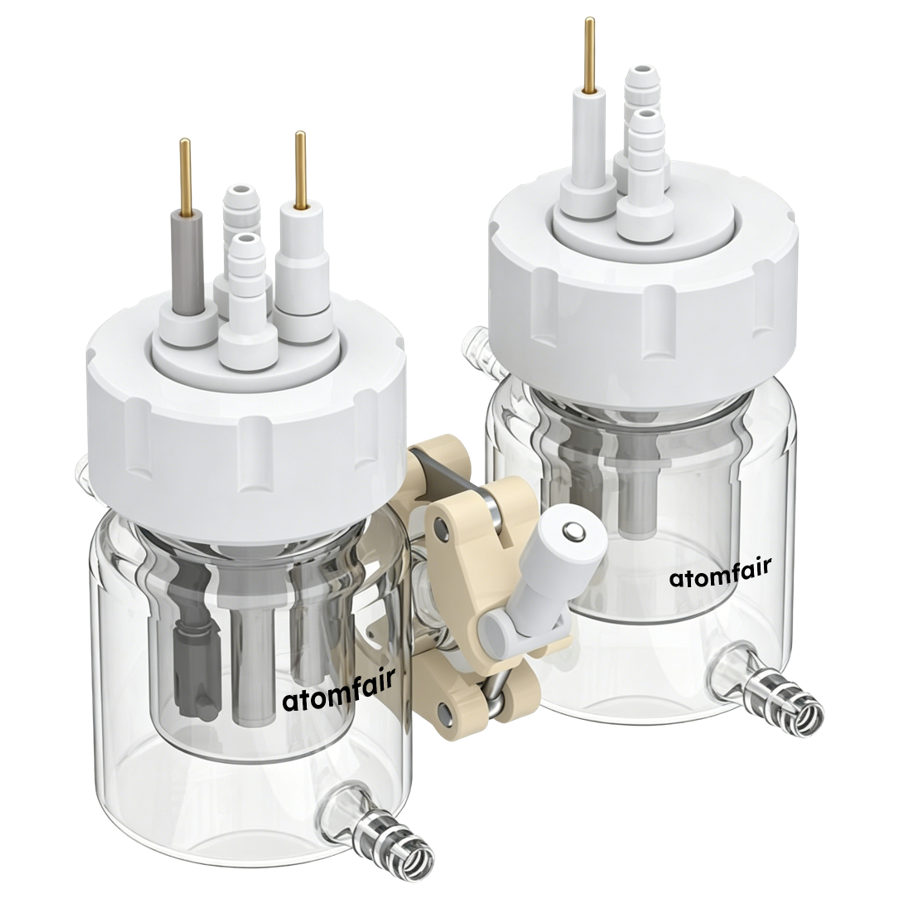
This cell requires absolute sealing for anaerobic experiments and can withstand vacuum below -100 kPa and pressurization up to 0.5 MPa. The quartz windows must be handled with care to avoid damage, and seals must be inspected before each vacuum or pressure operation.
- Pressure Limit: Do not exceed 0.5 MPa internal pressure to avoid cell rupture.
- Vacuum Capability: The cell can be evacuated to below -100 kPa for anaerobic conditions.
- Window Care: Quartz windows with >95% transmittance are fragile and require careful handling.
- Sealing Integrity: Built-in electrode jacks provide absolute sealing; inspect O-rings and seals before use.
- Membrane Compatibility: A user-supplied ion-exchange membrane must separate the cathode and anode chambers.
Follow these steps to safely assemble and operate the cell under vacuum or pressure. Proper handling of seals, windows, and electrodes is critical to maintain integrity and avoid hazards.
- Inspect Seals
Inspect all seals and O-rings for damage or debris before assembly. - Install Membrane
Install a user-supplied ion-exchange membrane between the cathode and anode chambers. - Attach Windows
Attach the quartz windows using the locking ring assemblies, handling the windows with care. - Connect Electrodes
Connect custom-matched electrodes to the built-in electrode jacks on the lid. - Install Valves
Install appropriate valves (not included) for vacuum and pressurization control. - Evacuate or Pressurize
Evacuate the cell to below -100 kPa or pressurize up to 0.5 MPa, ensuring not to exceed the limit. - Verify Sealing
Verify absolute sealing by monitoring pressure stability after reaching the desired condition.
How does the working-reference electrode configuration in this H-type cell minimize iR drop, and what is the trade-off in electrode selection?
The cell places the working and reference electrodes in the same compartment to minimize iR drop, improving electrochemical accuracy. However, this design requires custom-matched electrodes, limiting interchangeability with standard geometries. The dual quartz windows (>95% transmittance) maintain optical access for photoelectrochemical measurements.
What are the membrane compatibility and sealing requirements for using this photoelectrochemical cell in anaerobic CO₂ reduction experiments?
The cell accepts user-supplied ion-exchange membranes between the cathode and anode chambers, enabling tailored membrane selection for CO₂ reduction or other anaerobic studies. Absolute sealing via built-in electrode jacks and valves supports vacuum below -100 kPa and pressurization up to 0.5 MPa, ensuring strict anaerobic conditions. The quartz windows (>95% transmittance) provide optical access for photoelectrochemistry.
What is the maximum safe operating pressure and what precautions are necessary when using the vacuum and pressurization valves?
The cell supports vacuum below -100 kPa and mild pressurization up to 0.5 MPa. Operators must inspect all seals before applying vacuum or pressure, handle quartz windows with care to avoid breakage, and never exceed 0.5 MPa. Valves for vacuum/pressure control are not included, so compatible external fittings must be procured separately.
The ATOMFAIR Single-Layer Absolute Sealing Double-Window H-Type Replaceable-Membrane Photoelectrochemical Cell (AF-EC-C-C024-0030-006P-PARENT) is a high-borosilicate glass cell with dual quartz windows (>95% transmittance) and a 360° rotatable PTFE core, designed for three-electrode systems with membrane-separated compartments to minimize iR drop. Available in 30–250 mL volumes, it supports vacuum below -100 kPa and mild pressurization up to 0.5 MPa, but requires user-supplied electrodes and membrane, and valves are not included.
Positive
- Absolute sealing for anaerobic experiments: Built-in electrode jacks provide complete sealing integrity, enabling reliable anaerobic photoelectrochemistry and gas-sensitive reactions without ambient contamination.
- Dual quartz windows with >95% transmittance: High optical transparency across a broad spectral range supports accurate photoelectrochemical measurements and in-situ spectroscopic monitoring.
Trade-offs
- Electrodes and membrane not included: The cell requires custom-matched electrodes and a user-supplied ion-exchange membrane, adding procurement lead time and compatibility verification before use.
- Pressure and vacuum handling constraints: Operation is limited to mild pressurization up to 0.5 MPa and vacuum below -100 kPa; valves are not included, and seals must be inspected prior to each pressurized or evacuated run to avoid failure.
Every advanced material, component, equipment, and instrument in our catalog is backed by rigorous testing. We maintain strict internal quality management frameworks and align with CE conformity metrics to deliver transparent, reproducible performance data via our public open-science repository.
To request raw batch performance data, submit formal vendor registration paperwork, or execute a fast-turnaround R&D manufacturing loop, contact us at inquiry@atomfair.com.
Item is dispatched under the Atomfair Shipping & Delivery Framework (Free worldwide shipping on orders over $59 USD excl. heavy equipment). Return is governed by the Atomfair Return & Refund Policy (7-day technical return window).