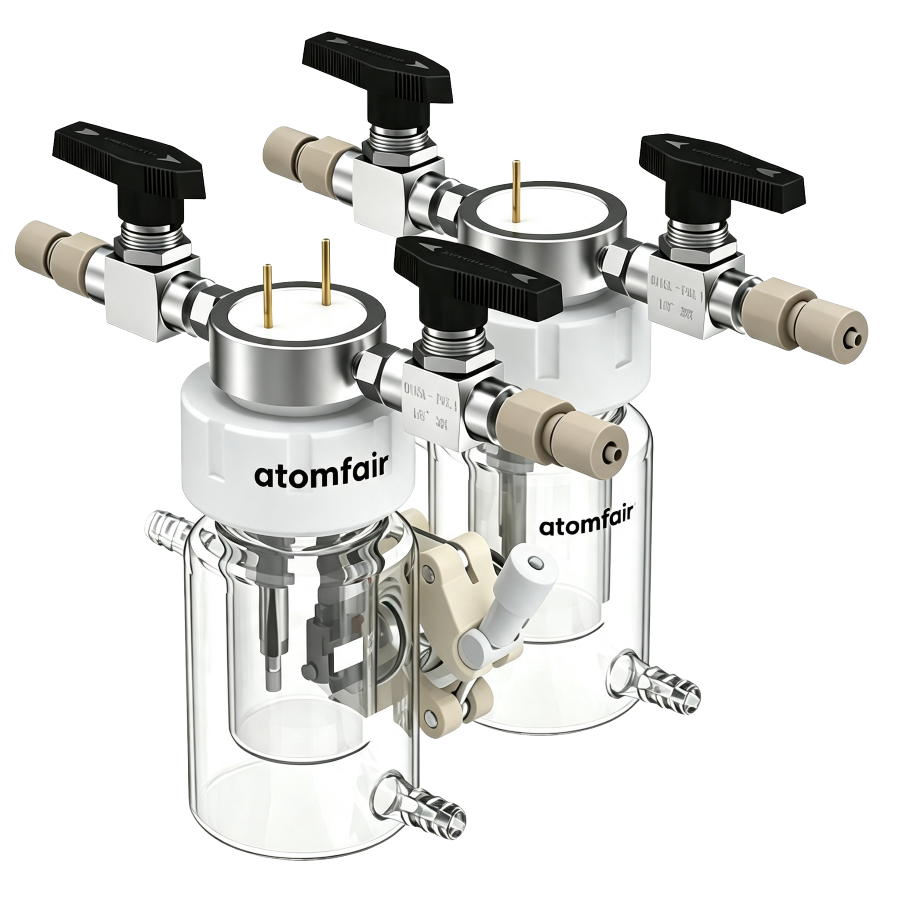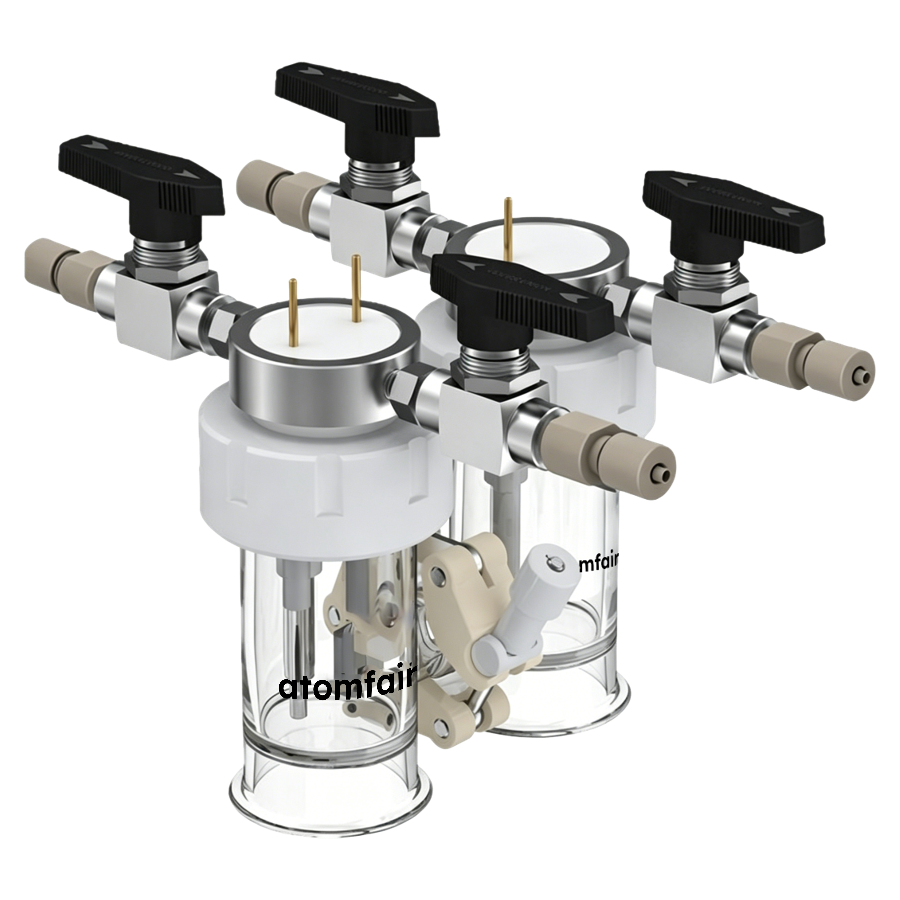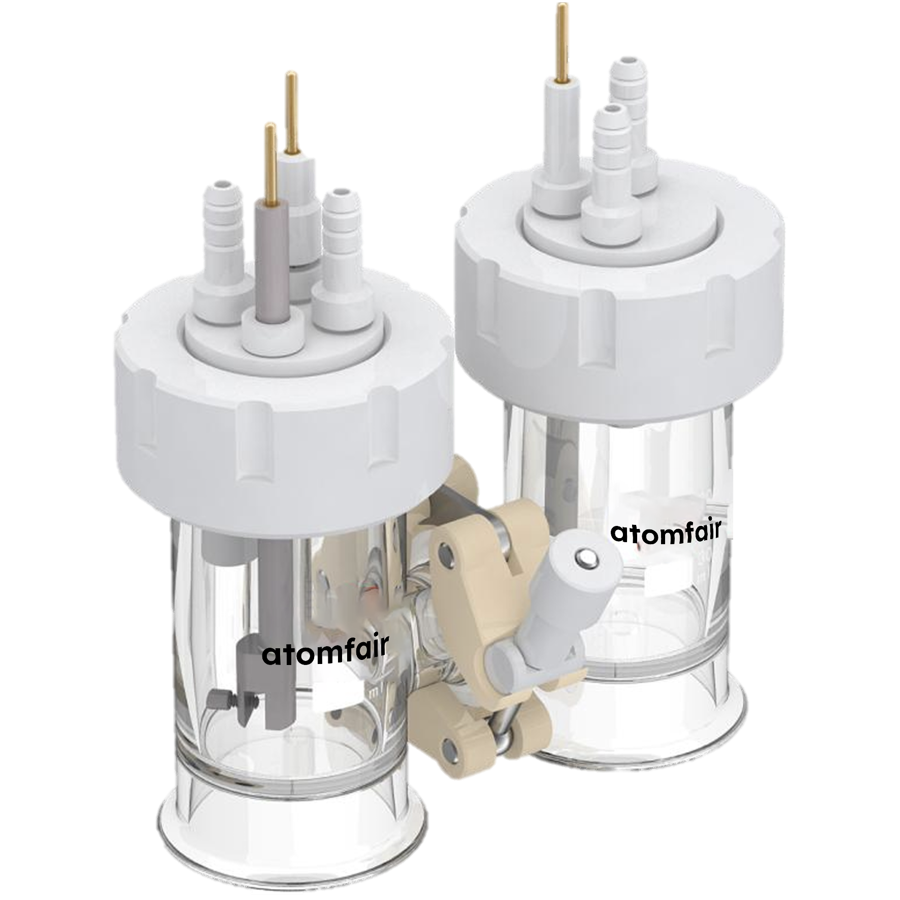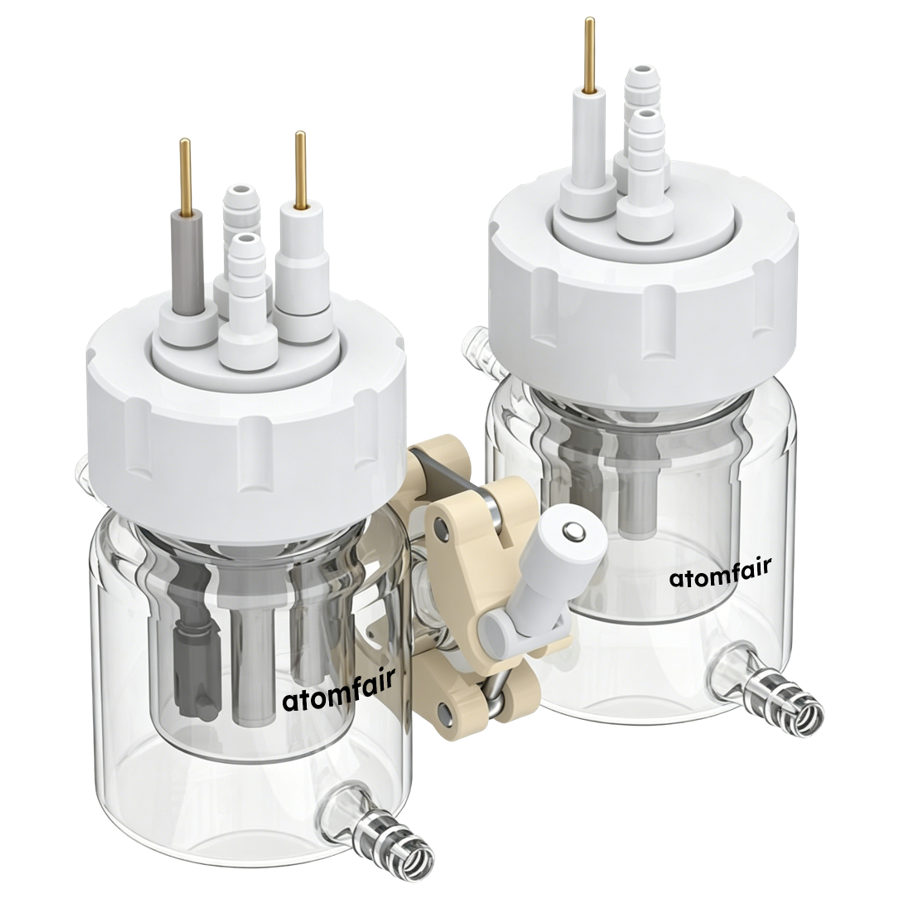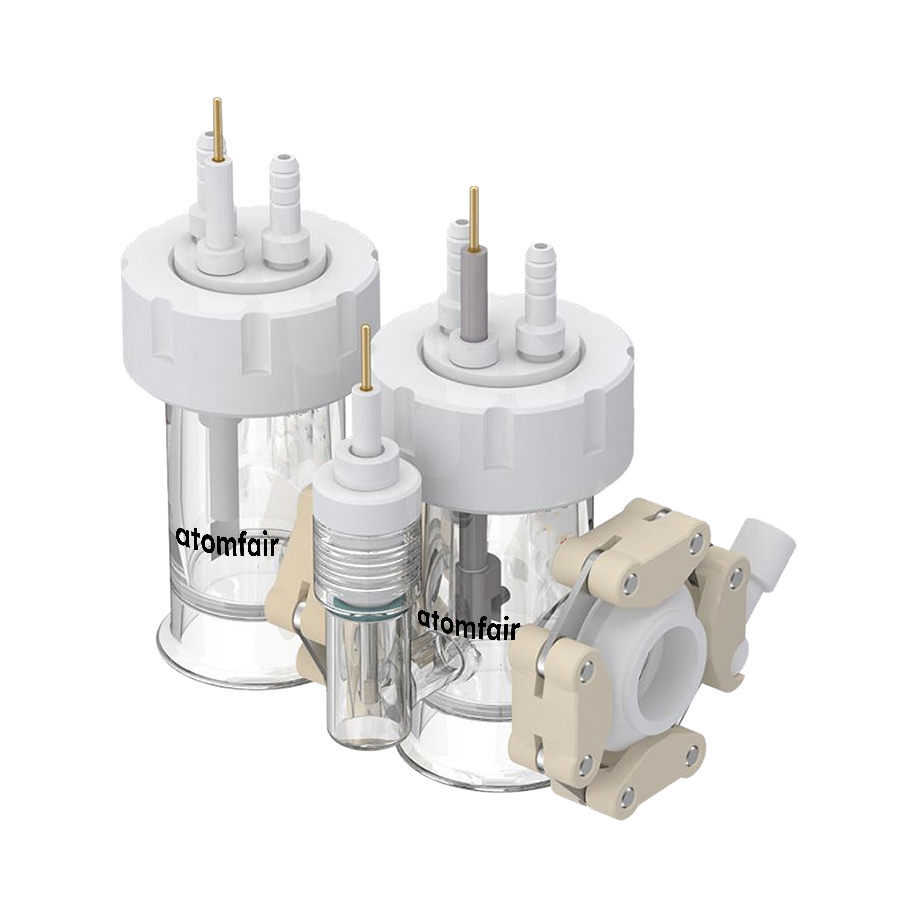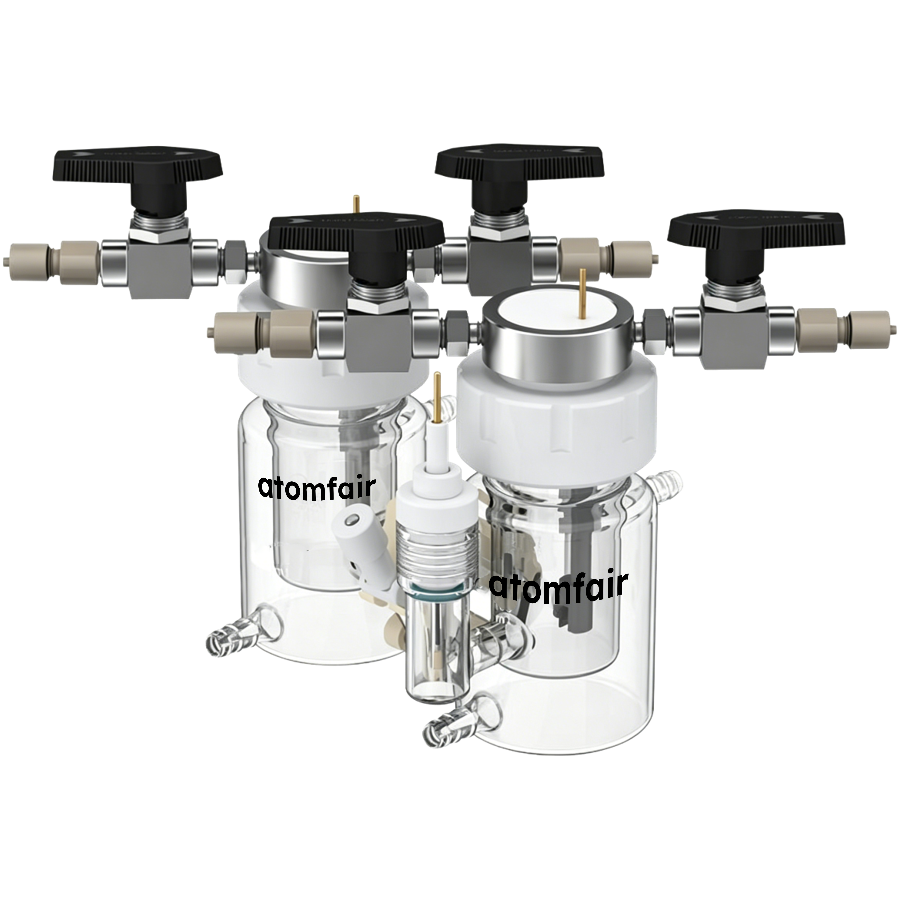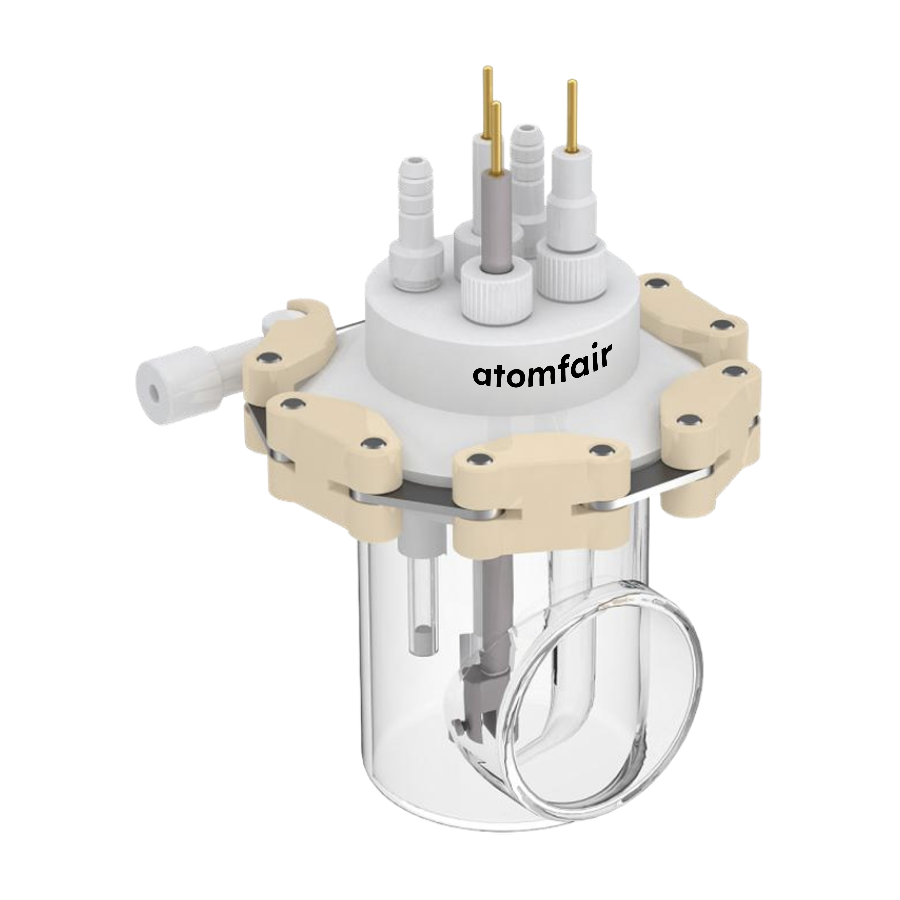
Side-Illumination Chain-Sealed Cylindrical Quartz Electrochemical Cell, Relative Sealed | ATOMFAIRProduct Type: Electrochemical cell
Research-grade laboratory product
|
|||||||||||||||||||||||||||||||||||
|
|||||||||||||||||||||||||||||||||||
|
LABORATORY PROCUREMENT SUPPORT
For model selection, accessory matching, platform compatibility or configuration confirmation, contact our technical sales team.
E-MAIL: inquiry@atomfair.com
|
|||||||||||||||||||||||||||||||||||
|
Manufacturer: Atomfair LLC
Brand: ATOMFAIR®
|
Manufacturer: Atomfair LLC
Brand: ATOMFAIR®
This cell requires careful handling to maintain optical clarity and sealing integrity. Key constraints include avoiding thermal shock, verifying chemical compatibility, and regular O-ring inspection.
- Thermal Shock Avoidance: Do not subject the quartz cell to rapid temperature changes to prevent cracking.
- Chemical Compatibility Verification: Confirm that all reagents are compatible with quartz and PTFE before use.
- Sealing Limitations: This semi-sealed system is not suitable for applications requiring absolute sealing.
- Optical Surface Care: Handle the quartz body with care to avoid scratches on the optical windows.
- O-Ring Maintenance: Inspect O-rings regularly and replace if damaged to maintain reliable sealing.
Follow these steps to assemble the cell, insert electrodes, and verify sealing before operation. Proper assembly ensures reliable performance and prevents damage to the quartz body.
Required Equipment: PTFE cap, Locking ring, Compression fittings, O-rings
- Verify Chemical Compatibility
Verify that all reagents and solvents are chemically compatible with quartz and PTFE. - Inspect O-Rings
Inspect the O-rings for damage or wear and replace if necessary. - Assemble Cap and Locking Ring
Place the PTFE cap onto the quartz body and secure it with the locking ring to compress the sealing ring. - Insert Electrodes
Insert standard 6mm rod-type electrodes through the compression fittings and tighten to achieve seals. - Connect Gas Ports
Connect gas inlet and outlet ports if atmosphere control is required for the experiment. - Verify Sealing
Before operation, confirm the cell is properly sealed by applying gentle pressure or checking for leaks.
What is the optical transparency of the quartz body and how does the fusion welding construction affect durability for spectroelectrochemical measurements?
The quartz body exhibits light transmittance exceeding 95%. The fusion welded (non-bonded) construction provides superior durability and optical clarity, ensuring long-term use without delamination or degradation of optical properties. This makes the cell suitable for precise UV-Vis and photoelectrochemical measurements where high transparency and structural integrity are required.
What electrode sizes and configurations are compatible with this semi-sealed side-illumination cell?
The cell accommodates standard 6 mm diameter rod-type electrodes for the reference, counter, and working electrode positions. Electrode seals are achieved via compression fittings with O-rings integrated into PTFE plugs. Electrodes are not included; users must supply 6 mm rod electrodes. The cell is designed as a semi-sealed system and is not intended for absolutely sealed applications.
What operational precautions are necessary when using the gas inlet and outlet ports with this quartz cell?
When using the optional gas inlet/outlet ports, ensure the locking ring and PTFE cap are properly tightened to maintain reliable sealing. Avoid thermal shock by preventing rapid temperature changes. Regularly inspect O-rings for wear or degradation. The cell is a semi-sealed system and is not suitable for absolutely sealed or pressurized operation. Verify chemical compatibility of all wetted materials (quartz, PTFE, O-rings) with your electrolyte and gaseous environment before use.
The ATOMFAIR side-illumination chain-sealed cylindrical quartz electrochemical cell offers high optical transparency (>95%) and durable all-quartz fusion welded construction, making it suitable for spectroelectrochemical and photoelectrochemical studies. However, it is a semi-sealed system not suitable for absolute sealing, and requires careful handling to avoid damage to optical windows.
Positive
- All-quartz fusion welded construction: The non-bonded all-quartz body provides superior durability and optical clarity for long-term use in demanding electrochemical applications.
- High optical transparency with side-illumination: ≥95% light transmittance and side-illumination design enable excellent spectroelectrochemical and photoelectrochemical measurements.
Trade-offs
- Semi-sealed system not for absolute sealing: The cell is semi-sealed; it is not rated for absolutely sealed requirements, limiting its use in experiments requiring hermetic isolation.
- Careful handling required to avoid damage: The quartz body must be handled with care to prevent scratches on optical windows, and O-rings require regular inspection; avoid thermal shock.
Every advanced material, component, equipment, and instrument in our catalog is backed by rigorous testing. We maintain strict internal quality management frameworks and align with CE conformity metrics to deliver transparent, reproducible performance data via our public open-science repository.
To request raw batch performance data, submit formal vendor registration paperwork, or execute a fast-turnaround R&D manufacturing loop, contact us at inquiry@atomfair.com.
Item is dispatched under the Atomfair Shipping & Delivery Framework (Free worldwide shipping on orders over $59 USD excl. heavy equipment). Return is governed by the Atomfair Return & Refund Policy (7-day technical return window).