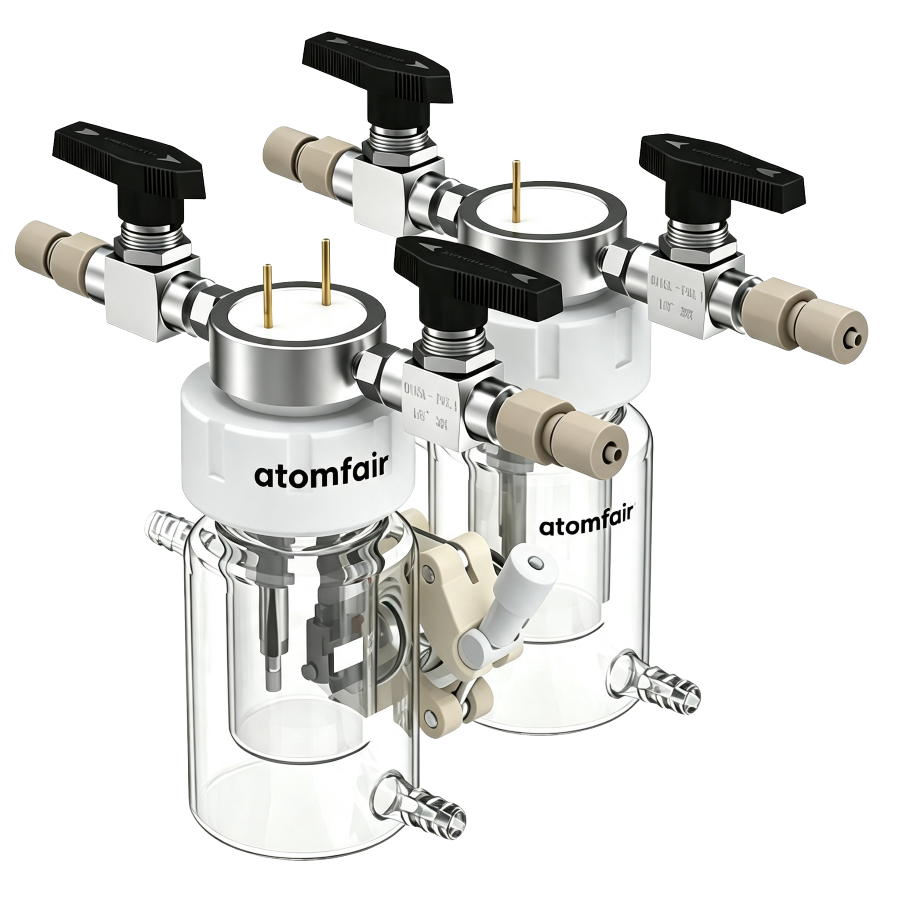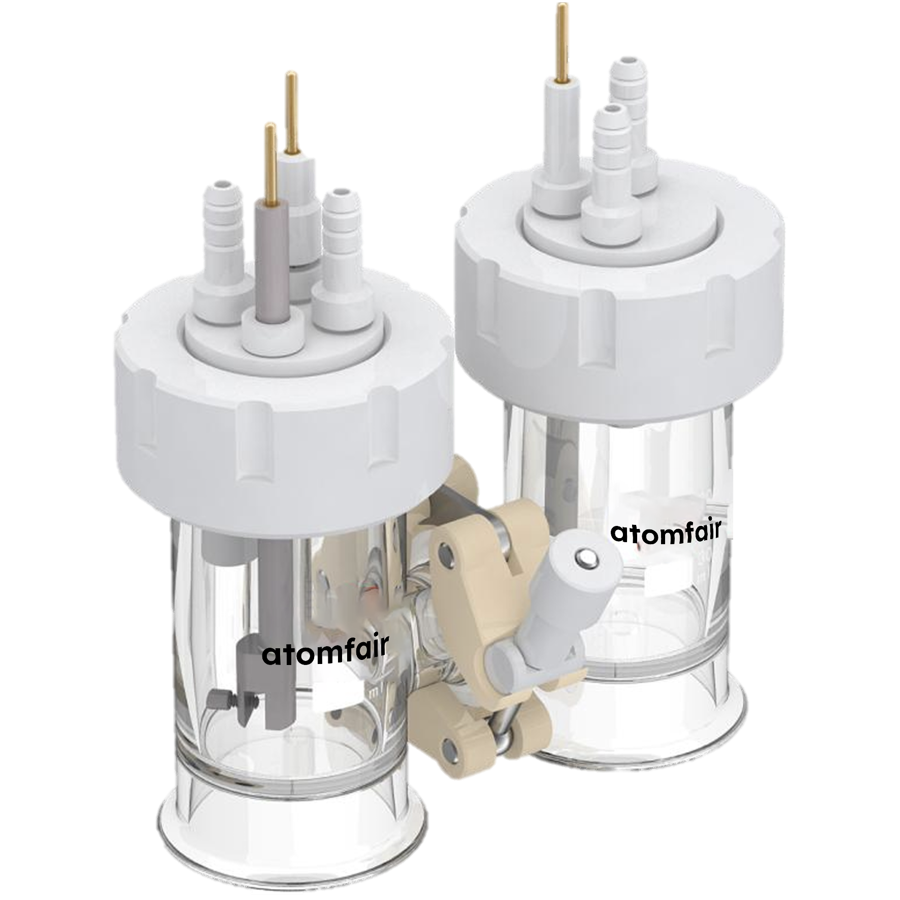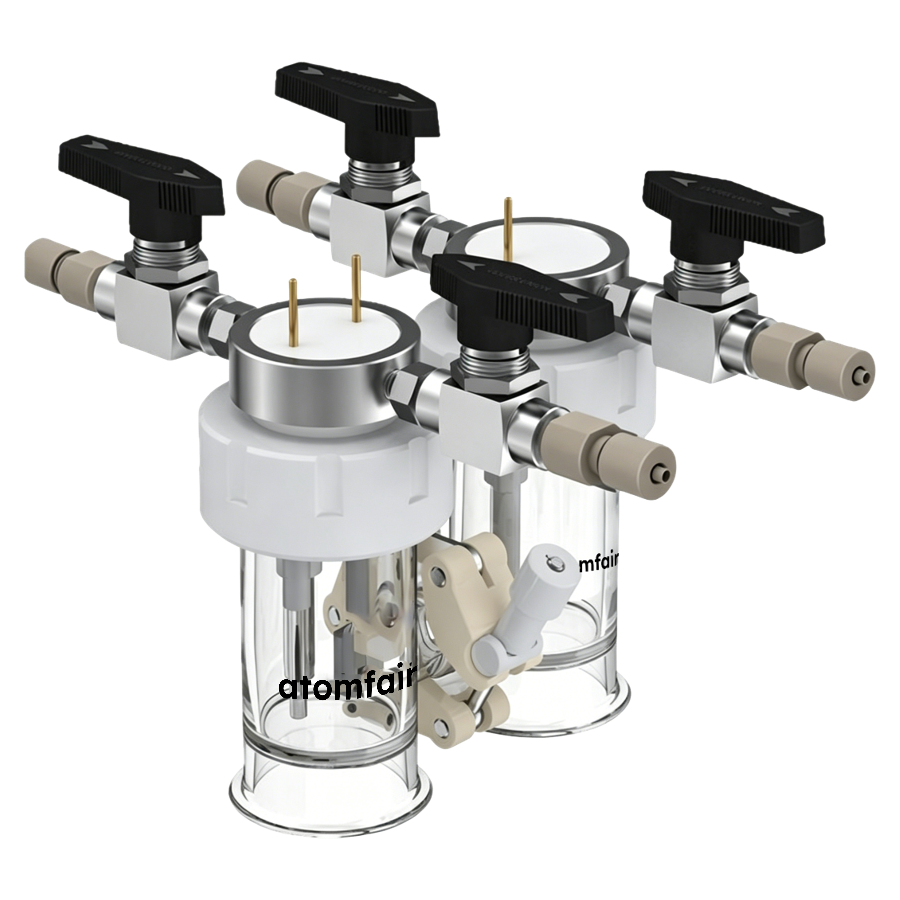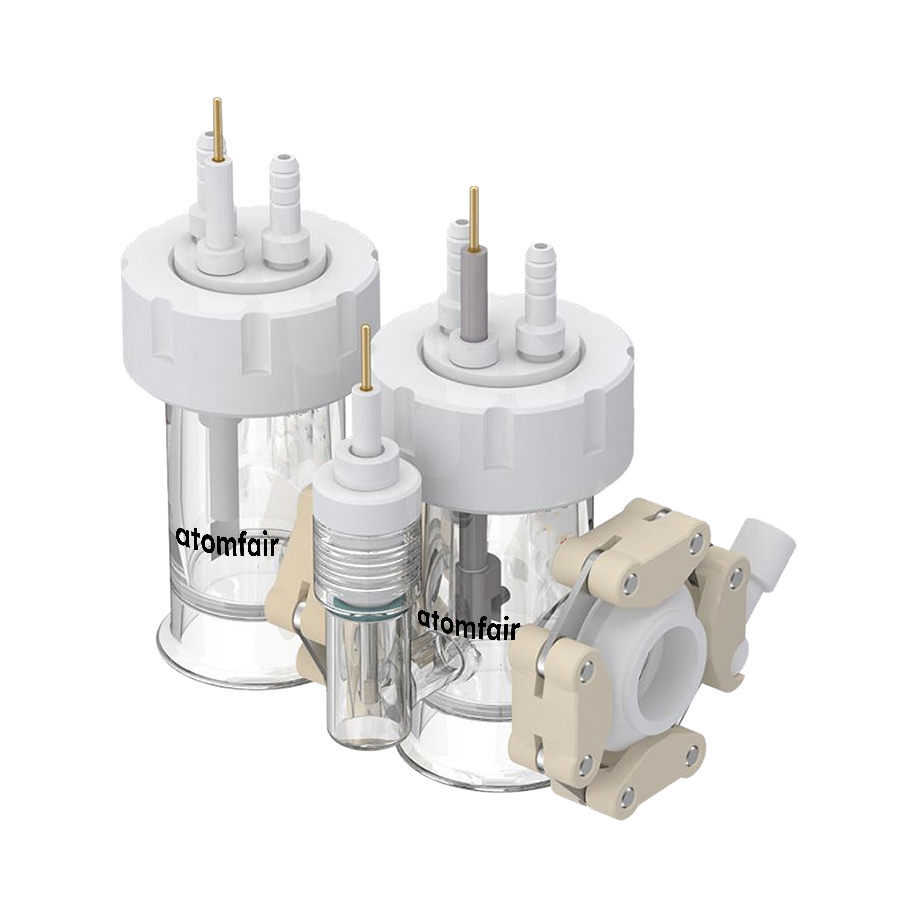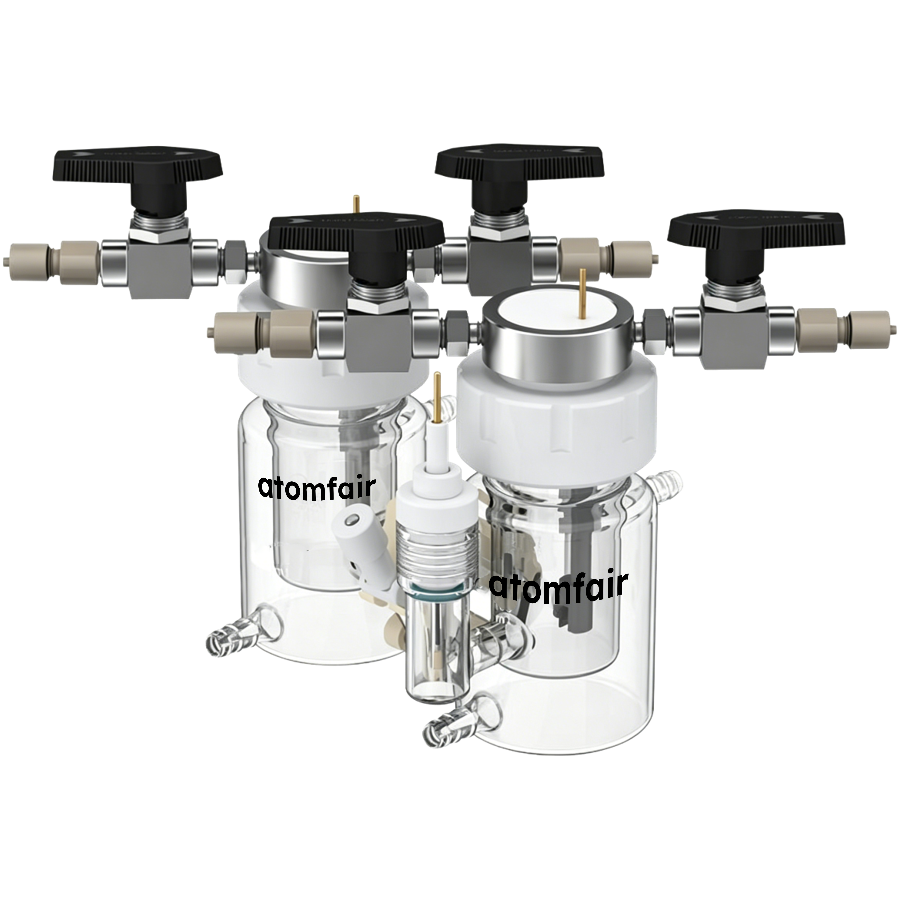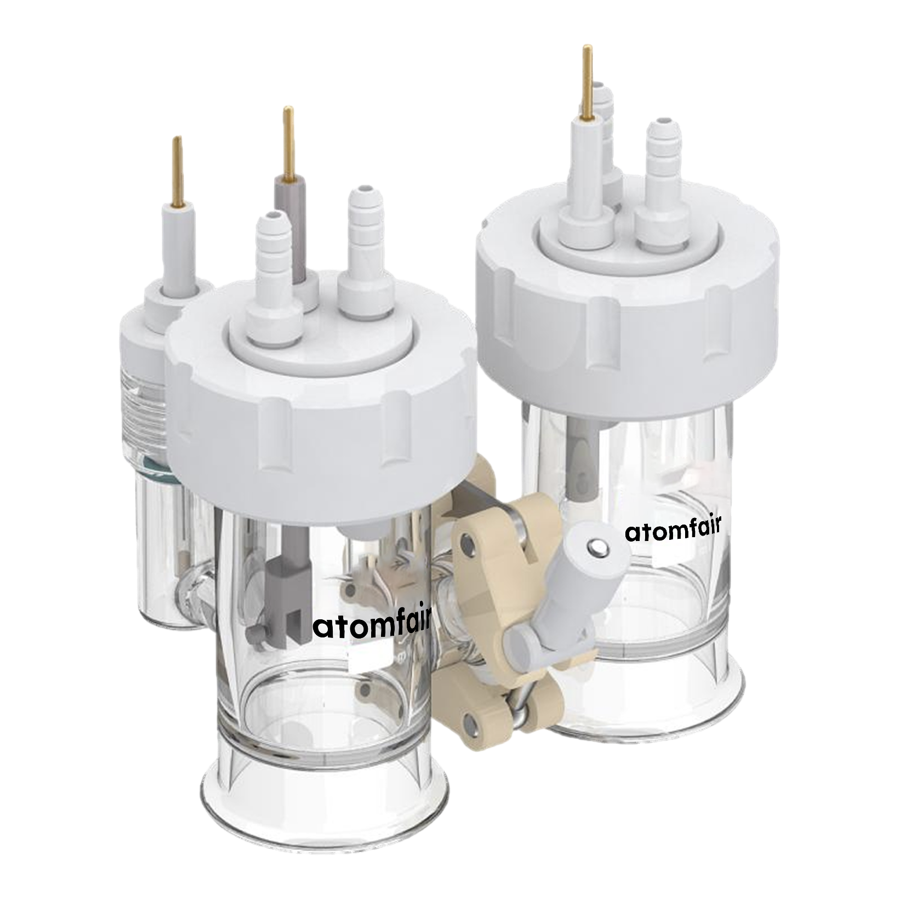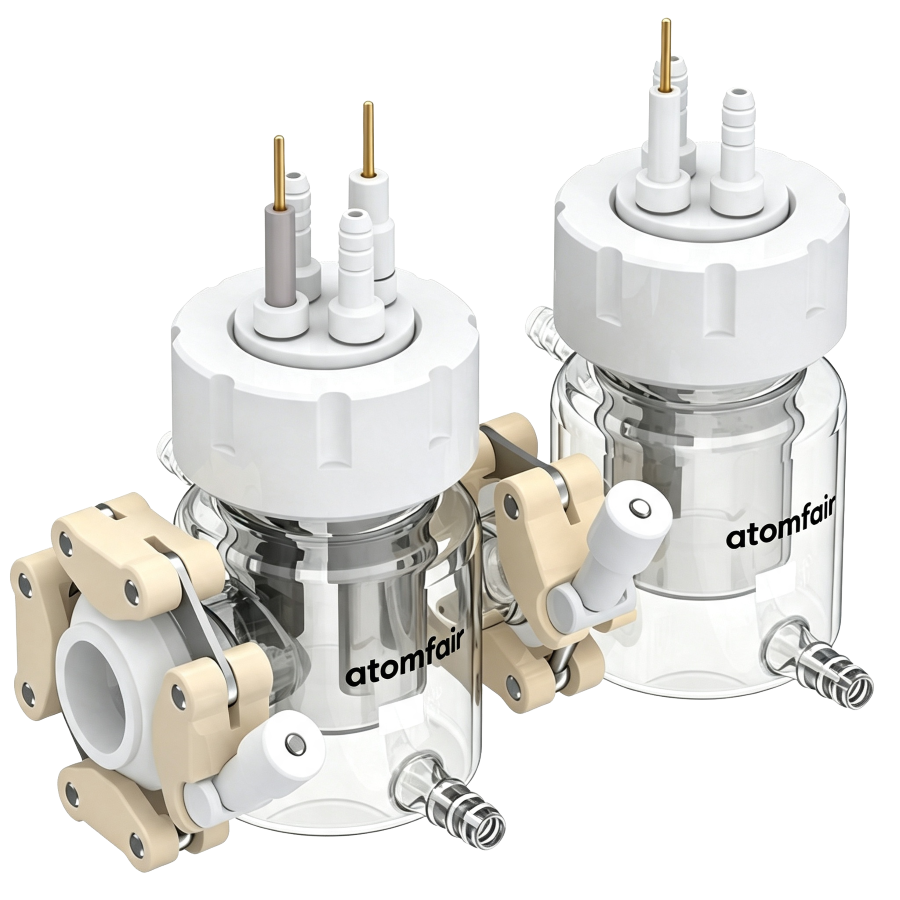
Single-Window H-Type Replaceable-Membrane Photoelectrochemical Cell, Relative Sealed, Double-Layer | ATOMFAIRProduct Type: Electrochemical cell
Research-grade laboratory product
|
|||||||||||||||||||||||||||||||||||
|
|||||||||||||||||||||||||||||||||||
|
LABORATORY PROCUREMENT SUPPORT
For model selection, accessory matching, platform compatibility or configuration confirmation, contact our technical sales team.
E-MAIL: inquiry@atomfair.com
|
|||||||||||||||||||||||||||||||||||
|
Manufacturer: Atomfair LLC
Brand: ATOMFAIR®
|
Manufacturer: Atomfair LLC
Brand: ATOMFAIR®
This photoelectrochemical cell requires careful handling of the quartz window to prevent scratches and ensure optical clarity. Proper sealing of the window assembly and membrane compatibility verification are essential before each use to avoid leaks and experimental failure.
- Quartz Window Care: Handle the quartz window with care to avoid scratches that could compromise light transmittance.
- Window Assembly Sealing: Ensure proper sealing of the window assembly using the galvanized plate before use to maintain integrity.
- Thermal Shock Avoidance: Avoid thermal shock to the glass body by gradually changing temperature during experiments.
- Water Jacket Leak Check: Check the water jacket for leaks before operation to prevent water damage to the cell.
- Membrane Compatibility: Verify membrane compatibility with the electrolyte before use to prevent degradation or contamination.
Follow these steps to prepare the cell for photoelectrochemical experiments. Proper assembly and verification prevent leaks and ensure reliable measurements.
Required Equipment: Quartz window, Galvanized plate assembly, Ion-exchange membrane, Extended-length electrodes
- Inspect Quartz Window
Inspect the quartz window for scratches or damage before assembly. - Inspect Seals
Inspect all seals on the cell body and connections for integrity before assembly. - Verify Membrane Compatibility
Verify that the ion-exchange membrane is compatible with the intended electrolyte. - Check Water Jacket
Check the water jacket for leaks by circulating water before operation. - Seal Window Assembly
Ensure the window assembly is properly sealed using the galvanized plate connection. - Install Electrodes
Install extended-length electrodes into the PTFE inner core for proper alignment.
How does the single-window H-cell design reduce uncompensated resistance (iR drop) in photoelectrochemical measurements?
The working and reference electrodes are positioned in the same compartment, which minimizes the solution resistance between them and effectively reduces uncompensated iR drop. The cell also features a 360° rotatable PTFE inner core that allows precise parallel alignment of the working electrode relative to the membrane, further optimizing the measurement geometry. This design is critical for accurate potential control in three-electrode photoelectrochemical studies.
What electrode and membrane specifications are required for use with this photoelectrochemical cell?
Extended-length electrodes are required and must be ordered separately; standard electrodes are not compatible due to the cell geometry. An ion-exchange membrane is not included and must be selected by the user based on electrolyte compatibility and experiment type. The chain-sealed membrane connections allow quick replacement without compromising seal integrity, and the cathode and anode chambers are isolated by the membrane for selective ion transport.
What precautions are necessary when operating the double-layer water-jacketed H-cell to avoid damage?
Avoid thermal shock to the high-borosilicate glass and quartz window—use gradual temperature changes. Check the water jacket for leaks before beginning an experiment. Handle the quartz window carefully to prevent scratches; its >95% transmittance depends on surface integrity. Ensure the window assembly is properly sealed using the galvanized plate connection before use, and verify membrane compatibility with the electrolyte to prevent degradation.
The ATOMFAIR Double-Layer H-Type Photoelectrochemical Cell provides a quartz window with >95% transmittance and a thermostatic water jacket for precise temperature control, but requires purchasing extended-length electrodes and ion-exchange membrane separately, and demands careful handling to avoid thermal shock and seal leaks.
Positive
- High-transparency quartz window: Provides ≥95% light transmittance for superior photoelectrochemical and spectroscopic measurements.
- Integrated thermostatic water jacket: Double-layer design enables precise temperature control by circulating constant-temperature water, essential for temperature-dependent studies.
Trade-offs
- Requires extended-length electrodes and membrane: Extended-length electrodes and ion-exchange membrane are not included and must be ordered separately; verify membrane compatibility with electrolyte before use.
- Operational handling precautions: Quartz window is scratch-sensitive; the cell requires careful handling to avoid thermal shock and ensure proper sealing of the water jacket and window assembly before operation.
Every advanced material, component, equipment, and instrument in our catalog is backed by rigorous testing. We maintain strict internal quality management frameworks and align with CE conformity metrics to deliver transparent, reproducible performance data via our public open-science repository.
To request raw batch performance data, submit formal vendor registration paperwork, or execute a fast-turnaround R&D manufacturing loop, contact us at inquiry@atomfair.com.
Item is dispatched under the Atomfair Shipping & Delivery Framework (Free worldwide shipping on orders over $59 USD excl. heavy equipment). Return is governed by the Atomfair Return & Refund Policy (7-day technical return window).