Coating Corrosion Test Cell, Double-Layer | ATOMFAIRProduct Type: Electrochemical cell
Research-grade laboratory product
|
|||||||||||||||||||||||||||||||||||
|
|||||||||||||||||||||||||||||||||||
|
LABORATORY PROCUREMENT SUPPORT
For model selection, accessory matching, platform compatibility or configuration confirmation, contact our technical sales team.
E-MAIL: inquiry@atomfair.com
|
|||||||||||||||||||||||||||||||||||
|
Manufacturer: Atomfair LLC
Brand: ATOMFAIR®
|
Manufacturer: Atomfair LLC
Brand: ATOMFAIR®
The double-layer coating corrosion test cell requires proper O-ring sealing and copper tape replacement before each experiment. Material compatibility must be verified for aggressive chemical environments, and the water jacket should be checked for leaks prior to operation.
- O-Ring Sealing: Ensure proper O-ring sealing before each experiment to prevent electrolyte leakage.
- Copper Tape Replacement: Replace copper tape after each use to maintain optimal electrical conductivity.
- Material Compatibility: Verify material compatibility for aggressive chemical environments to avoid degradation.
- Screw Torque: Do not overtighten screws to avoid damaging the sample or the glass cell.
- Water Jacket Leak Check: Check the water jacket for leaks before operation to prevent water damage.
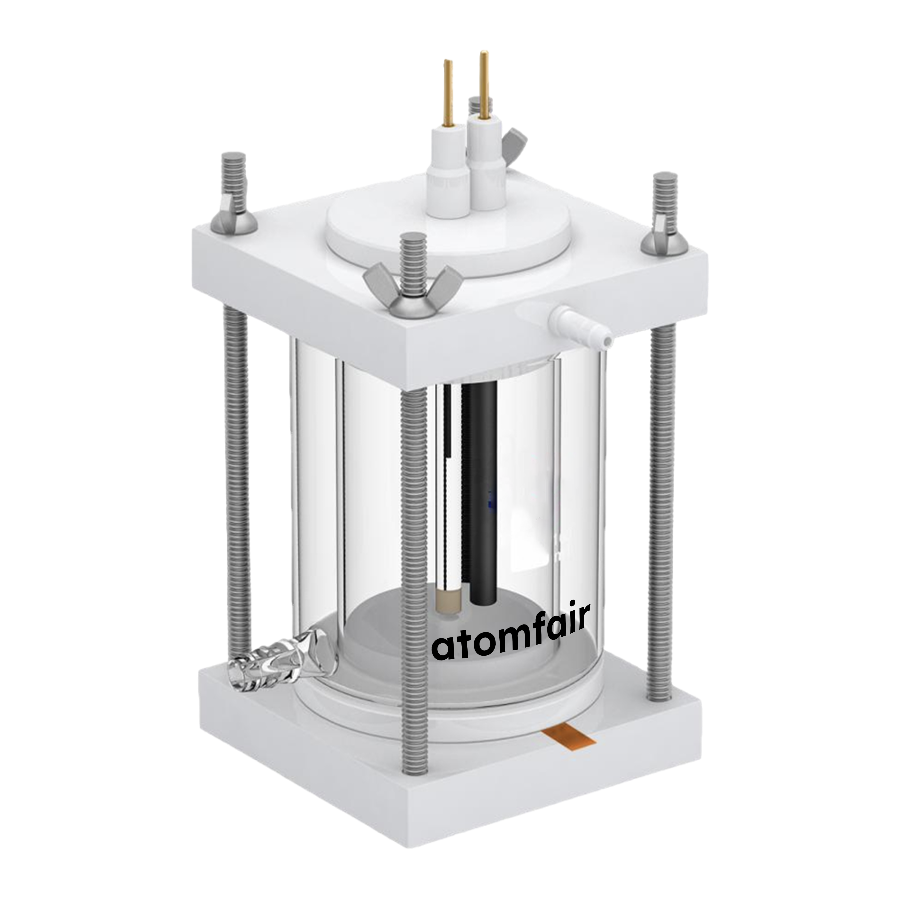
This procedure describes sample installation, sealing, electrical connection, and temperature control for the double-layer coating corrosion test cell. Proper execution ensures reliable electrochemical measurements and prevents leakage or sample damage.
Required Equipment: Screwdriver, Water bath circulator
- Inspect O-ring
Inspect the O-ring for damage or debris before each experiment. - Place sample
Place the flat sheet sample over the O-ring on the cell bottom. - Tighten screws
Tighten the four screws evenly to compress the sample against the O-ring. - Apply copper tape
Adhere a strip of copper tape to the sample surface for electrical connection. - Connect water jacket
Connect the water jacket inlet and outlet to a thermostatic water bath circulator. - Check for leaks
Check the water jacket for leaks by circulating water prior to operation.
How does the double-layer water jacket in the ATOMFAIR coating corrosion test cell enable precise temperature control during experiments?
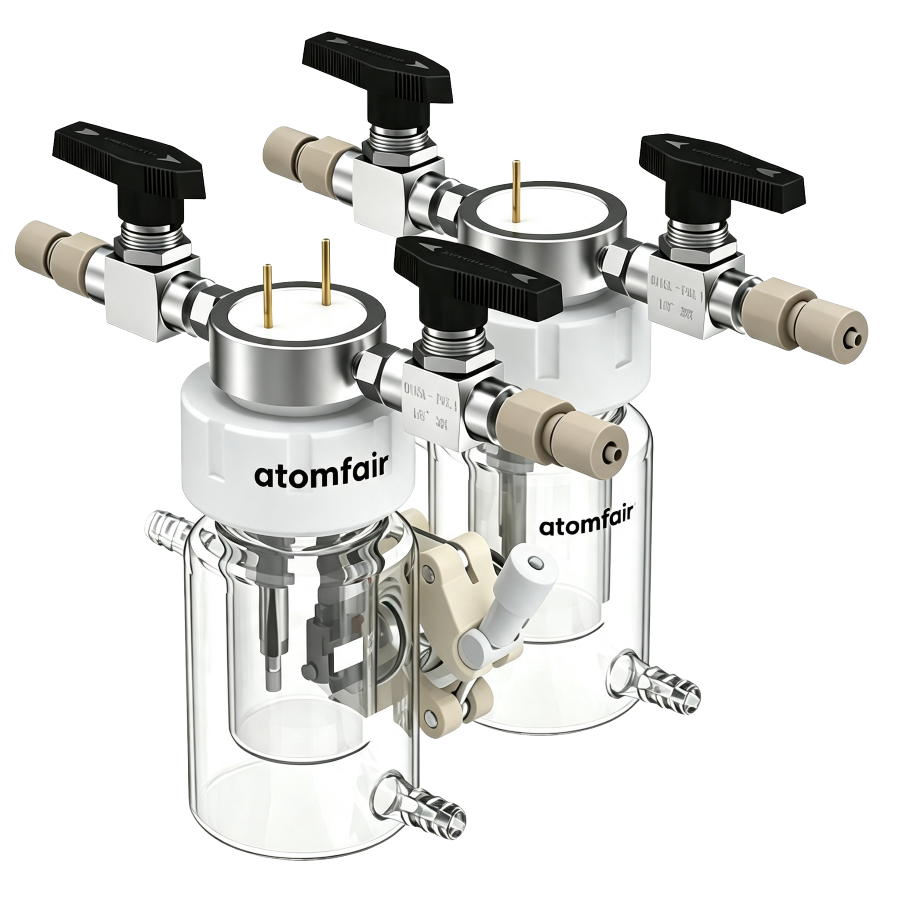
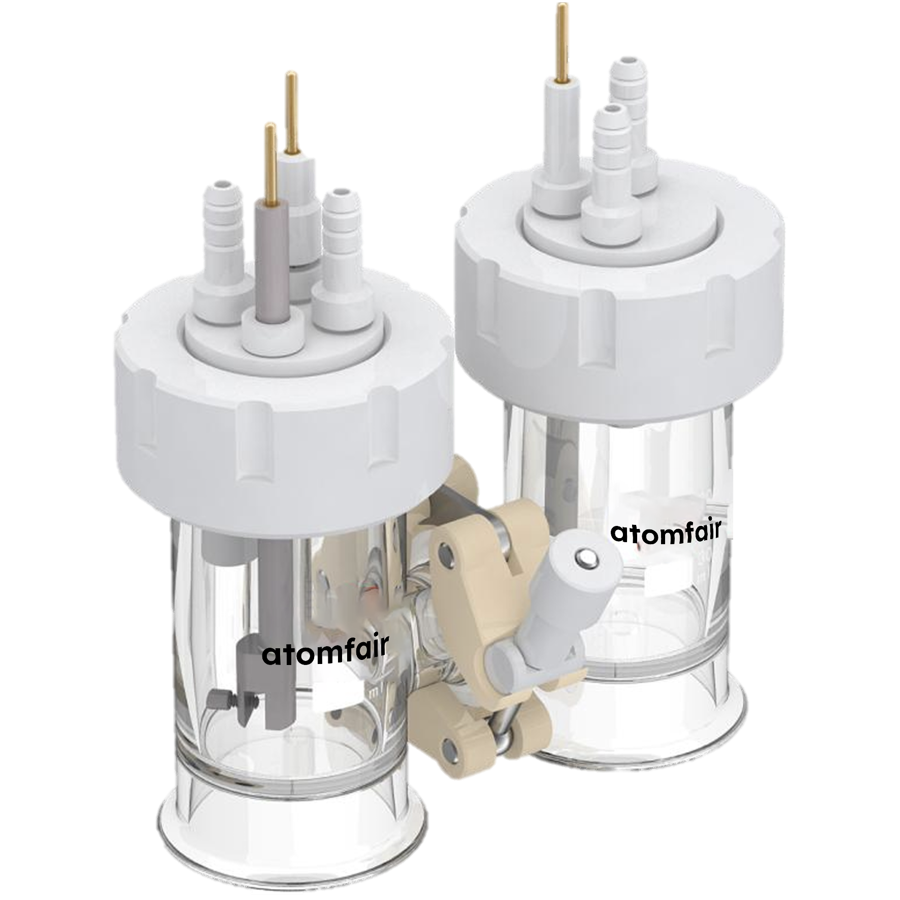
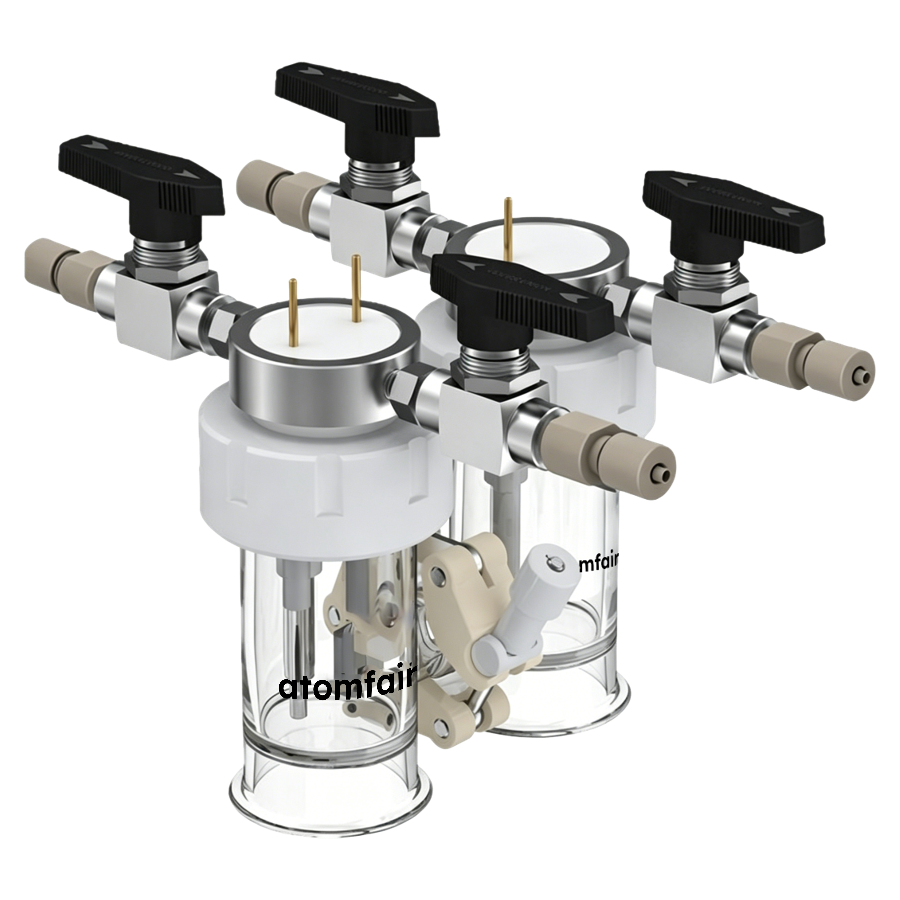
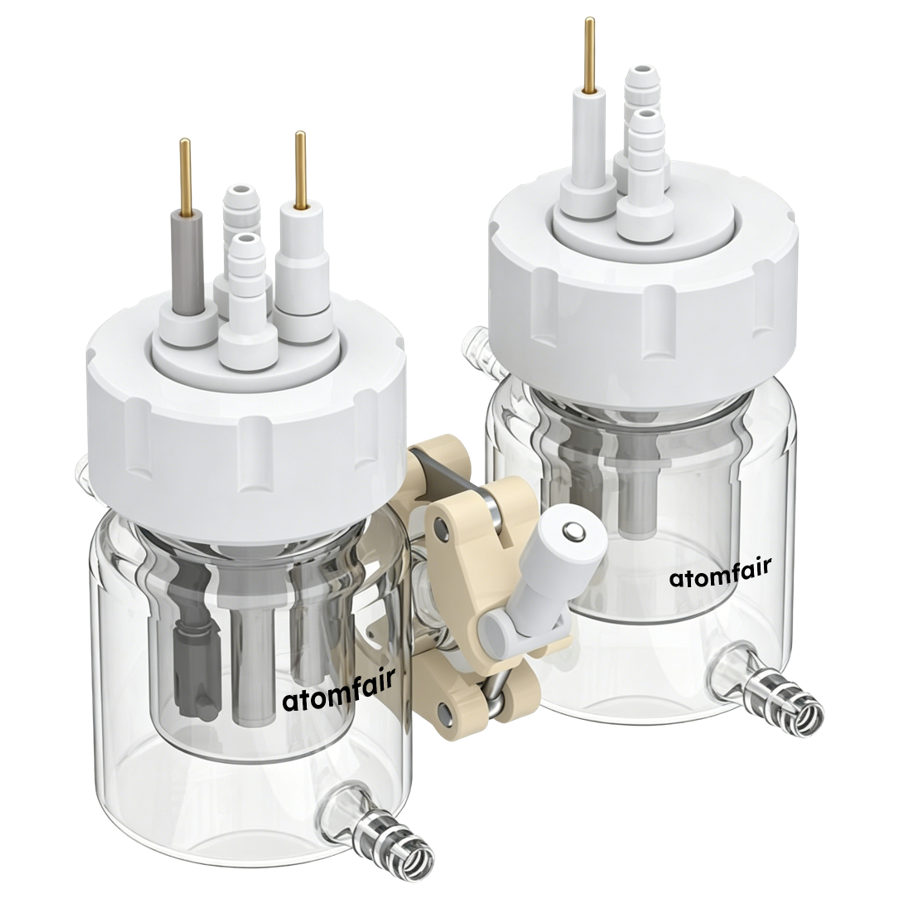
The double-layer configuration integrates a thermostatic water bath jacket that allows circulation of temperature-controlled fluid around the cell. This design provides precise thermal regulation for temperature-dependent corrosion studies, such as coating performance evaluation under controlled environmental conditions. The high-borosilicate glass construction ensures thermal stability and chemical resistance.
Can the ATOMFAIR double-layer corrosion test cell be used for electrochemical sample preparation prior to SEM analysis without compromising sample integrity?
Yes, the cell is specifically designed for electrochemical treatment prior to scanning electron microscopy (SEM) analysis. The tool-free flat sheet sample installation and four-screw compression sealing apply uniform pressure against the O-ring without damaging the sample, while the fixed-area circular opening (standard 1 cm²) ensures consistent exposed area. Copper tape provides reliable electrical connection and is easy to replace after corrosion without affecting the sample surface.
What are the key handling and safety precautions for sealing the sample and ensuring reliable electrical conductivity in this corrosion test cell?
Ensure proper O-ring sealing before each experiment and replace copper tape after each use to maintain optimal conductivity. Do not overtighten the four compression screws to avoid damaging the sample. For aggressive chemical environments, verify material compatibility. Additionally, check the water jacket for leaks before operation to prevent thermal regulation failure or contamination.
The ATOMFAIR Double-Layer Coating Corrosion Test Cell offers a robust design for flat sheet electrode corrosion studies with integrated temperature control via a water jacket, but requires careful handling of glass components and regular replacement of copper tape for consistent conductivity.
Positive
- Integrated water bath jacket: The double-layer configuration enables precise thermal regulation via a thermostatic water bath jacket, critical for temperature-dependent corrosion studies and ensuring reproducible electrochemical conditions.
- Tool-free sample mounting with secure sealing: Flat sheet samples are installed without tools and sealed by compressing against an O-ring using four screws, providing uniform pressure and reliable sealing while allowing easy sample removal and surface treatment access.
Trade-offs
- Fragile glass construction: The high-borosilicate glass body requires careful handling to avoid breakage; the water jacket must be checked for leaks before each operation, and shock-proof packaging is needed for transport.
- Copper tape consumable replacement: Electrical connection via copper tape must be replaced after each corrosion experiment to maintain consistent conductivity, adding a consumable step and cost to routine use.
Every advanced material, component, equipment, and instrument in our catalog is backed by rigorous testing. We maintain strict internal quality management frameworks and align with CE conformity metrics to deliver transparent, reproducible performance data via our public open-science repository.
To request raw batch performance data, submit formal vendor registration paperwork, or execute a fast-turnaround R&D manufacturing loop, contact us at inquiry@atomfair.com.
Item is dispatched under the Atomfair Shipping & Delivery Framework (Free worldwide shipping on orders over $59 USD excl. heavy equipment). Return is governed by the Atomfair Return & Refund Policy (7-day technical return window).