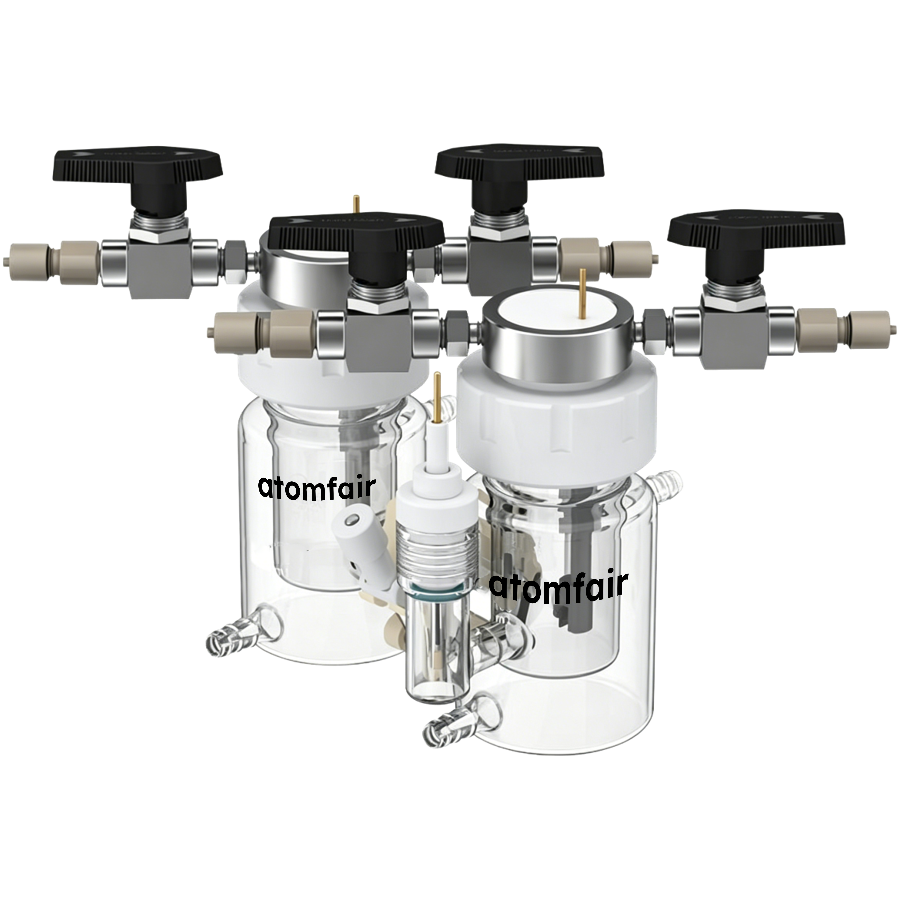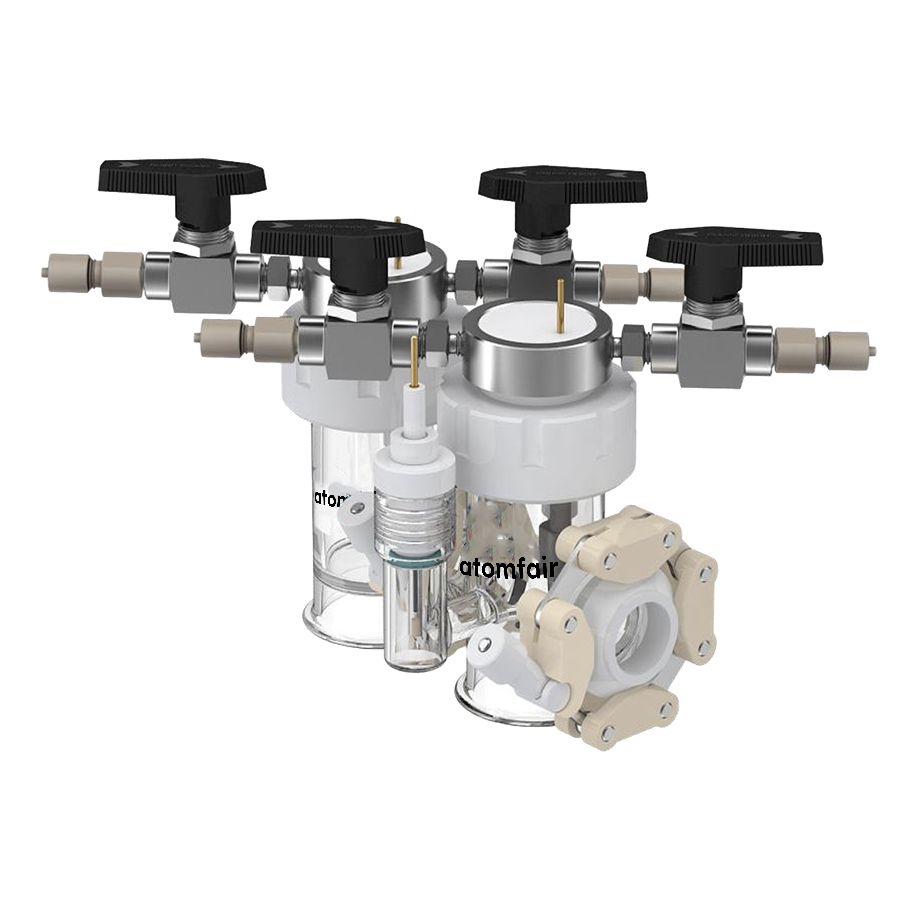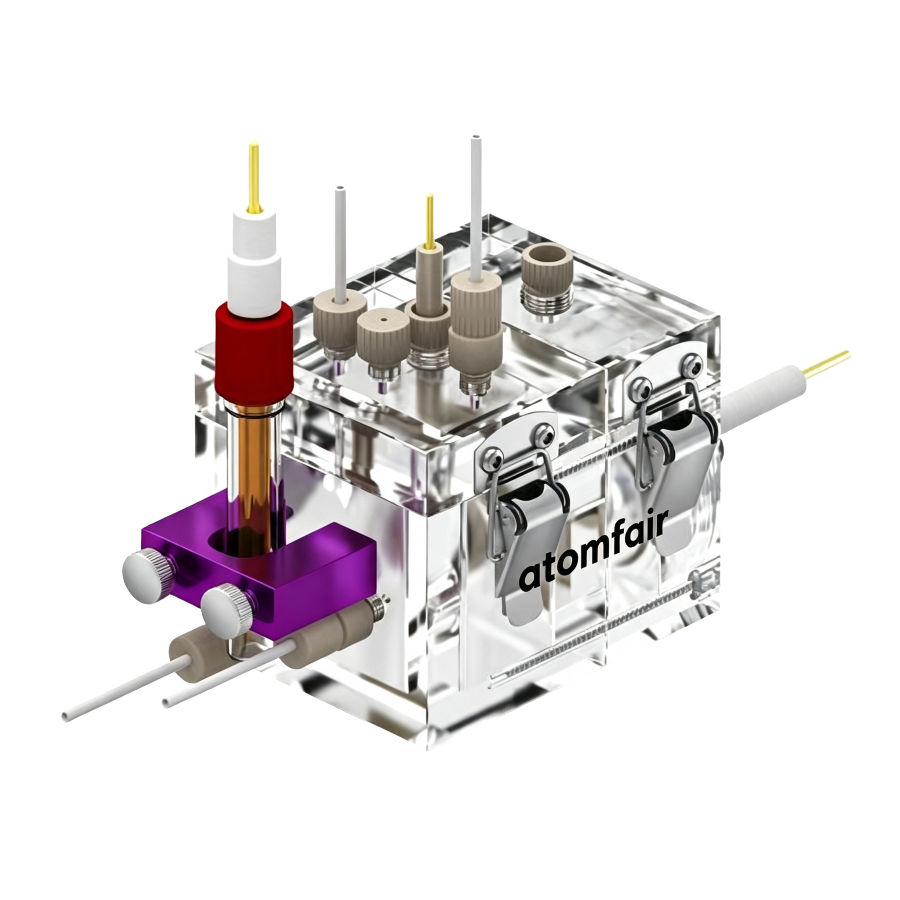
2H Electrolytic Cell – H-Type Flow Cell | ATOMFAIRProduct Type: Electrochemical cell
Research-grade laboratory product
|
|||||||||||||||||||||||
|
|||||||||||||||||||||||
|
LABORATORY PROCUREMENT SUPPORT
For model selection, accessory matching, platform compatibility or configuration confirmation, contact our technical sales team.
E-MAIL: inquiry@atomfair.com
|
|||||||||||||||||||||||
|
Manufacturer: Atomfair LLC
Brand: ATOMFAIR®
|
Manufacturer: Atomfair LLC
Brand: ATOMFAIR®
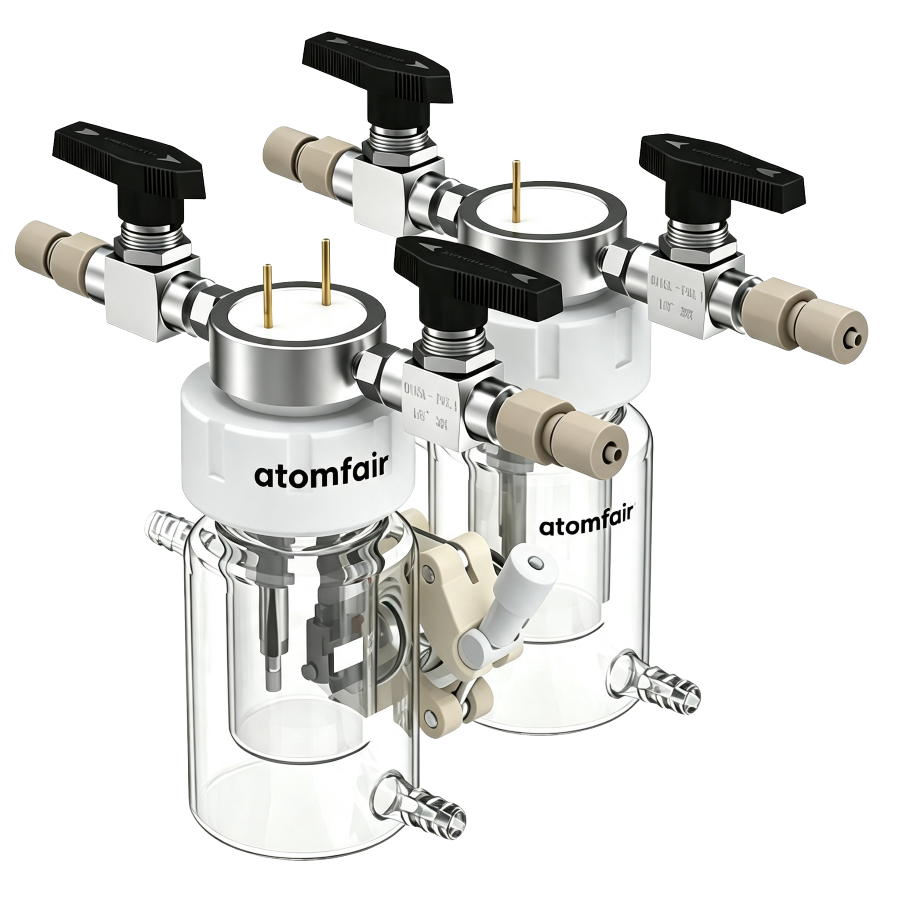
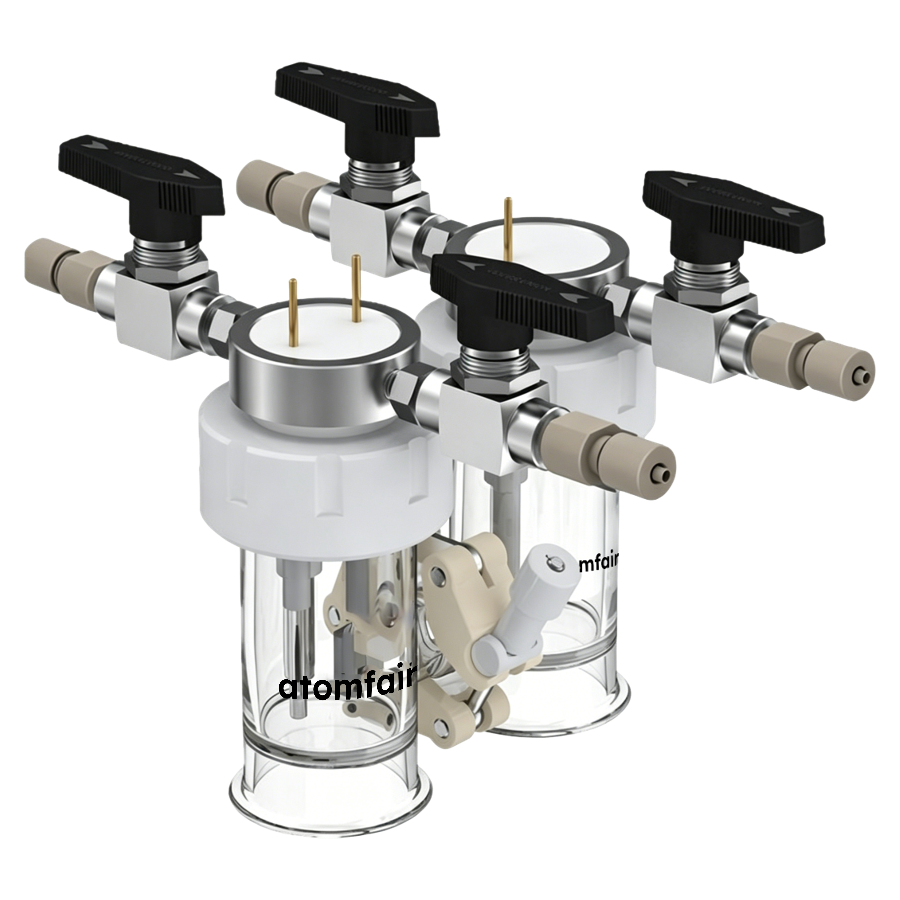
The cell requires fluororubber seal integrity verification before each flow operation to prevent electrolyte leakage. The salt bridge distance to the working electrode must be adjusted to approach zero for minimizing uncompensated resistance in high-current applications.
- Seal Integrity: Inspect fluororubber compression seals regularly for wear and replace if damaged to maintain leak-proof performance.
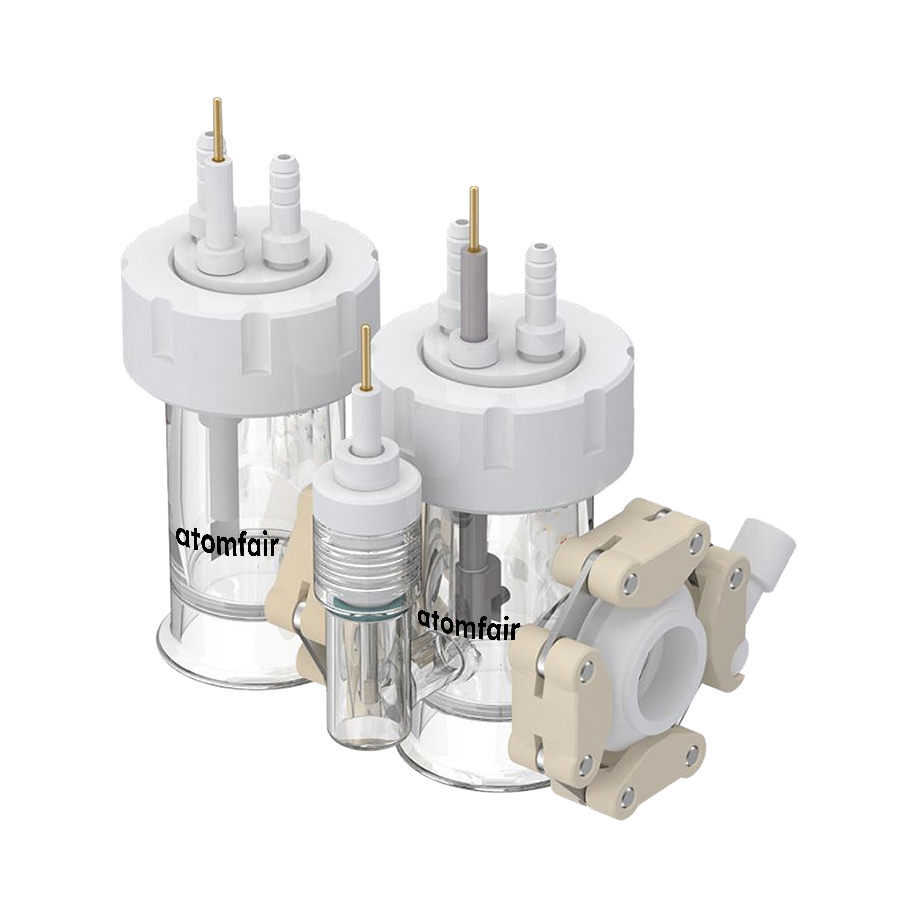
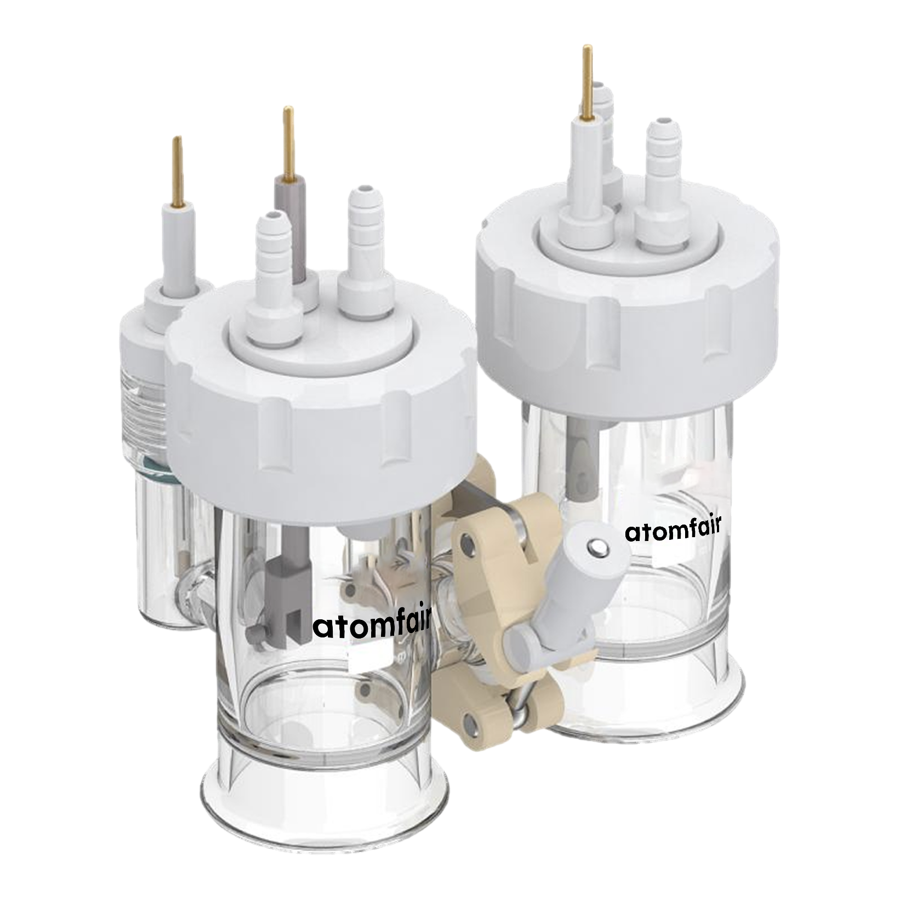
- Gas Management: Ensure the settled gas inlet delivers gas directly into solution and the quick-connect outlet is properly sealed to prevent gas escape.
- Electrode Compatibility: Only 6mm diameter rod-type working electrodes are compatible; verify electrode diameter before insertion.
- Flow Port Sealing: When electrolyte flow is not required, seal the cathode inlet and outlet ports with the provided spare screws to prevent contamination.
- Salt Bridge Adjustment: Adjust the L-type salt bridge laterally to approach zero distance from the working electrode and secure with the fixation device to prevent movement.
This procedure describes the assembly and preparation of the H-type flow cell for three-electrode electrochemical experiments. Follow these steps to ensure proper sealing, electrode placement, and gas management.
Required Equipment: Reference electrode (Ag/AgCl), Counter electrode (platinum mesh), Working electrode (6mm diameter rod), Gas supply tubing with quick-connect fittings
- Inspect seals
Inspect the fluororubber compression seals for integrity and replace any worn seals to ensure leak-proof operation. - Insert working electrode
Insert a 6mm diameter rod-type working electrode into the working electrode port and ensure a snug fit. - Install counter electrode
Install the platinum mesh counter electrode perpendicular to the electrode rod using the provided holder. - Insert salt bridge
Insert the L-type salt bridge laterally into the side port and adjust its distance to approach the working electrode surface. - Secure salt bridge
Secure the salt bridge with the fixation device to prevent shaking during experiments. - Connect gas lines
Connect the gas inlet tubing to the settled inlet port and the gas outlet tubing to the quick-connect outlet for efficient gas management. - Seal flow ports if needed
If flow operation is not required, seal the cathode inlet and outlet ports with the provided spare screws to prevent contamination.
How does the salt bridge design in the ATOMFAIR 2H Electrolytic Cell minimize uncompensated resistance for high-current electrochemical measurements?
The L-type salt bridge inserts laterally and can be adjusted to approach zero distance from the working electrode, drastically reducing uncompensated resistance and iR drop. A fixation device prevents shaking while preserving adjustability. This design is critical for maintaining accurate voltage control in high-current applications such as electrosynthesis or CO₂ reduction.
What are the specific requirements for integrating external electrolyte flow with this H-type flow cell?
The cathode chamber has dedicated inlet and outlet ports for electrolyte flow; when not used, they seal with spare screws. The cell uses fluororubber compression seals, which must be inspected before flow operation to ensure leak-proof performance. The working electrode accepts 6 mm diameter rod electrodes, and the counter electrode (platinum mesh, 99.99% Pt) is sold separately. Ag/AgCl reference electrode and glassy carbon electrode holder are also separate purchases.
How does the gas management system in the cathode lid ensure effective gas diffusion and leak-proof operation?
The gas inlet uses a settled design that delivers gas directly into the solution for enhanced diffusion, while the outlet employs quick-connect fittings for superior sealing. Both channels are integrated into the cathode lid. This system supports controlled‑atmosphere experiments (e.g., CO₂ reduction or corrosion studies) without compromising the semi‑sealed cell integrity.
The ATOMFAIR 2H Electrolytic Cell – H-Type Flow Cell provides ultra-low uncompensated resistance through its near-zero salt bridge distance to the working electrode, enabling high-current electrochemical experiments, but requires separate purchase of reference and counter electrodes and regular maintenance of fluororubber seals.
Positive
- Ultra-low uncompensated resistance: The salt bridge distance to the working electrode can approach zero, minimizing iR drop and enabling high-current applications with improved accuracy.
- Versatile flow cell and gas management: Dedicated cathode inlet/outlet ports allow electrolyte flow experiments, and the settled gas inlet delivers gas directly into solution for efficient diffusion; ports can be sealed for non-flow operation.
Trade-offs
- Separate electrode components required: The Ag/AgCl reference electrode, platinum mesh counter electrode, and glassy carbon electrode holder are sold separately, requiring additional procurement for full setup.
- Regular seal inspection necessary: Fluororubber compression seals must be inspected regularly and seal integrity verified before flow operation to maintain leak-proof performance.
Every advanced material, component, equipment, and instrument in our catalog is backed by rigorous testing. We maintain strict internal quality management frameworks and align with CE conformity metrics to deliver transparent, reproducible performance data via our public open-science repository.
To request raw batch performance data, submit formal vendor registration paperwork, or execute a fast-turnaround R&D manufacturing loop, contact us at inquiry@atomfair.com.
Item is dispatched under the Atomfair Shipping & Delivery Framework (Free worldwide shipping on orders over $59 USD excl. heavy equipment). Return is governed by the Atomfair Return & Refund Policy (7-day technical return window).