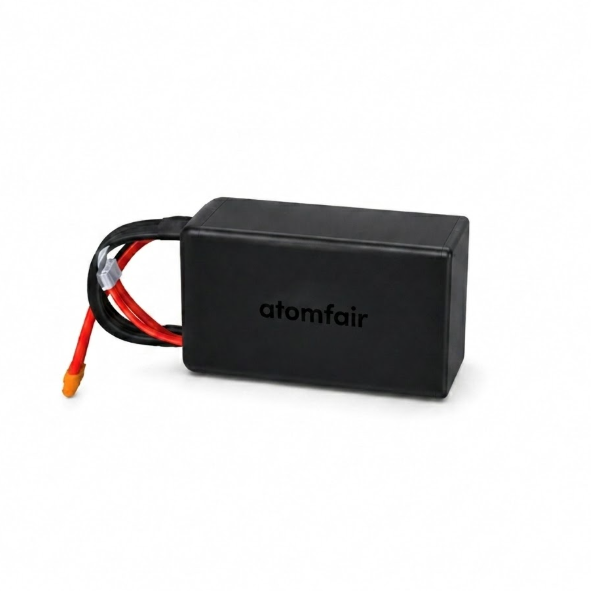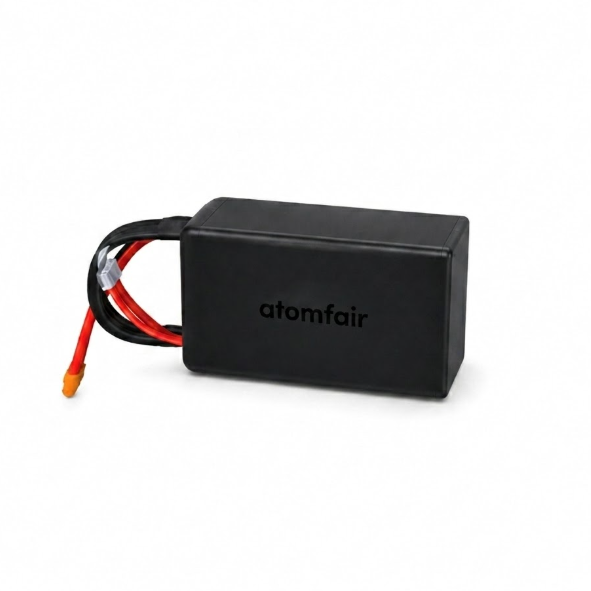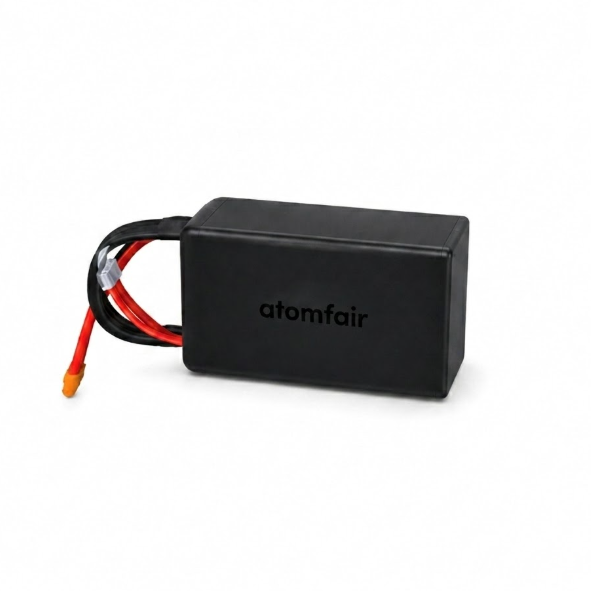
Electric Bicycle Semi-Solid Battery | ATOMFAIRCOMMERCIAL GRADE · PRODUCTION
|
|||||||||||||||||||||||||||||||
|
|||||||||||||||||||||||||||||||
|
TAILORED SOLUTIONS FOR RESEARCH
Contact our engineering team for technical support or official institutional quotations.
EMAIL: inquiry@atomfair.com
|
|||||||||||||||||||||||||||||||
|
Manufacturer: Atomfair LLC
Brand: ATOMFAIR®
|
The battery must be operated within its specified temperature ranges to prevent thermal runaway or capacity degradation. Charging requires a compatible BMS with over-discharge, over-current, and cell balancing protection.
- Temperature Limits: Discharge operation is limited to -20°C to 65°C and charging to -10°C to 55°C to avoid electrolyte instability or damage.
- Preconditioning Requirement: New batteries must be preconditioned at room temperature before the first full charge cycle to stabilize the semi-solid electrolyte interface.
- Discharge Cut-off Protection: The BMS must enforce a discharge cut-off voltage of 36.4 V to prevent deep discharge and irreversible cell damage.
- Current Limitation: Continuous discharge current must not exceed 35 A to avoid overheating and internal resistance rise beyond the 9 mΩ specification.
Follow these steps to safely prepare the battery for first use and integrate it into an electric bicycle. Always use a compatible BMS and observe the specified voltage and temperature limits.
Required Equipment: Compatible battery management system (BMS) with over-discharge, over-current, and cell balancing, Charger capable of supplying the recommended voltage range
- Inspect the battery
Inspect the battery package for physical damage, deformation, or leakage before unpacking and handling. - Connect the BMS
Connect a compatible BMS with over-discharge, over-current, and cell balancing protection to the battery terminals. - Precondition at room temperature
Charge the battery within the recommended voltage range at room temperature (20–25°C) for the first full cycle to precondition the electrolyte. - Set discharge cut-off voltage
Verify the BMS discharge cut-off voltage is set to 36.4 V to prevent deep discharge and extend cycle life.
How does the 35A maximum continuous discharge (1C) affect hill-climbing performance and battery life on long commutes?
The 35A maximum continuous discharge (1C rate) supports consistent hill-climbing and acceleration. With 35Ah capacity and ≤9 mΩ internal resistance, the battery delivers high power output. The cycle life is ≥1000 cycles to 70% SOH under standard conditions; sustained operation at the 1C discharge rate may reduce cycle life but remains within specified limits.
Can this 48V 35Ah semi-solid battery be integrated with existing e-bike controllers and BMS systems?
Yes, but integration requires a compatible BMS with over-discharge, over-current, and cell balancing. The battery uses a 13S1P configuration with nominal voltage of 48V and discharge cut-off at 36.4V. The controller must accept 48V input and handle up to 35A continuous current. The battery is intended for electric bicycles, e-scooters, and light electric vehicles.
What are the specific temperature constraints for charging and discharging this semi-solid battery in cold climates?
The charge temperature range is -10°C to +55°C, and discharge range is -20°C to +65°C. Avoid prolonged exposure above 65°C. For initial use, pre-condition new batteries at room temperature before the first full cycle. The semi-solid electrolyte enhances thermal stability and leak-proof construction, improving safety in cold-weather operation.
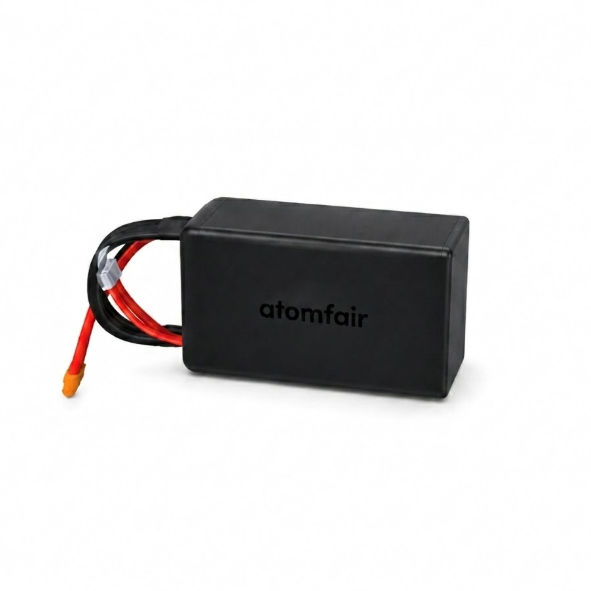
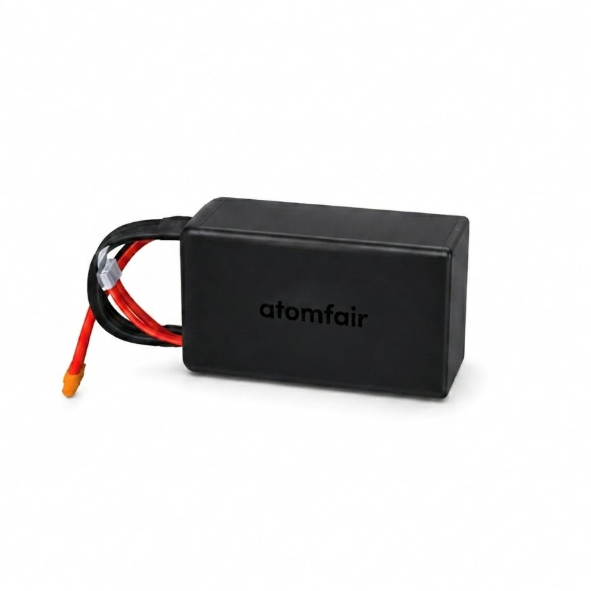
The ATOMFAIR Rock Solid Series 48V 35Ah semi-solid state battery for electric bicycles offers enhanced safety through leak-proof semi-solid electrolyte and wide -20°C to +65°C discharge capability, but requires a compatible external BMS and careful temperature management during charging due to a narrower -10°C to +55°C charge temperature range.
Positive
- Semi-Solid Electrolyte Safety: Enhanced thermal stability and leak-proof construction provide superior safety over conventional liquid cells, validated by nail penetration and overcharge test passes.
- Wide Operating Temperature Range: Discharge from -20°C to +65°C enables reliable all-season e-bike operation, suitable for cold climates and hot environments.
Trade-offs
- Narrower Charge Temperature Range: Charging is limited to -10°C to +55°C, narrower than the discharge range, requiring temperature-controlled charging infrastructure to avoid operating outside specifications.
- Requires External BMS: Proper operation mandates a compatible battery management system with over-discharge, over-current, and cell balancing protection, adding integration complexity.
Every advanced material, component, equipment, and instrument in our catalog is backed by rigorous testing. We maintain strict internal quality management frameworks and align with CE conformity metrics to deliver transparent, reproducible performance data via our public open-science repository.
To request raw batch performance data, submit formal vendor registration paperwork, or execute a fast-turnaround R&D manufacturing loop, contact us at inquiry@atomfair.com.
Item is dispatched under the Atomfair Shipping & Delivery Framework (Free worldwide shipping on orders over $59 USD excl. heavy equipment). Return is governed by the Atomfair Return & Refund Policy (7-day technical return window).