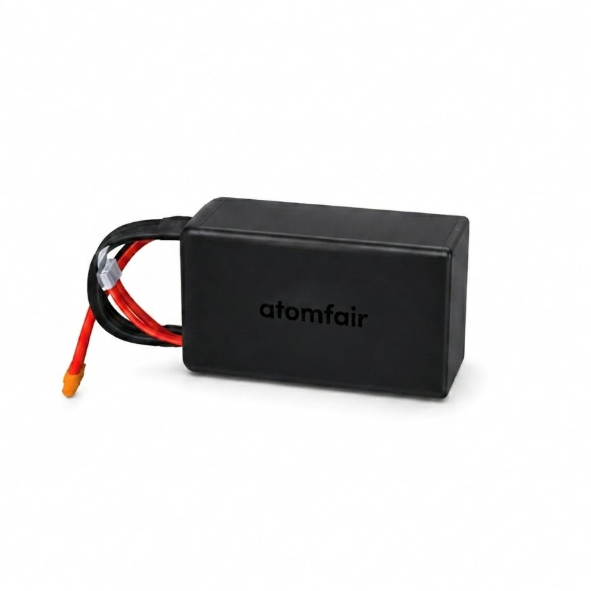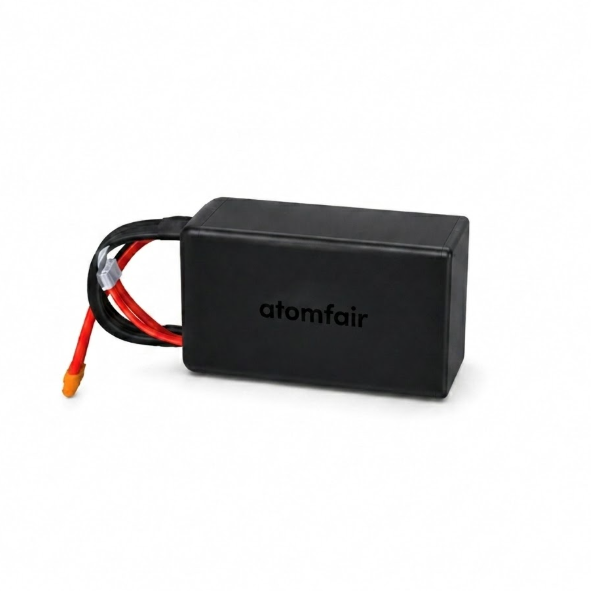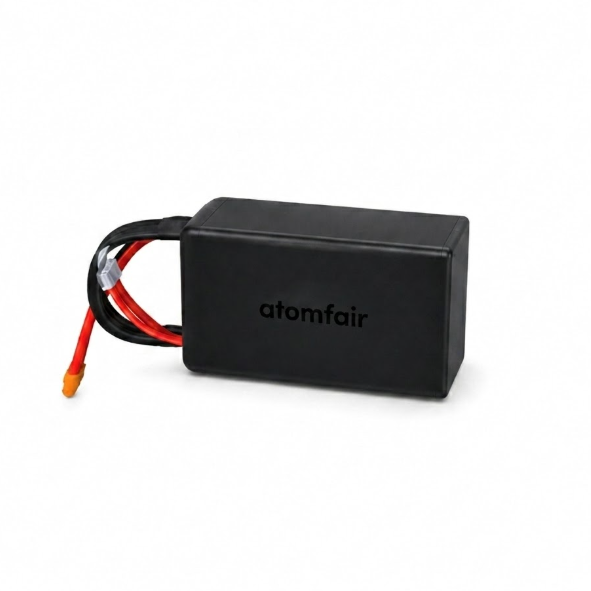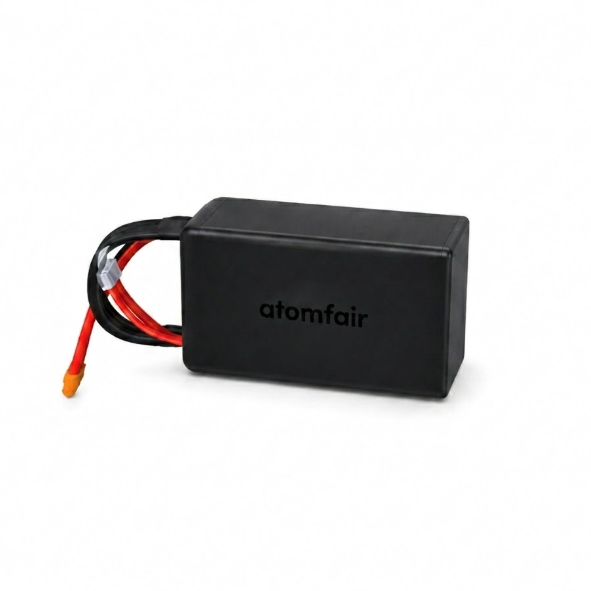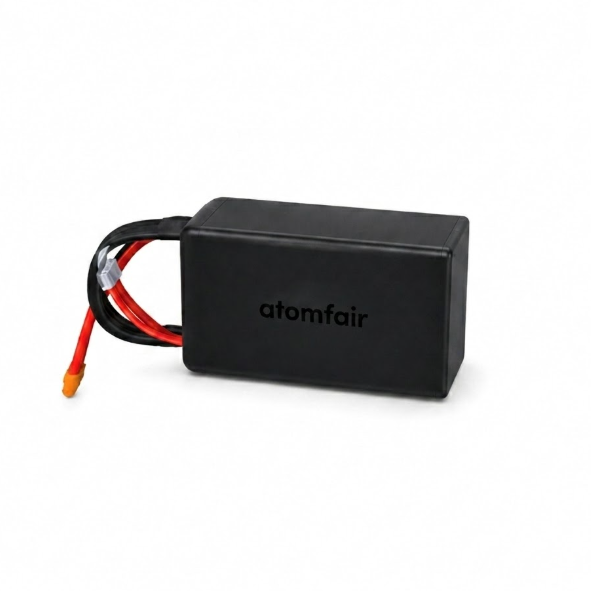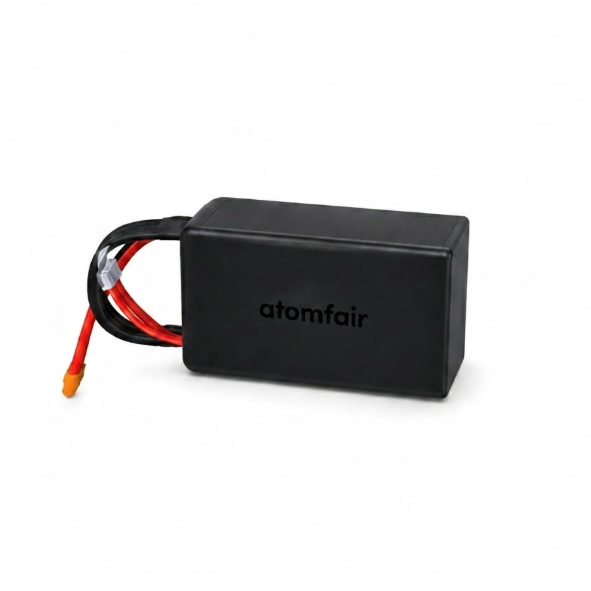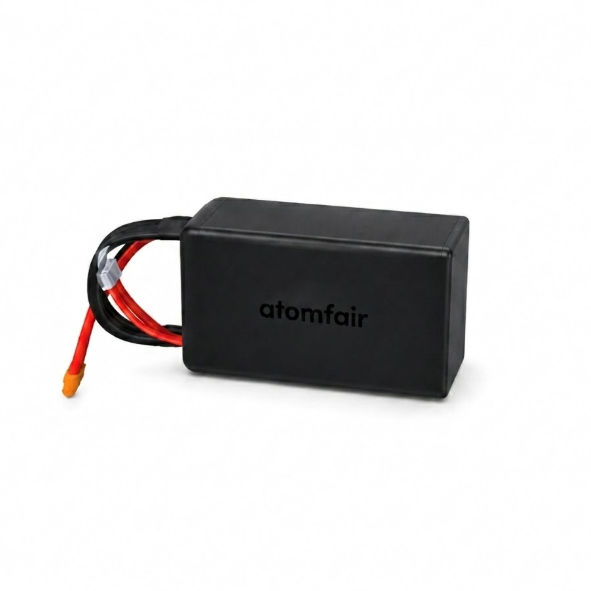
3.95V Semi-Solid Battery 240Wh/kg 17Ah Series | ATOMFAIRCOMMERCIAL GRADE · PRODUCTION
|
||||||||||||||||||||||||||||||||||||||||||||||||||||||||||||||
|
||||||||||||||||||||||||||||||||||||||||||||||||||||||||||||||
|
TAILORED SOLUTIONS FOR RESEARCH
Contact our engineering team for technical support or official institutional quotations.
EMAIL: inquiry@atomfair.com
|
||||||||||||||||||||||||||||||||||||||||||||||||||||||||||||||
|
Manufacturer: Atomfair LLC
Brand: ATOMFAIR®
|
Store cells in moisture-barrier vacuum-sealed packaging to prevent electrolyte degradation. Maintain cells within the recommended temperature range and avoid exposure to excessive heat to ensure thermal stability.
- Storage: Cells must be stored in moisture-barrier vacuum-sealed aluminum foil bags to prevent moisture ingress and electrolyte degradation.
- Temperature: Avoid exposing cells to excessive temperatures for extended periods to prevent thermal runaway and capacity loss.
- BMS Requirement: Always use a compatible battery management system with over-discharge, over-current, and cell balancing protection.
- Voltage Range: Charge the battery only within the manufacturer’s recommended voltage range to avoid overvoltage damage.
- Peak Discharge: Do not exceed the rated peak discharge duration (10C) to prevent internal overheating and cell failure.
Pre-condition new cells at a suitable temperature before first use to stabilize the electrolyte. Always connect a compatible BMS with full protection features before charging or discharging.
Required Equipment: Compatible battery management system (BMS) with over-discharge, over-current, and cell balancing protection
- Pre-condition cells
Pre-condition new cells at a suitable temperature before first use to stabilize the electrolyte. - Connect BMS
Connect a compatible BMS with over-discharge, over-current, and cell balancing protection to the battery. - Charge within voltage range
Charge the battery within the manufacturer’s recommended voltage range using a suitable charger. - Avoid excessive temperature
Avoid exposing the battery to excessive temperatures during operation to maintain thermal stability. - Limit peak discharge
Do not exceed the rated peak discharge duration of 10C to prevent internal overheating. - Dispose properly
Dispose of cells in accordance with local regulations at end of life.
How does the energy density vary across the 6S, 8S, 12S, and 18S configurations of the ATOMFAIR 3.95V semi-solid battery series?
Energy density increases with series cell count: 235 Wh/kg for the 6S, 240 Wh/kg for the 8S, 245 Wh/kg for the 12S, and 250 Wh/kg for the 18S model. All configurations share the same 17Ah nominal capacity and 3.95V nominal cell voltage, with the higher energy density in larger packs resulting from reduced relative packaging and interconnect weight.
What are the key differences in dimensions and voltage between the AF3951706S, AF3951708S, AF3951712S, and AF3951718S models, and how do I choose the right one for my application?
The models differ in series cell count, yielding cell voltages of 23.7V (6S), 31.6V (8S), 47.4V (12S), and 71.1V (18S). Dimensions scale proportionally: 61.5×74×185 mm (6S) to 174×74×185 mm (18S), with weight from 1700 g to 4800 g. Select based on your system's voltage requirements and available space, ensuring the BMS supports the pack voltage. All models maintain the same 17Ah capacity and 3.95V nominal cell voltage.
What safety precautions and infrastructure are required when using these semi-solid electrolyte pouch cells?
A compatible BMS with over-discharge, over-current, and cell balancing protection is mandatory. Charge within the manufacturer's recommended voltage range and avoid extended exposure to excessive temperatures. Pre-condition new cells at a suitable temperature before first use. Do not exceed the rated 10C peak discharge duration. The semi-solid electrolyte reduces leakage risk and improves thermal stability compared to liquid electrolytes.
The ATOMFAIR 3.95V Semi-Solid Battery 240Wh/kg 17Ah Series offers high energy density (235-250 Wh/kg) and high rate capability (2C charge, 5C continuous, 10C peak discharge) in configurable 6S-18S pouch cells, enabling lightweight, power-dense designs for UAVs and robotics, but requires a compatible BMS and strict thermal management for safe operation.
Positive
- High energy density for lightweight design: Energy density of 240 Wh/kg (range 235-250 Wh/kg across configurations) enables extended runtime in compact form factors, ideal for UAVs and portable devices.
- High rate charge and discharge capability: Supports 2C fast charge, 5C continuous discharge, and 10C peak discharge, providing reliable power delivery for demanding applications like drones and robotics.
Trade-offs
- Requires external BMS for safe operation: A compatible battery management system with over-discharge, over-current, and cell balancing protection is mandatory to prevent damage and ensure safe cycling.
- Sensitive to temperature and voltage limits: Cells must be charged within the recommended voltage range, preconditioned at suitable temperature, and protected from prolonged exposure to excessive heat to avoid performance degradation.
Every advanced material, component, equipment, and instrument in our catalog is backed by rigorous testing. We maintain strict internal quality management frameworks and align with CE conformity metrics to deliver transparent, reproducible performance data via our public open-science repository.
To request raw batch performance data, submit formal vendor registration paperwork, or execute a fast-turnaround R&D manufacturing loop, contact us at inquiry@atomfair.com.
Item is dispatched under the Atomfair Shipping & Delivery Framework (Free worldwide shipping on orders over $59 USD excl. heavy equipment). Return is governed by the Atomfair Return & Refund Policy (7-day technical return window).