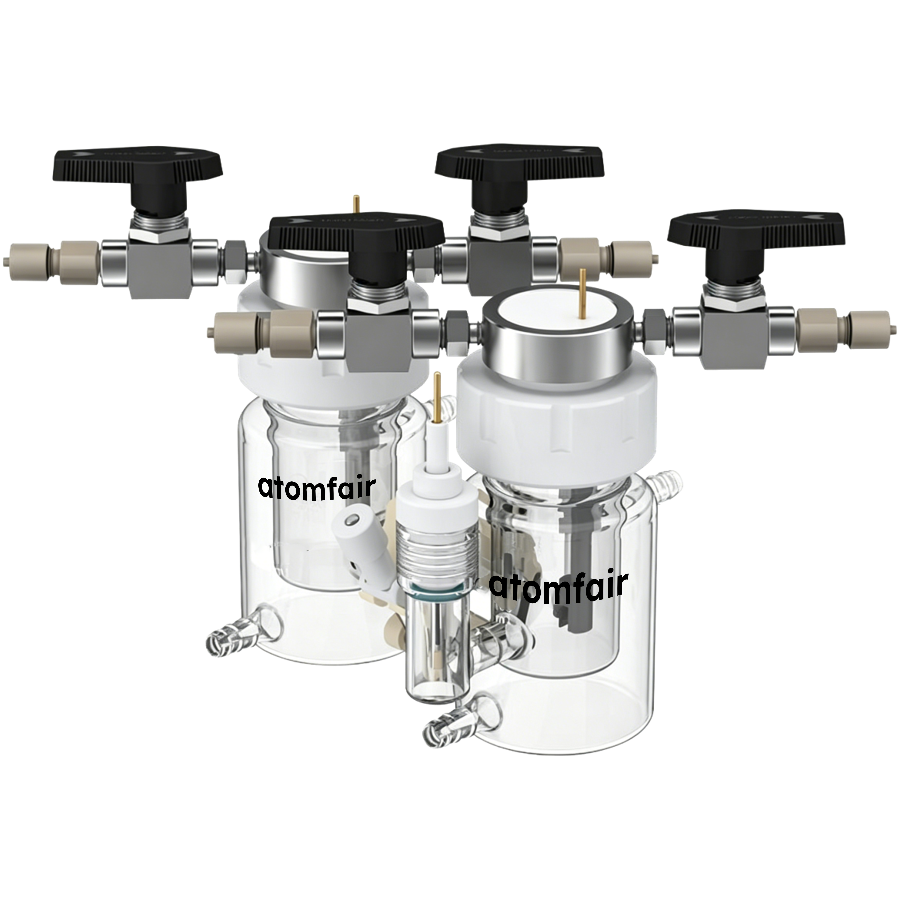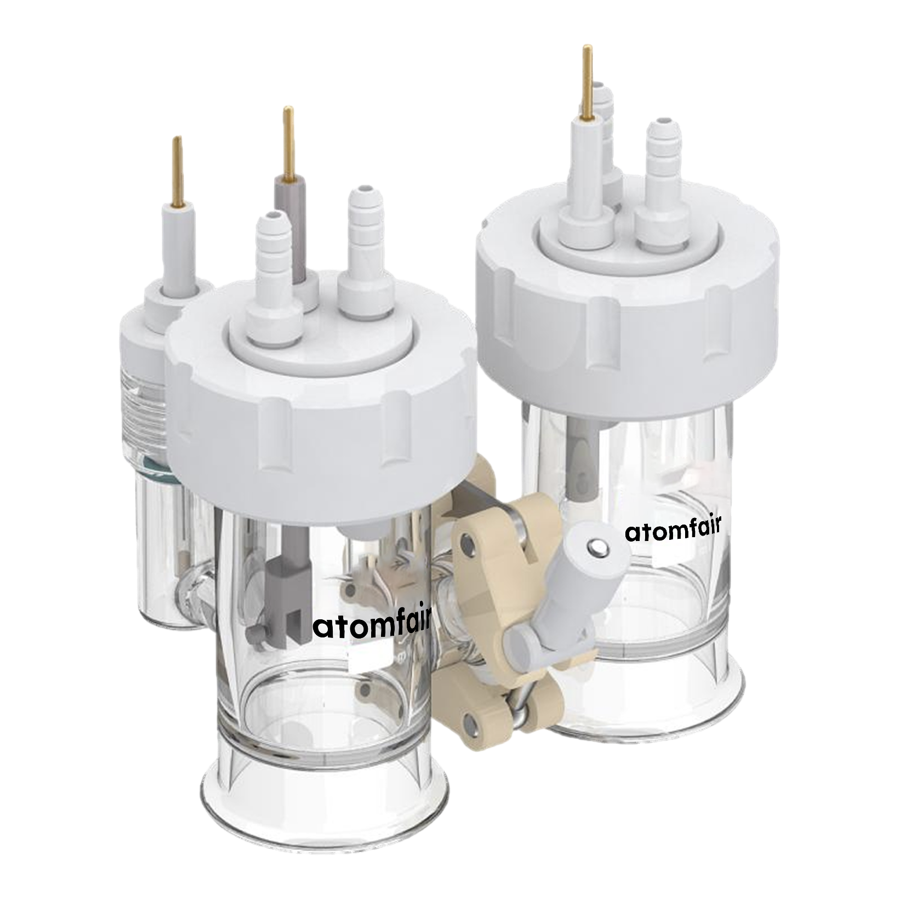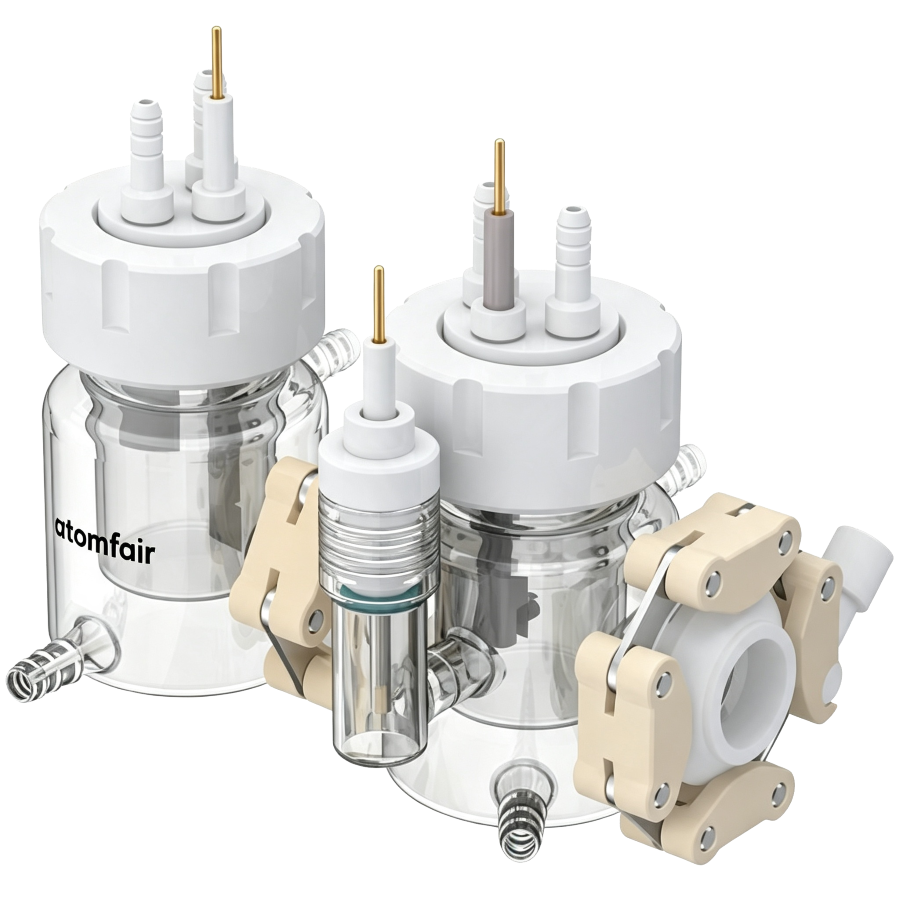
3H Single-Window Replaceable-Membrane Photoelectrochemical Cell, Relative Sealing, Double-Layer | ATOMFAIRProduct Type: Electrochemical cell
Research-grade laboratory product
|
|||||||||||||||||||||||||||||||||||
|
|||||||||||||||||||||||||||||||||||
|
LABORATORY PROCUREMENT SUPPORT
For model selection, accessory matching, platform compatibility or configuration confirmation, contact our technical sales team.
E-MAIL: inquiry@atomfair.com
|
|||||||||||||||||||||||||||||||||||
|
Manufacturer: Atomfair LLC
Brand: ATOMFAIR®
|
Manufacturer: Atomfair LLC
Brand: ATOMFAIR®
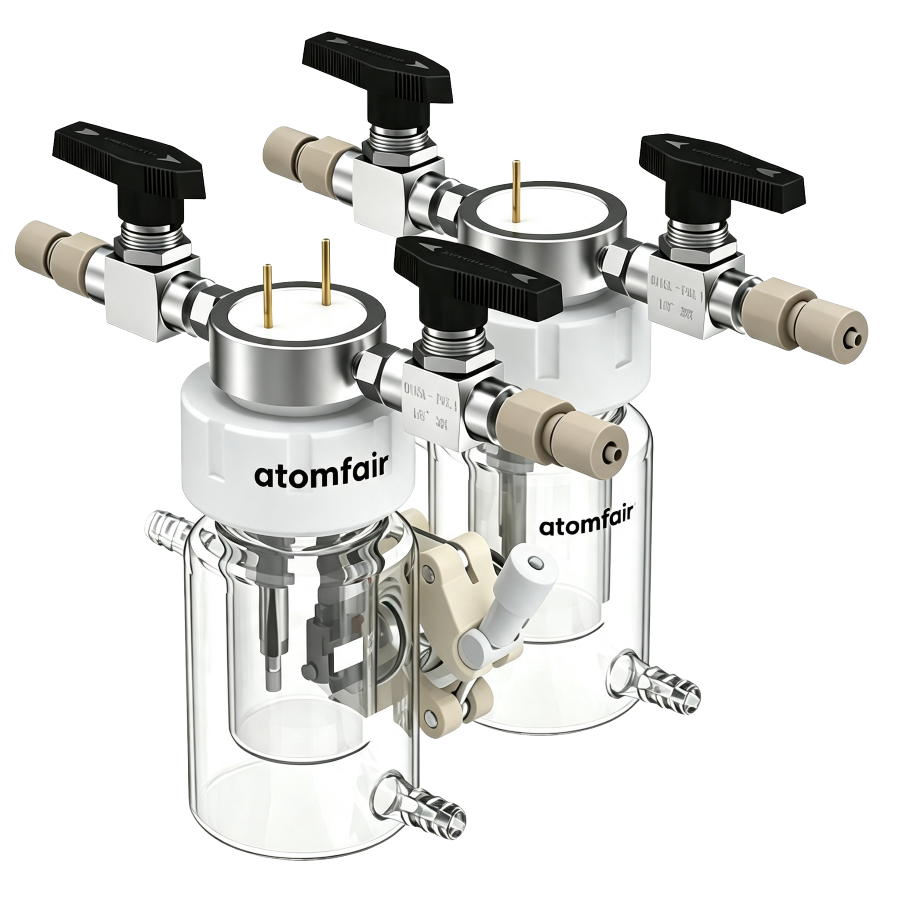
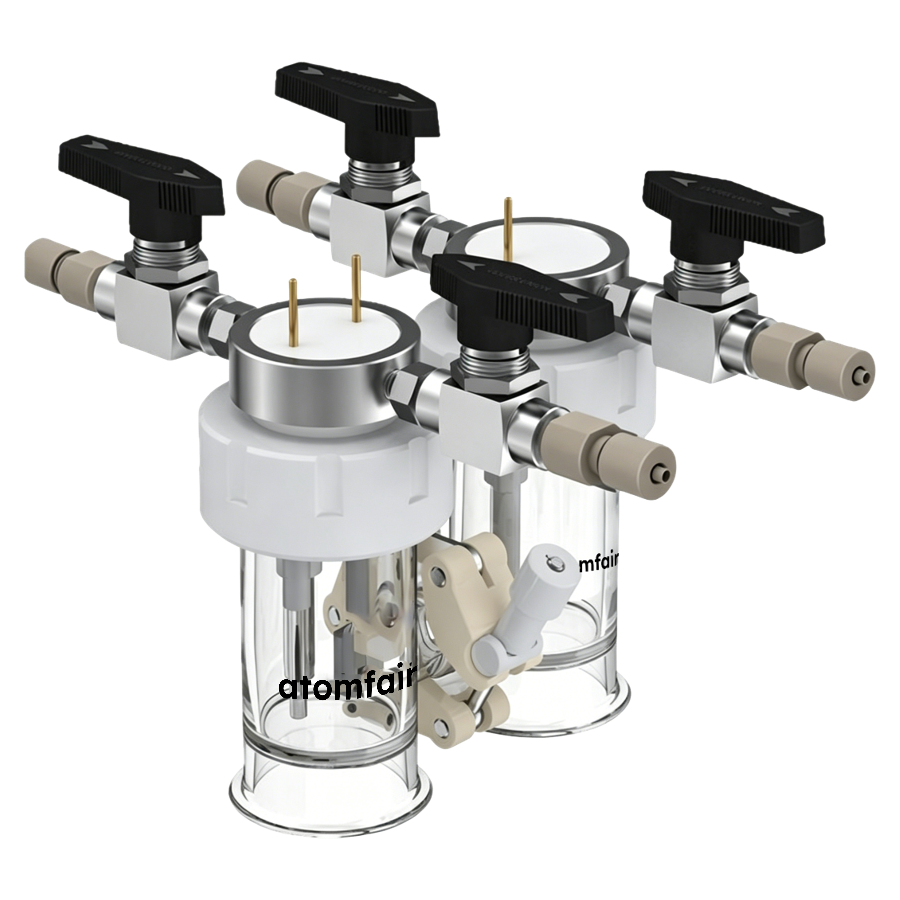
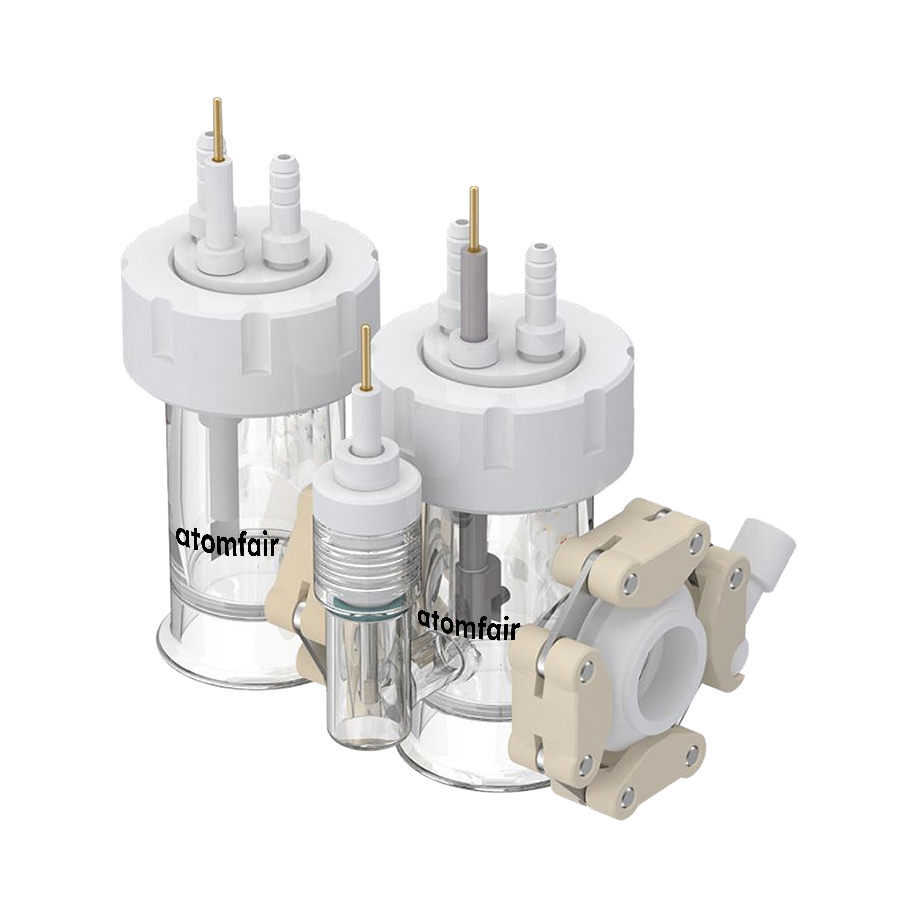
This cell requires a user-supplied ion-exchange membrane and extended-length electrodes for operation. The Luggin capillary tip aperture is less than 0.2 mm and may be filled with agar to reduce electrolyte flow rate.
- Luggin capillary and reference sealing: The reference electrode chamber uses internal threaded sealing to prevent siphon-effect leakage when properly sealed.
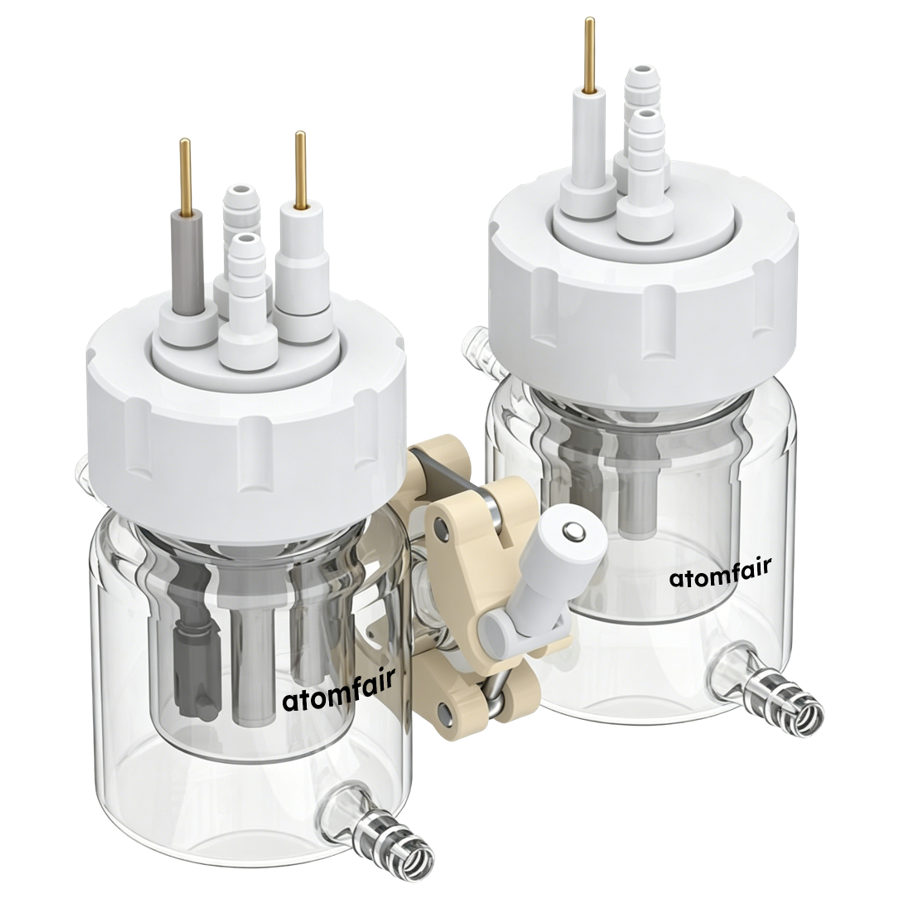
- Membrane compatibility and replacement: The cathode and anode chambers are separated by a user-supplied ion-exchange membrane with chain-sealed connections for easy replacement.
- Quartz window handling: The quartz window (>95% transmittance) is fragile and must be handled with care to avoid breakage.
- Water jacket thermal regulation: The double-layer design includes a water bath jacket that must be checked for leaks before operation to ensure precise thermal regulation.
- Electrode alignment and PTFE core: The 360° rotatable PTFE core enables precise electrode alignment, typically parallel to the membrane.
This procedure covers the assembly and pre-operation checks for the photoelectrochemical cell. All steps assume the user has the required extended-length electrodes and a compatible ion-exchange membrane.
Required Equipment: Luggin capillary, Rotatable PTFE core, Sub-surface sparger, Water bath jacket
- Inspect seals
Inspect all seals on the cell chambers and connections for damage or debris before assembly. - Verify membrane compatibility
Verify that the user-supplied ion-exchange membrane is chemically compatible with the intended electrolyte and experimental conditions. - Insert membrane and seal chambers
Insert the ion-exchange membrane between the cathode and anode chambers and secure the chain-sealed connections to prevent leakage. - Fill reference chamber with agar
Fill the reference electrode chamber with agar to reduce electrolyte flow rate through the Luggin capillary tip. - Align electrodes
Align the working electrode parallel to the membrane using the 360° rotatable PTFE core for optimal positioning. - Connect water jacket and check for leaks
Connect the water bath jacket to a thermal regulator and check for leaks before filling with electrolyte. - Purge electrolyte with inert gas
Purge the electrolyte with inert gas using the sub-surface sparger to remove dissolved oxygen before starting the experiment.
How does the Luggin capillary with <0.2mm tip aperture minimize iR drop in this photoelectrochemical cell, and what are the practical challenges of filling it with agar?
The Luggin capillary's tip aperture of less than 0.2mm places the reference electrode very close to the working electrode, minimizing the uncompensated solution resistance (iR drop) during electrochemical measurements. However, filling the capillary with agar to reduce electrolyte flow rate can introduce variability in ionic conductivity and may require careful preparation to avoid clogging, as stated in the product description. This design trade-off enables high-precision potential control at the expense of additional maintenance.
What electrode and membrane specifications are required to ensure compatibility with the ATOMFAIR 3H single-window photoelectrochemical cell?
The cell requires extended-length electrodes because the working and counter electrodes must be positioned parallel to the user-supplied ion-exchange membrane via the 360° rotatable PTFE core. The membrane is not included and must be compatible with chain-sealed connections for easy replacement. The reference electrode chamber uses internal threaded sealing and is connected via a Luggin capillary with a tip aperture <0.2mm, so standard electrode lengths may not reach the immersed region.
What critical operational precautions should be taken with the double-layer water jacket and reference chamber sealing to avoid cell failure?
Before operation, check the double-layer water jacket for leaks to ensure safe thermal regulation via the integrated bath. The reference electrode chamber must be properly sealed with internal threading to prevent electrolyte leakage caused by the siphon effect. Additionally, the quartz window (>95% transmittance) should be handled carefully, and all seals inspected before assembly, as noted in the product's important notices. These steps prevent contamination, thermal shock, or loss of electrochemical integrity.
The ATOMFAIR Double-Layer Relative Sealing 3H Single-Window Replaceable-Membrane Photoelectrochemical Cell offers a Luggin capillary with <0.2mm tip aperture to minimize iR drop and a 360° rotatable PTFE core for precise electrode alignment, but requires user-supplied extended-length electrodes and an ion-exchange membrane, adding to setup complexity.
Positive
- Luggin capillary minimizes iR drop: The reference electrode is separated from the working electrode and connected via a Luggin capillary with a tip aperture of less than 0.2mm, reducing uncompensated resistance and improving measurement accuracy.
- 360° rotatable PTFE core for alignment: The PTFE core allows precise electrode alignment, typically parallel to the membrane, enabling reproducible positioning in three-electrode photoelectrochemical experiments.
Trade-offs
- Requires extended-length electrodes: The cell design necessitates extended-length electrodes, which are not included and must be sourced separately, adding to procurement complexity.
- Membrane not included; compatibility required: The ion-exchange membrane is user-supplied, and its compatibility must be verified before use, introducing an additional qualification step and potential for experimental variability.
Every advanced material, component, equipment, and instrument in our catalog is backed by rigorous testing. We maintain strict internal quality management frameworks and align with CE conformity metrics to deliver transparent, reproducible performance data via our public open-science repository.
To request raw batch performance data, submit formal vendor registration paperwork, or execute a fast-turnaround R&D manufacturing loop, contact us at inquiry@atomfair.com.
Item is dispatched under the Atomfair Shipping & Delivery Framework (Free worldwide shipping on orders over $59 USD excl. heavy equipment). Return is governed by the Atomfair Return & Refund Policy (7-day technical return window).