
Oxide Evaporation Materials
Oxide evaporation materials are used in vacuum thin-film deposition for optical, electronic, dielectric, functional ceramic, sensing, and surface-engineering applications. This material class includes single metal oxides, rare-earth oxides, complex oxides, and transparent conductive oxides, allowing selection according to the required refractive index, transmission, electrical behavior, dielectric performance, thermal resistance, and chemical stability of the finished film.
Materials may be supplied as powders, granules, pieces, pellets, or tablets for electron-beam evaporation and other vacuum-deposition routes subject to process confirmation. Because evaporation behavior, film composition, and process windows vary by oxide system, material selection should consider the target film, evaporation source configuration, substrate, and required film properties together.
Explore Oxide Evaporation Materials
Select by Material System
| Material Type | Common Material Range | Typical Film Requirements |
|---|---|---|
| Optical and Dielectric Oxides | SiO, SiO2, Al2O3, TiO2, ZrO2, HfO2, Ta2O5, Nb2O5 | Anti-reflection coatings, reflective coatings, optical filters, dielectric layers, protective films, and optical multilayers |
| Transparent and Semiconducting Oxides | ZnO, SnO2, In2O3, ITO, AZO, GZO | Transparent conductive films, optoelectronic devices, sensors, displays, and energy-device research |
| Transition-Metal Oxides | NiO, Cr2O3, MoO3, WO3, V2O5, CuO | Functional electronic layers, electrochromic films, catalytic coatings, sensors, and interface control |
| Rare-Earth Oxides | Y2O3, La2O3, CeO2, Sm2O3, Pr oxides, Tb oxides, Sc2O3 | High-k layers, optical functional films, magneto-optical materials, laser applications, and specialty ceramic research |
| Complex and Perovskite Oxides | MgAl2O4, SrTiO3, BaTiO3, zirconium silicate, and other complex oxides | Functional ceramics, ferroelectric and dielectric films, epitaxial studies, and advanced interface research |
| Precious-Metal and Specialty Oxides | PdO, Pt oxides, and other specialty oxides | Catalysis, sensing, electrode layers, and specialized research applications |
Select by Target Film Performance
| Primary Film Requirement | Oxide Material Directions to Consider |
|---|---|
| High transmission and optical control | Silicon oxides, aluminum oxide, titanium oxide, zirconium oxide, tantalum oxide, and rare-earth oxides |
| Transparent conductivity or semiconducting behavior | Zinc oxide, tin oxide, indium oxide, and doped transparent conductive oxides |
| High dielectric constant and insulation | Aluminum oxide, hafnium oxide, zirconium oxide, tantalum oxide, niobium oxide, and selected rare-earth oxides |
| Functional response and interface control | Nickel oxide, tungsten oxide, molybdenum oxide, vanadium oxide, and other transition-metal oxides |
| High-temperature, wear, and chemical stability | Aluminum oxide, zirconium oxide, spinel, rare-earth oxides, and complex oxides |
| Ferroelectric, piezoelectric, or complex functional films | Titanates, perovskite oxides, and other complex oxide materials |
Select by Supply Form
| Supply Form | Selection Considerations |
|---|---|
| Powder | Suitable where flexible loading quantity, particle size, or formulation options are important for research and process development. |
| Granules or Pieces | Convenient for source loading and suitable for processes requiring a more stable loading arrangement. |
| Pellets | Suitable for regular loading in compatible source configurations and repeatable deposition workflows. |
| Tablets | Suitable for fixed source pockets or processes with defined loading geometry requirements. |
| Custom Form | Can be reviewed according to source dimensions, loading method, required quantity, and process requirements. |
Key Information for Material Selection
- Required material name, chemical formula, and target film function
- Purity level and relevant impurity-control requirements
- Preferred form: powder, granules, pieces, pellets, or tablets
- Particle-size range or physical dimensions where applicable
- Deposition method and existing evaporation source configuration
- Crucible, liner, hearth, or contact-material compatibility
- Substrate type, target thickness, and post-treatment conditions
- Required package size, documentation, and project quantity
Process Considerations
The deposition behavior of oxide materials depends on the evaporation source, vacuum conditions, deposition rate, substrate temperature, and reactive atmosphere. Projects that require controlled film stoichiometry, optical constants, resistivity, or interface quality should confirm the material and process route together before purchase.
Electron-beam evaporation is suitable for many oxide thin-film applications, but source hardware, loading form, and process conditions should be assessed for each material. For complex oxides, moisture-sensitive materials, or applications requiring careful composition control, provide process details when requesting technical support.
Frequently Asked Questions
What types of films can oxide evaporation materials be used for?
They can be used for optical coatings, dielectric layers, transparent conductive films, functional electronic layers, sensing films, protective films, ceramic thin films, and a wide range of research-oriented functional coatings. The appropriate material depends on the required film performance.
How should I choose oxide purity?
Purity should match the sensitivity of the target film and application. Optical, electronic, and high-performance device research may require tighter impurity control, while other projects can balance purity requirements with the intended performance and budget.
What is the difference between powders, pieces, and pellets?
The main difference is source loading and in-source behavior. Powders offer flexible loading, pieces or granules can simplify source charging, and pellets are suitable for more regular loading in compatible source configurations. The best choice depends on the evaporation source in use.
Are all oxide materials suitable for electron-beam evaporation?
Many oxide materials can be used in electron-beam evaporation, but individual materials may require different liners, beam control, deposition rates, or oxygen conditions. Confirm compatibility according to the specific material and target film.
How should I select an oxide material for optical coatings?
Consider the required wavelength range, refractive index, transmission, film-stack design, substrate, and environmental stability. High-index, low-index, and dielectric-layer requirements may lead to different oxide material choices.
What should I consider for transparent conductive films?
In addition to the material system, consider film transmission, resistivity, deposition conditions, post-treatment requirements, and substrate temperature tolerance. Composition control is particularly important for doped oxide materials.
Can purity, particle size, form, or packaging be customized?
Custom requirements can be reviewed by providing the material name, chemical formula, target purity, required form, size range, quantity, and intended evaporation application.
What information should I provide when requesting a quotation?
Please provide the target material, purity, supply form, quantity, evaporation method, existing source or crucible and liner configuration, and the intended film application.
Showing 145–160 of 216 results
-
Praseodymium Oxide Pr2O3 Powder 99.99% 8-110 nm ATOMFAIR®
Price range: $550.00 through $4,200.00 -
Praseodymium Oxide Pr2O3 Powder 99.99%, 13-57 nm ATOMFAIR®
Price range: $550.00 through $4,200.00 -
Radium Oxide ReO3 Evaporation Pieces 99.99% ATOMFAIR®
Price range: $280.00 through $850.00 -
Samarium Oxide Sm2O3 Powder 99.955% 13-47 nm ATOMFAIR®
Price range: $550.00 through $5,200.00 -
Samarium Oxide Sm2O3 Powder 99.955% 325 Mesh ATOMFAIR®
Price range: $420.00 through $3,900.00 -
Samarium Oxide Sm2O3 Powder 99.99% 13-47 nm ATOMFAIR®
Price range: $650.00 through $6,000.00 -
Samarium Oxide Sm2O3 Powder 99.99% 325 Mesh ATOMFAIR®
Price range: $470.00 through $4,400.00 -
Scandium Oxide Evaporation Powder 99.99% 325 Mesh ATOMFAIR®
Price range: $470.00 through $4,400.00 -
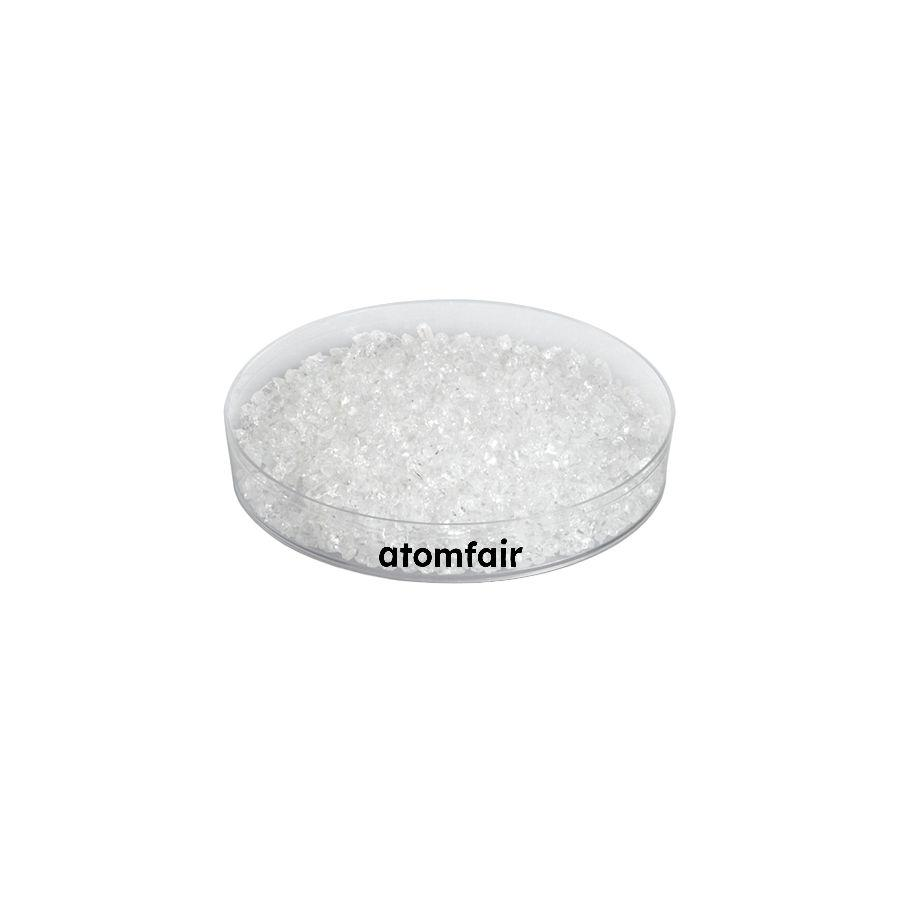
Silicon(II) Oxide SiO Pieces 99.99% 1-3 mm ATOMFAIR®
Price range: $300.00 through $950.00 -
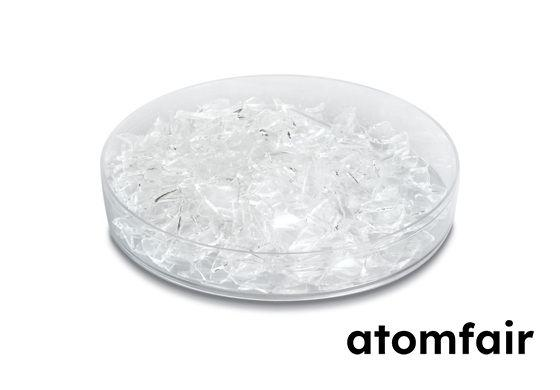
Silicon(IV) Oxide Evaporation Pieces 99.99% ATOMFAIR®
Price range: $170.00 through $320.00 -
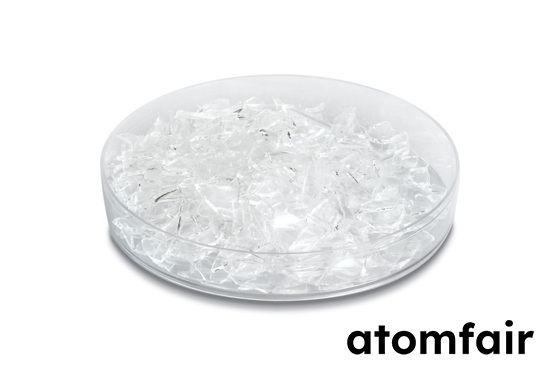
Silicon(IV) Oxide Evaporation Powder 99.99% 1-5μm ATOMFAIR®
Price range: $140.00 through $380.00 -
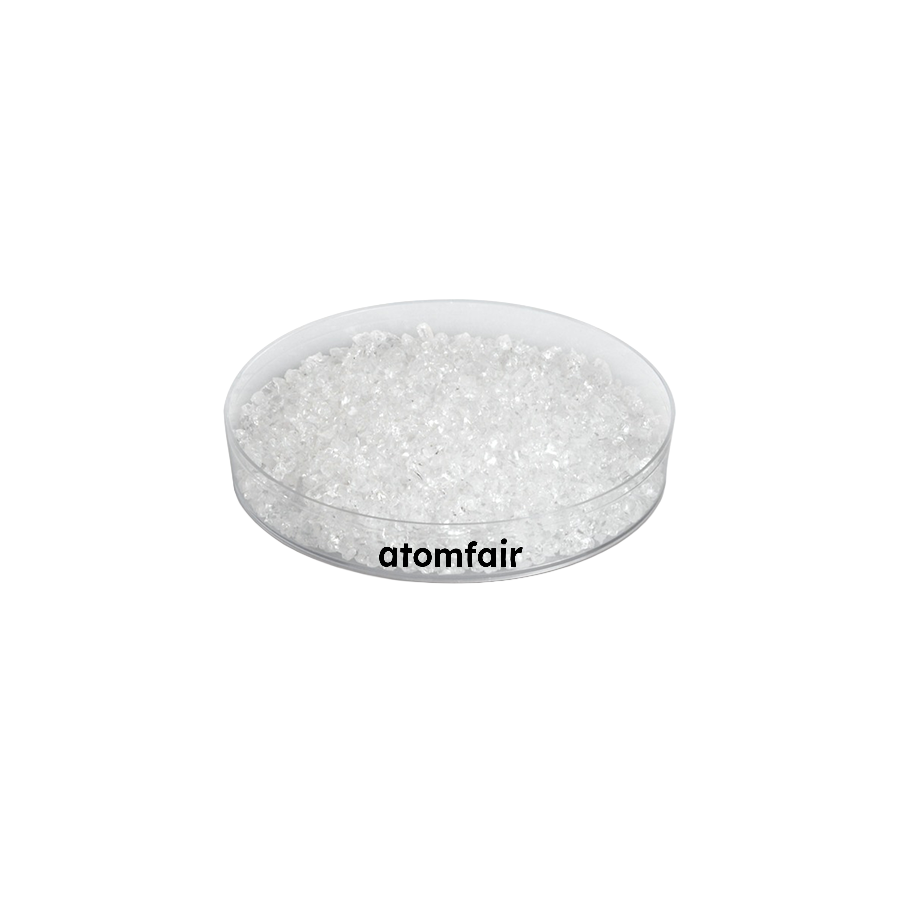
Sodium Hydroxide Evaporation Pieces 99.99% 1-3 mm ATOMFAIR®
Price range: $280.00 through $850.00 -
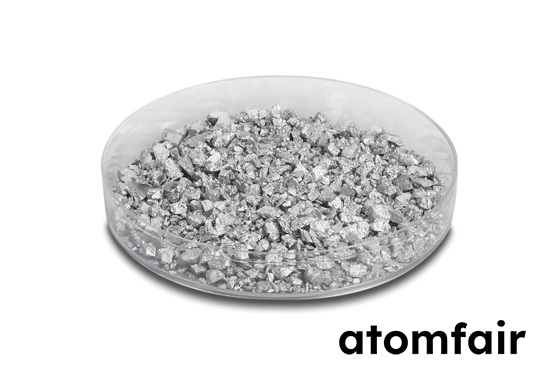
Spinel MgAl2O4 99.9% 12 mm Evaporation Pieces ATOMFAIR®
Price range: $390.00 through $1,350.00 -
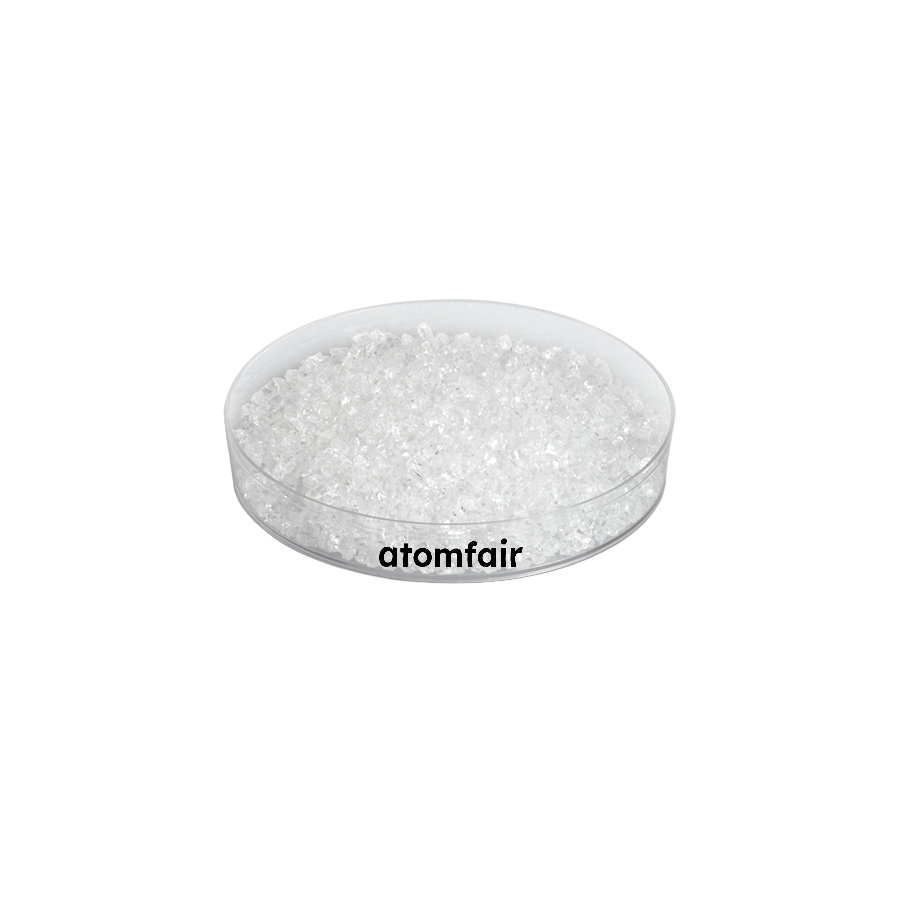
Strontium Oxide SrO Pieces 99.99% 1-3 mm by ATOMFAIR®
Price range: $280.00 through $850.00 -
Strontium Titanate SrTiO3 Powder 99.9%, 90 nm ATOMFAIR®
Price range: $460.00 through $3,600.00 -
Strontium Titanate SrTiO3 Powder 99.97% 90 nm ATOMFAIR®
Price range: $460.00 through $3,600.00