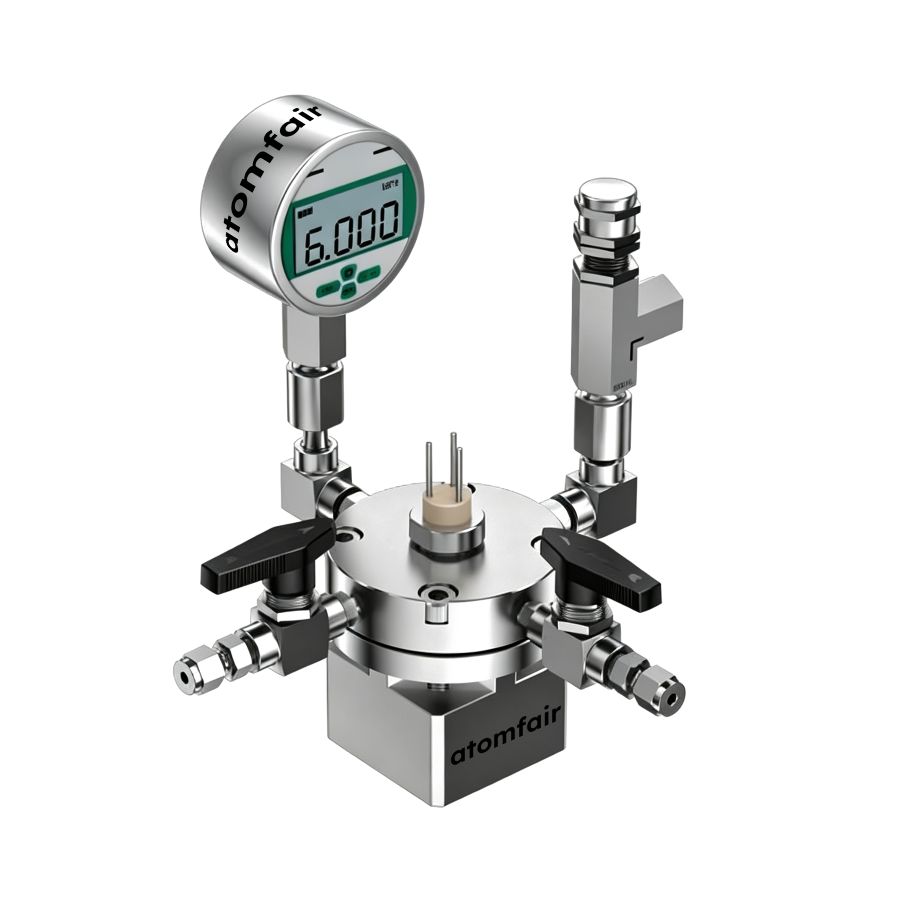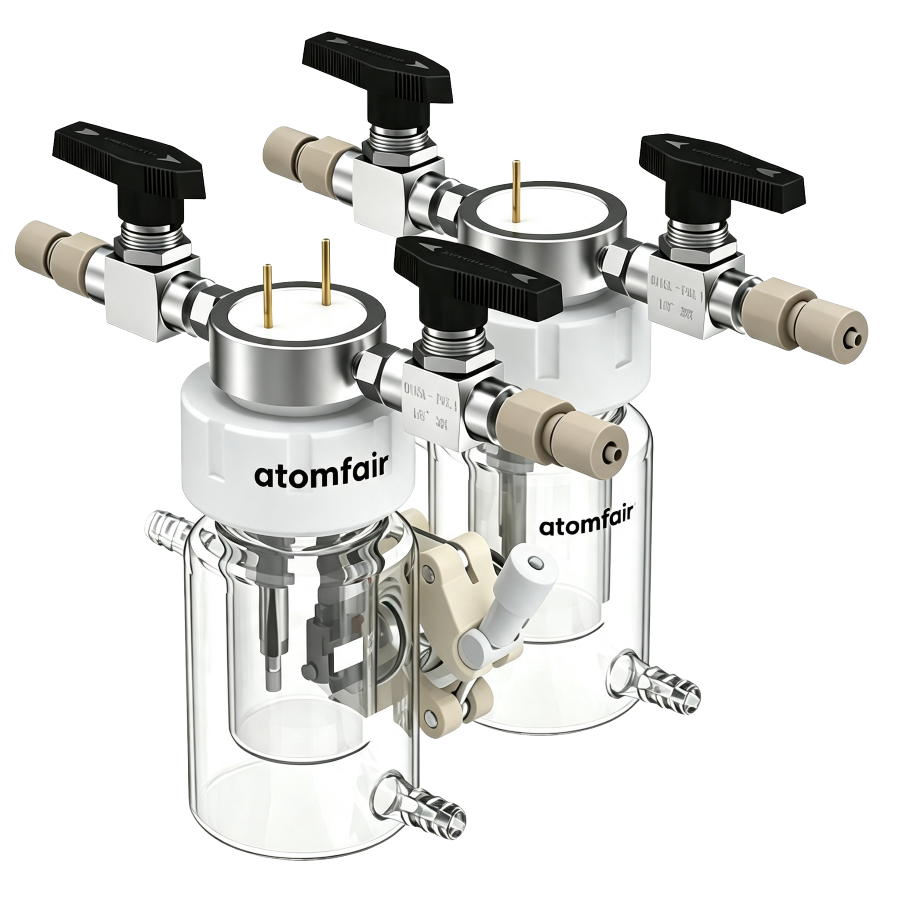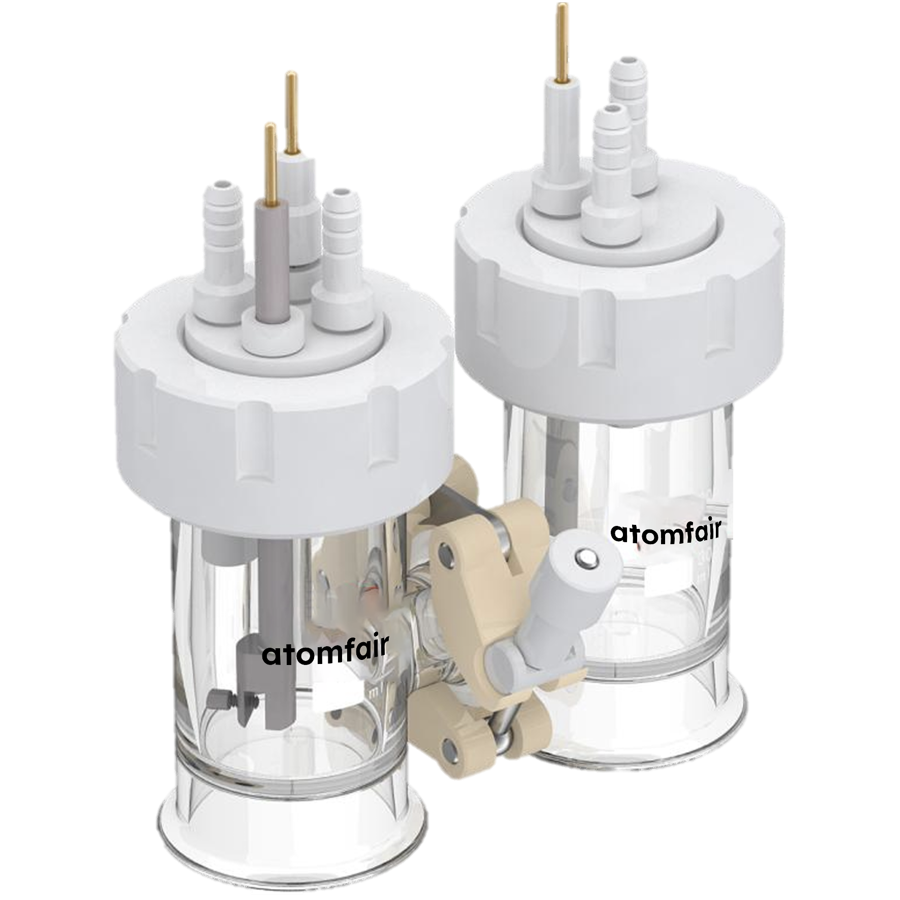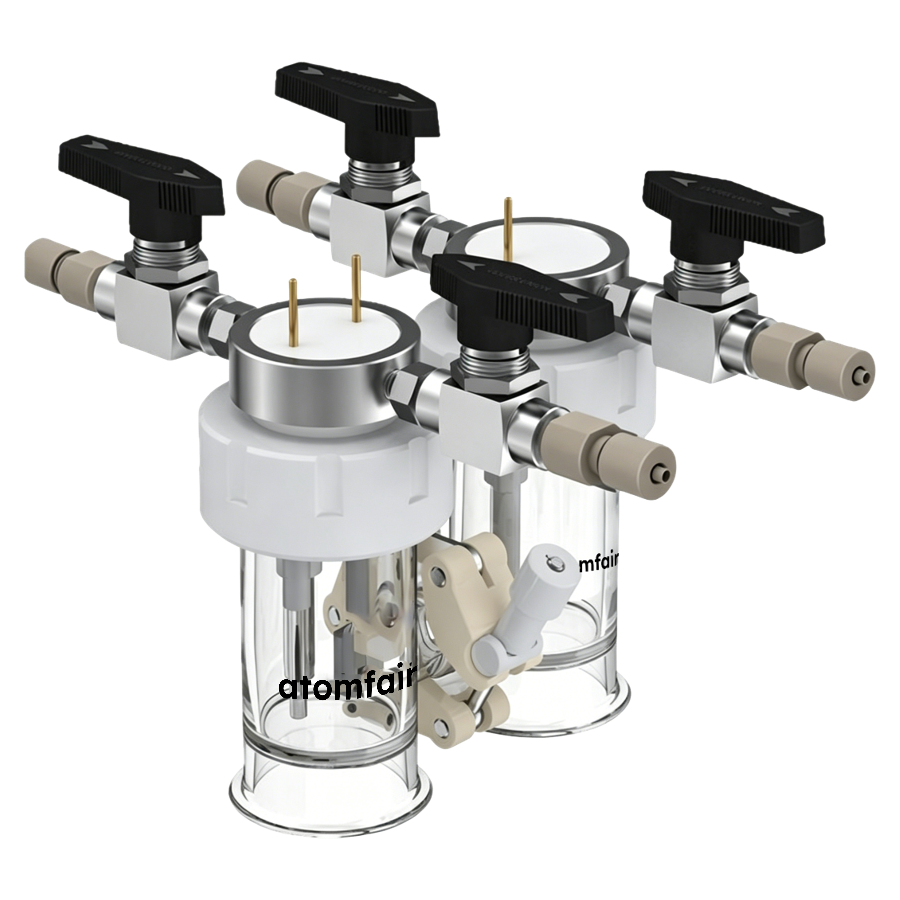
In-situ Raman Electrochemical Cell, 2H Membrane-Replaceable TypeProduct Type: In-situ Raman electrochemical cell
Research-grade laboratory product
|
|||||||||||||||||||||||
|
|||||||||||||||||||||||
|
LABORATORY PROCUREMENT SUPPORT
For model selection, technical compatibility or configuration confirmation, contact our technical sales team.
E-MAIL: inquiry@atomfair.com
|
|||||||||||||||||||||||
|
Manufacturer: Atomfair LLC LLC
Brand: ATOMFAIR®
|
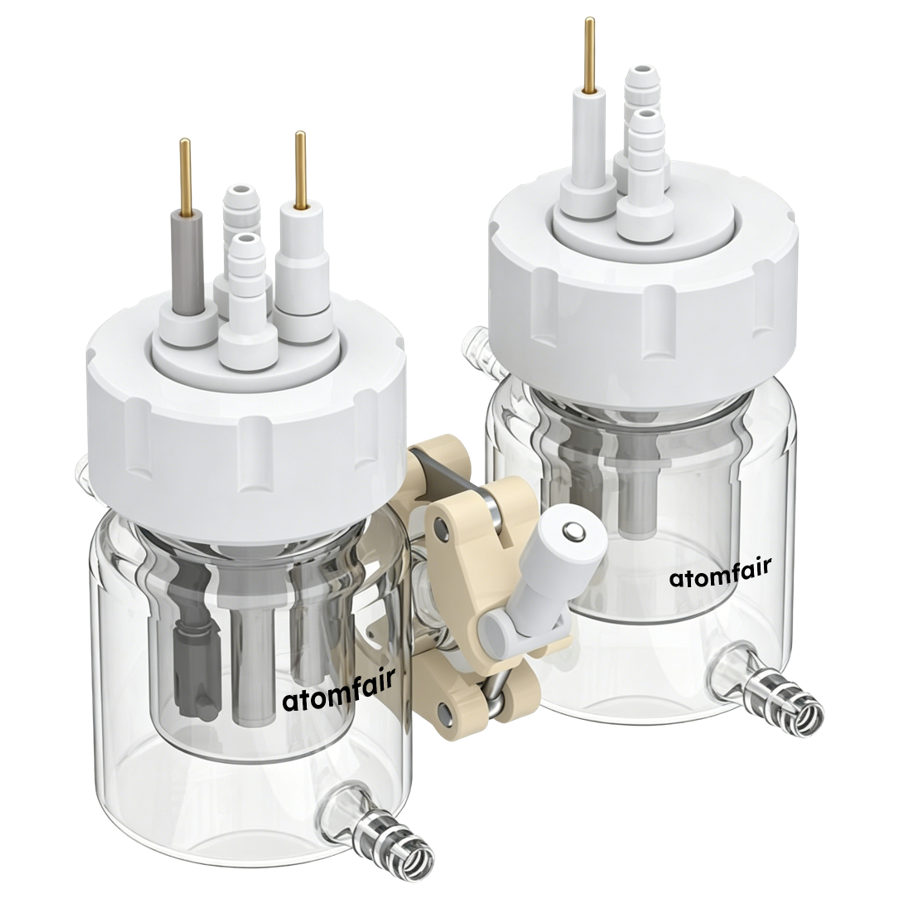
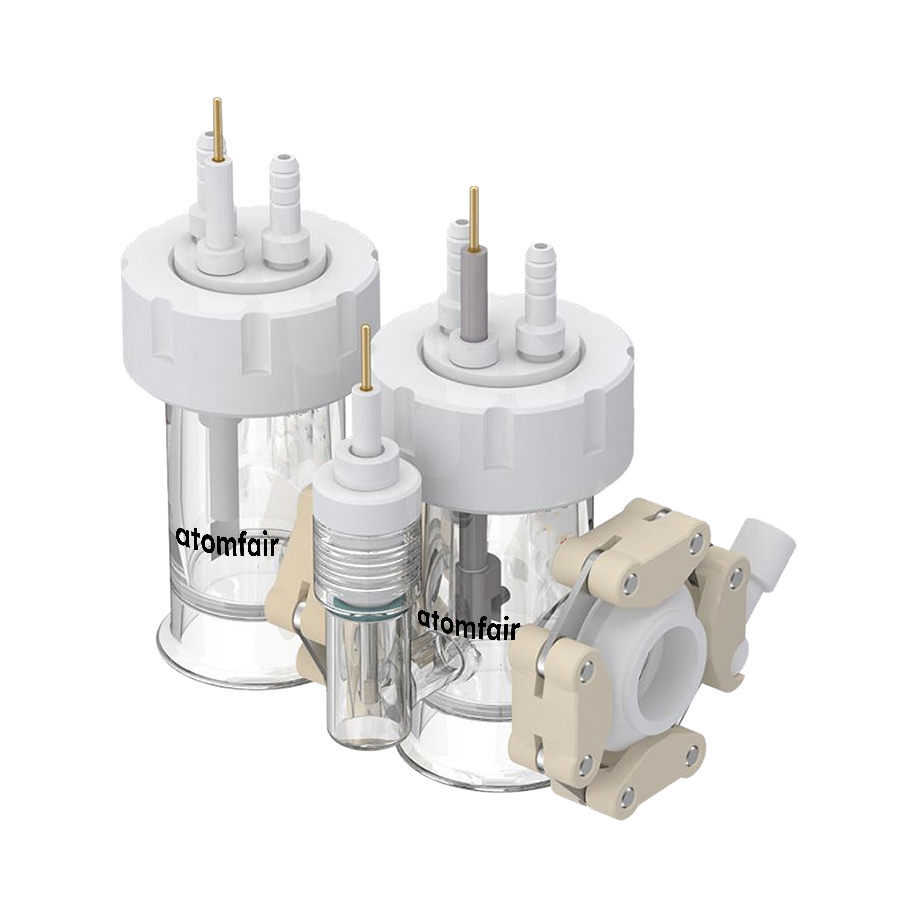
This electrochemical cell features a membrane-separated two-chamber design that minimizes anode interference on the cathode side. The working electrode-to-window distance is under 6 mm to optimize Raman signal collection.
- Electrode Placement: Reference and working electrodes share the same chamber to minimize solution resistance drop.
- Membrane Interface: The 2H membrane-replaceable type allows separation of anode and cathode chambers with a user-selectable membrane.
- Electrode Compatibility: The cell accommodates plate-type working electrodes made of gold, platinum, glassy carbon, ITO, FTO, or carbon paper.
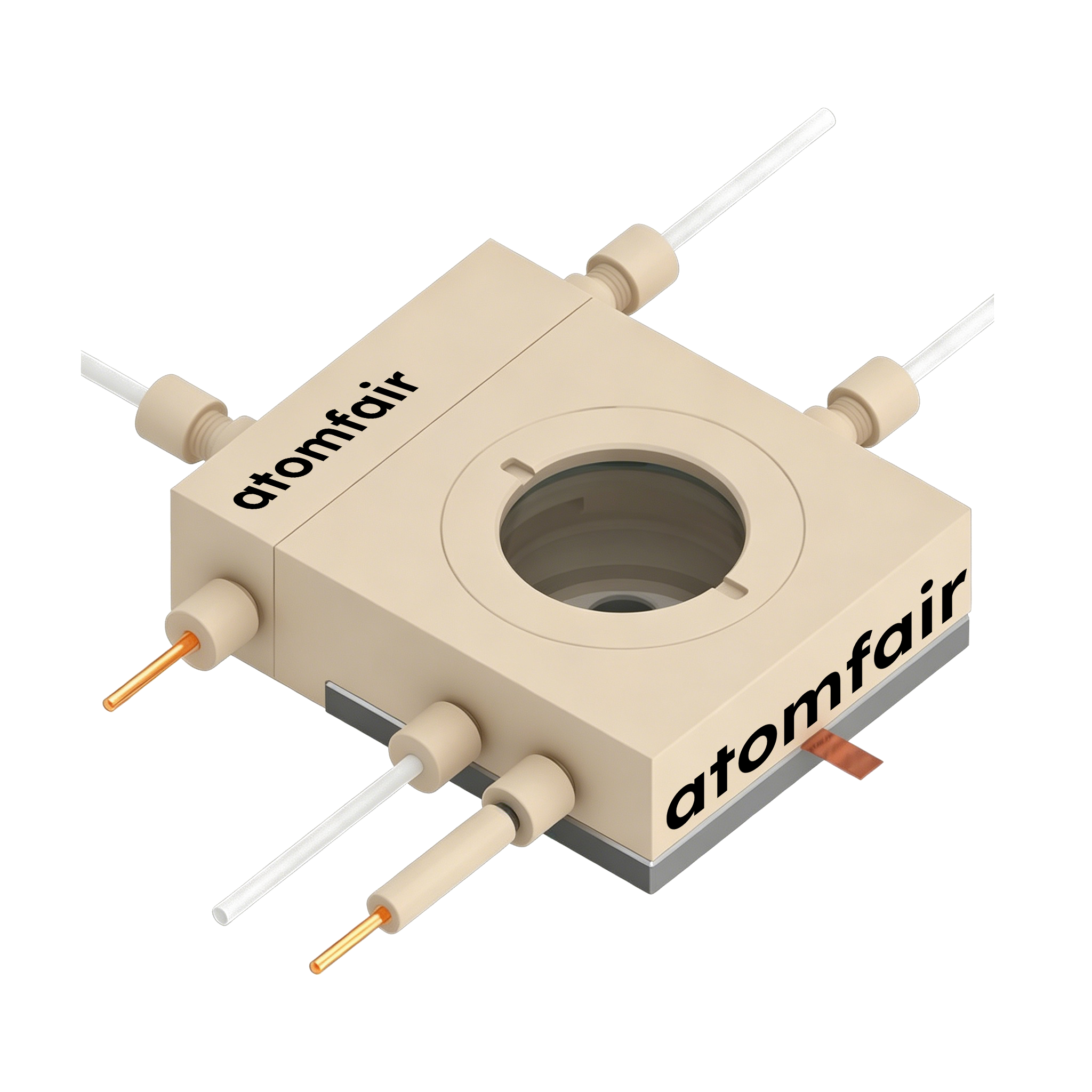
- Optical Window: A 37 mm diameter optical window provides access for Raman laser excitation and signal collection.
- Material: The cell body is constructed from PEEK for chemical resistance and electrical insulation.
How does the two-chamber membrane-replaceable design affect the electrochemical impedance compared to a single-chamber cell?
The membrane-separated chambers reduce anode interference on the cathode side, but the membrane introduces additional ionic resistance. The design mitigates this by placing the reference and working electrode in the same chamber to minimize uncompensated resistance drop. The product description does not provide specific impedance values; the actual impact depends on the membrane type, electrolyte, and electrode configuration.
Can this cell accommodate gas diffusion electrodes for in-situ Raman studies under flow conditions?
Yes, the cell supports plate-type working electrodes including carbon paper, which is commonly used as a gas diffusion electrode. The product description lists gas diffusion electrodes as a separately purchased accessory. However, dedicated gas inlet/outlet ports are not explicitly described; customization or additional flow accessories may be required for continuous gas flow during measurement. Confirm configuration with Atomfair technical sales.
What are the chemical compatibility limitations of the PEEK body and the default optical window material?
The cell body is made of PEEK, which offers broad chemical resistance to most organic solvents, acids, and bases, but is not recommended for concentrated sulfuric or nitric acid. The optical window material is not specified in the product description; standard windows are provided but can be customized to quartz, sapphire, or other materials upon request. For specific electrolyte compatibility, users should contact Atomfair to confirm that all wetted materials—including the membrane and window—are suitable.
This two-chamber membrane-replaceable in-situ Raman electrochemical cell features a PEEK body with a 37 mm optical window and <6 mm working electrode distance, designed to minimize anode cross-talk and iR drop for accurate spectroelectrochemical measurements.
Positive
- Membrane-separated chambers reduce anode interference: The replaceable membrane interface isolates cathode and anode chambers, minimizing the influence of anode reactions on the cathode side during in-situ Raman analysis.
- Co-located reference and working electrode minimizes iR drop: Placing the reference and working electrode in the same chamber reduces uncompensated resistance, improving electrochemical measurement accuracy.
Trade-offs
- Working electrode-to-window distance limits optical alignment: The <6 mm distance between the working electrode and optical window may constrain Raman signal collection geometry and require precise alignment for optimal signal-to-noise ratio.
- Accessory selection required for complete configuration: Electrodes, membranes, windows, and gas diffusion electrodes are separately purchased items that must be confirmed with the order to ensure operational readiness.
Every advanced material, component, equipment, and instrument in our catalog is backed by rigorous testing. We maintain strict internal quality management frameworks and align with CE conformity metrics to deliver transparent, reproducible performance data via our public open-science repository.
To request raw batch performance data, submit formal vendor registration paperwork, or execute a fast-turnaround R&D manufacturing loop, contact us at inquiry@atomfair.com.
Item is dispatched under the Atomfair Shipping & Delivery Framework (Free worldwide shipping on orders over $59 USD excl. heavy equipment). Return is governed by the Atomfair Return & Refund Policy (7-day technical return window).