Multifunctional Combination Carbon Steel Working Electrode Series | ATOMFAIRRESEARCH GRADE INSTRUMENT
|
|||||||||||||||||||||||
|
|||||||||||||||||||||||
|
TAILORED SOLUTIONS FOR RESEARCH
Contact our engineering team for technical support or official institutional quotations.
EMAIL: inquiry@atomfair.com
|
|||||||||||||||||||||||
|
Manufacturer: Atomfair LLC
Brand: ATOMFAIR®
|
|||||||||||||||||||||||
The electrode surface is highly sensitive to contamination and must be stored in sealed containers under anhydrous inert atmosphere to prevent degradation. Exposure to ambient moisture or oxygen can compromise electrochemical performance and invalidate experimental results.
- Contamination Prevention: Contamination from ambient atmosphere can cause phase degradation of the carbon steel surface.
- Inert Environment Requirement: Anhydrous inert environment is required for all handling and storage to maintain electrode integrity.
- Mechanical Integrity: Mechanical damage to the thin electrode head (<4mm) must be avoided during transfer and mounting.
- Contact Stability: Gold-plated copper rod maintains stable conductivity but requires gentle handling to preserve plating.
- Diameter Compatibility: Electrode diameter must be compatible with the electrochemical cell and SEM/AFM stage to ensure proper contact.
How does the choice of carbon steel working electrode diameter affect electrochemical measurement sensitivity and surface characterization compatibility?
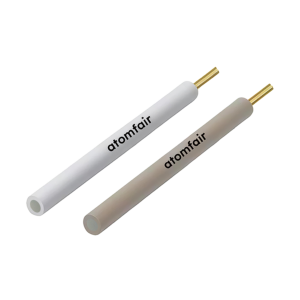
The carbon steel working electrode is available in diameters from 2mm to 5mm, accommodating different experimental scales from micro-electrode sensing to macro-electrode bulk electrolysis. Smaller diameters near 2mm provide higher current density suitable for micro-electrode applications, while larger diameters up to 5mm offer greater surface area for bulk electrolysis. The electrode head thickness of less than 4mm remains constant across sizes, enabling identical integration with SEM or AFM systems regardless of diameter selection, though the larger area may reduce spatial resolution in correlative microscopy.
What are the critical surface contamination risks and handling requirements for the carbon steel working electrode in corrosive electrochemical studies?
The product is explicitly noted as highly sensitive to surface contamination, requiring containers to be kept tightly sealed or handled exclusively within an anhydrous inert environment to prevent phase contamination or degradation before electrochemical validation. The carbon steel material provides specific electrochemical characteristics suitable for corrosion studies and cathodic protection research, but any contamination directly compromises the reliability of corrosion potential and current measurements. The gold-plated copper rod enhances oxidation resistance of the electrical contact, but the active carbon steel disk surface must remain uncontaminated and undisturbed prior to use.
What infrastructure or equipment is needed to perform correlative electrochemical and microscopic analysis using this carbon steel electrode?
The electrode head thickness of less than 4mm allows direct integration with scanning electron microscopy (SEM) or atomic force microscopy (AFM) systems without sample transfer, enabling correlative analysis on the identical electrode surface. It also functions as a standard working electrode for conventional electrochemical measurements in a standard potentiostat setup. No specialized infrastructure beyond standard electrochemical cells and accessible SEM or AFM instrumentation is required, though handling must be performed within an anhydrous inert environment to avoid surface contamination before analysis.
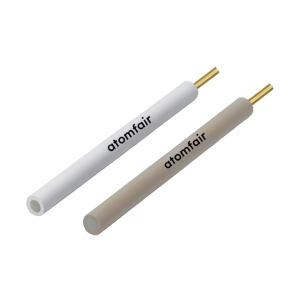
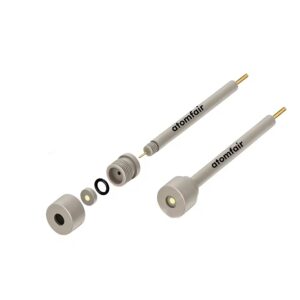
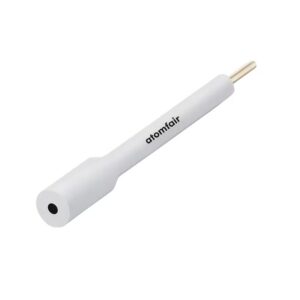
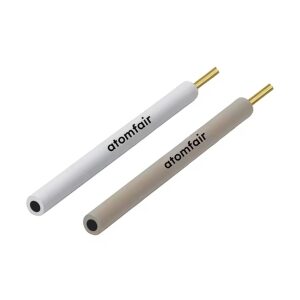
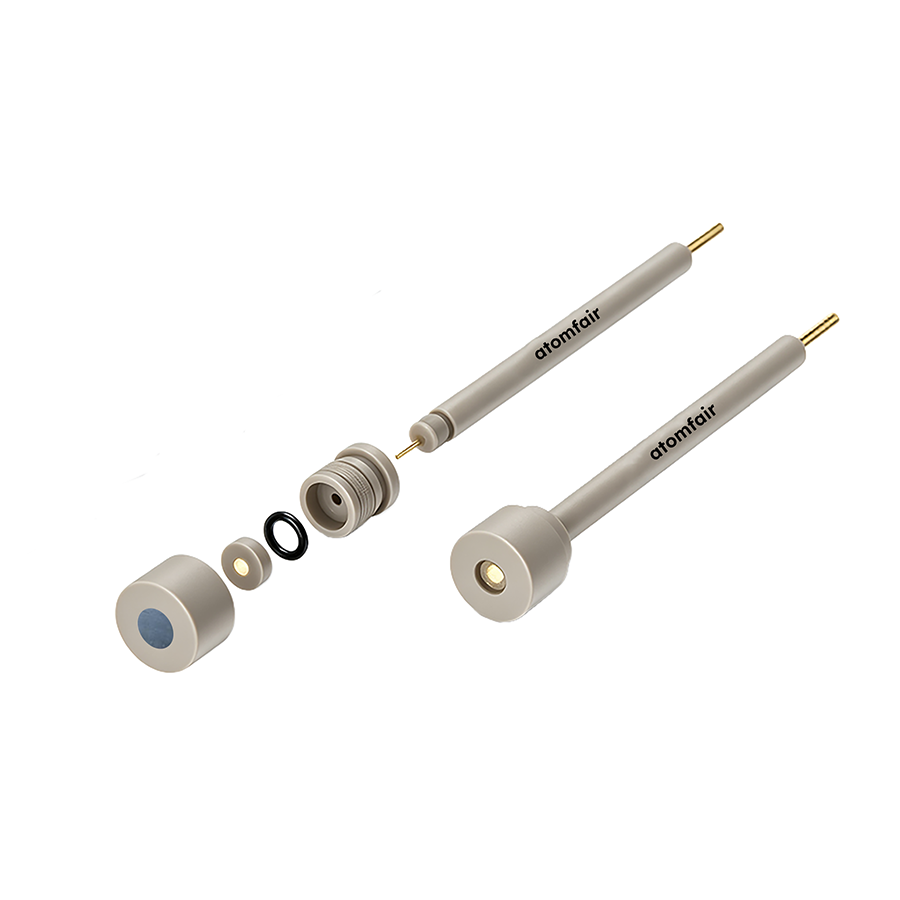
This carbon steel working electrode combines a thin head profile (<4mm) for direct SEM/AFM correlation with a gold-plated copper rod for corrosion resistance, making it suitable for corrosion and materials research where surface contamination must be strictly controlled.
Positive
- Correlative Electrochemical-Microscopic Analysis: Electrode head thickness less than 4mm enables direct integration with SEM or AFM without sample transfer, allowing correlation of electrochemical data with surface structural and topographical features from the identical electrode location.
- Robust Corrosion Protection: Gold-plated copper rod (1.5x15mm) provides enhanced oxidation resistance and maintains stable conductivity over extended use, ensuring reliable electrochemical measurements.
Trade-offs
- Surface Contamination Sensitivity: The carbon steel disk is highly sensitive to surface contamination; containers must be kept tightly sealed or handled exclusively within an anhydrous inert environment to prevent phase contamination or degradation before electrochemical validation.
Every advanced material, component, equipment, and instrument in our catalog is backed by rigorous testing. We maintain strict internal quality management frameworks and align with CE conformity metrics to deliver transparent, reproducible performance data via our public open-science repository.
To request raw batch performance data, submit formal vendor registration paperwork, or execute a fast-turnaround R&D manufacturing loop, contact us at inquiry@atomfair.com.
Item is dispatched under the Atomfair Shipping & Delivery Framework (Free worldwide shipping on orders over $59 USD excl. heavy equipment). Return is governed by the Atomfair Return & Refund Policy (7-day technical return window).