Electric Motorcycle Semi-Solid Battery Series | ATOMFAIRCOMMERCIAL GRADE · PRODUCTION
|
||||||||||||||||||||||||||||||||||||||||||||||||||||
|
||||||||||||||||||||||||||||||||||||||||||||||||||||
|
TAILORED SOLUTIONS FOR RESEARCH
Contact our engineering team for technical support or official institutional quotations.
EMAIL: inquiry@atomfair.com
|
||||||||||||||||||||||||||||||||||||||||||||||||||||
|
Manufacturer: Atomfair LLC
Brand: ATOMFAIR®
|
||||||||||||||||||||||||||||||||||||||||||||||||||||
The ATOMFAIR Rock Solid semi-solid battery requires strict adherence to temperature limits and BMS integration. Pre-conditioning and proper storage are essential to prevent performance degradation and safety hazards.
- Operating Temperature Range: Operate the battery between -25°C and 70°C to maintain performance and avoid thermal damage.
- Cycle Life Degradation: The battery retains ≥80% capacity after 800 cycles at 70% state of health under normal use.
- BMS Requirement: Always connect a compatible BMS with over-discharge, over-current, and cell balancing protection.
- Pre-conditioning: Pre-condition new batteries at room temperature before the first full charge cycle to stabilize the electrolyte.
- Storage Conditions: Store in moisture-proof, anti-static packaging with foam inserts to prevent physical damage and short circuits.
Initialize the battery by pre-conditioning at room temperature and connecting a compatible BMS. Follow charging and temperature guidelines to ensure safe operation and longevity.
Required Equipment: Battery Management System (BMS)
- Pre-condition
Pre-condition the new battery at room temperature for at least one hour before the first full charge cycle. - Install BMS
Install a compatible battery management system with over-discharge, over-current, and cell balancing capabilities. - Charge
Charge the battery within the recommended voltage range specified in the product datasheet. - Monitor Temperature
Ensure the battery operating temperature does not exceed 70°C for extended periods to prevent thermal stress.
How does the maximum continuous discharge current scale with capacity across the ATOMFAIR Rock Solid Series models?
The 50Ah (AFEMS7250), 52Ah (AFEMS7255), and 76Ah (AFEMS7280) models support 80A continuous discharge, while the 100Ah (AFEMS72100) model supports 120A. This corresponds to a 1.6C rate for the 50Ah, 1.54C for 52Ah, 1.05C for 76Ah, and 1.2C for 100Ah. The 100Ah model offers the highest absolute current, but the 50Ah model has the highest C-rate, providing stronger relative acceleration for its capacity.
What are the physical size constraints when integrating the AFEMS72100 model into an electric motorcycle chassis?
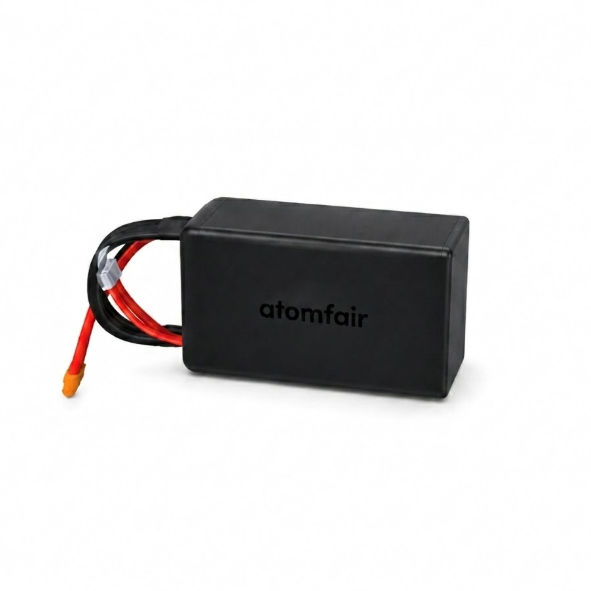
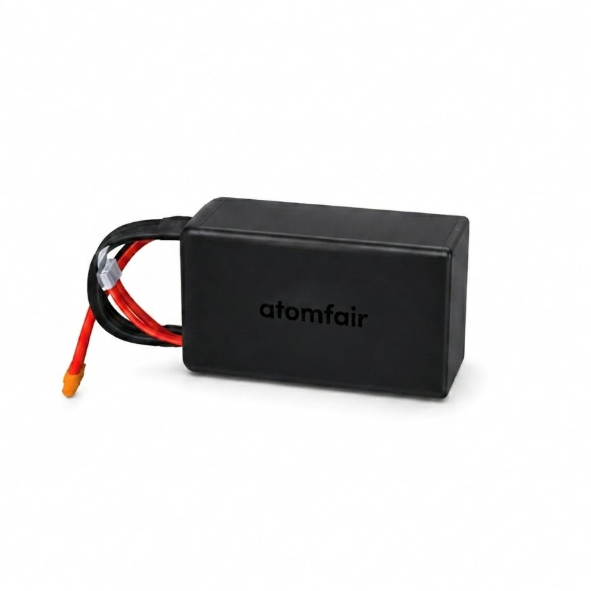
The AFEMS72100 measures 510 × 216 × 183 mm and weighs 43 ± 0.5 kg, making it the largest and heaviest in the series. For comparison, the smallest model AFEMS7250 is 230 × 170 × 309 mm and weighs 24 kg. The series offers four different footprints to fit various chassis from scooters and e-mopeds to heavy cruisers, so careful measurement of the battery compartment is required for the 100Ah variant.
What are the recommended storage and preconditioning procedures for the ATOMFAIR semi-solid battery?
Pre-condition new batteries at room temperature before the first full cycle. Always use a compatible BMS with over-discharge, over-current, and cell balancing protection. Charge within the recommended voltage range (consult the datasheet). Avoid prolonged exposure to temperatures above 70°C. The semi-solid electrolyte is leak-proof and enhances thermal stability, but the battery should still be stored in a dry, cool environment to maximize cycle life (≥800 cycles to 70% SOH).
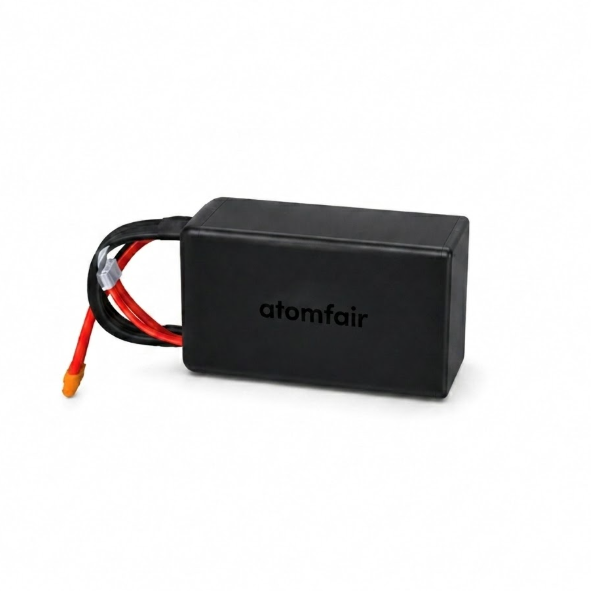
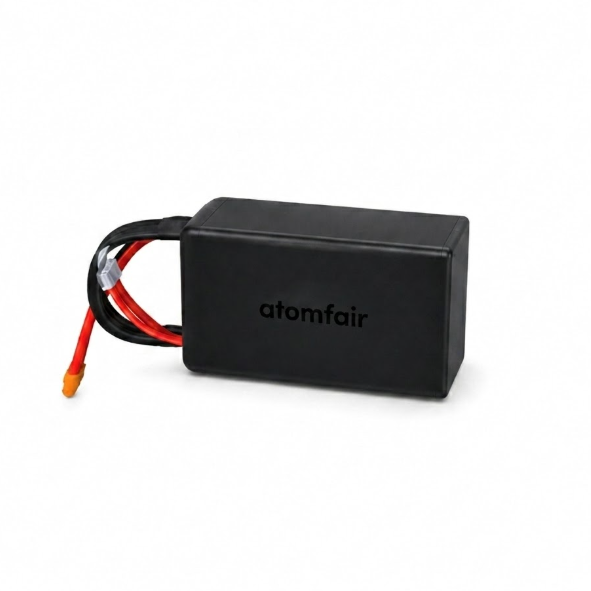
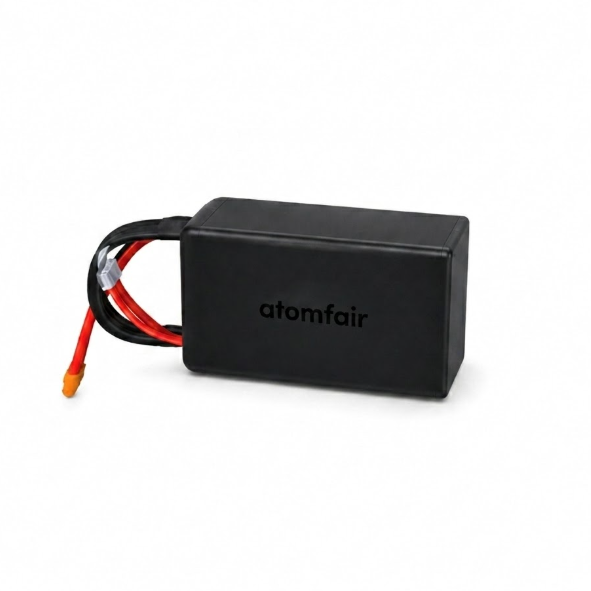
The ATOMFAIR Rock Solid Series semi-solid state battery for electric motorcycles offers high continuous discharge rates (up to 120A on the 100Ah model) and wide operating temperature range (-25°C to 70°C) with a cycle life of ≥800 cycles to 70% SOH, but requires careful thermal management and compatible BMS for safe operation.
Positive
- Semi-solid electrolyte safety: Enhanced thermal stability and leak-proof construction reduce risk of thermal runaway compared to conventional liquid electrolyte cells, making it suitable for high-vibration motorcycle environments.
- Wide temperature tolerance: Reliable discharge from -25°C to 70°C (with one model rated to 65°C) enables operation in extreme climates and hot motor compartments without performance degradation.
Trade-offs
- BMS dependency and preconditioning: Requires a compatible BMS with over-discharge, over-current, and cell balancing, plus room-temperature preconditioning before first full cycle, adding system integration complexity.
- Temperature and weight constraints: Extended exposure above 70°C is prohibited, and the 80A model (AFEMS7280) has a reduced discharge temperature ceiling of 65°C; the 100Ah model weighs 43 kg, requiring robust chassis mounting.
Every advanced material, component, equipment, and instrument in our catalog is backed by rigorous testing. We maintain strict internal quality management frameworks and align with CE conformity metrics to deliver transparent, reproducible performance data via our public open-science repository.
To request raw batch performance data, submit formal vendor registration paperwork, or execute a fast-turnaround R&D manufacturing loop, contact us at inquiry@atomfair.com.
Item is dispatched under the Atomfair Shipping & Delivery Framework (Free worldwide shipping on orders over $59 USD excl. heavy equipment). Return is governed by the Atomfair Return & Refund Policy (7-day technical return window).