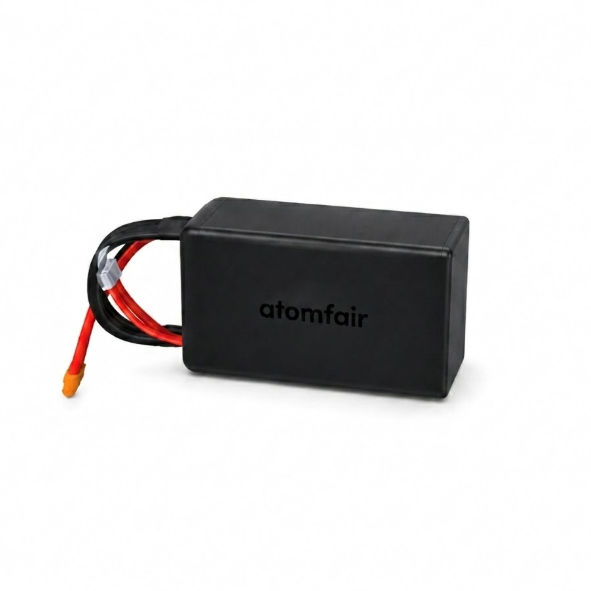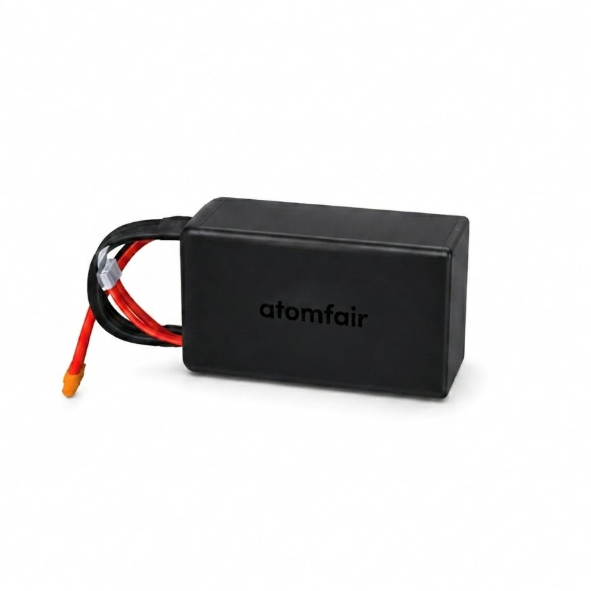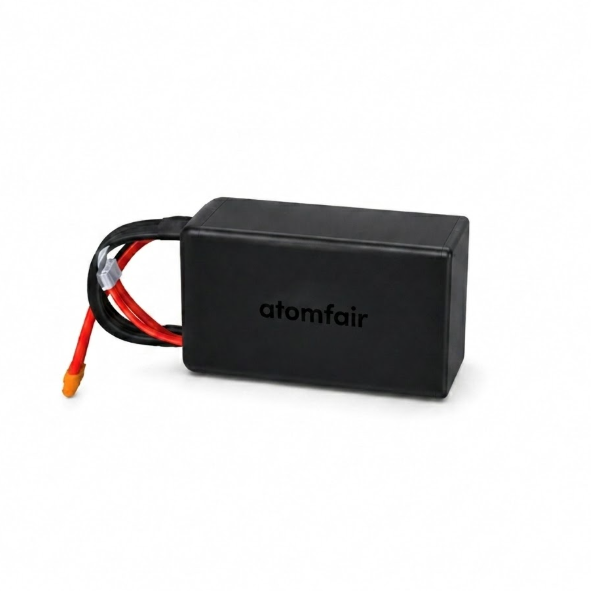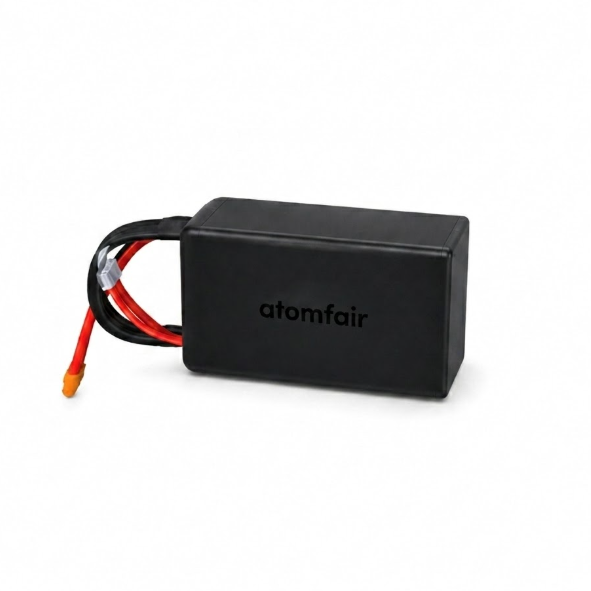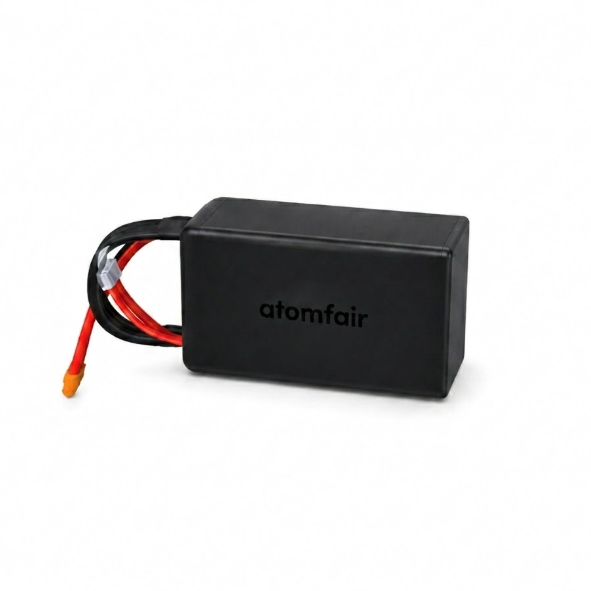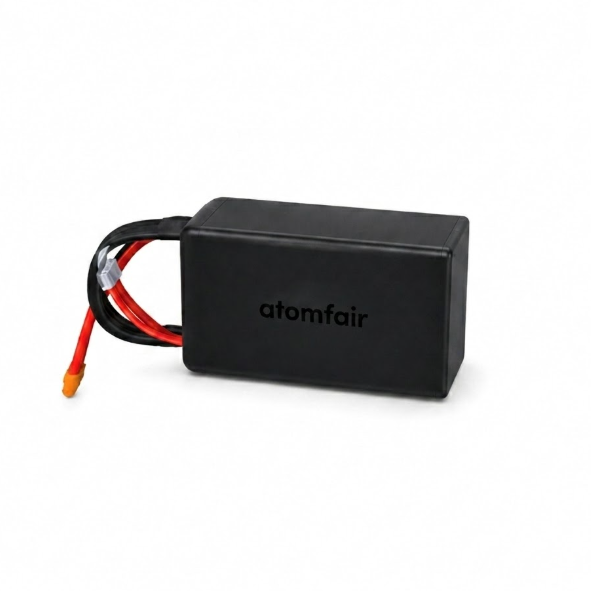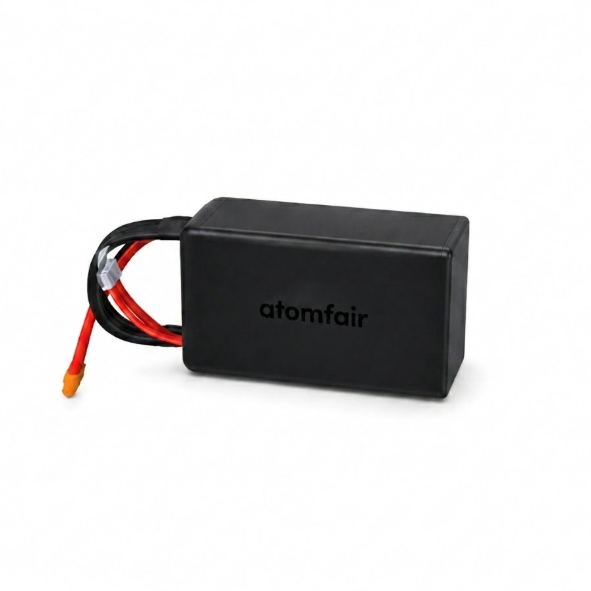
Embodied Robot Dedicated Solid-State Battery (48V 20Ah Hot-Swappable Power Module) | ATOMFAIR
Product Overview
Specifically engineered for high-performance Embodied Robots and AI research platforms, this system utilizes cutting-edge Solid-State Soft-Pack (Pouch) Cell technology. The module is designed to eliminate operational downtime by supporting intelligent dual-pack switching and a quick-release hot-swappable interface. This allows for seamless battery exchanges without system reboots, injecting stable, safe, and long-lasting core power into next-generation intelligent robotics. For bulk inquiries or official volume quotations, please contact us via email at inquiry@atomfair.com.
Technical Specifications
| Parameter | Detailed Specifications (48V20Ah Version) |
|---|---|
| Cell Type / Configuration | Solid-State Pouch Cell / 13S1P |
| Typical Energy (Wh) | 962 Wh |
| Continuous Charging Current | 0.5C |
| Peak Discharge Current | 3.0C |
| Dimensions (L*W*H mm) | 120 * 165 * 200 mm |
| Communication Method | Bluetooth, RS485, CAN |
| Operating Temperature | Charge: 0~45°C | Discharge: -20~45°C |
| IP Rating / Cycle Life | IPX7 / 2500 @ 70% |
Core Features & Advantages
Uninterrupted Mission Runtime
Native support for hot-swappable interfaces and dual-battery balancing allows for continuous robot operation without power-down during battery swaps.
Solid-State Safety Standard
Utilizes advanced solid-state soft-pack technology for superior thermal stability and higher energy density compared to traditional Li-ion formats.
Smart Research Connectivity
Triple-protocol communication (CAN/RS485/BT) provides high-fidelity access to SOC/SOH data, ideal for precise algorithmic robot control.
Application Scope
- Humanoid & Quadruped Robotics
- Hospitality & Service Robots
- Embodied AI Research Platforms
- Indoor/Outdoor Autonomous Delivery
Accessories & Customization
Hot-Swap Kits: Custom quick-release mechanical docks available for standardized robot chassis integration.
BMS Protocol SDK: Official API documentation for ROS2 and specialized robotics control systems for real-time power analytics.
Bespoke Solutions: Custom voltage (24V-72V) and capacity configurations are available for laboratory prototypes.
The module must be operated within the specified charge and discharge temperature ranges to prevent capacity degradation or safety hazards. The 48V electrical system and IPX7-rated enclosure impose handling and environmental protection requirements.
- Thermal Operating Range: Charge the battery only between 0°C and 45°C, and discharge only between -20°C and 45°C.
- Electrical Hazard: The 48V DC output presents a shock hazard; ensure proper insulation and avoid contact with conductive surfaces.
- Environmental Protection: The IPX7 rating allows temporary submersion, but the module should not be exposed to prolonged moisture or corrosive environments.
This procedure describes how to safely install and hot-swap the battery module without interrupting robot operation. Ensure the robot is in a safe state and the replacement module is fully charged.
Required Equipment: Quick-Release Mechanical Dock
- Inspect the Module
Inspect the battery module for physical damage, debris, or contamination on the connector before insertion. - Align with Dock
Align the module's quick-release interface with the robot chassis dock to ensure proper engagement. - Insert and Lock
Slide the module into the dock until the locking mechanism clicks securely into place. - Verify Communication
Confirm that the BMS establishes communication via CAN or RS485 and reports SOC/SOH data. - Monitor Dual-Pack Switching
Verify the system recognizes the new module and that dual-pack switching operates without interruption.
What specific advantages do solid-state soft-pack cells offer over traditional Li-ion batteries for robotic applications?
Solid-state soft-pack cells provide superior thermal stability and higher energy density compared to traditional Li-ion formats. This translates to safer operation under high-load robotic cycles and longer runtime for the same physical footprint. The 48V 20Ah module delivers 962 Wh of typical energy with a cycle life of 2500 cycles at 70% capacity retention.
Which communication protocols does the 48V 20Ah solid-state battery module support for integration with robotic control systems?
The module supports Bluetooth, RS485, and CAN communication protocols, providing high-fidelity access to SOC and SOH data for precise algorithmic robot control. An official BMS Protocol SDK with API documentation is available for ROS2 and specialized robotics control systems, enabling real-time power analytics and seamless integration into research platforms.
What are the operating temperature limits and environmental protection rating of this hot-swappable solid-state battery module?
The module operates within a charge temperature range of 0–45°C and a discharge range of -20–45°C. It carries an IPX7 rating, indicating protection against temporary immersion in water. The hot-swappable interface and dual-pack balancing allow continuous robot operation without power-down during battery swaps, minimizing downtime in field or lab environments.
This 48V 20Ah solid-state battery module is engineered for embodied robots, featuring hot-swappable capability for uninterrupted operation and solid-state pouch cells for enhanced safety and energy density, but with constraints on charge temperature and peak discharge current.
Positive
- Hot-swappable uninterrupted operation: Native hot-swap interface with dual-battery balancing enables continuous robot missions without power-down during battery exchanges, eliminating downtime.
- Solid-state safety and density: Solid-state soft-pack cells provide superior thermal stability and higher energy density compared to traditional Li-ion formats, reducing fire risk and extending runtime.
Trade-offs
- Charge temperature limitation: Charging is only permitted between 0–45°C, requiring thermal management or pre-conditioning in cold environments to avoid damage.
- Peak discharge current cap: The maximum peak discharge current of 3.0C (approx. 60A) may restrict transient power delivery for high-torque or acceleration-demanding robot applications.
Every advanced material, component, equipment, and instrument in our catalog is backed by rigorous testing. We maintain strict internal quality management frameworks and align with CE conformity metrics to deliver transparent, reproducible performance data via our public open-science repository.
To request raw batch performance data, submit formal vendor registration paperwork, or execute a fast-turnaround R&D manufacturing loop, contact us at inquiry@atomfair.com.
Item is dispatched under the Atomfair Shipping & Delivery Framework (Free worldwide shipping on orders over $59 USD excl. heavy equipment). Return is governed by the Atomfair Return & Refund Policy (7-day technical return window).