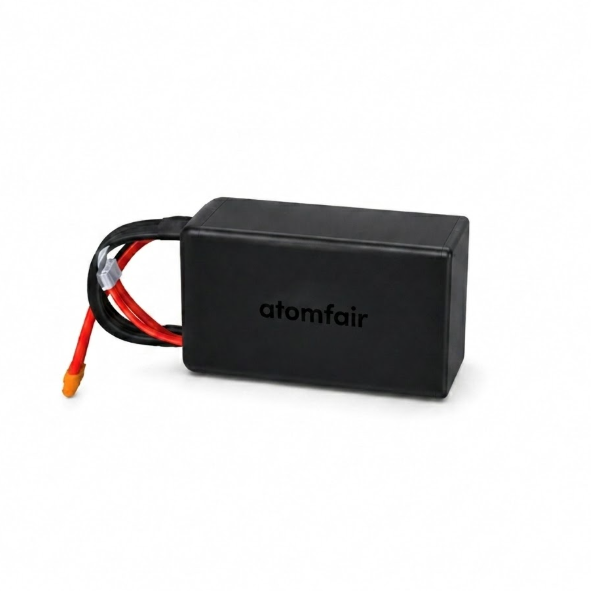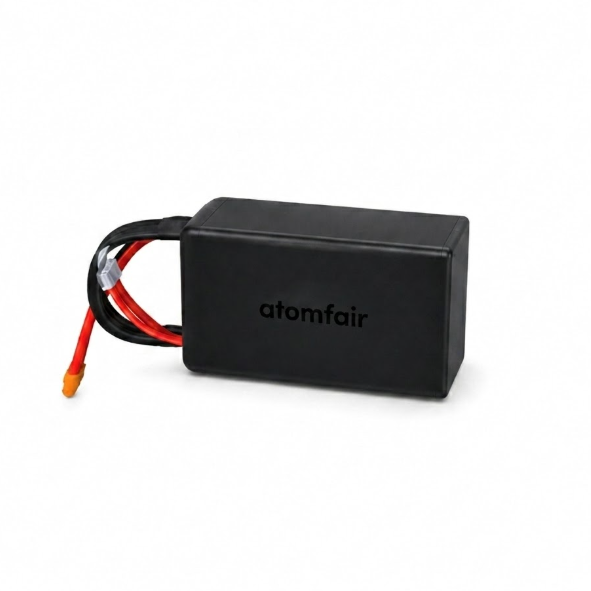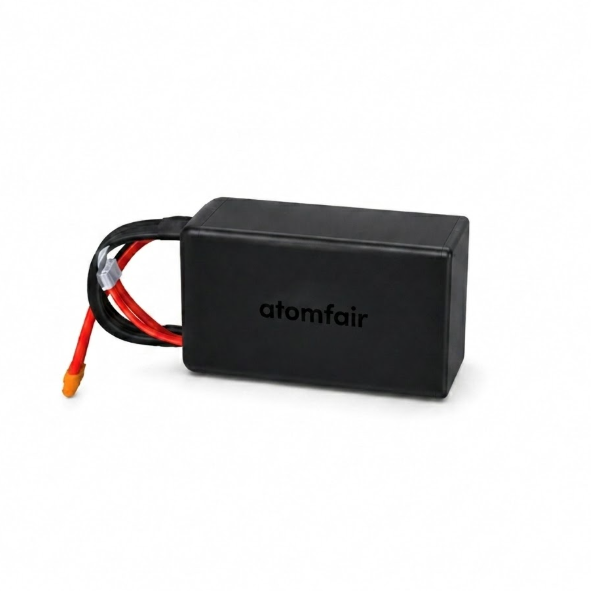
High-Specific-Energy Lightweight UAV Battery Packs (360Wh/kg Series) | ATOMFAIRCOMMERCIAL GRADE · PRODUCTION
|
|||||||||||||||||||||||||||||||
|
|||||||||||||||||||||||||||||||
|
TAILORED SOLUTIONS FOR RESEARCH
Contact our engineering team for technical support or official institutional quotations.
EMAIL: inquiry@atomfair.com
|
|||||||||||||||||||||||||||||||
|
Manufacturer: Atomfair LLC
Brand: ATOMFAIR®
|
|||||||||||||||||||||||||||||||
Avoid physical impacts, over-discharge below the pack's minimum voltage threshold, and prolonged exposure to temperatures exceeding 60 °C. The pack requires an intelligent battery management system (BMS) capable of real-time cell balancing to prevent multi-cell degradation.
- Temperature Limit: Prolonged exposure to temperatures above 60 °C must be avoided to prevent thermal runaway.
- Over-Discharge Protection: Over-discharge below the pack's specified lower voltage boundary must be prevented to avoid irreversible capacity loss.
- BMS Requirement: Always pair the pack with an advanced BMS capable of tracking real-time status indices and balancing cells.
- Physical Integrity: Avoid drop impacts and mechanical shock to maintain cell integrity and prevent internal short circuits.
- Transport Compliance: The pack is approved under standard transport safety parameters for verified institutional operators.
Inspect the pack for damage, connect to an intelligent BMS, and configure over-discharge protection before first use. Maintain operating temperature below 60 °C and avoid physical impacts to ensure safe operation.
Required Equipment: Intelligent Battery Management System (BMS)
- Inspect the Pack
Inspect the battery pack for any physical damage, swelling, or deformation before use. - Connect to BMS
Connect the pack to an intelligent BMS capable of real-time cell balancing and voltage monitoring. - Configure Over-Discharge Protection
Configure the BMS low-voltage cutoff to the manufacturer's specified minimum threshold to prevent over-discharge. - Monitor Temperature
Ensure the operating environment temperature does not exceed 60 °C during use or storage. - Connect to UAV Power System
Attach the pack's power terminals to the UAV's power distribution system using the appropriate connector type.
What is the continuous discharge current and specific energy density of the Atomfair 360 Wh/kg UAV battery pack?
The battery pack sustains a continuous 5C discharge rate at 50 A, with a nominal capacity of 10 Ah (10,000 mAh). The gravimetric energy density reaches ≥360 Wh/kg, enabling extended flight runtime by minimizing passive deadweight.
Can the 14.8V or 22.2V Atomfair UAV battery packs replace existing legacy packs without affecting center-of-gravity balance?
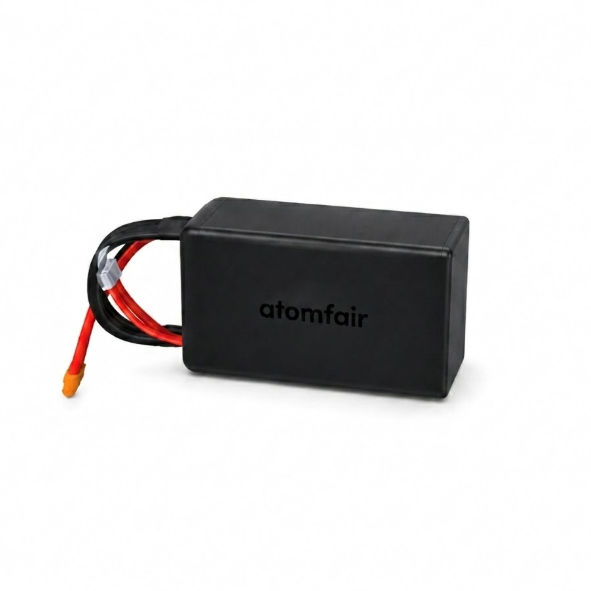
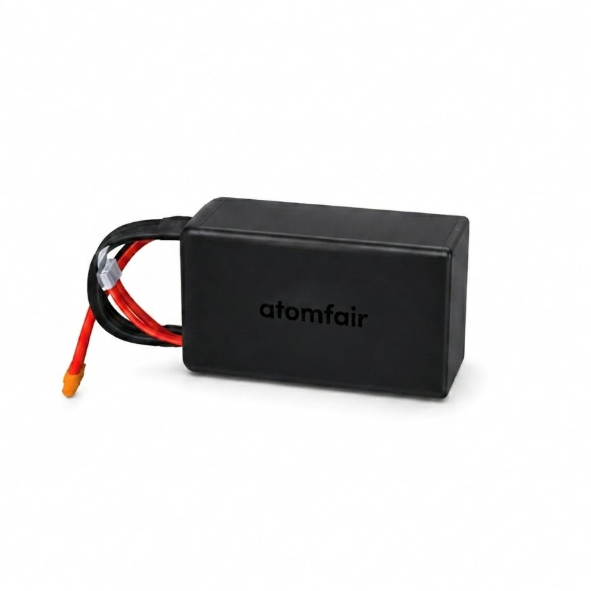
Yes, the 4S (14.8V) and 6S (22.2V) variants are designed to substitute standard legacy packs without generating center-of-gravity imbalance tracking faults. The physical dimensions (46×46×165 mm for 4S, 64×46×165 mm for 6S) and weight (475 g and 710 g respectively) support drop-in replacement in compatible drone frames.
What are the critical operational safety requirements for these high-density pouch cell batteries?
These high-density pouch matrix modules require an intelligent battery management system (BMS) for real-time balancing to prevent multi-cell degradation. Avoid drop impacts, over-discharge below the lower voltage threshold, and exposure to temperatures exceeding 60°C. The packs are fully approved under standard transport safety parameters for institutional operators.
This high-specific-energy lithium ion battery pack (360 Wh/kg) in 4S and 6S configurations offers exceptional gravimetric density for lightweight UAV applications, delivering 50A continuous discharge with a flat voltage plateau. The soft-pack architecture requires careful BMS integration and protection from mechanical shock and thermal extremes above 60°C.
Positive
- Peak specific energy density: Industry-leading gravimetric energy density of ≥360 Wh/kg minimizes deadweight, directly extending flight endurance for lightweight UAV platforms.
- Stable high-current discharge: Sustains continuous 5C (50A) output with a flat voltage discharge plateau, enabling reliable power delivery during demanding aerial operations.
Trade-offs
- Requires external BMS balancing: The high-density pouch matrix demands precise intelligent battery management system (BMS) balancing to suppress multi-cell degradation and ensure safe operation.
- Sensitive to abuse conditions: Must avoid drop impacts, over-discharge below thresholds, and prolonged exposure to temperatures exceeding 60°C to prevent performance loss or safety hazards.
Every advanced material, component, equipment, and instrument in our catalog is backed by rigorous testing. We maintain strict internal quality management frameworks and align with CE conformity metrics to deliver transparent, reproducible performance data via our public open-science repository.
To request raw batch performance data, submit formal vendor registration paperwork, or execute a fast-turnaround R&D manufacturing loop, contact us at inquiry@atomfair.com.
Item is dispatched under the Atomfair Shipping & Delivery Framework (Free worldwide shipping on orders over $59 USD excl. heavy equipment). Return is governed by the Atomfair Return & Refund Policy (7-day technical return window).