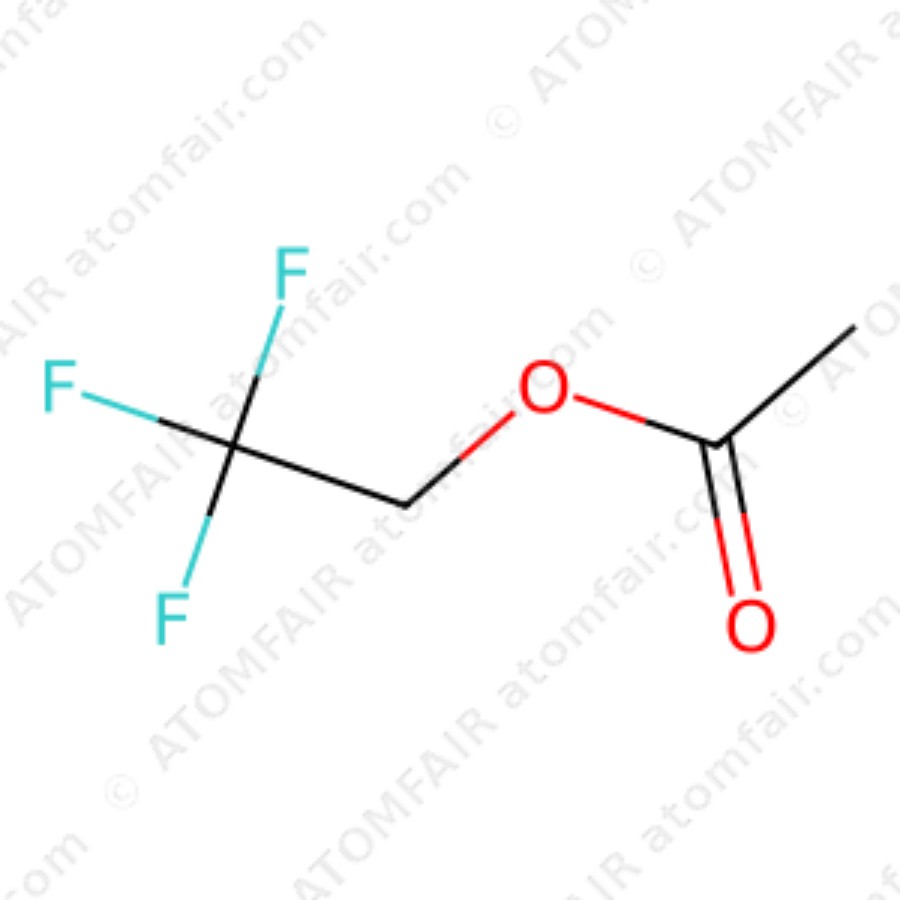
ATOMFAIR® 2,2,2-TRIFLUOROETHYL ACETATERESEARCH GRADE MATERIAL
|
|||||||||||||||||||||||||||||
|
|||||||||||||||||||||||||||||
|
TAILORED SOLUTIONS FOR RESEARCH
Contact our engineering team for technical support or official institutional quotations.
EMAIL: inquiry@atomfair.com
|
|||||||||||||||||||||||||||||
|
Manufacturer: Atomfair LLC
Brand: ATOMFAIR®
|
|||||||||||||||||||||||||||||
This material is moisture-sensitive and must be stored and handled under anhydrous conditions to maintain its low moisture specification for battery applications. Compatibility with battery electrolyte and electrode components should be assessed prior to use to ensure electrochemical stability.
- Moisture Sensitivity: Protect the material from atmospheric moisture by storing in sealed containers under inert gas and handling in a dry environment such as a glovebox.
- Processing Environment: Conduct all transfer and processing operations in a moisture-free atmosphere to avoid degradation and contamination of battery materials.
- Component Compatibility: Verify chemical compatibility of TFEA with the electrolyte salts, solvents, and electrode surfaces used in the battery system before formulation.
How does the 98% purity of 2,2,2-Trifluoroethyl Acetate (TFEA) impact its effectiveness as a solvent additive in lithium-ion battery electrolytes compared to higher purity grades?
The 98% purity is specified as battery-grade moisture, ensuring water content is sufficiently low to prevent hydrolysis of lithium salts like LiPF6. This purity level is a standard trade-off that balances cost and performance for electrolyte formulations, as indicated by the product's designation for battery material processing. Higher purity may further reduce side reactions but is not critical for most applications where the controlled moisture content is the primary constraint.
What are the key compatibility constraints when integrating TFEA into a standard carbonate-based electrolyte system for lithium-ion batteries?
TFEA, as an acetate ester, is generally compatible with common carbonate solvents such as EC, DMC, and EMC, and its battery-grade moisture specification minimizes water-induced degradation of lithium salts. However, its electrochemical stability window and reactivity with specific cathode or anode materials must be verified for the target cell chemistry, as the product description only indicates it facilitates battery material processing without detailing specific salt or electrode compatibility.
What storage and handling conditions are required to preserve the battery-grade moisture specification of 2,2,2-Trifluoroethyl Acetate?
To maintain the battery-grade moisture level, TFEA must be stored in sealed, moisture-proof containers under an inert atmosphere such as argon or nitrogen and handled in a dry environment (e.g., glovebox or dry room with a dew point below -40°C). The product is supplied in 50g and 300g specifications to accommodate controlled dispensing without prolonged exposure to ambient humidity, which would quickly compromise the moisture specification.
This battery-grade TFEA (2,2,2-Trifluoroethyl Acetate) offers low moisture content and 98% purity, making it suitable for use as a solvent or additive in lithium-ion battery electrolyte formulations. However, its limited packaging options and need for strict anhydrous handling conditions must be considered for scale-up applications.
Positive
- Battery-grade low moisture: Explicitly labeled as battery grade moisture, this TFEA minimizes water content that could degrade electrolyte performance and battery cycle life.
- 98% purity facilitates processing: The 98% purity level supports reproducible formulation of battery materials, reducing variability during electrolyte mixing and cell assembly.
Trade-offs
- Moisture-sensitive handling required: To preserve the battery-grade moisture specification, the material must be stored and dispensed under dry, inert atmosphere conditions, adding infrastructure requirements.
- Limited standard packaging sizes: Available only in 50g or 300g quantities, the small packaging may restrict scalability for pilot or production-level evaluations without custom ordering.
Every advanced material, component, equipment, and instrument in our catalog is backed by rigorous testing. We maintain strict internal quality management frameworks and align with CE conformity metrics to deliver transparent, reproducible performance data via our public open-science repository.
To request raw batch performance data, submit formal vendor registration paperwork, or execute a fast-turnaround R&D manufacturing loop, contact us at inquiry@atomfair.com.
Item is dispatched under the Atomfair Shipping & Delivery Framework (Free worldwide shipping on orders over $59 USD excl. heavy equipment). Return is governed by the Atomfair Return & Refund Policy (7-day technical return window).