Atomfair-OCT-638 Optical Communication Experiment System
Product Overview
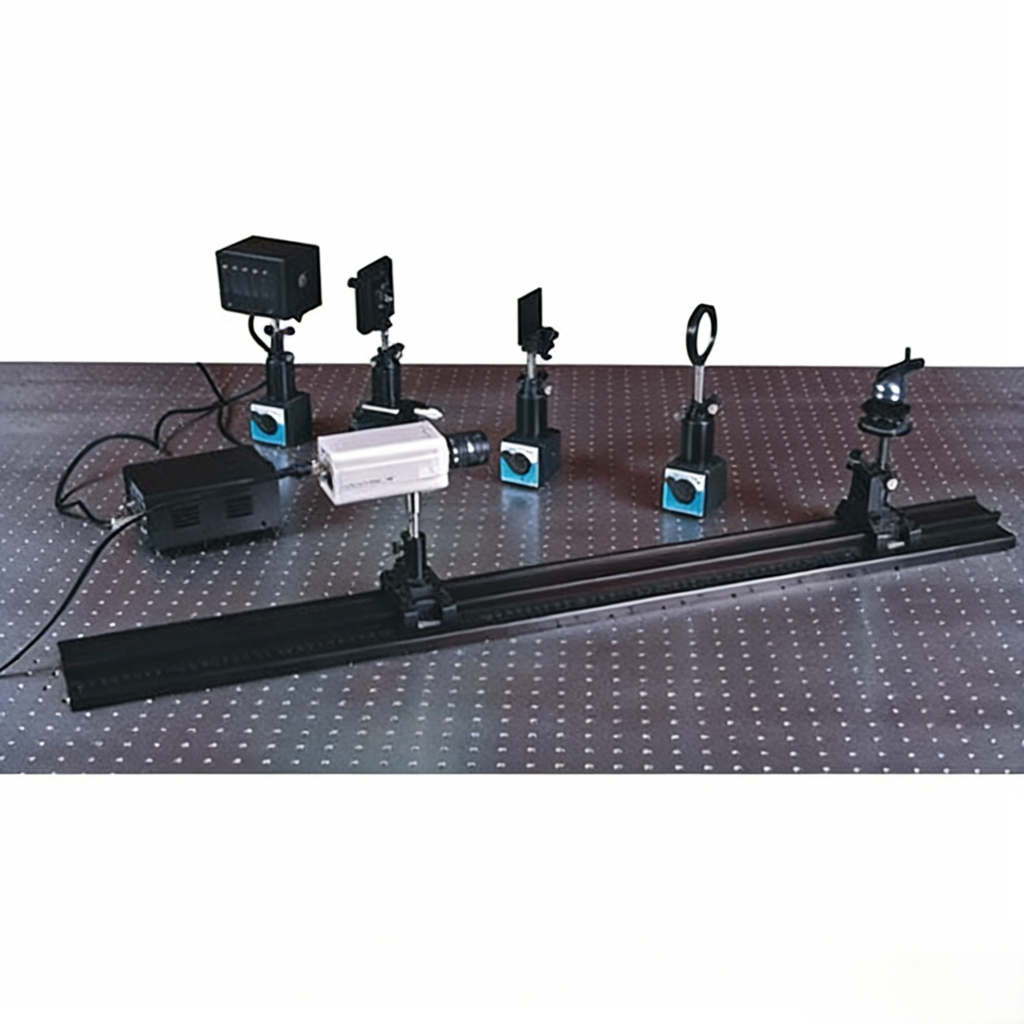
Atomfair-OCT-638 is a high-performance experimental system belonging to the optical fiber sensing and communication category. It is meticulously designed to meet the needs of experimental teaching and related R&D scenarios, integrating a full set of high-quality optical communication equipment with international standard parameters. This system provides reliable and accurate experimental conditions for users engaged in optical communication research and learning, helping to deeply understand the core principles and application technologies of optical communication.
Key Specifications & Technical Parameters
| No. | Equipment Name | International Standard Specifications |
|---|---|---|
| 1 | Semiconductor Laser | Wavelength: 650nm, equipped with internal modulation input interface |
| 2 | Handheld Light Source | Wavelength: 1310/1550nm, output power: > -8.0dBm, modulation modes supported: CW/270Hz/1kHz/2kHz |
| 3 | Handheld Optical Power Meter | Power measurement range: -70~+6dBm, wavelength coverage: 800~1700nm (including typical wavelengths of 850, 980, 1310, 1480, 1550nm) |
| 4 | High-Stability Light Source | Wavelength: 1310nm, output power: ≤1dBm, 15-minute power stability: ±0.005dB, 8-hour output power stability: ±0.03dB |
| 5 | Optical Power Tester | Power measurement ranges: 2W, 20W, 200W, 2mW, 20mW, 200mW (6 adjustable ranges), equipped with a 3.5-digit digital display |
| 6 | Bit Error Rate Tester | External clock frequency: 2.4Kbps~20Mbps; Internal clock frequency: 2.4Kpbs, 8Kpbs, 16Kpbs, 32Kpbs, 64Kpbs, 512Kpbs, 2048Kpbs, 8192Kpbs;
Integrated HDB3 codec with 2048Kpbs rate; Equipped with RS232 communication port, RS422 test port, RS232 test port, TTL test port |
| 7 | Erbium-Doped Fiber Amplifier | Adopts UK-imported 980nm pump laser and Canada-imported high-gain flattened erbium-doped fiber |
| 8 | Optical Isolator | Operating wavelength: 1550nm |
Note: The above configuration and parameters are for reference only. The final configuration shall be subject to the packing list. Minor adjustments will not be notified separately.
Applicable Experiments
- Optical Fiber Switch Experiment
- Wavelength Division Multiplexing (WDM) Principle Experiment
- Optical Transmitter Extinction Ratio Measurement Experiment
- Erbium-Doped Fiber Amplifier Principle and Characteristics Experiment
- Open-Circuit Audio Analog Signal Transmission Experiment
Product Modules
The system includes core modules such as product overview, product specifications, product applications, typical users, and instrument introduction. It comprehensively supports experimental teaching, scientific research projects, and technical verification in the field of optical communication, suitable for universities, research institutions, and enterprises engaged in related fields.
If you’re interested, have any questions, or have specific customization requirements, please feel free to contact us at inquiry@atomfair.com.
What is the long-term output power stability of the high-stability light source in the Atomfair-OCT-638 system?
The high-stability light source at 1310 nm achieves a 15-minute power stability of ±0.005 dB and an 8-hour output power stability of ±0.03 dB, ensuring consistent performance for extended measurement and experimentation sessions.
What clock frequencies and test interfaces does the bit error rate tester in the OCT-638 support?
The BER tester supports an external clock range of 2.4 Kbps to 20 Mbps and internal fixed clocks at 2.4K, 8K, 16K, 32K, 64K, 512K, 2048K, and 8192 Kbps. It integrates HDB3 codec at 2048 Kbps and provides RS232, RS422, and TTL test ports for flexible integration with external systems.
What optical power measurement ranges and display does the included power tester offer?
The optical power tester provides six adjustable ranges: 2 W, 20 W, 200 W, 2 mW, 20 mW, and 200 mW, with a 3.5-digit digital display, covering both high-power and low-power measurement needs for optical communication experiments.
The Atomfair-OCT-638 integrates a 650nm semiconductor laser, 1310/1550nm handheld sources, a high-stability 1310nm source, an erbium-doped fiber amplifier, and a bit error rate tester into a single experimental platform, enabling hands-on instruction in WDM, EDFA, and extinction ratio measurement. Its multi-wavelength coverage and modular design support both teaching and R&D, though the 1550nm optical isolator and EDFA pump laser impose specific wavelength-matching constraints.
Positive
- Multi-wavelength source integration: Combines 650nm, 1310nm, and 1550nm sources with a high-stability 1310nm laser (8-hour stability ±0.03dB), enabling experiments across common telecom bands without separate equipment.
- Comprehensive measurement capability: Includes a 6-range optical power tester (2W to 200mW) and a bit error rate tester with internal clocks from 2.4kbps to 20Mbps, supporting quantitative analysis of link performance and signal integrity.
Trade-offs
- Wavelength-specific component constraints: The optical isolator is specified only for 1550nm, and the EDFA uses a 980nm pump, so experiments outside these wavelengths may require additional components or bypass paths.
- Stability and calibration requirements: The high-stability source requires a 15-minute warm-up to achieve ±0.005dB stability, and the power meter's wide range (-70 to +6dBm) demands periodic recalibration to maintain accuracy in varying lab conditions.
Every advanced material, component, equipment, and instrument in our catalog is backed by rigorous testing. We maintain strict internal quality management frameworks and align with CE conformity metrics to deliver transparent, reproducible performance data via our public open-science repository.
To request raw batch performance data, submit formal vendor registration paperwork, or execute a fast-turnaround R&D manufacturing loop, contact us at inquiry@atomfair.com.
Item is dispatched under the Atomfair Shipping & Delivery Framework (Free worldwide shipping on orders over $59 USD excl. heavy equipment). Return is governed by the Atomfair Return & Refund Policy (7-day technical return window).