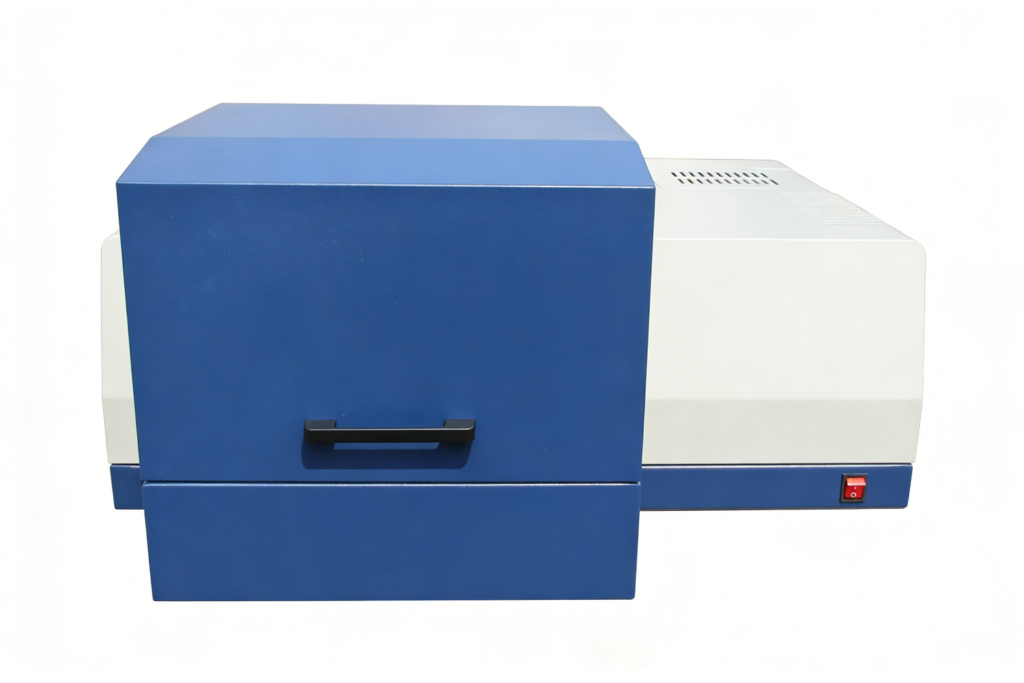
Atomfair-MI-739 Michelson Interferometer
Product Overview
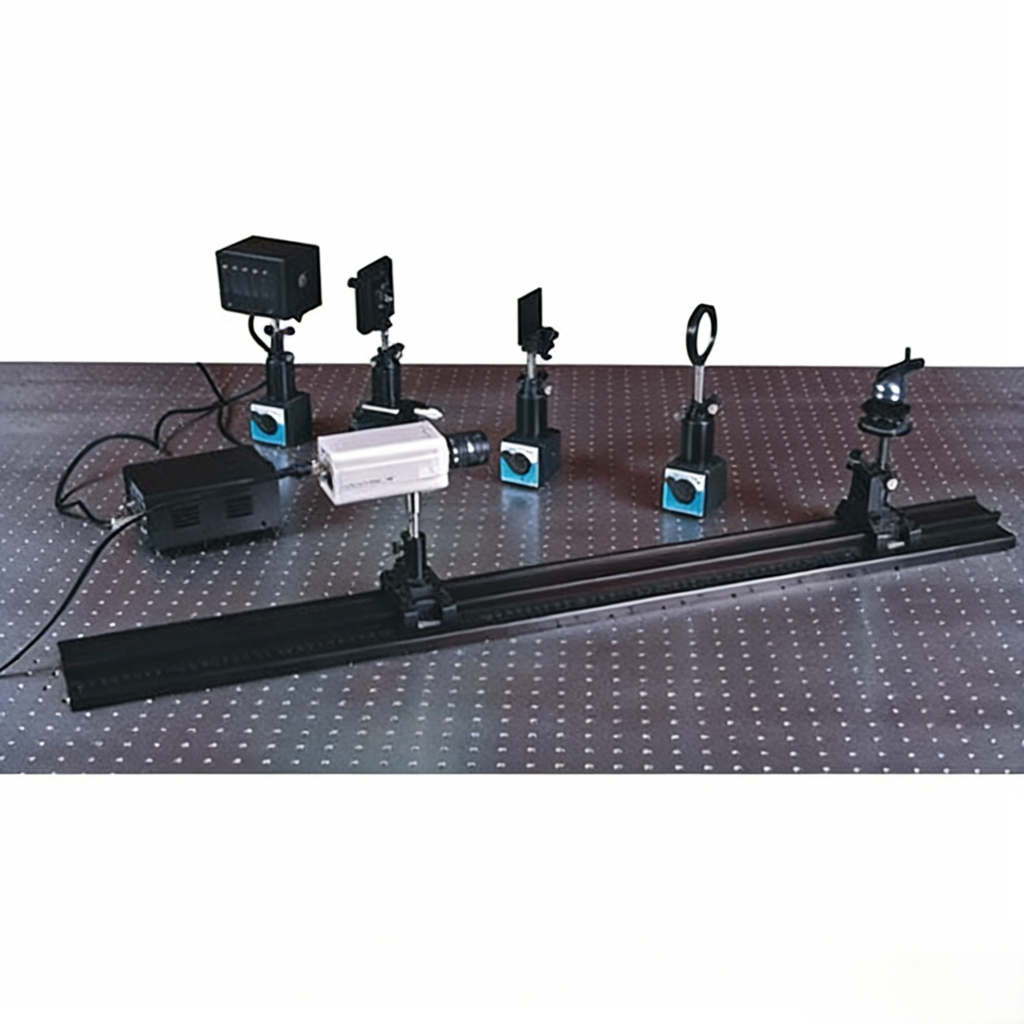
The Atomfair-MI-739 Michelson Interferometer falls under the category of interference, diffraction, and polarization experimental instruments. Boasting a platform-style design, it allows for easy integration of substances under study into the optical path. Primarily tailored for physics optics experimental teaching in colleges and universities, this instrument enables students and researchers to observe various interference phenomena and conduct precise measurements of key optical parameters, making it an indispensable tool for optical education and basic research.
Key Experimental Capabilities
- Observe inclined interference, equal-thickness interference, and white light interference (requires optional accessory: Sodium-Tungsten Dual Lamp) while accurately determining the wavelength of monochromatic light.
- Measure the wavelength difference of sodium yellow doublet.
- Determine the refractive index of transparent medium thin films and air (requires optional accessories: Gas Cell, Barometer, and Gauge Head).
Standard Configuration & Technical Specifications
| No. | Name | Specifications |
|---|---|---|
| 1 | Michelson Interferometer Main Unit | Beam splitter and compensation plate flatness: ≤1/20λ; Micrometer measurement division value: equivalent to 0.0005mm; Moving mirror travel: 1.25mm; Wavelength measurement accuracy: relative error of approximately 2% when counting 100 fringes |
| 2 | Laser (with power supply) | Helium-neon laser, wavelength 632.8nm |
| 3 | Other Accessories | Pinhole plate (100mm×60mm), ground glass screen |
Note: The above configuration and parameters are for reference only. The final product shall be subject to the packing list. Minor adjustments may be made without prior notice.
Optional Accessories
| No. | Name | Specifications |
|---|---|---|
| 1 | Sodium-Tungsten Dual Lamp | Sodium lamp power: 20W; Tungsten bromide lamp specification: 12V, 35W |
| 2 | Gas Cell | Length: 80mm |
Application Scenarios
- College and university physics laboratories for optical experiment teaching.
- Basic optical research institutions engaged in interference phenomenon observation and optical parameter measurement.
- Vocational and technical schools offering related majors for practical skill training.
If you’re interested, have any questions, or have specific customization requirements, please feel free to contact us at inquiry@atomfair.com.
The integrated helium-neon laser emits a visible coherent beam that poses an eye hazard. The interferometer optics require a clean, dust-free environment to maintain fringe visibility.
- Laser Safety: Direct eye exposure to the laser beam can cause retinal damage; appropriate laser safety eyewear is required during operation.
- Optical Surface Cleanliness: The beam splitter and mirror surfaces must be kept free of fingerprints and dust to prevent degradation of fringe contrast.
The setup involves aligning the laser, beam splitter, and mirrors to produce interference fringes. The operation requires careful adjustment of the micrometer to count fringe transitions for measurements.
Required Equipment: Pinhole plate, Ground glass screen, Laser power supply
- Position and power the laser
Position the helium-neon laser on the optical table and connect its power supply. - Align the laser beam
Align the laser beam through the pinhole plate to ensure it strikes the beam splitter centrally. - Adjust beam splitter and plate
Adjust the beam splitter and compensation plate to obtain a clear interference pattern on the ground glass screen. - Move the mirror with micrometer
Rotate the micrometer drum to move the movable mirror and observe fringe movement. - Count fringes for measurement
Count the number of fringes passing a reference point to measure wavelength or other parameters.
What is the wavelength measurement accuracy of the Atomfair-MI-739 Michelson interferometer when counting 100 fringes?
The wavelength measurement accuracy is a relative error of approximately 2% when counting 100 fringes. This specification is based on the instrument's splitter/compensator plate flatness of ≤1/20λ and micrometer division value equivalent to 0.0005 mm, as stated in the product description.
Which optional accessory is required to observe white light interference with the Atomfair-MI-739?
White light interference observation requires the optional Sodium-Tungsten Dual Lamp accessory. The lamp includes a 20W sodium lamp and a 12V, 35W tungsten bromide lamp, enabling both sodium and white light sources for interference experiments.
What additional equipment is needed to measure the refractive index of air using the MI-739?
Measuring the refractive index of air requires the optional Gas Cell (80 mm length), Barometer, and Gauge Head. These accessories allow controlled introduction of air into the optical path and pressure measurement, as specified in the product's optional accessories and key experimental capabilities.
The Atomfair-MI-739 Michelson Interferometer is a platform-style instrument designed for university-level optics teaching, enabling observation of inclined, equal-thickness, and white-light interference, with wavelength measurement accuracy of ~2% relative error over 100 fringes. Its moving mirror travel of 1.25 mm and micrometer resolution of 0.0005 mm support precise refractive index and wavelength-difference measurements, though certain capabilities require optional accessories.
Positive
- High-precision optical components: Beam splitter and compensation plate flatness of ≤1/20λ ensures wavefront quality, enabling accurate interference fringe observation and reliable measurement of optical parameters.
- Fine measurement resolution: Micrometer division equivalent to 0.0005 mm and moving mirror travel of 1.25 mm allow precise determination of wavelength differences and refractive indices, suitable for educational experiments.
Trade-offs
- Requires optional accessories for full capability: White-light interference and refractive index measurements of air or thin films require additional purchases (Sodium-Tungsten Dual Lamp, Gas Cell, Barometer, Gauge Head), increasing initial setup cost and complexity.
- Limited moving mirror travel: The 1.25 mm travel restricts the maximum optical path difference, which may limit experiments requiring larger path variations, such as measuring low-coherence sources without white-light compensation.
Every advanced material, component, equipment, and instrument in our catalog is backed by rigorous testing. We maintain strict internal quality management frameworks and align with CE conformity metrics to deliver transparent, reproducible performance data via our public open-science repository.
To request raw batch performance data, submit formal vendor registration paperwork, or execute a fast-turnaround R&D manufacturing loop, contact us at inquiry@atomfair.com.
Item is dispatched under the Atomfair Shipping & Delivery Framework (Free worldwide shipping on orders over $59 USD excl. heavy equipment). Return is governed by the Atomfair Return & Refund Policy (7-day technical return window).