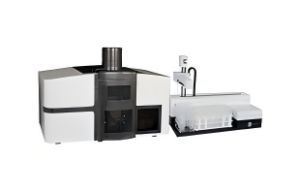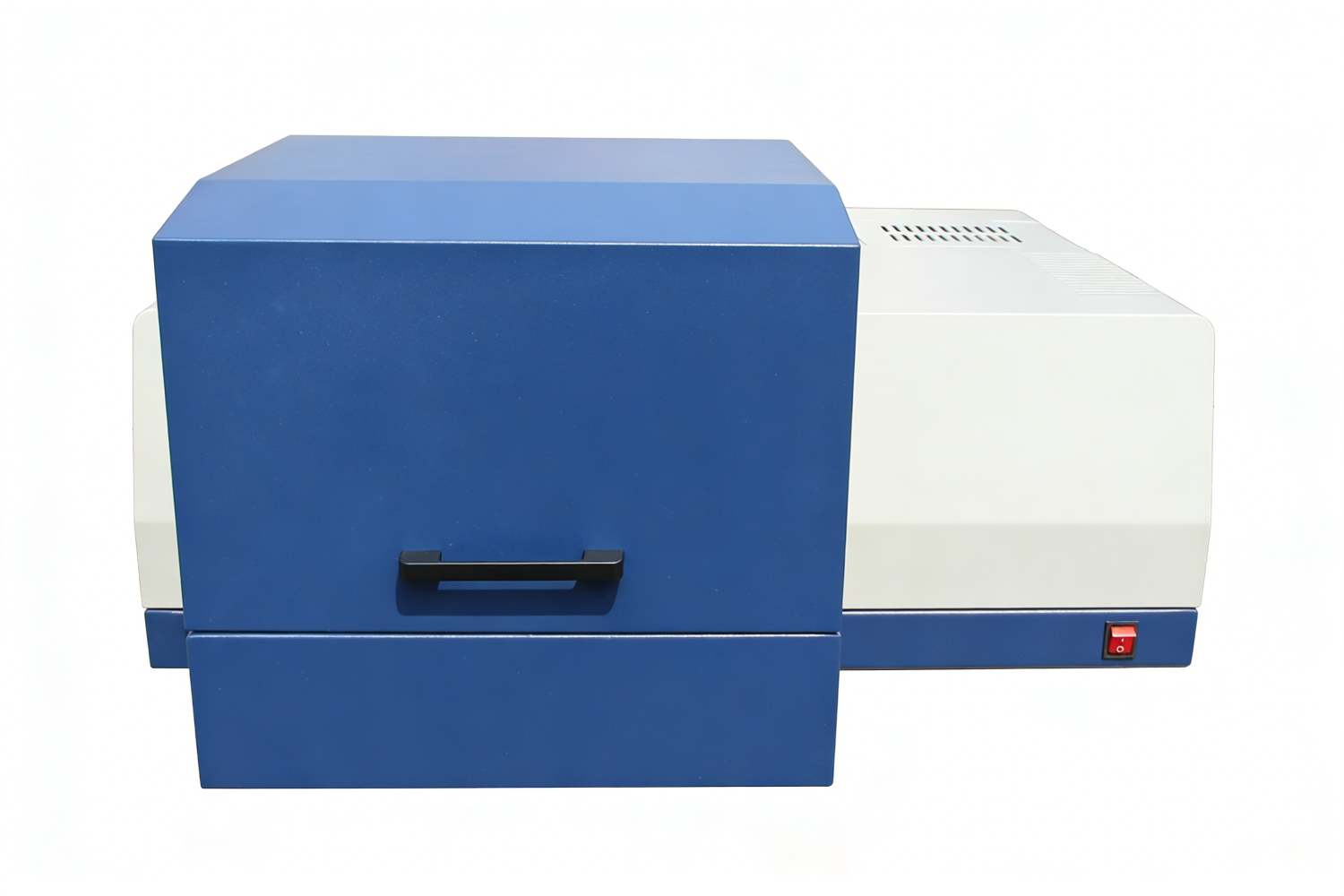
Atomfair-GL-629 Architectural Glass Optical & Thermal Tester
1. Product Overview
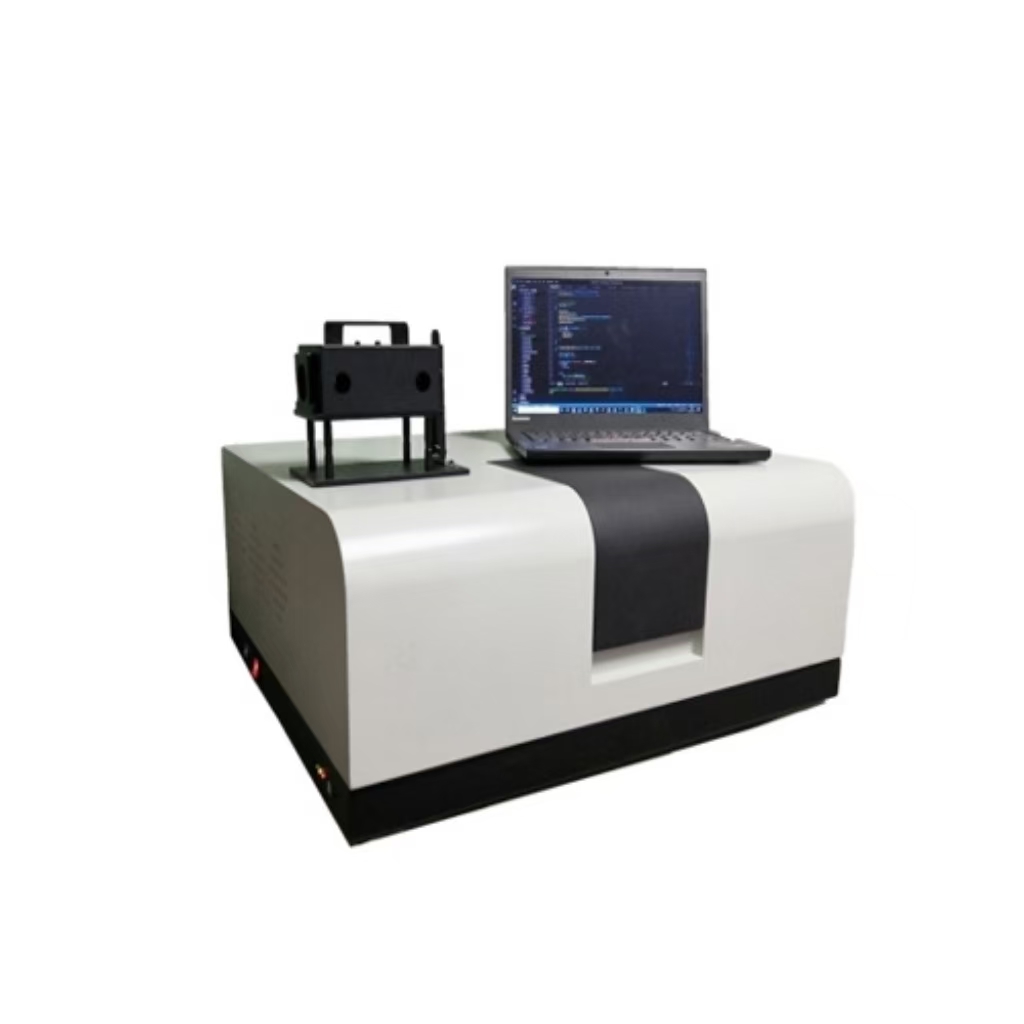
Atomfair-GL-629 is a high-performance professional device specially designed for energy-saving testing of architectural glass, with core performance complying with the international standard ISO 9050-2003. It can accurately measure key optical and thermal parameters including visible light transmittance, direct solar transmittance, total solar energy transmittance and shading coefficient, suitable for architectural glass samples of 20-100mm (thickness ≤20mm). Adopting imported light source and dual detector configuration with dual-beam optical system, it features high detection accuracy, low noise, strong stability and high automation, widely used in architectural glass production quality control, engineering testing, scientific research experiments and other fields, providing reliable data support for glass energy-saving performance evaluation.
2. Core Features
- Full coverage of professional parameters: Focus on the core energy-saving testing needs of architectural glass, one-stop measurement of key parameters such as visible light transmittance and direct solar transmittance, no need for additional equipment matching to meet comprehensive testing needs.
- High-end imported configuration: Adopting imported light source with longer service life and stronger stability; equipped with dual imported detectors for UV/VIS/NIR bands, sensitive to weak signals with low noise and better detection accuracy.
- High-precision optical design: Dual-beam, dual-grating and dual-detector optical system effectively reduces background interference and improves test accuracy; wavelength accuracy ±0.5nm (UV/VIS), ±2.0nm (NIR), all core indicators reach the international advanced level.
- Efficient automatic operation: Support automatic computer control, automatic calibration on startup and automatic data collection and processing; equipped with special test software to realize instrument reset, parameter setting, data export (text/EXCEL), report printing and other functions with convenient and efficient operation.
- Fast data transmission: USB2.0 communication interface with single scan only takes 5 minutes, stable and fast data transmission greatly improves testing efficiency, suitable for batch sample testing scenarios.
- Wide sample adaptation range: Measurable sample specification is 20-100mm with thickness ≤20mm, compatible with various architectural glass such as ordinary transparent glass, insulating glass and coated glass, meeting the testing needs of different application scenarios.
- Flexible spectral bandwidth adjustment: UV-VIS band provides 7 gears of bandwidth from 0.1nm to 5.0nm; NIR band supports 0.4-16.0nm automatic/manual adjustment, which can be accurately matched according to sample characteristics with stronger adaptability.
- Rich optional configurations: Standard equipped with basic accessories such as transmission accessory, specular reflection accessory and standard reflector; optional integrating sphere accessory (applicable wavelength 280-2500nm) can be selected on demand to expand detection functions and meet diverse testing needs.
3. Specification Parameters
| Item | Detailed Parameters |
|---|---|
| Model No. | Atomfair-GL-629 |
| Measurable Sample Specification | 20-100mm, thickness ≤20mm |
| Wavelength Range | 190-3200nm |
| Wavelength Accuracy | UV/VIS: ±0.5nm; NIR: ±2.0nm |
| Wavelength Repeatability | UV/VIS: ≤0.3nm; NIR: ≤1.0nm |
| Transmittance Accuracy | ±0.3%T |
| Transmittance Repeatability | ≤0.2%T |
| Stray Light | ≤0.2%T (220nm) |
| Baseline Flatness | ±0.005A (200-2500nm, after 30 mins warm-up) |
| Spectral Bandwidth | UV-VIS: 0.1nm, 0.2nm, 0.5nm, 1.0nm, 2.0nm, 3.0nm, 5.0nm; NIR: 0.4-16.0nm (Automatic/Manual) |
| Working Mode | Transmission, Reflection |
| Light Source | Imported light source with long service life and high stability |
| Detector | Dual imported detectors (dedicated for UV/VIS/NIR bands) |
| Optical System | Dual-beam, Dual-grating, Dual-detector |
| Communication Interface | USB2.0 |
| Overall Dimension (L×W×H) | 750×600×260mm |
| Sample Chamber Dimension (L×W×H) | 120×240×200mm |
| Weight | 65kg |
| Power Supply | AC220V, 50Hz |
| Software Function | Automatic instrument reset, Parameter setting, Spectral data processing, Data export (Text/EXCEL), Test report printing |
| Standard Accessories | Main unit, Transmission accessory, Specular reflection accessory, Standard reflector, USB cable, Three-core power cord, Cross screwdriver, Program installation disk, User manual, Quick operation guide, Certificate of conformity, Packing list |
| Optional Accessories | Integrating sphere accessory (Applicable wavelength 280-2500nm, measurable sample 20-100mm) |
| Applicable Standard | ISO 9050-2003 |
4. Typical Applications
- Architectural glass manufacturing enterprises: Energy-saving performance testing before product delivery to ensure that parameters such as visible light transmittance and shading coefficient meet international standards, guaranteeing product quality and market competitiveness.
- Engineering testing field: Inspection of glass materials entering the site during building construction to verify whether the glass energy-saving performance meets engineering design requirements and help buildings meet energy-saving standards.
- Third-party quality inspection institutions: Supervision and random inspection of architectural glass product quality and compliance testing, issuing test reports complying with international standards to provide data support for market supervision.
- Research institutes: R&D of new energy-saving glass materials, testing optical and thermal parameters of materials to provide accurate data support for formula optimization and technological innovation.
- Glass trade industry: Compliance testing of imported and exported architectural glass products to ensure that product parameters meet international standards of target markets and guarantee smooth trade.
- Design consulting institutions: Providing optical and thermal parameter data of glass materials in the process of building energy-saving design to optimize building energy-saving schemes and improve building energy-saving effects.
If you’re interested, have any questions, or have specific customization requirements, please feel free to contact us at inquiry@atomfair.com.
Sample dimensions must be 20–100 mm in width and no more than 20 mm thick. The instrument requires a 30-minute warm-up period after power-on to achieve baseline flatness of ±0.005 A over 200–2500 nm.
- Sample Compatibility: The tester is designed for transparent, insulating, and coated architectural glass within the specified size limits.
- Infrastructure Requirements: A computer with the provided software and a USB2.0 interface is necessary for instrument control and data acquisition.
- Calibration Procedure: Automatic calibration must be performed at startup to ensure measurement accuracy per ISO 9050-2003.
- Spectral Bandwidth Adjustment: UV-VIS bandwidth can be set to any of seven discrete values from 0.1 to 5.0 nm, while NIR bandwidth is adjustable from 0.4 to 16.0 nm automatically or manually.
- Optional IntegratIng Sphere: An optional integrating sphere accessory extends detectable wavelength coverage to 280–2500 nm for reflection measurements.
This procedure covers sample preparation, instrument warm-up, calibration and data acquisition. Each step must be followed in sequence to obtain accurate transmittance and shading coefficient results.
Required Equipment: Atomfair-GL-629 Tester, Computer with installed test software, USB 2.0 cable
- Connect and Power On
Connect the instrument to a computer via USB, then power on the unit using the AC220V supply. - Warm Up the Instrument
Allow the instrument to warm up for 30 minutes to stabilize the baseline before proceeding. - Set Software Parameters
Open the test software, perform an automatic instrument reset and set the desired spectral bandwidth and measurement mode for the sample. - Place the Sample
Insert the glass sample (width 20–100 mm, thickness ≤20 mm) into the sample chamber securely. - Run Calibration and Measurement
Initiate automatic calibration through the software, then start the spectral scan which completes in approximately 5 minutes. - Export Data
Export the collected spectral data and calculated parameters to text or Excel format using the software's export function.
How does the dual-beam dual-detector optical system improve measurement accuracy for low-transmittance coated glass?
The dual-beam, dual-grating, dual-detector configuration effectively reduces background interference, which is critical for low-transmittance samples. Combined with a stray light of ≤0.2%T at 220nm and baseline flatness of ±0.005A after 30 minutes warm-up, the system achieves a transmittance accuracy of ±0.3%T and repeatability ≤0.2%T. This ensures reliable data even for heavily coated or tinted architectural glass.
Can the Atomfair-GL-629 directly measure the solar heat gain coefficient (SHGC) or only the shading coefficient?
The instrument measures total solar energy transmittance and shading coefficient as defined by ISO 9050-2003. While SHGC is not explicitly listed as an output parameter, the shading coefficient is directly related and can be used to derive SHGC per standard procedures. The sample size must be 20-100mm with thickness ≤20mm; the optional integrating sphere (280-2500nm) extends diffuse measurement capability for textured or patterned glass.
What warm-up and environmental conditions are required to achieve the specified baseline flatness and wavelength accuracy?
The baseline flatness of ±0.005A over 200-2500nm is guaranteed only after a 30-minute warm-up. The instrument requires AC220V, 50Hz power and operates within standard laboratory conditions. Wavelength accuracy is ±0.5nm in UV/VIS and ±2.0nm in NIR, with repeatability ≤0.3nm and ≤1.0nm respectively. The sample chamber dimensions (120×240×200mm) accommodate glass up to 20mm thick, and the 65kg unit should be placed on a stable, vibration-free bench.
The Atomfair-GL-629 is a dual-beam, dual-grating, dual-detector spectrophotometer engineered for ISO 9050-2003 energy-saving assessment of architectural glass, delivering ±0.3%T transmittance accuracy across 190-3200nm with a 5-minute full scan. Its 20-100mm sample chamber and optional integrating sphere support direct optical and thermal parameter measurement for QC, engineering, and research applications.
Positive
- High-precision dual-beam optical system: The dual-beam, dual-grating, dual-detector design minimizes background interference, achieving ±0.3%T transmittance accuracy and ≤0.2%T repeatability, which is critical for reliable ISO 9050-2003 energy performance classification.
- Broad spectral and sample versatility: Covering 190-3200nm with adjustable spectral bandwidth (UV-VIS 0.1-5.0nm; NIR 0.4-16.0nm) and supporting 20-100mm samples up to 20mm thick, the instrument accommodates transparent, insulating, and coated glass types for diverse QC and R&D workflows.
Trade-offs
- Requires 30-minute warm-up for baseline flatness: Baseline flatness of ±0.005A is only guaranteed after a 30-minute warm-up, which extends pre-test stabilization time and may affect high-throughput batch testing schedules.
- Fixed AC220V/50Hz power and 65kg weight: The instrument operates solely on AC220V/50Hz and weighs 65kg, requiring dedicated bench space and stable power infrastructure, which may limit portability or deployment in field-based testing environments.
Every advanced material, component, equipment, and instrument in our catalog is backed by rigorous testing. We maintain strict internal quality management frameworks and align with CE conformity metrics to deliver transparent, reproducible performance data via our public open-science repository.
To request raw batch performance data, submit formal vendor registration paperwork, or execute a fast-turnaround R&D manufacturing loop, contact us at inquiry@atomfair.com.
Item is dispatched under the Atomfair Shipping & Delivery Framework (Free worldwide shipping on orders over $59 USD excl. heavy equipment). Return is governed by the Atomfair Return & Refund Policy (7-day technical return window).