Description
I. Basic Product Information
- Product Name: High-Stability Fluorescent Microspheres
- Product Aliases: Nanofluorescent Beads, Fluorescent Nanospheres
- Product Grade: Research Grade
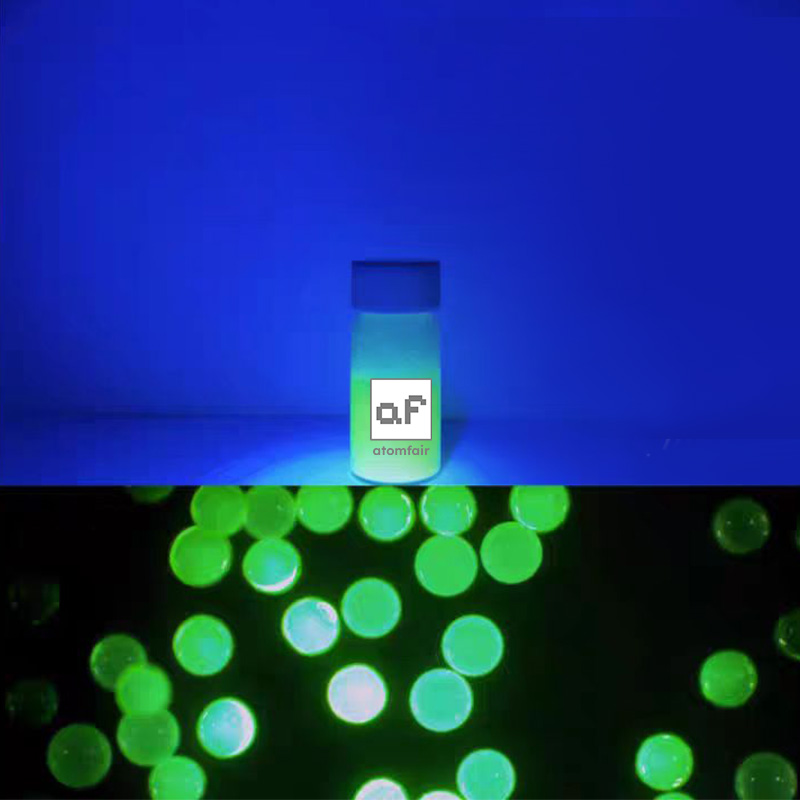
Nanofluorescent beads (fluorescent microspheres) are spherical particles that uniformly encapsulate fluorescent dyes (or quantum dots, etc.) in polymer (such as polystyrene) or silica matrices. They range in size from the nanometer scale (typically 10nm to several micrometers) and possess stable fluorescent properties and excellent dispersibility.
This product is specifically designed for high-end biomedical research, optical instrument calibration, and nanotechnology applications. Its core advantages include high particle size uniformity, strong fluorescence intensity, and excellent photostability, which can effectively improve the reliability of experimental data. It is an ideal choice for fluorescent labeling and detection in scientific research.
II. Technical Specification Standards
2.1 Basic Parameter Range
| Parameter Category | Specific Specifications | Description |
|---|---|---|
| Particle Size Range | 20nm-500μm | Integrates two expressions from the original document (40nm-500nm and 20nm-500μm) to cover a wider range of size requirements |
| Surface Modification | Carboxyl Modification, Amino Modification | The two modification types can meet the conjugation needs of different biomolecules (such as antibodies, antigens, nucleic acids) |
| Storage Conditions | Recommended storage at 2-8℃ in the dark | Supplemented based on the characteristics of similar products, which can effectively extend the product shelf life |
| Shelf Life | 12 months in unopened condition | Supplemented in accordance with general standards for research-grade products |
2.2 Detailed Parameters of Color Models
| Fluorescence Color | Particle Size Range | Maximum Excitation Wavelength | Maximum Emission Wavelength | Application Scenarios |
|---|---|---|---|---|
| Red | 20nm-500μm | 632nm | 680nm | Suitable for experiments requiring avoidance of biological autofluorescence interference, such as deep tissue imaging |
| Green | 20nm-500μm | 488nm | 520nm | Preferred for routine fluorescence imaging, compatible with the 488nm laser channel of most fluorescence microscopes |
| Blue | 20nm-500μm | 405nm | 425nm | Suitable for the blue channel in multicolor labeling experiments, with no overlap with other fluorescent colors |
| Orange | 20nm-500μm | 380nm | 610nm | Suitable for ultraviolet excitation scenarios, with strong penetration of fluorescent signals |
III. Product Advantage Analysis
3.1 Performance Advantages
- Excellent Optical Performance: High fluorescence intensity and strong signal strength enable accurate detection at low concentrations; excellent photostability and outstanding anti-photobleaching ability support long-term continuous observation.
- Stable Physical Properties: Good particle size uniformity (CV value usually < 5%), excellent dispersibility, and low tendency to aggregate; high sphericity and regular morphology ensure the consistency of experimental results.
- Controllable Surface Properties: Offers two modification options (carboxyl and amino), with stable surface active group density, facilitating subsequent biomolecule conjugation with high coupling efficiency.
3.2 Application Advantages
- High Flexibility: Multiple color and particle size combinations are available to flexibly match specific experimental requirements.
- Wide Compatibility: Compatible with various experimental platforms such as flow cytometry, fluorescence microscopy, and immunoassays, without the need for special equipment modification.
- Reliable Quality: Adheres to strict quality control standards for research-grade products, with good batch-to-batch stability and high experimental reproducibility.
IV. Recommended Application Fields
| Application Field | Specific Application Scenarios | Recommended Models |
|---|---|---|
| Biomedical Research | Cell Tracking, Cell Migration Observation, Cell Differentiation Research | Green (488nm excitation), Red (632nm excitation) |
| Immunoassay and Diagnosis | ELISA Detection, Immunochromatographic Test Strips, Western Blotting | Blue (405nm excitation), Green (488nm excitation) |
| Flow Cytometry | Cell Counting, Cell Sorting, Detection of Cell Surface Markers | Green (488nm excitation), Orange (380nm excitation) |
| Optical Instrument Calibration | Fluorescence Microscope Calibration, Flow Cytometer Sensitivity Calibration | Red (632nm excitation), Green (488nm excitation) |
| Nanotechnology Research | Nanoparticle Dispersibility Testing, Nanocarrier Performance Evaluation | Multicolor combination |
If you’re interested, have any questions, or have specific customization requirements, please feel free to contact us at inquiry@atomfair.com.




Reviews
There are no reviews yet.