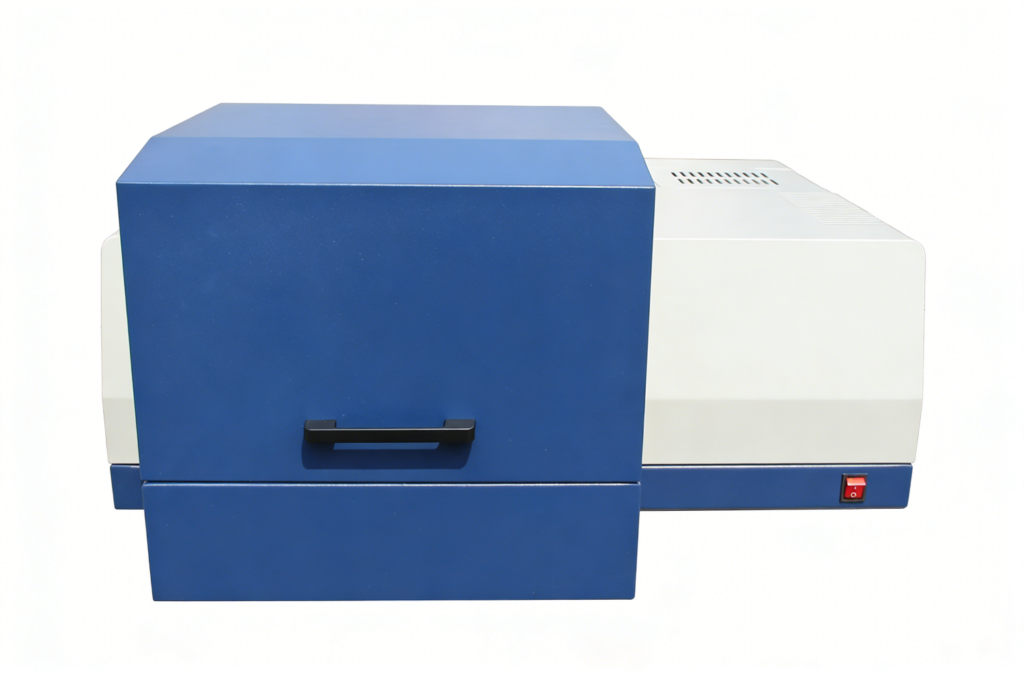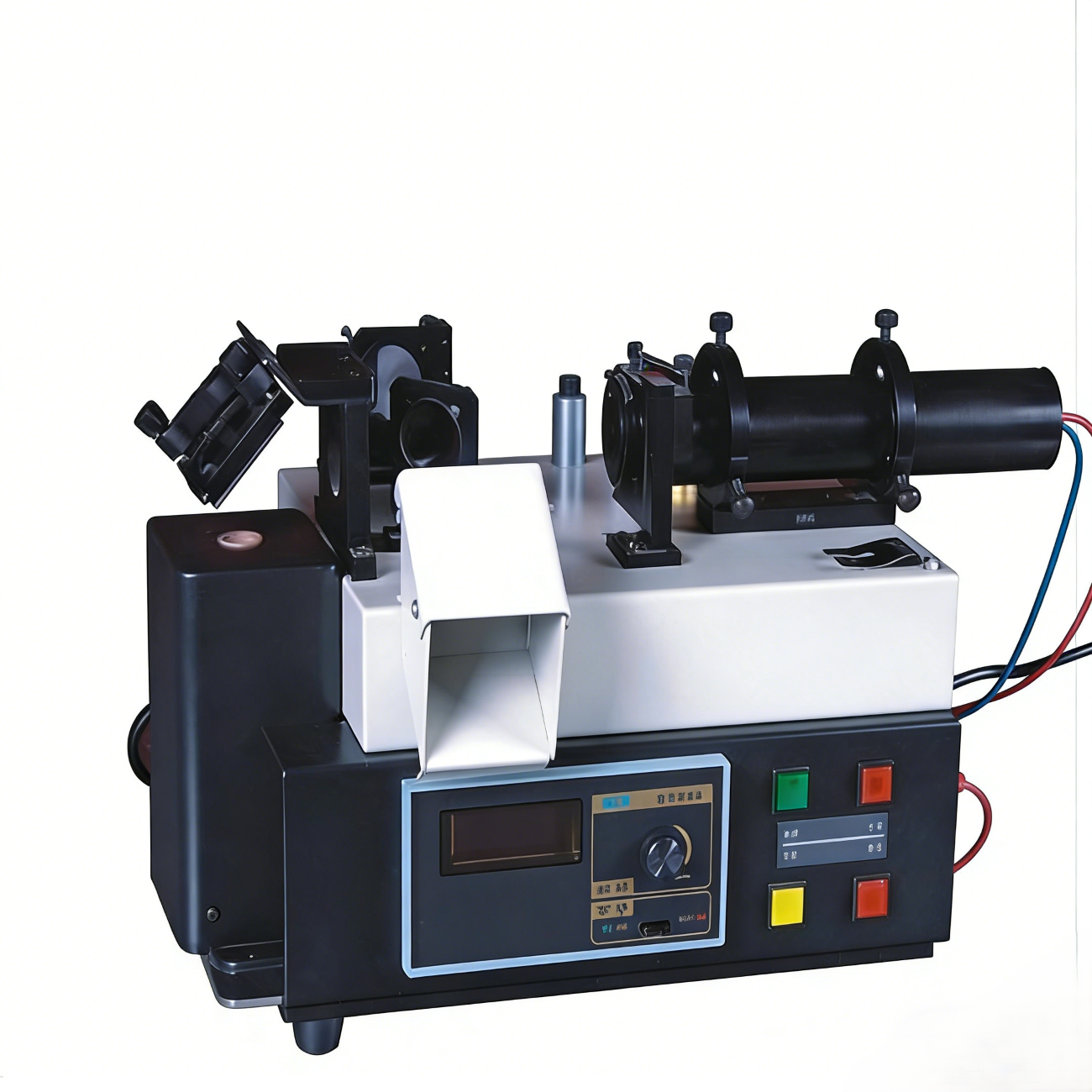
Atomfair-TEA-739 Thermal Expansion Experimental Apparatus
Product Overview
The Atomfair-TEA-739 is a specialized experimental instrument categorized under interference, diffraction, and polarization technology. Adopting an electric heating method, it leverages the linear expansion of metal samples to drive a plane mirror, which induces changes in the optical path difference of the Michelson interferometer optical path and consequently alters the interference fringes. Through this precise mechanism, the device measures the length variation of the sample and ultimately calculates the linear expansion coefficient of metals.
Compared with traditional methods such as steam heating-optical lever, this apparatus boasts distinct advantages: compact size, short required sample length, low power consumption, and high measurement accuracy. It has been awarded the Third Prize in the National University Physics Experiment Teaching Instrument Evaluation, a testament to its reliability and performance in academic settings.
Key Experimental Application
Core Function: Precisely measure the linear expansion coefficient of metals.
Target Scenarios: Ideal for college and university physics experimental teaching. It helps users deepen their understanding of thermal expansion principles and interference measurement technology, serving as a valuable tool for both theoretical verification and practical skill development in academic laboratories.
Standard Configuration & International Standard Specifications
| Quantity | Name | Specifications |
|---|---|---|
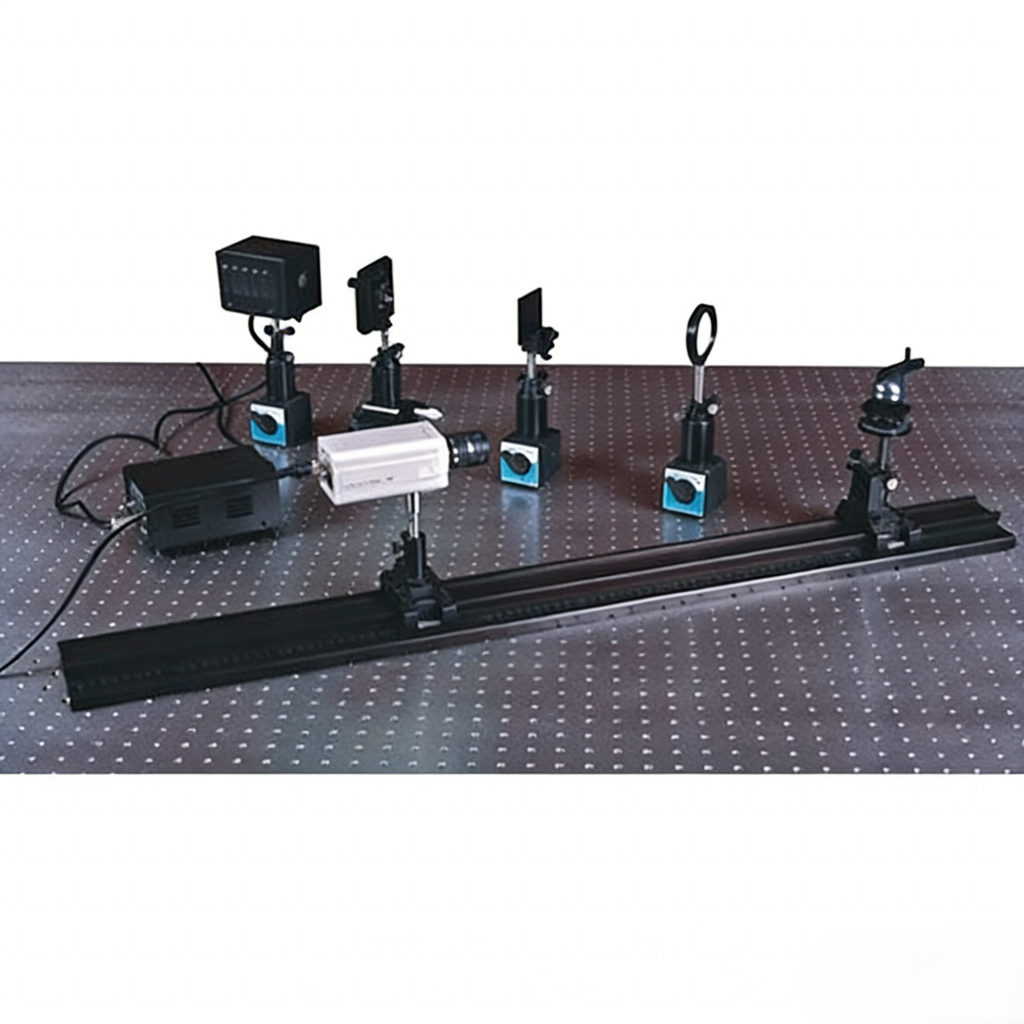
| 1 | Light Source | Helium-neon laser with a wavelength of 632.8nm and power of 1.5mW (Compliant with international laser safety and optical equipment standards) |
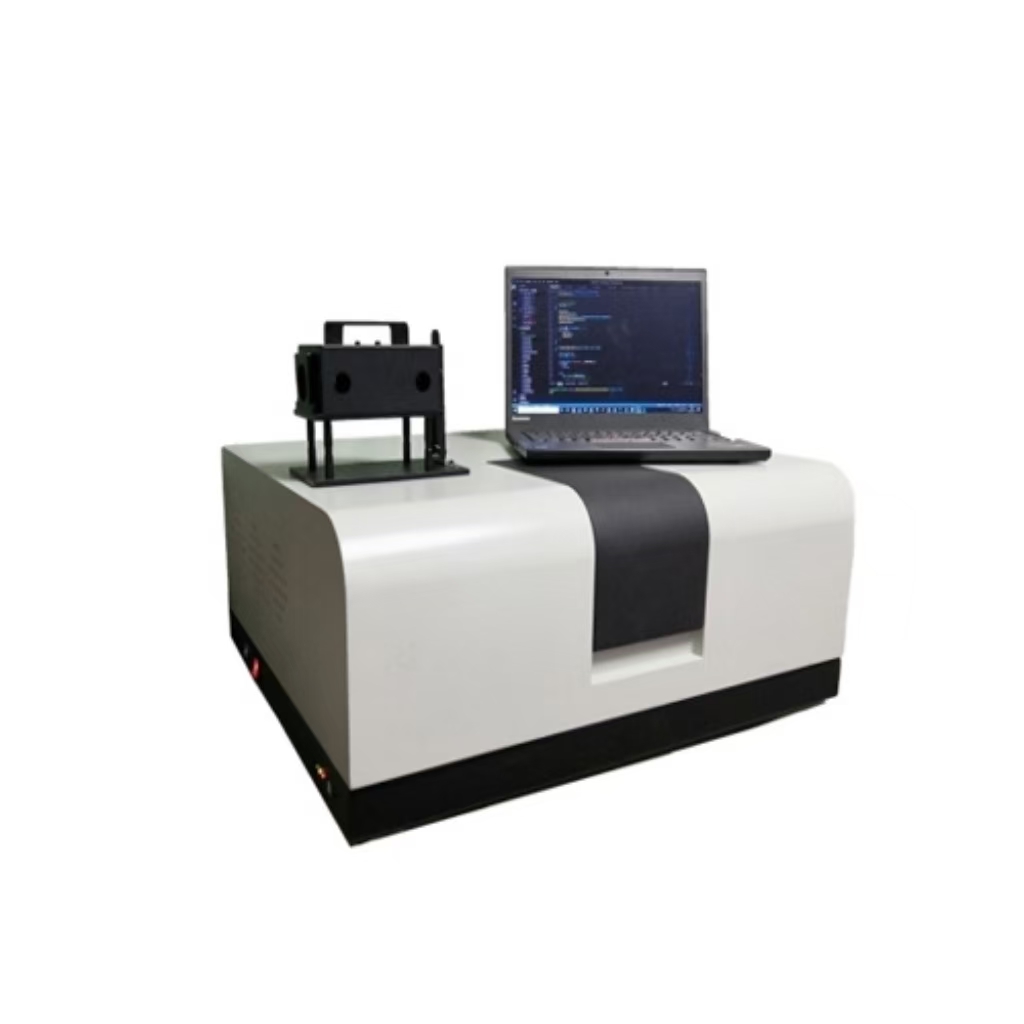
| 2 | Main Experimental Instrument |
|
| 3 | Piezoelectric Ceramic & Control Box | Driving voltage range: 10V~150V (Compliant with international voltage output standards for electrical equipment) |
| 4 | Other Accessories | Ground glass, beam expander, laser holder, dual screens (All meet international general standards for optical experimental accessories) |
Note: The above configuration and parameters are for reference only. Actual specifications are subject to the product packing list. Minor changes may be made without prior notice.
If you’re interested, have any questions, or have specific customization requirements, please feel free to contact us at inquiry@atomfair.com.
This apparatus combines a helium-neon laser source with an electric heating stage and a piezoelectric ceramic control unit for interferometric thermal-expansion measurements. Safe operation depends on controlling laser-beam exposure, piezoelectric drive voltage, optical-surface integrity, and moving-mirror displacement within rated limits.
- Laser emission control: The helium-neon laser output must be handled so that direct beam exposure to eyes is prevented during alignment.
- Piezoelectric drive limit: The piezoelectric ceramic drive voltage must remain within its rated range of 10 V to 150 V during operation.
- Optical component protection: The beam splitter, compensation plate, and moving mirror must be kept free of dust, contamination, and mechanical shock to maintain their specified flatness and travel tolerances.
- Mirror travel limit: Moving mirror displacement must not exceed its specified travel range of 1.25 mm during fringe counting.
- Beam conditioning requirement: The laser beam must pass through the supplied ground glass and beam expander before entering the interferometer.
This procedure uses electric heating of a metal sample while Michelson interference fringes are monitored to determine sample length change. The measured fringe-based length variation provides data for calculating the linear expansion coefficient of metal.
Required Equipment: Helium-neon laser assembly, Electric heating stage, Piezoelectric ceramic control box, Ground glass and beam expander
- Install sample
Install the metal sample in the electric heating stage so its expansion axis is coupled to the plane mirror without binding. - Align interferometer
Align the helium-neon laser through the beam expander onto the beam splitter until a stable interference pattern appears on the dual screens. - Configure piezo drive
Set the piezoelectric ceramic control box driving voltage within its specified 10 V to 150 V range before making fine mirror adjustments. - Apply heat
Activate electric heating and observe progressive fringe motion as thermal expansion changes the optical path difference. - Record fringe counts
Record changes in interference fringes caused by thermal expansion of the metal sample. - Calculate coefficient
Calculate linear expansion coefficient using measured fringe-based length variation according to established interferometric relations.
What measurement accuracy can be expected from the Atomfair-TEA-739 thermal expansion apparatus?
The instrument achieves a relative error of less than 2% in wavelength measurement when the fringe count is 100. The micromotion measurement division value is equivalent to 0.0005 mm, and the moving mirror travel range is 1.25 mm, enabling precise calculation of the linear expansion coefficient.
What type of samples is the Atomfair-TEA-739 designed to measure?
The apparatus is specifically designed to measure linear expansion coefficients of metal samples. It uses an electric heating method to induce thermal expansion in the metal, which drives a plane mirror within a Michelson interferometer configuration. The sample must be metallic to generate the required linear expansion.
What is the maximum measurable expansion of the metal sample with the Atomfair-TEA-739?
The moving mirror has a travel range of 1.25 mm, which defines the maximum measurable length variation of the sample. The micromotion measurement division value of 0.0005 mm allows precise detection of small expansions within this range, making it suitable for typical metal samples.
The Atomfair-TEA-739 leverages a Michelson interferometer with a helium-neon laser to measure metal linear expansion coefficients via fringe counting, achieving a micromotion division value equivalent to 0.0005 mm and a relative wavelength measurement error below 2% at 100 fringes. Its electric heating design reduces sample length requirements and power consumption compared to steam-optical lever methods, making it suitable for university physics teaching laboratories.
Positive
- High measurement precision: The micromotion division value of 0.0005 mm and relative error below 2% at 100 fringes enable accurate determination of linear expansion coefficients, critical for teaching and research applications.
- Compact and efficient design: Electric heating reduces sample length and power consumption compared to steam-optical lever methods, while the integrated Michelson interferometer with a 632.8 nm helium-neon laser provides stable optical path control.
Trade-offs
- Requires precise optical alignment: The beam splitter flatness of <1/20λ and moving mirror travel of 1.25 mm demand careful setup and vibration isolation to maintain fringe visibility and measurement accuracy.
- Laser safety and environmental constraints: The 1.5 mW helium-neon laser requires adherence to international laser safety standards, and the piezoelectric ceramic's 10V–150V driving voltage necessitates proper electrical isolation and controlled laboratory conditions.
Every advanced material, component, equipment, and instrument in our catalog is backed by rigorous testing. We maintain strict internal quality management frameworks and align with CE conformity metrics to deliver transparent, reproducible performance data via our public open-science repository.
To request raw batch performance data, submit formal vendor registration paperwork, or execute a fast-turnaround R&D manufacturing loop, contact us at inquiry@atomfair.com.
Item is dispatched under the Atomfair Shipping & Delivery Framework (Free worldwide shipping on orders over $59 USD excl. heavy equipment). Return is governed by the Atomfair Return & Refund Policy (7-day technical return window).