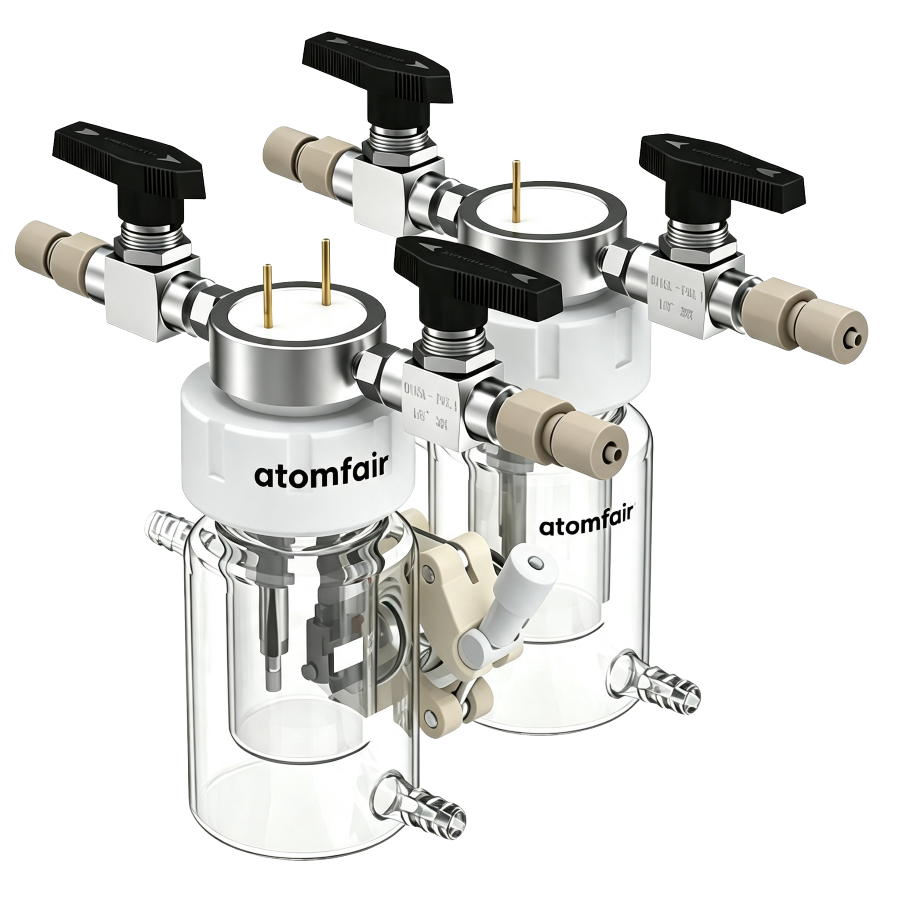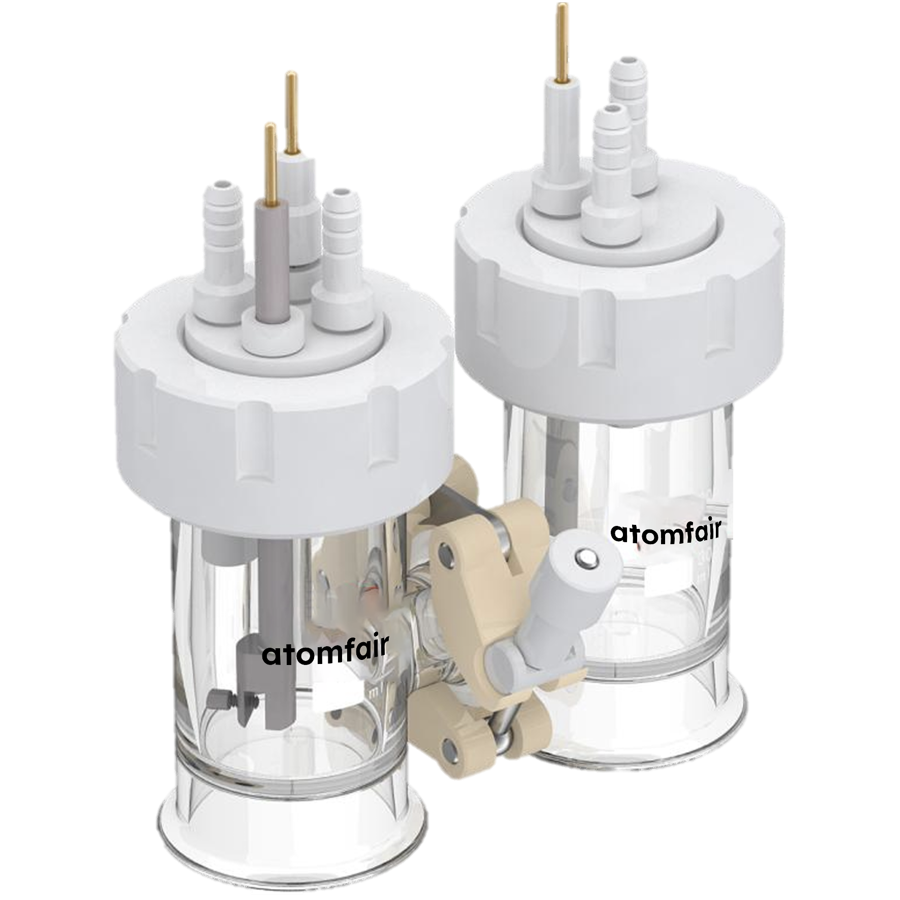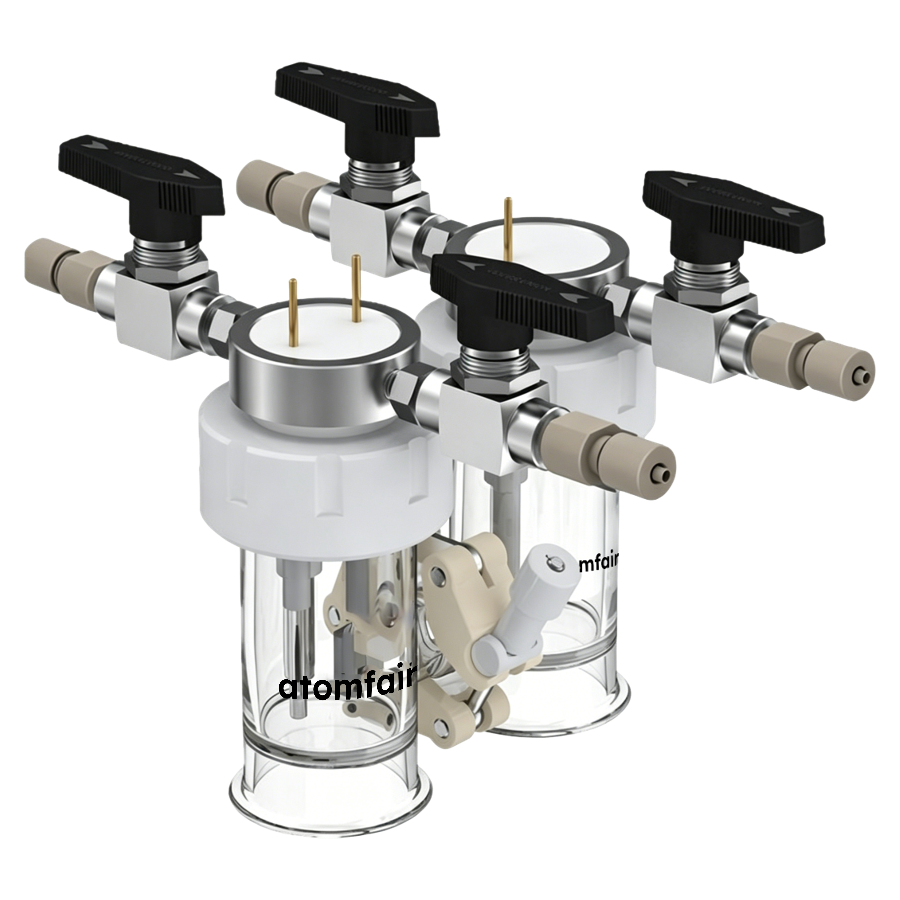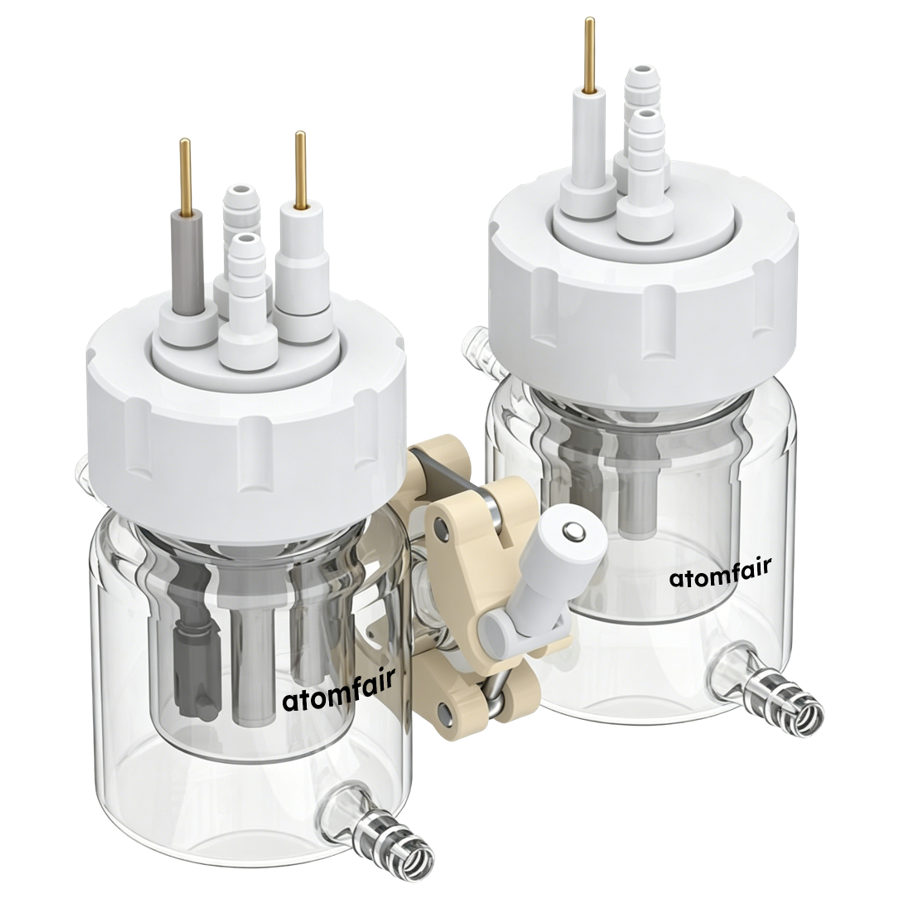
Small-Volume Single-Window Replaceable-Membrane Photoelectrochemical Cell, Sampling Port, Single-Layer | ATOMFAIRProduct Type: Electrochemical cell
Research-grade laboratory product
|
|||||||||||||||||||||||||||
|
|||||||||||||||||||||||||||
|
LABORATORY PROCUREMENT SUPPORT
For model selection, accessory matching, platform compatibility or configuration confirmation, contact our technical sales team.
E-MAIL: inquiry@atomfair.com
|
|||||||||||||||||||||||||||
|
Manufacturer: Atomfair LLC
Brand: ATOMFAIR®
|
Manufacturer: Atomfair LLC
Brand: ATOMFAIR®
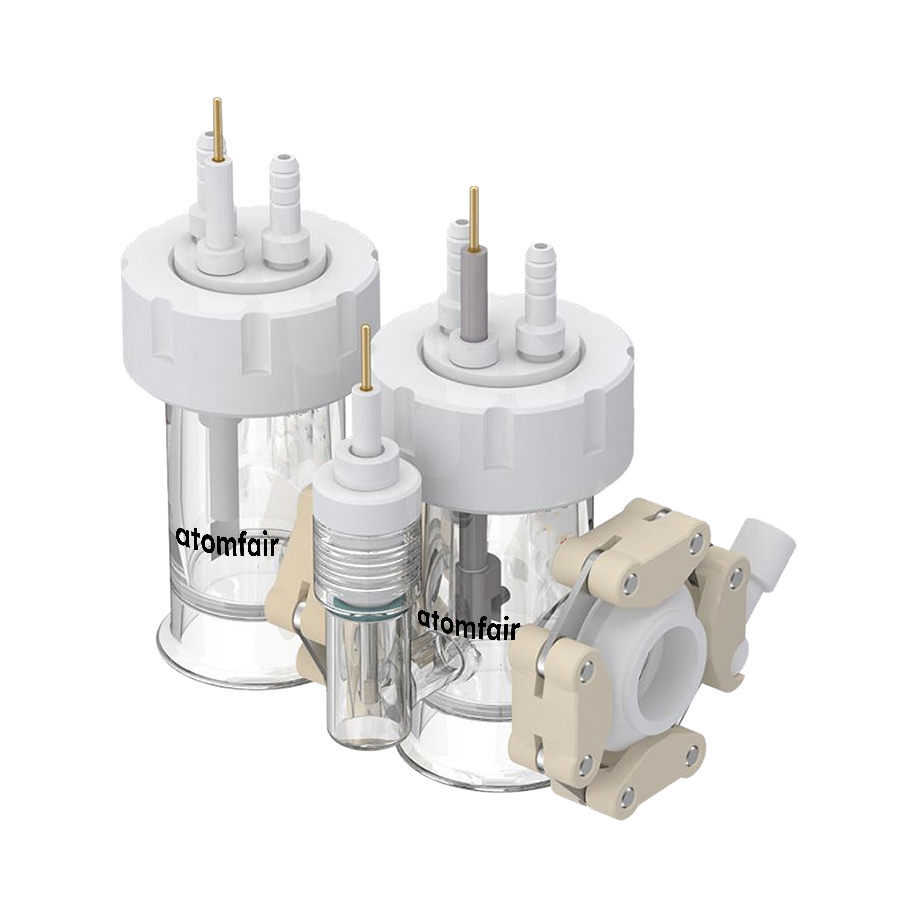
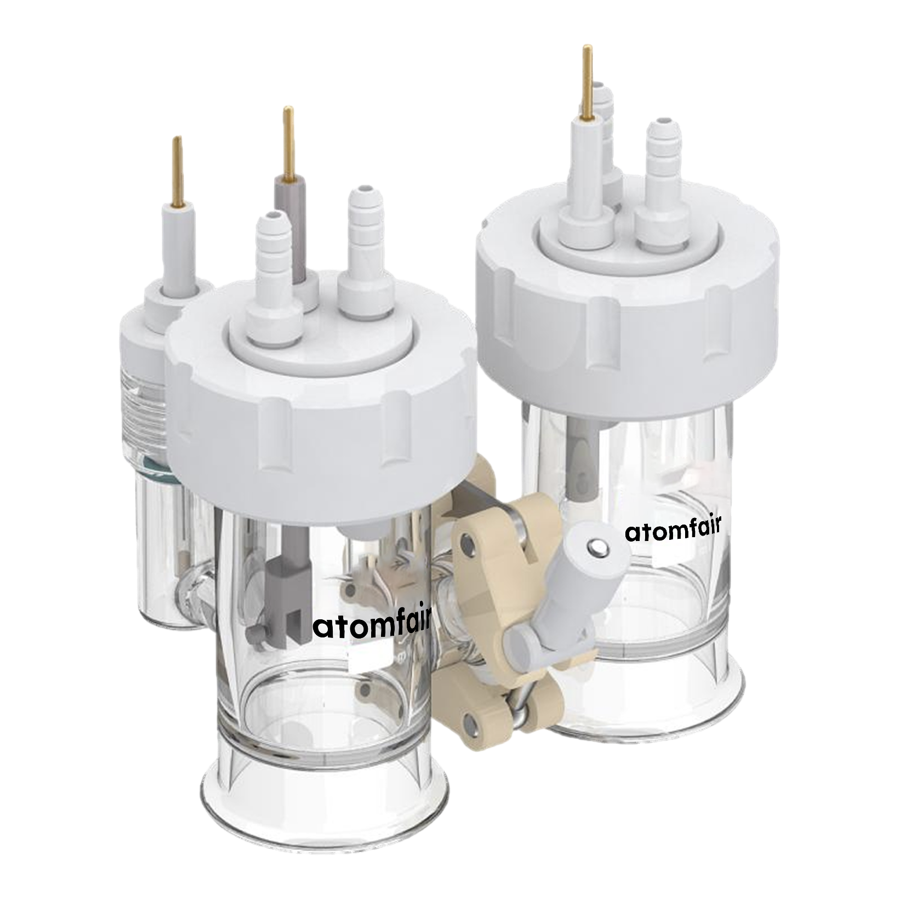
This photoelectrochemical cell requires careful handling to maintain seal integrity and optical window quality. Proper assembly and membrane compatibility are critical for anaerobic and gas-sensitive experiments.
- Quartz Window Care: Handle the quartz window with care to avoid scratches and ensure ≥95% light transmittance.
- Seal Integrity: Inspect all seals before assembly and ensure proper sealing before vacuum or gas operation.
- Membrane Compatibility: Verify the ion-exchange membrane compatibility with the electrolyte and experimental conditions before use.
- Thermal Shock Avoidance: Avoid thermal shock to the high-borosilicate glass body and quartz window by gradual temperature changes.
- Electrode Matching: Electrodes must be custom-ordered as matched sets with this cell model to ensure proper fit and sealing.
Follow these steps to assemble the cell with proper sealing and membrane installation. Ensure all components are clean and compatible before starting.
Required Equipment: Quartz window, Locking ring assembly, PTFE lid with electrode jacks, Chain-sealed membrane connectors
- Inspect the quartz window
Inspect the quartz window for scratches or damage before attaching it to the cell body via the locking ring assembly. - Install the ion-exchange membrane
Install the user-supplied ion-exchange membrane between the two compartments using the chain-sealed connections to ensure a leak-free seal. - Insert the electrodes
Insert the custom-matched working and reference electrodes into the built-in jacks on the PTFE lid and secure the seal. - Verify sealing integrity
Verify the sealing integrity by applying a gentle vacuum or pressure test before introducing electrolyte or gas. - Use the sampling port
Use the integrated sampling port to extract sample aliquots during experiments without compromising the sealed environment.
Why are the working and reference electrodes placed in the same compartment in this photoelectrochemical cell?
The working and reference electrodes are positioned in the same compartment to effectively reduce uncompensated resistance (iR drop). This design minimizes voltage losses between the electrodes, improving measurement accuracy in three-electrode photoelectrochemical experiments. The cell achieves this while maintaining absolute sealing via built-in jacks on the PTFE lid.
What electrode compatibility requirements exist for the ATOMFAIR replaceable-membrane photoelectrochemical cell?
Electrodes must be custom-ordered as matched sets specifically for this cell model. The cell does not include standard electrode dimensions or connections; instead, the PTFE lid's built-in jacks provide absolute sealing for integrated electrode connections. The manufacturer requires customers to coordinate electrode matching separately, and the ion-exchange membrane (which isolates cathode and anode) must also be user-supplied.
What handling and safety precautions are required when using this photoelectrochemical cell for vacuum or anaerobic experiments?
Before any vacuum or gas operation, ensure proper sealing is verified via the PTFE lid's built-in jacks and locking ring assembly. Avoid thermal shock to the high-borosilicate glass body and quartz window. The quartz window should be handled carefully to prevent scratches, and seals must be inspected before each assembly. For anaerobic work, the absolutely sealed design supports gas-sensitive experiments, but no double-layer temperature control is available for this model.
The ATOMFAIR AF-C023 series photoelectrochemical cell offers integrated absolute sealing, a high-transparency replaceable quartz window (≥95% transmittance), and chain-sealed membrane isolation for small-volume (10 mL) photoelectrochemical studies, but requires custom-matched electrodes, user-supplied membranes, and careful thermal management due to the absence of double-layer temperature control.
Positive
- Integrated absolute sealing for anaerobic experiments: Built-in electrode jacks on the PTFE lid provide complete sealing integrity, enabling gas-sensitive and anaerobic photoelectrochemical studies without leakage.
- Replaceable quartz window and membrane connections: The locking ring window assembly and chain-sealed membrane connections allow quick, convenient replacement of the quartz window and ion-exchange membrane without compromising seal integrity.
Trade-offs
- Custom-matched electrodes and membrane not included: Electrodes must be custom-ordered as matched sets for this cell, and the ion-exchange membrane is user-supplied, adding procurement lead time and compatibility considerations.
- No double-layer temperature control; thermal shock risk: This model does not offer a double-layer temperature-controlled version, and the quartz window is susceptible to scratches and thermal shock, requiring careful handling and stable thermal conditions.
Every advanced material, component, equipment, and instrument in our catalog is backed by rigorous testing. We maintain strict internal quality management frameworks and align with CE conformity metrics to deliver transparent, reproducible performance data via our public open-science repository.
To request raw batch performance data, submit formal vendor registration paperwork, or execute a fast-turnaround R&D manufacturing loop, contact us at inquiry@atomfair.com.
Item is dispatched under the Atomfair Shipping & Delivery Framework (Free worldwide shipping on orders over $59 USD excl. heavy equipment). Return is governed by the Atomfair Return & Refund Policy (7-day technical return window).