Small-Volume 3H Single-Window Replaceable-Membrane Photoelectrochemical Cell, Thermostatic System, Relative Sealing | ATOMFAIRProduct Type: Electrochemical cell
Research-grade laboratory product
|
|||||||||||||||||||||||||
|
|||||||||||||||||||||||||
|
LABORATORY PROCUREMENT SUPPORT
For model selection, accessory matching, platform compatibility or configuration confirmation, contact our technical sales team.
E-MAIL: inquiry@atomfair.com
|
|||||||||||||||||||||||||
|
Manufacturer: Atomfair LLC
Brand: ATOMFAIR®
|
Manufacturer: Atomfair LLC
Brand: ATOMFAIR®
The cell requires extended-length electrodes and a user-supplied ion-exchange membrane for two-compartment operation. The reference chamber must be properly sealed with internal threads to prevent siphon-effect leakage, and the quartz window must be handled with care to avoid damage.
- Thermostatic Water Jacket Leak Check: Verify the water jacket for leaks before initiating circulation of constant-temperature water.
- Membrane Compatibility Verification: Confirm compatibility of the user-supplied ion-exchange membrane with the experimental electrolyte before assembly.
- Luggin Capillary Setup: Fill the Luggin capillary with agar to reduce electrolyte flow rate and minimize iR drop during measurements.
- Seal Inspection: Inspect all seals, particularly the reference chamber threads, before each experiment to ensure leak-free operation.
Assemble the cell by installing the quartz window, inserting the membrane, and connecting electrodes with proper sealing. Operate the cell by filling the compartments, circulating temperature-controlled water, and initiating electrochemical measurements.
Required Equipment: Extended-length electrodes (working, reference, counter), User-supplied ion-exchange membrane, Constant-temperature water circulator, Agar for Luggin capillary filling
- Inspect the cell body and quartz window
Inspect the high-borosilicate glass body and quartz window for cracks or contamination before assembly. - Install the quartz window
Secure the quartz window into the cell using the locking ring assembly, ensuring a tight seal. - Insert the ion-exchange membrane
Place the user-supplied ion-exchange membrane between the two compartments to separate cathode and anode chambers. - Fill the Luggin capillary with agar
Fill the Luggin capillary with agar to reduce electrolyte flow rate and minimize iR drop. - Connect the electrodes
Insert extended-length working, reference, and counter electrodes into their respective ports with internal threaded sealing. - Fill compartments and connect water circulation
Fill each compartment with electrolyte, connect the thermostatic water jacket to a constant-temperature circulator, and verify no leaks. - Initiate electrochemical measurements
Confirm proper sealing of all ports and commence photoelectrochemical measurements under illumination.
What is the tip aperture of the Luggin capillary and how does it benefit photoelectrochemical measurements?
The Luggin capillary has a tip aperture of less than 0.2mm, which minimizes iR drop for accurate potential measurements. It can be filled with agar to further reduce electrolyte flow rate, improving measurement stability. This design is critical for precision in three-electrode photoelectrochemical studies.
What type of electrodes are required for the ATOMFAIR small-volume photoelectrochemical cell?
This cell requires extended-length electrodes, not included with the product. It is designed for a three-electrode system with a reference electrode separated via the Luggin capillary. Users must supply their own electrodes and ensure compatibility with the 10mL single-compartment volume and the cell's glass body.
What are the sealing requirements for the reference electrode chamber to prevent electrolyte leakage?
The reference electrode chamber uses internal threaded sealing to prevent electrolyte leakage due to the siphon effect. Users must ensure the reference chamber is properly sealed before operation. The cell does not include valves or pressurization capability, so sealing relies on the threaded mechanism.
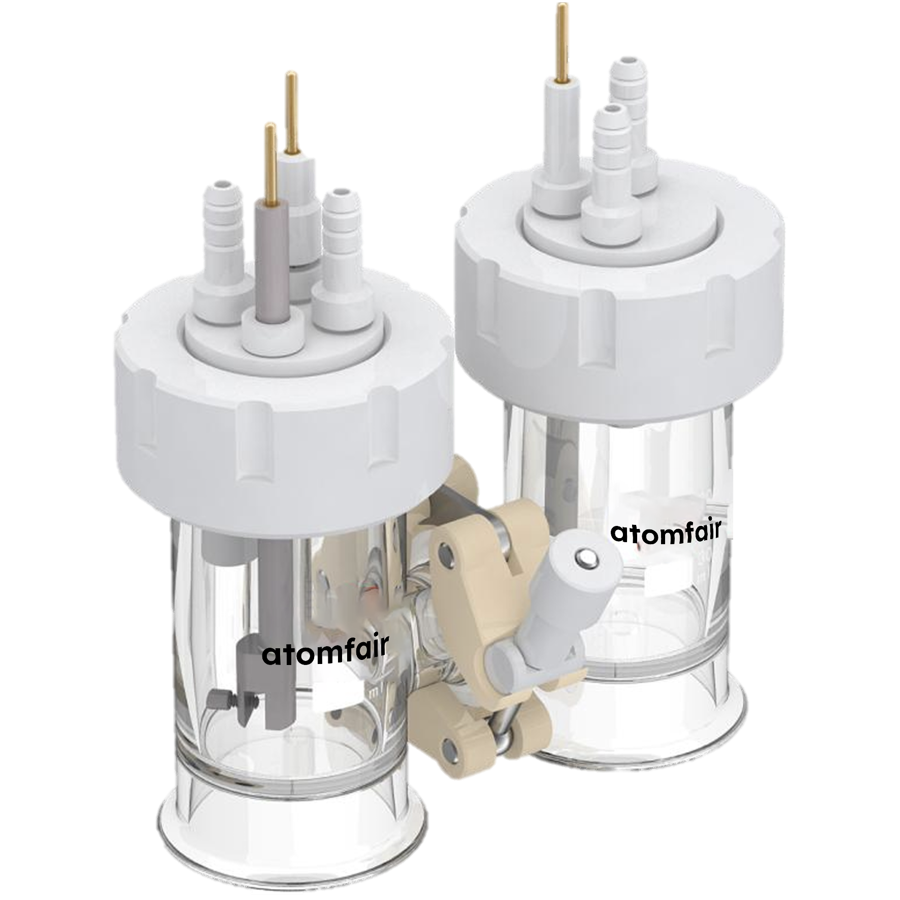
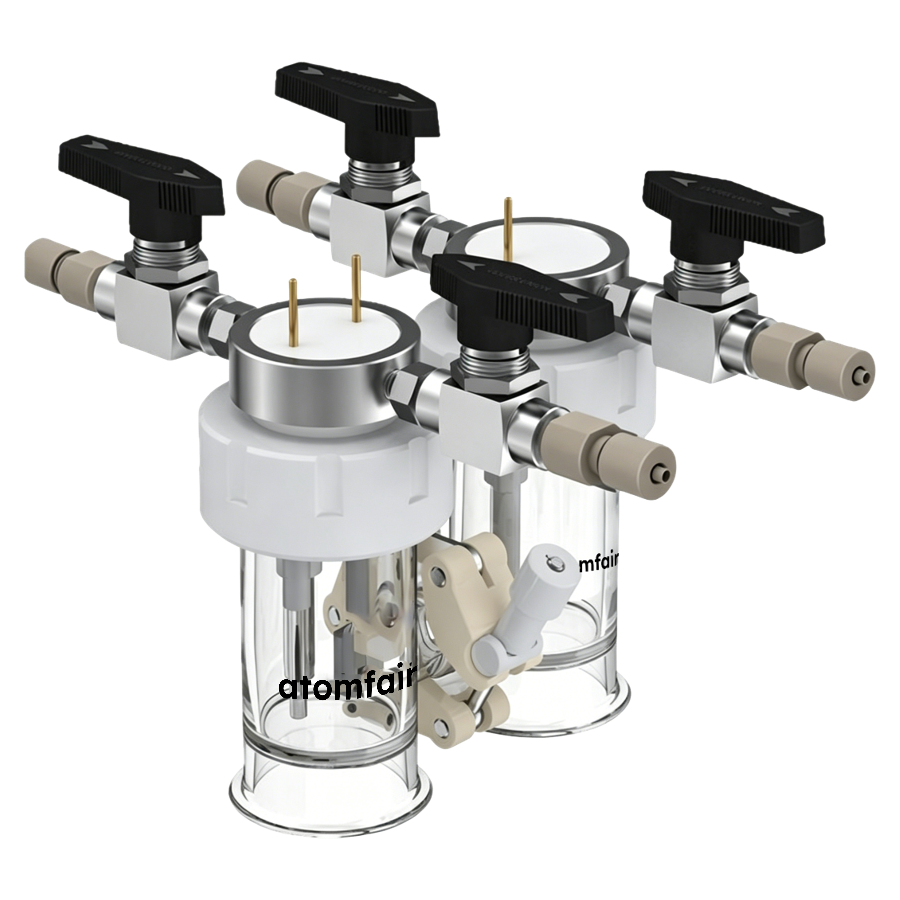
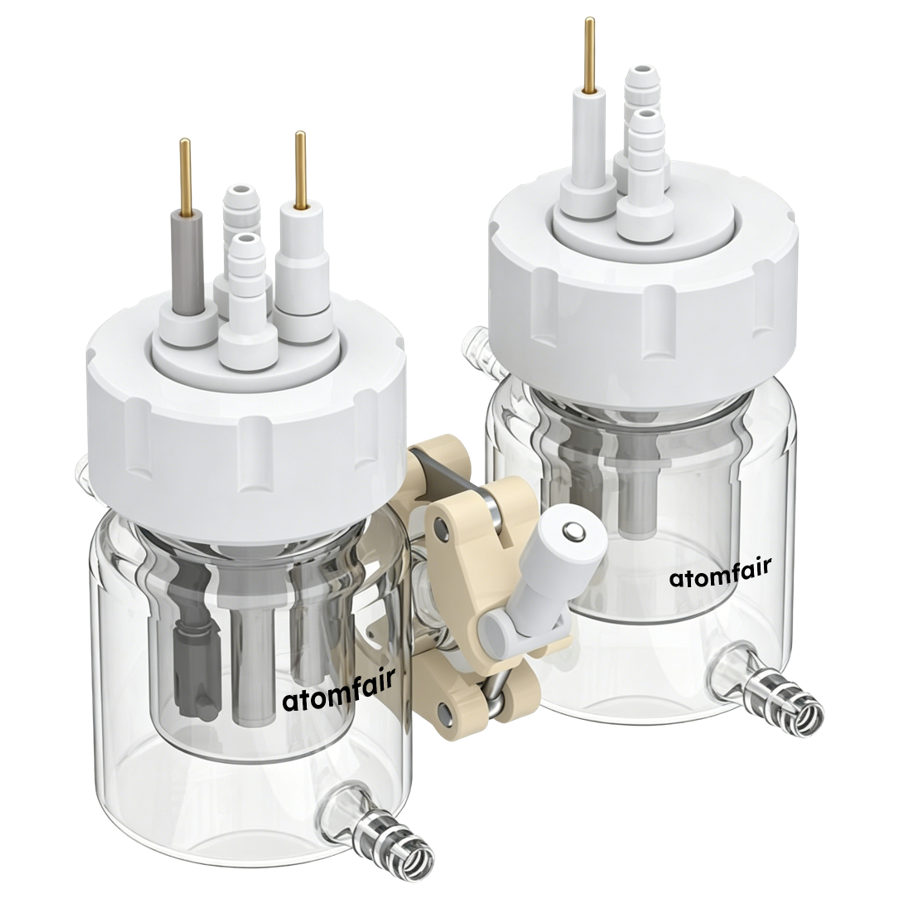
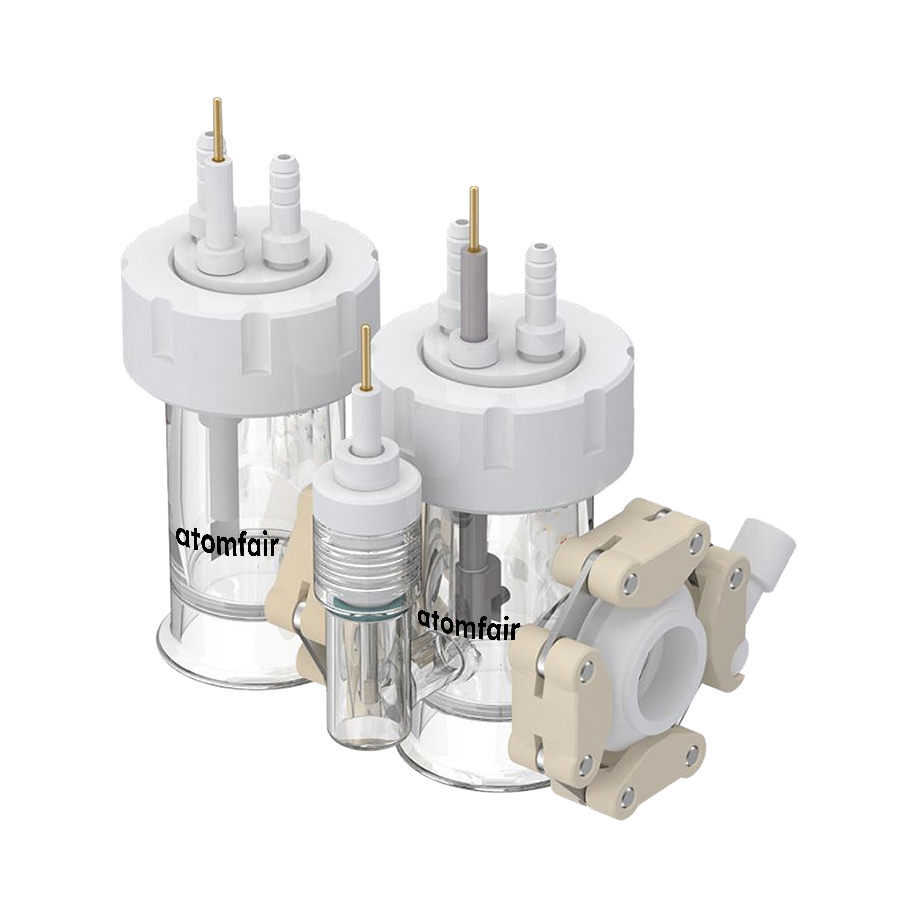
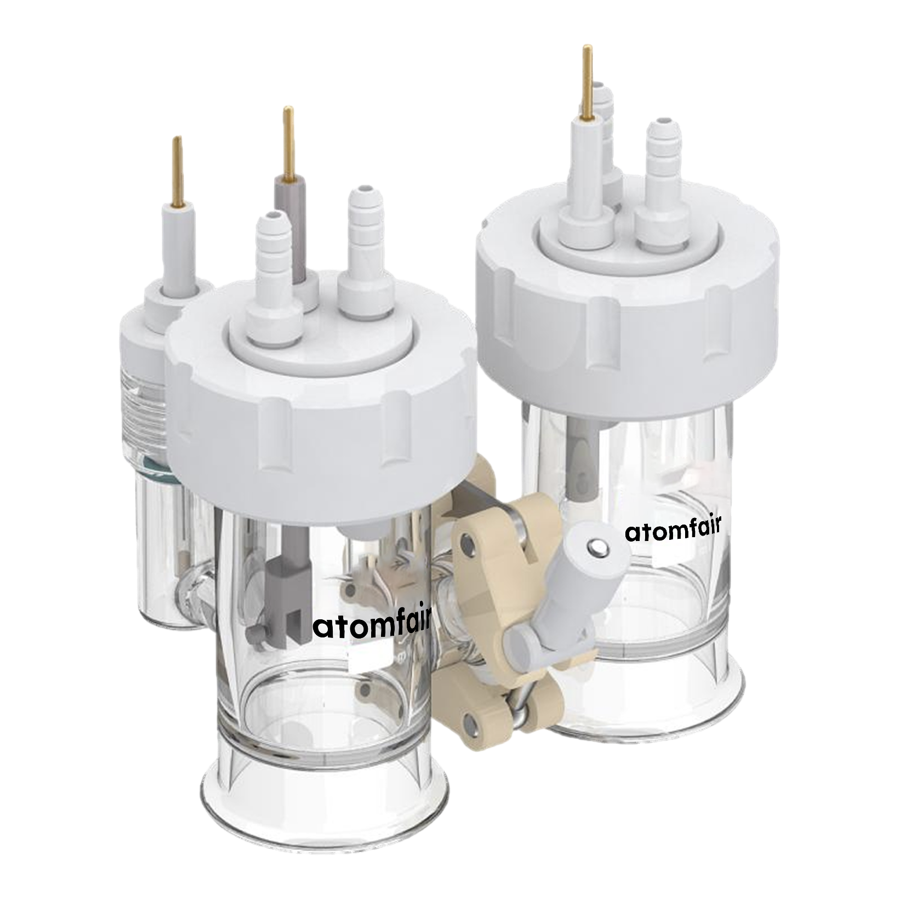
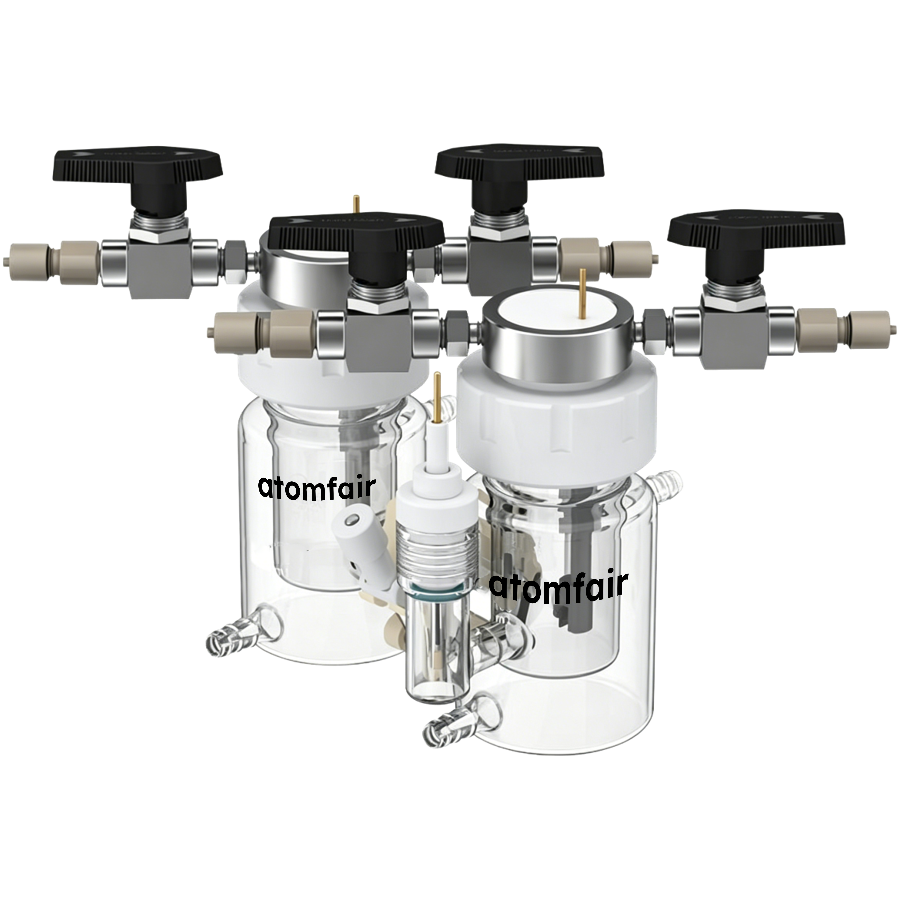
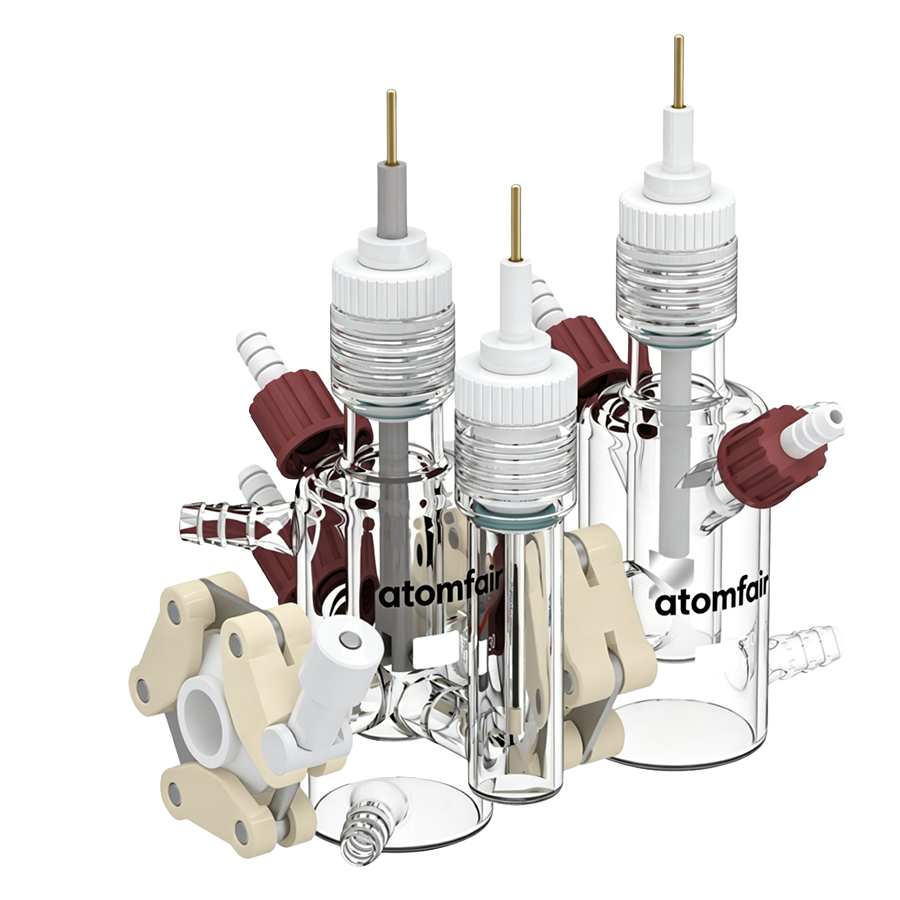
The ATOMFAIR Relative Sealing Small-Volume 3H Single-Window Replaceable-Membrane Photoelectrochemical Cell (Thermostatic System) is a 10 mL single-compartment cell with a high-borosilicate glass body, quartz window (>95% transmittance), and Luggin capillary (<0.2 mm tip aperture) for minimized iR drop. It requires extended-length electrodes and user-supplied ion-exchange membranes, and lacks pressurization capability, making it suitable for ambient-pressure photoelectrochemistry and membrane-based studies.
Positive
- Luggin capillary minimizes iR drop: The reference electrode Luggin capillary has a tip aperture of less than 0.2 mm, reducing uncompensated resistance for more accurate potential measurements in three-electrode configurations.
- High-transmittance quartz window: The quartz window provides ≥95% light transmittance and is secured via a locking ring assembly for quick replacement, enabling efficient photoelectrochemical experiments.
Trade-offs
- Requires extended-length electrodes: Standard electrodes are incompatible; users must procure extended-length electrodes to fit the cell geometry, adding procurement lead time and cost.
- No pressurization capability: The cell lacks valves and pressurization features, limiting its use to ambient-pressure experiments and excluding high-pressure gas reactions.
Every advanced material, component, equipment, and instrument in our catalog is backed by rigorous testing. We maintain strict internal quality management frameworks and align with CE conformity metrics to deliver transparent, reproducible performance data via our public open-science repository.
To request raw batch performance data, submit formal vendor registration paperwork, or execute a fast-turnaround R&D manufacturing loop, contact us at inquiry@atomfair.com.
Item is dispatched under the Atomfair Shipping & Delivery Framework (Free worldwide shipping on orders over $59 USD excl. heavy equipment). Return is governed by the Atomfair Return & Refund Policy (7-day technical return window).