Small-Volume Single-Window Replaceable-Membrane Photoelectrochemical Cell, Relative Sealing | ATOMFAIRProduct Type: Electrochemical cell
Research-grade laboratory product
|
|||||||||||||||||||||||||
|
|||||||||||||||||||||||||
|
LABORATORY PROCUREMENT SUPPORT
For model selection, accessory matching, platform compatibility or configuration confirmation, contact our technical sales team.
E-MAIL: inquiry@atomfair.com
|
|||||||||||||||||||||||||
|
Manufacturer: Atomfair LLC
Brand: ATOMFAIR®
|
Manufacturer: Atomfair LLC
Brand: ATOMFAIR®
This cell requires careful handling of the quartz window and verification of membrane compatibility before use. Inspect all seals prior to assembly and use only extended-length electrodes.
- Quartz Window Handling: Handle the quartz window with care to avoid scratches or breakage.
- Membrane Compatibility Verification: Verify ion-exchange membrane compatibility with the experimental conditions before use.
- Seal Inspection: Inspect PTFE compression caps and O-ring seals before assembly to ensure leak-free operation.
- Electrode Requirement: Use only extended-length electrodes to ensure proper positioning within the cell.
- Temperature and Valve Limitations: This cell does not support temperature control or valve integration.
Assemble the cell by installing the quartz window, inserting the membrane, and securing electrode seals. Insert extended-length electrodes and connect the sparger for gas purging.
Required Equipment:
- Install Quartz Window
Install the quartz window by tightening the galvanized threaded connections until secure. - Insert Membrane
Insert the user-supplied ion-exchange membrane into the chain-sealed connections between compartments. - Secure Electrode Seals
Secure the PTFE compression caps and O-ring seals on the electrode ports to prevent leakage. - Insert Electrodes
Insert extended-length working and reference electrodes into the same compartment to minimize iR drop. - Connect Sparger
Connect the sub-surface sparger for gas purging of the electrolyte.
What are the critical design constraints of the ATOMFAIR replaceable-membrane photoelectrochemical cell for three-electrode measurements?
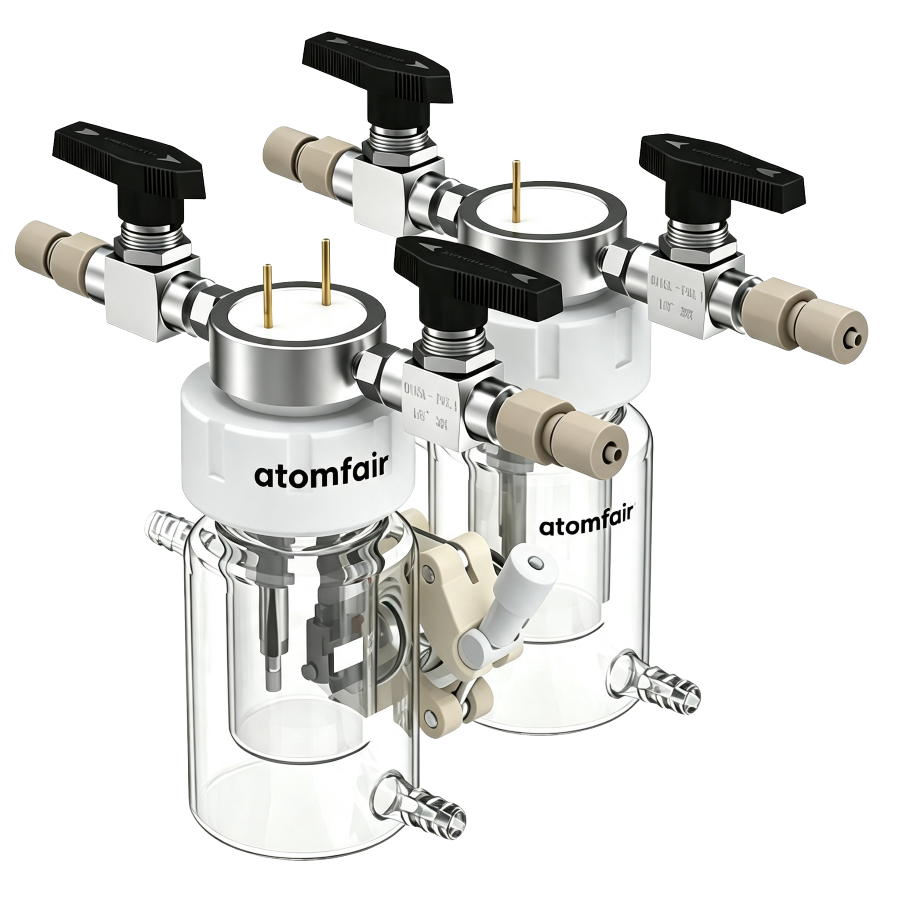
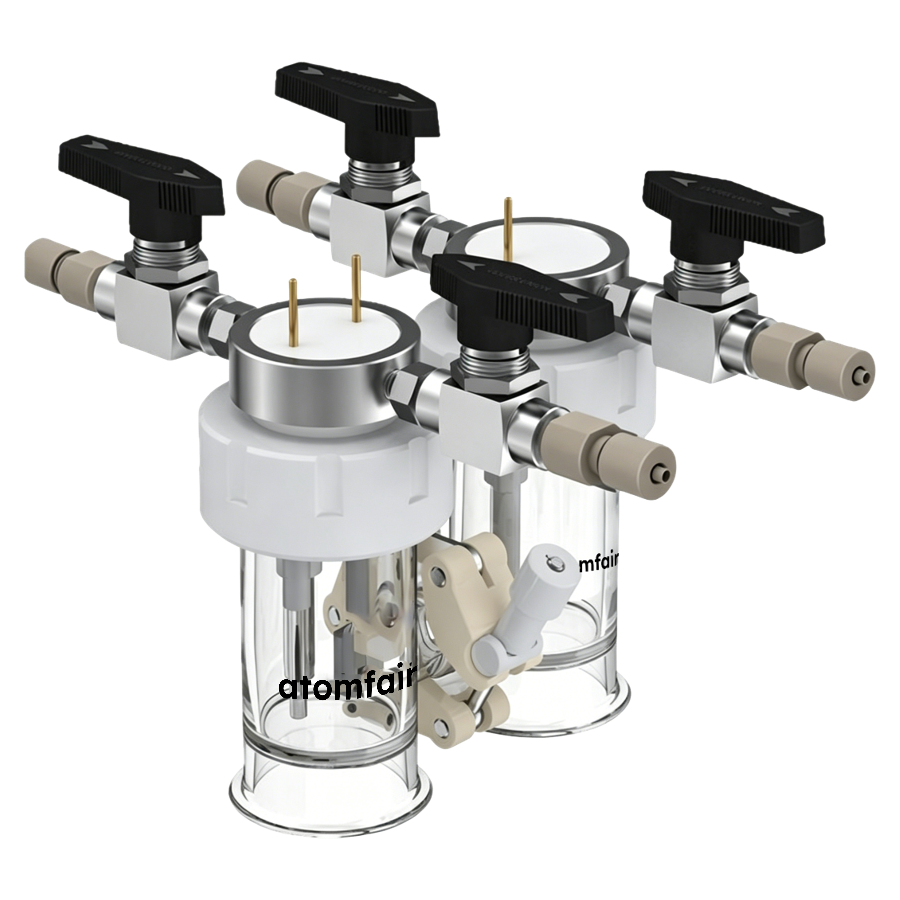
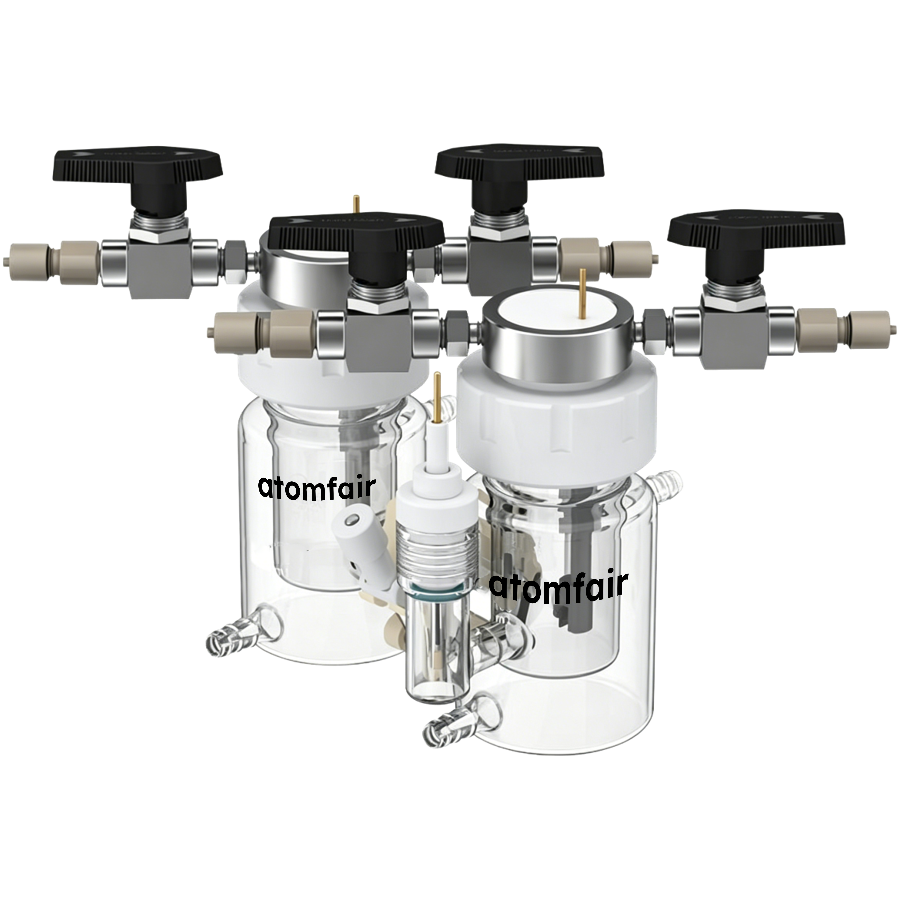
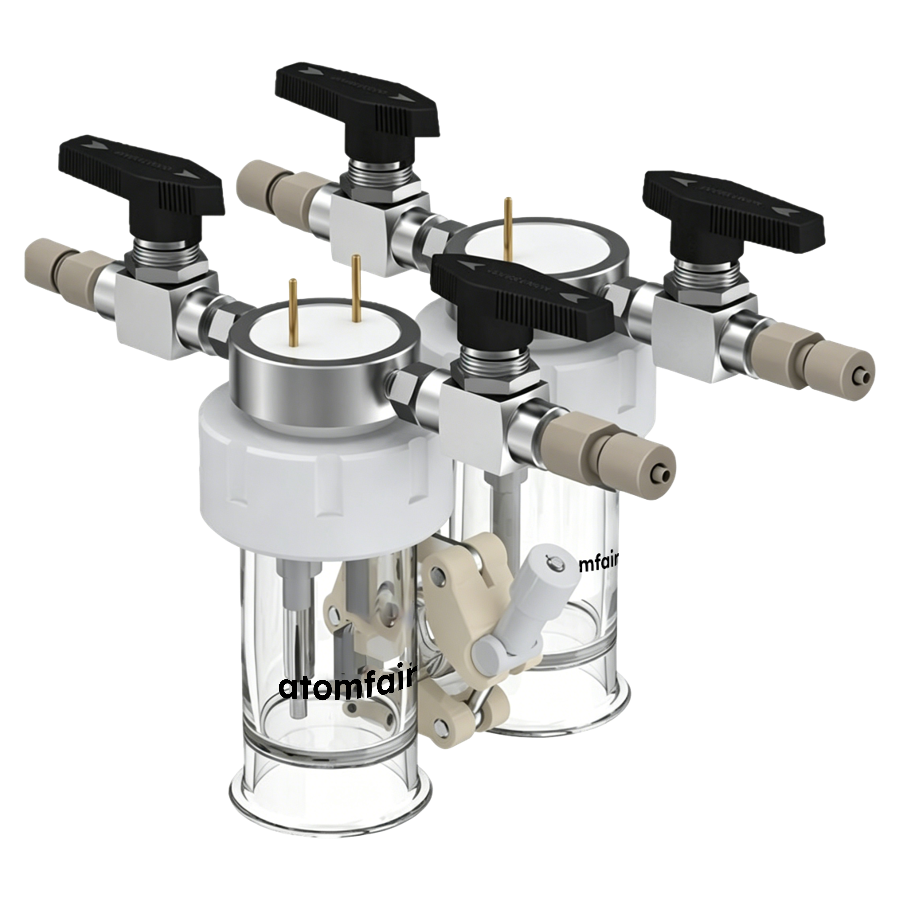
The cell requires extended-length electrodes (not included) to reach through the PTFE compression caps and O-ring seals. The working and reference electrodes share a single 10 mL compartment to minimize iR drop. The cell has no temperature-controlled version and cannot accommodate valves, limiting operation to ambient conditions and simple gas purging via the sub-surface sparger.
How is the ion-exchange membrane sealed and replaced in this photoelectrochemical cell?
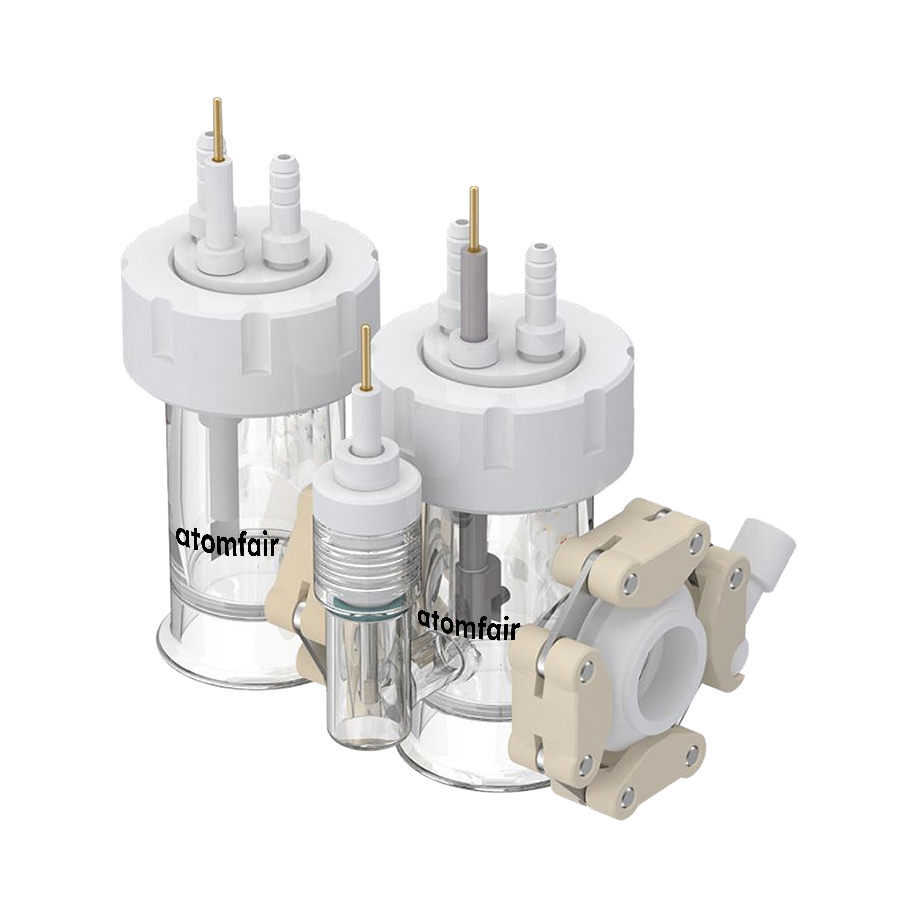
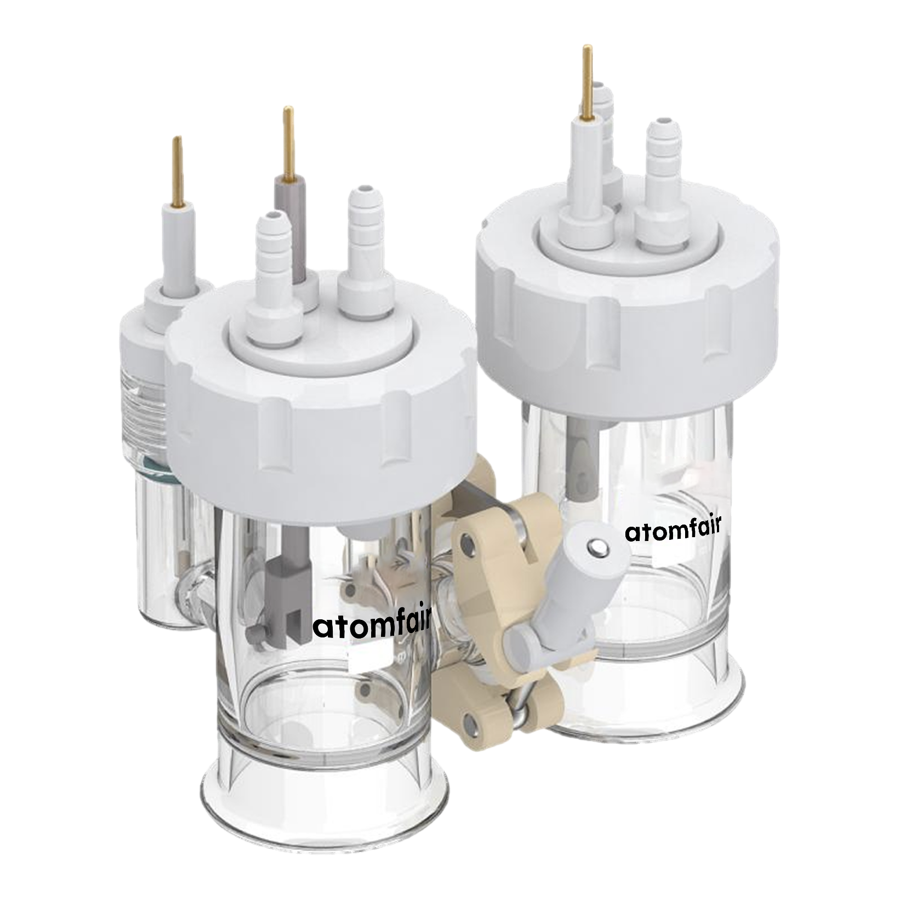
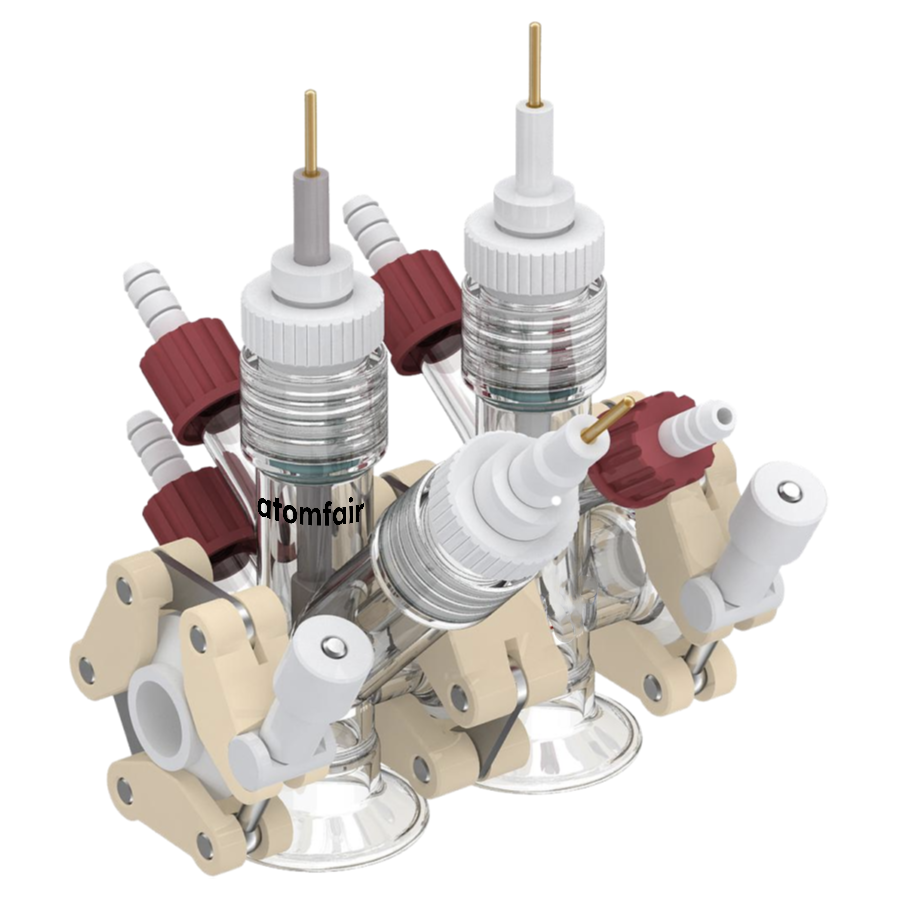
The user-supplied ion-exchange membrane is separated by chain-sealed connections that enable quick replacement. Sealing is achieved by PTFE compression caps and O-ring seals on the electrode ports. Verify membrane compatibility and inspect seals before assembly to ensure proper isolation of cathode and anode chambers.
What optical and chemical performance specifications are relevant for photoelectrochemical experiments?
The quartz optical window provides ≥95% light transmittance for superior photoelectrochemical measurements. The high-borosilicate glass body offers excellent chemical resistance and thermal stability. The elevated floor design eliminates solution hiding effects. Handle the quartz window with care to avoid damage.
The ATOMFAIR Relative Sealing Small-Volume Single-Window Replaceable-Membrane Photoelectrochemical Cell (SKU AF-EC-C-PWSR-C024-REL1) is a 10 mL three-electrode PEC cell with a quartz window (>95% transmittance), high-borosilicate glass body, and user-supplied membrane separation. Its elevated floor design minimizes solution hiding effects, but requires extended-length electrodes (not included) and lacks temperature control.
Positive
- High-transparency quartz window: ≥95% light transmittance across the optical window ensures reliable photoelectrochemical measurements by maximizing photon flux to the working electrode.
- Elevated floor design eliminates solution hiding: The elevated floor prevents solution hiding effects, ensuring that the entire electrode surface area is exposed to the electrolyte for accurate current density measurements.
Trade-offs
- Extended-length electrodes required: The cell is designed for extended-length electrodes, which are not included and must be ordered separately, increasing setup complexity and procurement lead time.
- No temperature-controlled version available: The cell does not support temperature control, limiting its use in experiments requiring precise thermal management or isothermal conditions.
Every advanced material, component, equipment, and instrument in our catalog is backed by rigorous testing. We maintain strict internal quality management frameworks and align with CE conformity metrics to deliver transparent, reproducible performance data via our public open-science repository.
To request raw batch performance data, submit formal vendor registration paperwork, or execute a fast-turnaround R&D manufacturing loop, contact us at inquiry@atomfair.com.
Item is dispatched under the Atomfair Shipping & Delivery Framework (Free worldwide shipping on orders over $59 USD excl. heavy equipment). Return is governed by the Atomfair Return & Refund Policy (7-day technical return window).