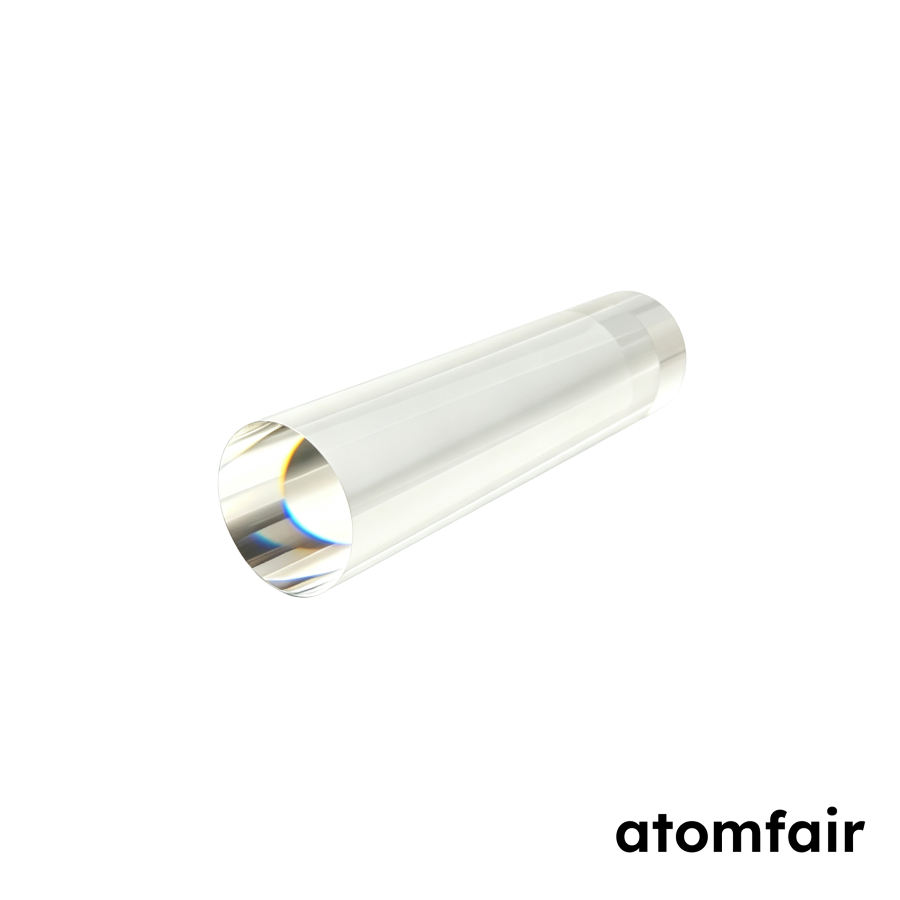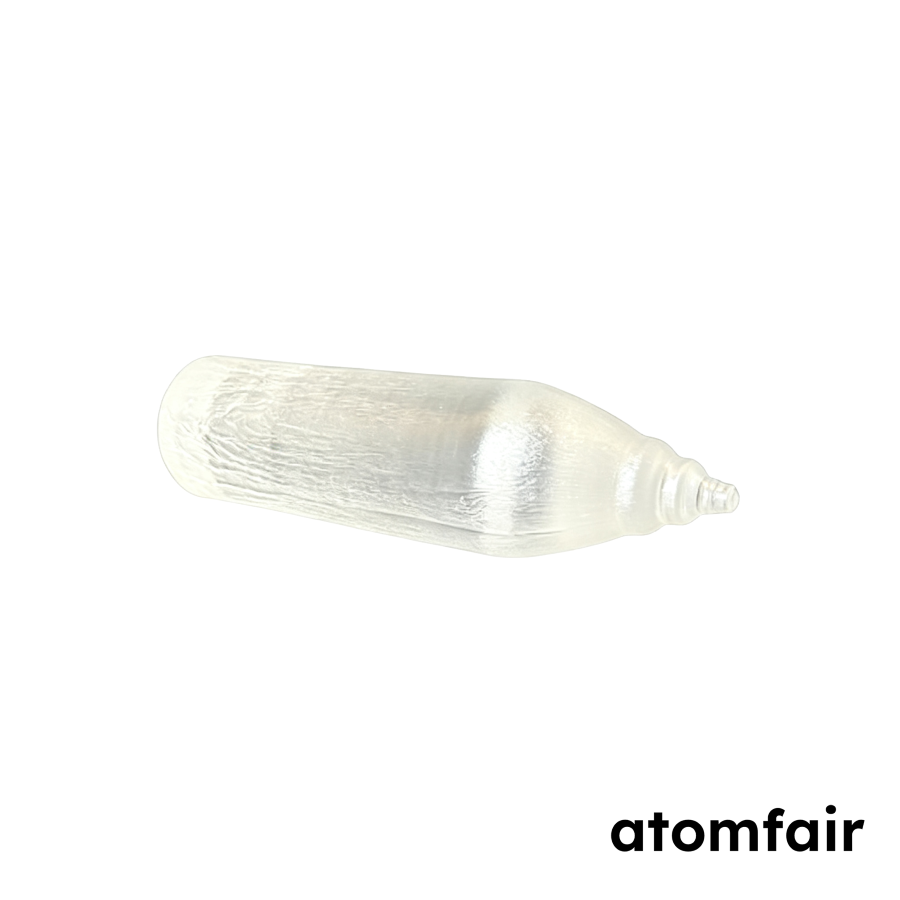
Cerium-Doped Lutetium-Yttrium Oxyorthosilicate Scintillation Crystal (LYSO(Ce))Product Type: Scintillation crystal
Research-grade laboratory product
|
|||||||||||||||||||||||||||||||||||||||||||||||||||
|
|||||||||||||||||||||||||||||||||||||||||||||||||||
|
LABORATORY PROCUREMENT SUPPORT
For model selection, technical specification confirmation or configuration support, contact our technical sales team.
E-MAIL: inquiry@atomfair.com
|
|||||||||||||||||||||||||||||||||||||||||||||||||||
|
Manufacturer: Atomfair LLC
Brand: ATOMFAIR®
|
What is the measured energy resolution of the Atomfair LYSO(Ce) scintillation crystal at 650 V with a Cs-137 source?
The measured energy resolution is 10.9% at a test voltage of 650 V using a Cs-137 radiation source, a 15 mm × 15 mm × 15 mm characterization crystal, an R1306 photomultiplier tube, and a 0.80 mm thick Teflon reflector. This value is specific to the stated detector coupling and configuration.
Can the LYSO(Ce) crystal be coupled directly to a photomultiplier tube without additional optical coupling considerations?
Yes, the 420 nm emission peak lies within the sensitive region of standard photomultiplier tubes, and the product description specifies use with an R1306 PMT and Teflon reflector. However, the crystal dimensions, finished form (single crystal or array), and detector coupling arrangement must be confirmed before quotation to ensure optimal light collection and energy resolution.
What are the handling and storage requirements for LYSO(Ce) scintillation crystals given their physical properties?
LYSO(Ce) is non-deliquescent and has no cleavage plane, so it does not require humidity-controlled storage or special handling to prevent cleavage fracture. With a Mohs hardness of 5.80 and a density of 7.25 g/cm³, the crystal is mechanically robust but should still be handled with care to avoid surface scratches or chipping during mounting and detector assembly.
This LYSO(Ce) scintillation crystal delivers a high light yield of 30,000 ph/MeV with a fast 40 ns decay time and strong radiation resistance up to 1×10⁸ rad, making it well-suited for medical imaging and high-energy physics detectors. However, its refractive index of 1.82 requires precise optical coupling for efficient light collection, and its Mohs hardness of 5.80 necessitates careful handling to avoid surface damage during fabrication or mounting.
Positive
- High light output and fast decay: Light yield of 30,000 ph/MeV and decay time of 40 ns enable excellent timing resolution for coincidence detection in PET and particle physics.
- Radiation resistant and stable: Withstands 1×10⁸ rad without degradation and exhibits no deliquescence or cleavage, ensuring long-term reliability in high-flux or harsh environments.
Trade-offs
- High refractive index requires coupling care: Refractive index of 1.82 demands optimized optical grease or adhesive and precise surface finishing to minimize light loss at the crystal-PMT interface.
- Moderate hardness limits scratch resistance: Mohs hardness of 5.80 makes the crystal susceptible to surface scratches during handling, polishing, or array assembly, requiring careful work practices.
Every advanced material, component, equipment, and instrument in our catalog is backed by rigorous testing. We maintain strict internal quality management frameworks and align with CE conformity metrics to deliver transparent, reproducible performance data via our public open-science repository.
To request raw batch performance data, submit formal vendor registration paperwork, or execute a fast-turnaround R&D manufacturing loop, contact us at inquiry@atomfair.com.
Item is dispatched under the Atomfair Shipping & Delivery Framework (Free worldwide shipping on orders over $59 USD excl. heavy equipment). Return is governed by the Atomfair Return & Refund Policy (7-day technical return window).