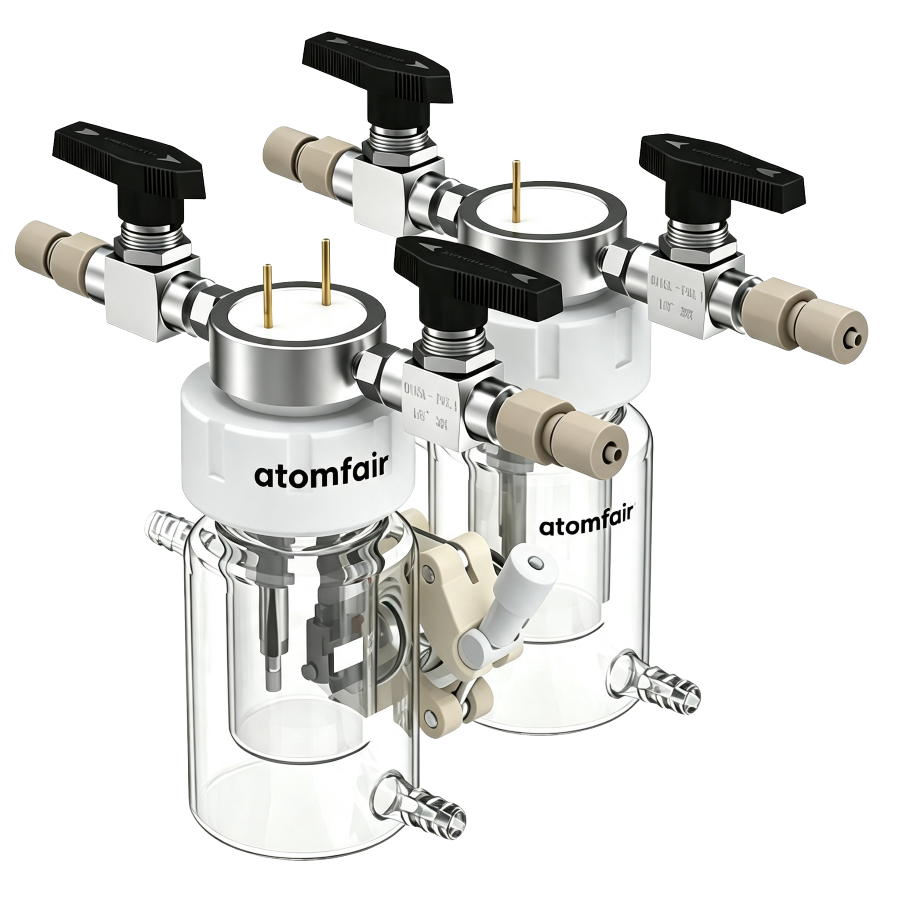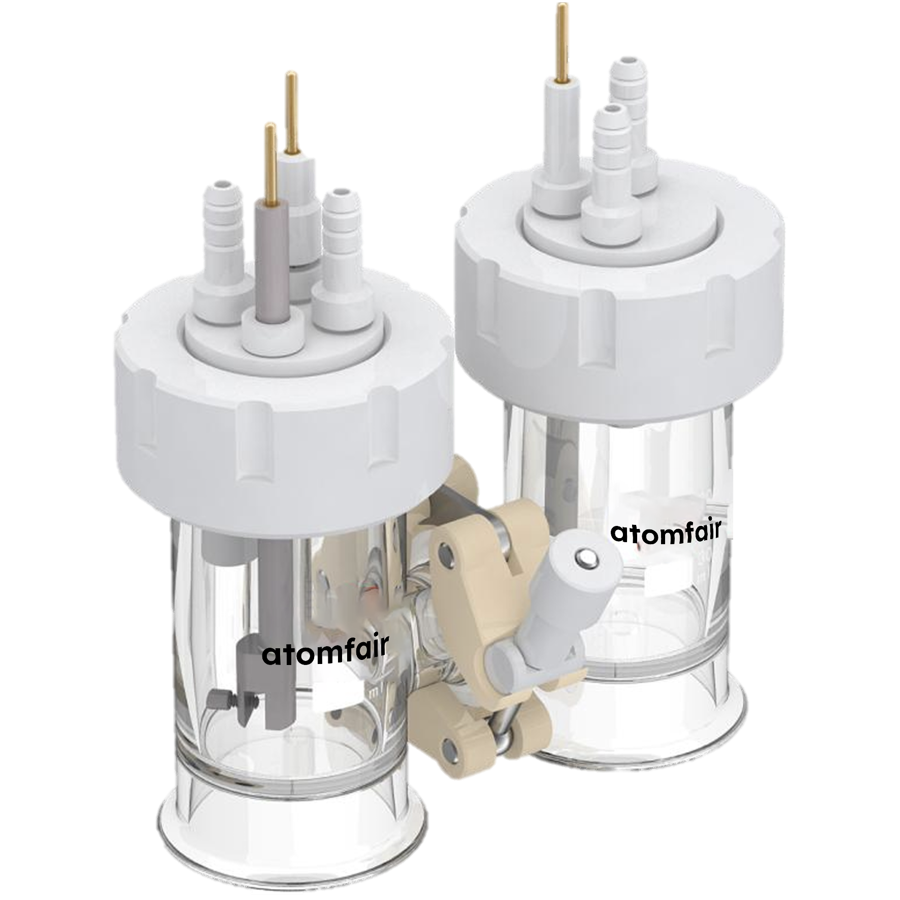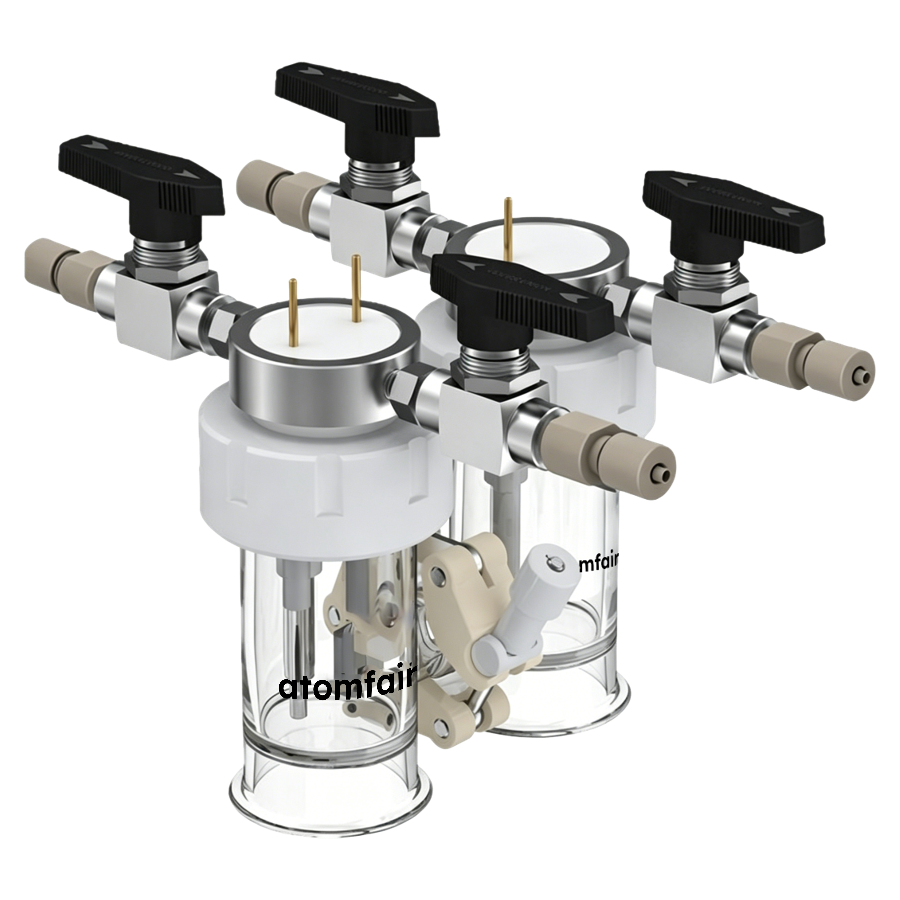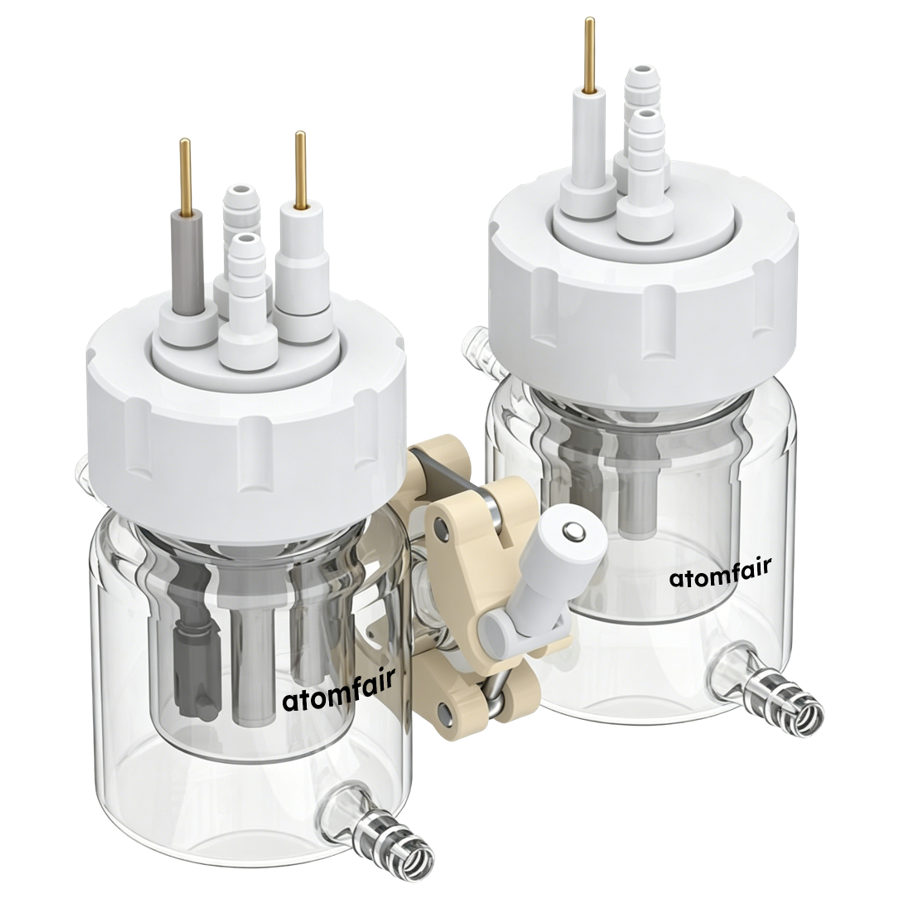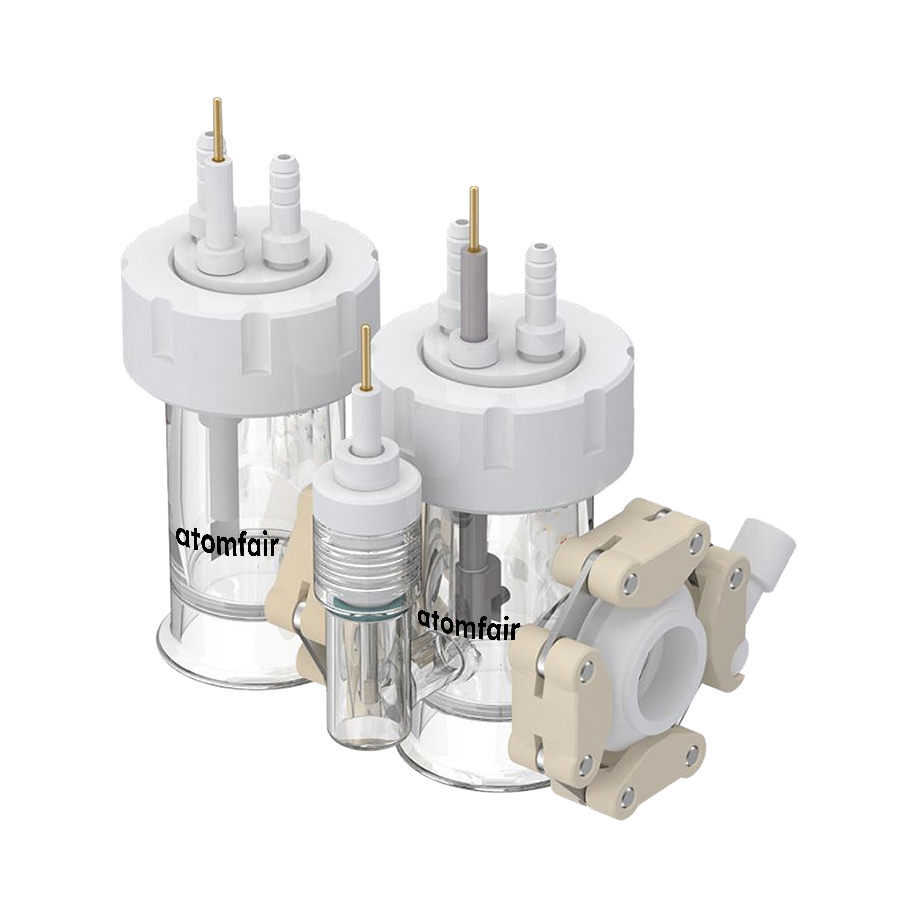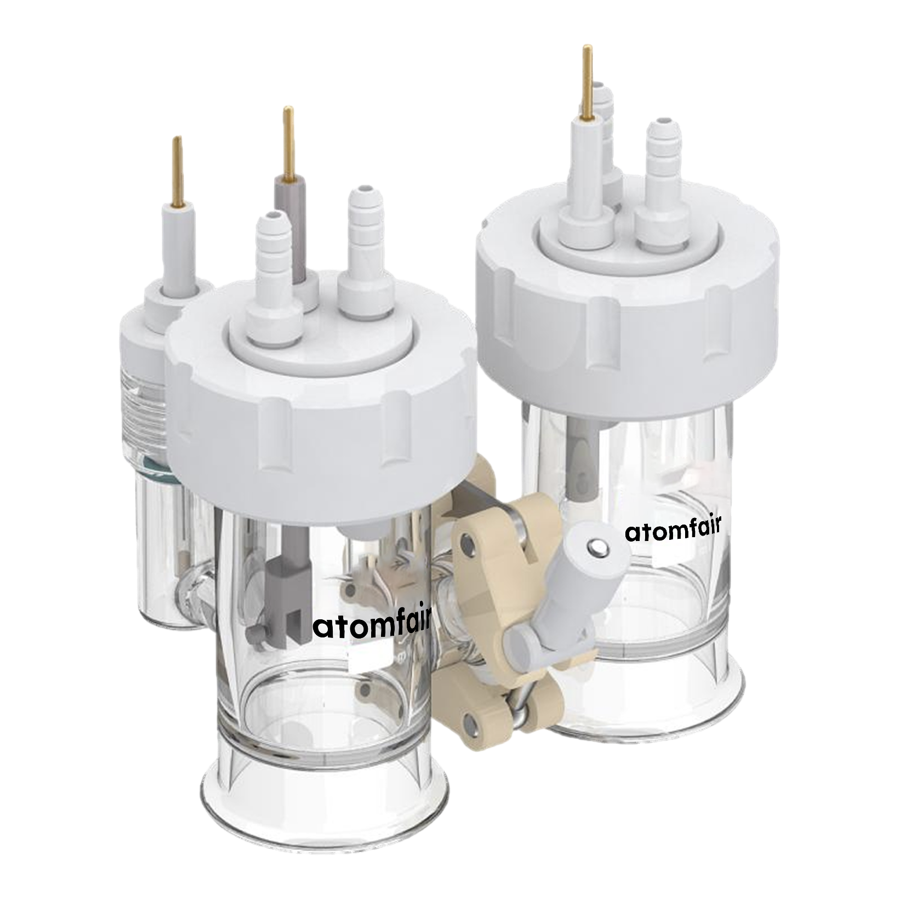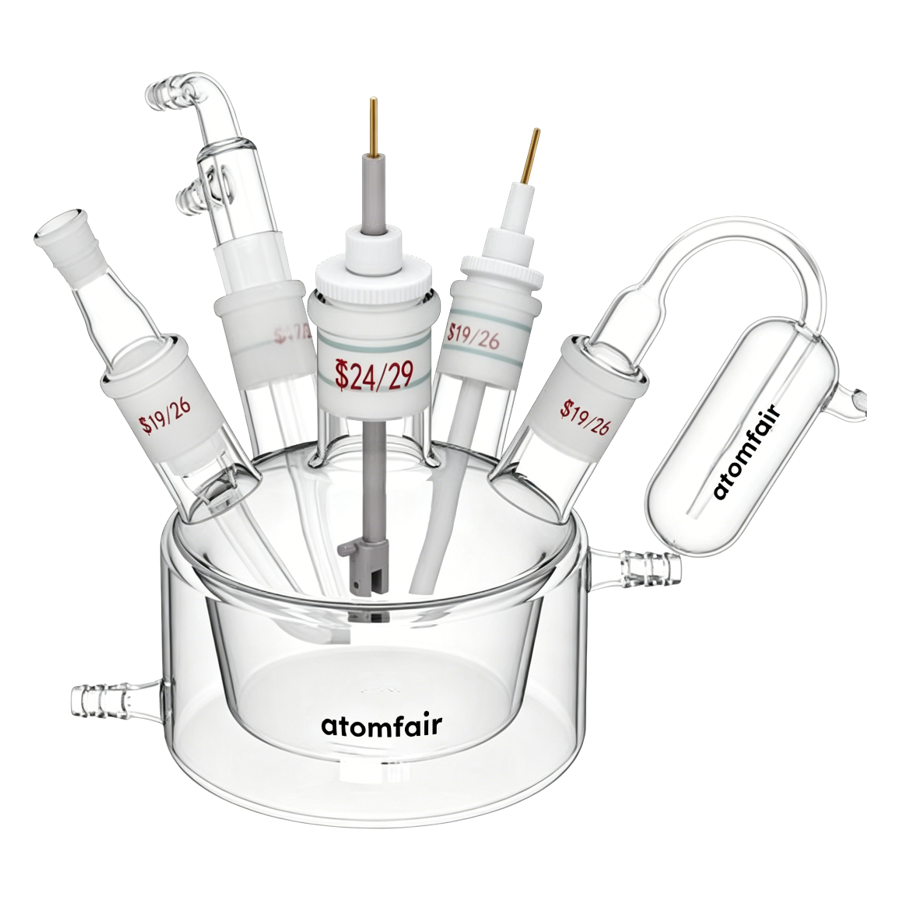
Traditional Five-Port Electrolytic Cell, Double-Layer | ATOMFAIRProduct Type: Electrochemical cell
Research-grade laboratory product
|
|||||||||||||||||||||||||||||||||||||||||||
|
|||||||||||||||||||||||||||||||||||||||||||
|
LABORATORY PROCUREMENT SUPPORT
For model selection, accessory matching, platform compatibility or configuration confirmation, contact our technical sales team.
E-MAIL: inquiry@atomfair.com
|
|||||||||||||||||||||||||||||||||||||||||||
|
Manufacturer: Atomfair LLC
Brand: ATOMFAIR®
|
Manufacturer: Atomfair LLC
Brand: ATOMFAIR®
This electrolytic cell requires inspection of ground glass joints and O-rings before each use. Gas purging must be switched to overhead-only during measurements to prevent solution disturbance.
- Joint and O-ring Integrity: Inspect ground glass joints and O-rings for cracks, wear, or debris before each assembly to maintain the semi-sealed containment.
- Gas Purging Protocol: Use dual-mode gas purging for initial deoxygenation, but switch to overhead-only purging during electrochemical measurements to avoid disturbing the solution.
- Rotating Disk Electrode Compatibility: Increase overhead gas flow rate when using rotating disk electrodes, as the semi-sealed system is not natively compatible with RDE operation.
- Electrode Length Requirement: Employ extended-length electrodes to ensure complete immersion in the deeper cell geometries of this double-layer configuration.
- Thermal Regulation: Utilize the integrated water bath jacket with a circulating bath to maintain precise temperature control during temperature-dependent studies.
Follow these steps to safely assemble, purge, and operate the cell for three-electrode electrochemical experiments. Proper handling of the glassware and gas flow is essential for reproducible results.
Required Equipment: Inert gas supply, Water bath circulator, Extended-length electrodes, Electrochemical workstation
- Inspect cell components
Inspect the ground glass joints and O-rings for cracks, wear, or debris before assembly. - Assemble the cell
Assemble the cell by aligning the PTFE lid with the glass body and securing the electrode ports using compression fittings. - Purge the cell
Connect the F-type gas inlet tube and purge the cell with inert gas both below and above the liquid surface, then switch to overhead-only purging before starting measurements. - Set temperature control
Fill the double-layer water jacket with fluid from a circulating bath and set the temperature for the experiment. - Insert electrodes
Insert extended-length working, counter, and reference electrodes into the designated ports, ensuring proper sealing. - Begin measurement
Begin the electrochemical measurement and monitor the gas flow and temperature throughout the run.
How does the integrated salt bridge in the ATOMFAIR traditional five-port electrolytic cell reduce uncompensated resistance?
The integrated salt bridge positions the reference electrode in close proximity to the working electrode, which effectively reduces uncompensated solution resistance. This improves the accuracy of electrochemical measurements by minimizing the potential drop between the reference and working electrodes, as stated in the product's performance features.
Can the ATOMFAIR traditional five-port electrolytic cell be used with rotating disk electrodes?
No, this semi-sealed system is not compatible with rotating disk electrodes (RDE). For RDE applications, the product instructions recommend increasing overhead gas flow to maintain an inert atmosphere protection, but the cell design does not support direct RDE integration due to sealing constraints.
What temperature control capability does the double-layer version of the ATOMFAIR electrolytic cell offer?
The double-layer version incorporates an integrated water bath jacket for precise thermal regulation, enabling accurate temperature control during electrochemical experiments. This feature supports temperature-dependent studies such as battery testing, corrosion studies, and electrosynthesis, as described in the technical specifications.
The ATOMFAIR Double-Layer Traditional Five-Port Electrolytic Cell is a semi-sealed borosilicate glass three-electrode system with an integrated salt bridge that reduces uncompensated resistance and a dual-mode gas inlet for purging above and below the liquid surface. Temperature control via the water jacket supports thermal studies, but the cell requires extended-length electrodes (sold separately) and is incompatible with rotating disk electrodes without increased overhead gas flow.
Positive
- Integrated salt bridge reduces resistance: The salt bridge positions the reference electrode close to the working electrode, effectively lowering solution resistance for improved measurement accuracy.
- Dual-mode gas purging with overhead switch: F-type inlet tube enables purging both below and above the liquid surface; during measurement, overhead-only purging minimizes solution disturbance while maintaining atmosphere protection.
Trade-offs
- Incompatible with rotating disk electrodes: The semi-sealed system cannot accommodate rotating disk electrodes; users must increase overhead gas flow to protect the atmosphere when using RDE setups.
- Requires extended-length electrodes: Standard-length electrodes are unsuitable; extended-length electrodes must be ordered separately to achieve proper immersion in the deeper cell geometry.
Every advanced material, component, equipment, and instrument in our catalog is backed by rigorous testing. We maintain strict internal quality management frameworks and align with CE conformity metrics to deliver transparent, reproducible performance data via our public open-science repository.
To request raw batch performance data, submit formal vendor registration paperwork, or execute a fast-turnaround R&D manufacturing loop, contact us at inquiry@atomfair.com.
Item is dispatched under the Atomfair Shipping & Delivery Framework (Free worldwide shipping on orders over $59 USD excl. heavy equipment). Return is governed by the Atomfair Return & Refund Policy (7-day technical return window).