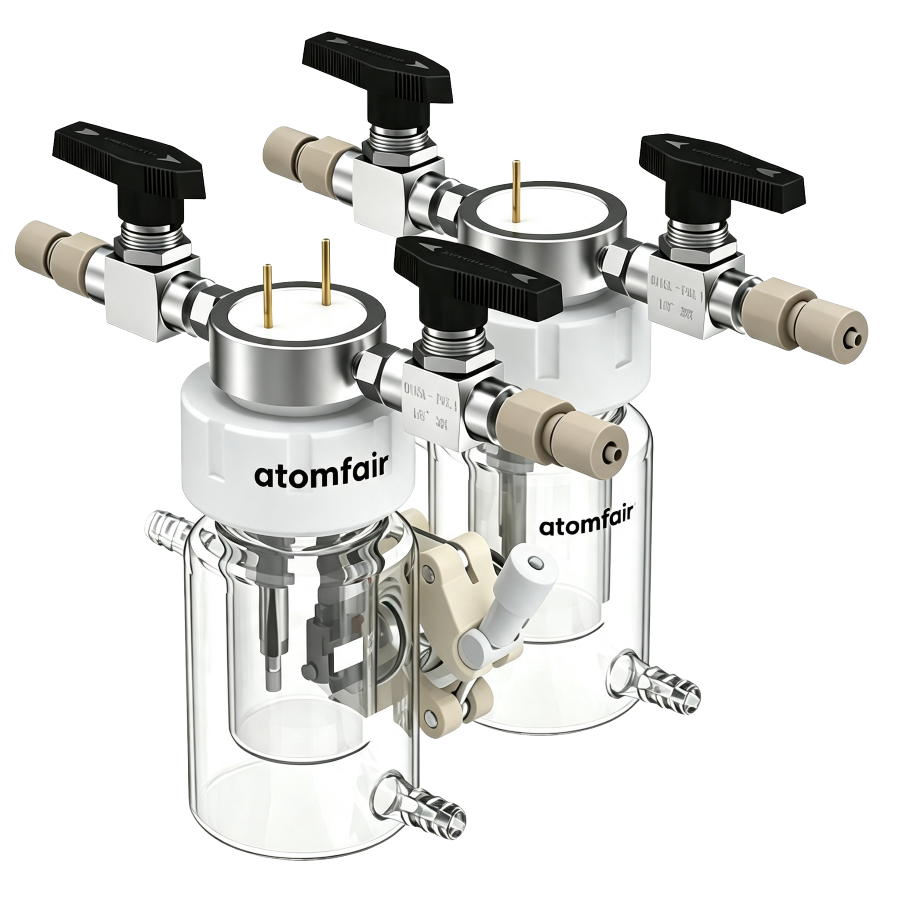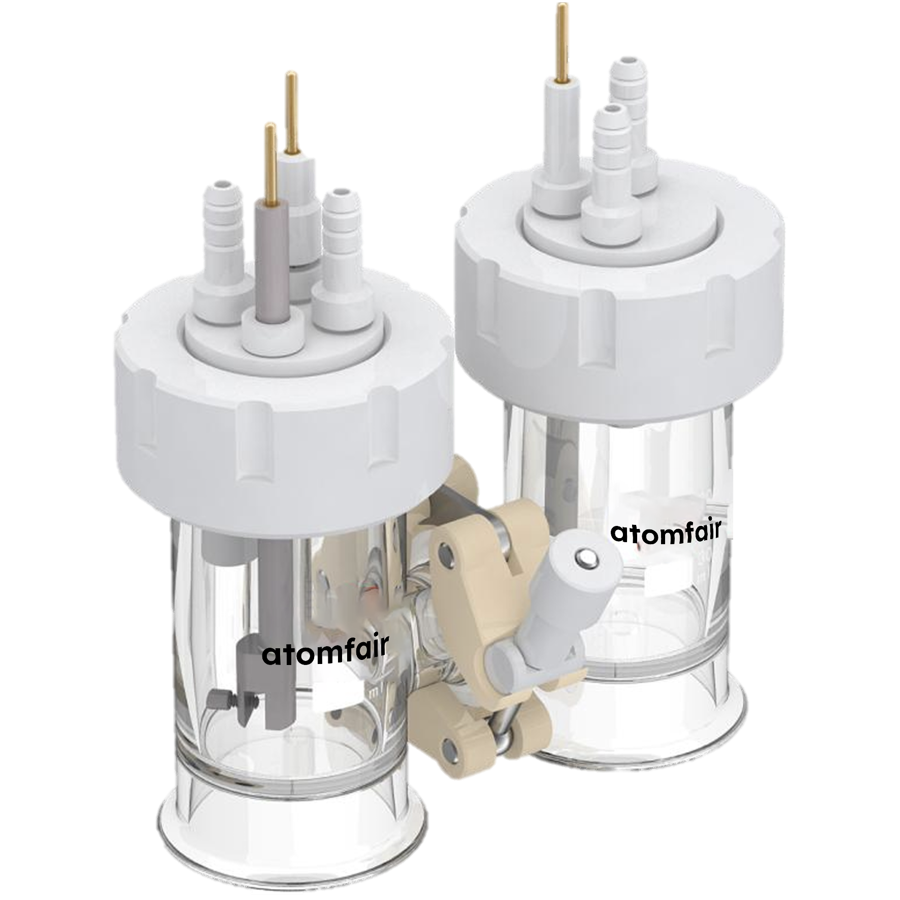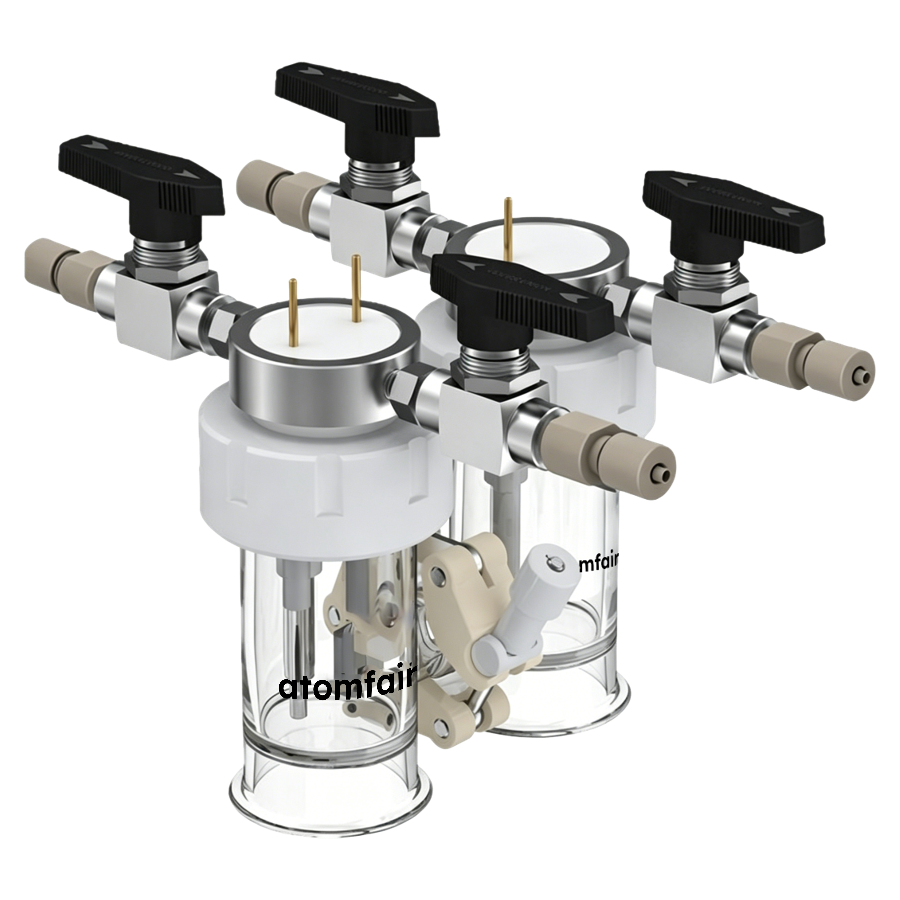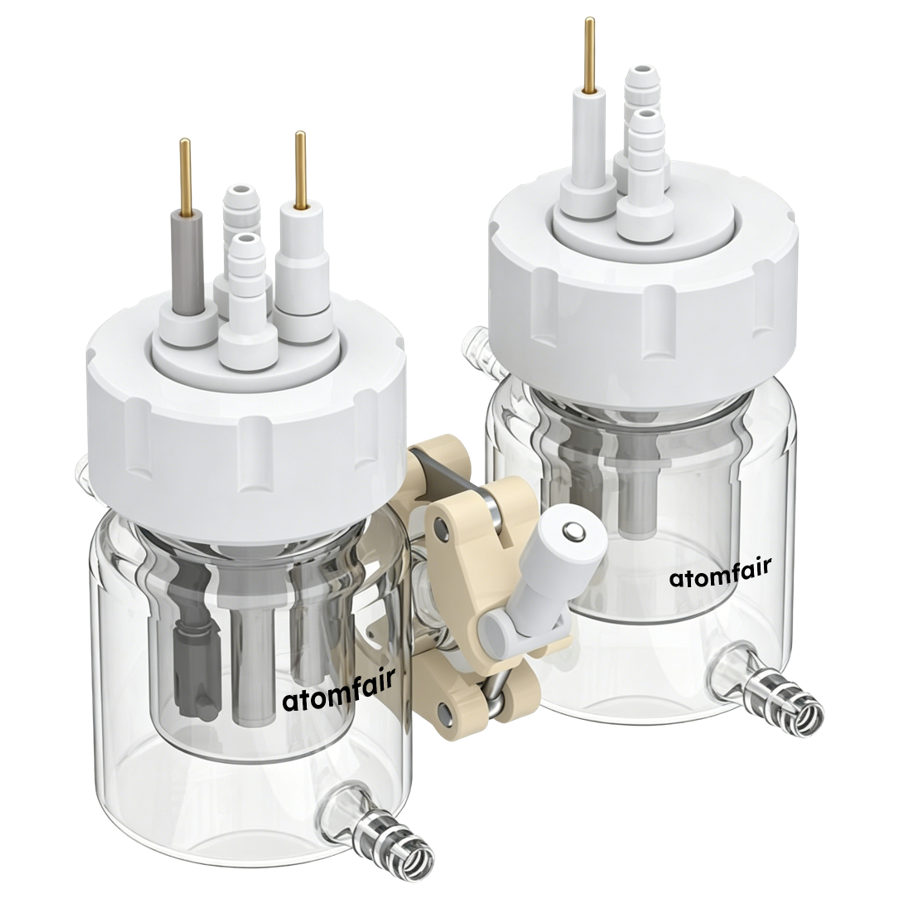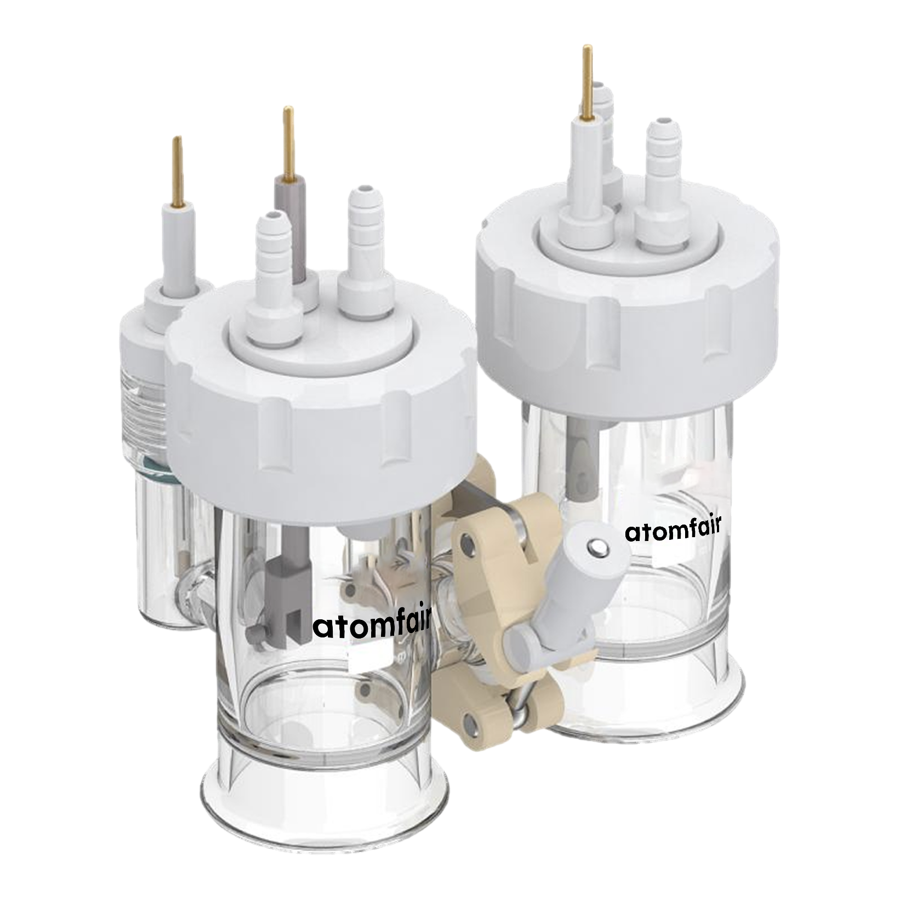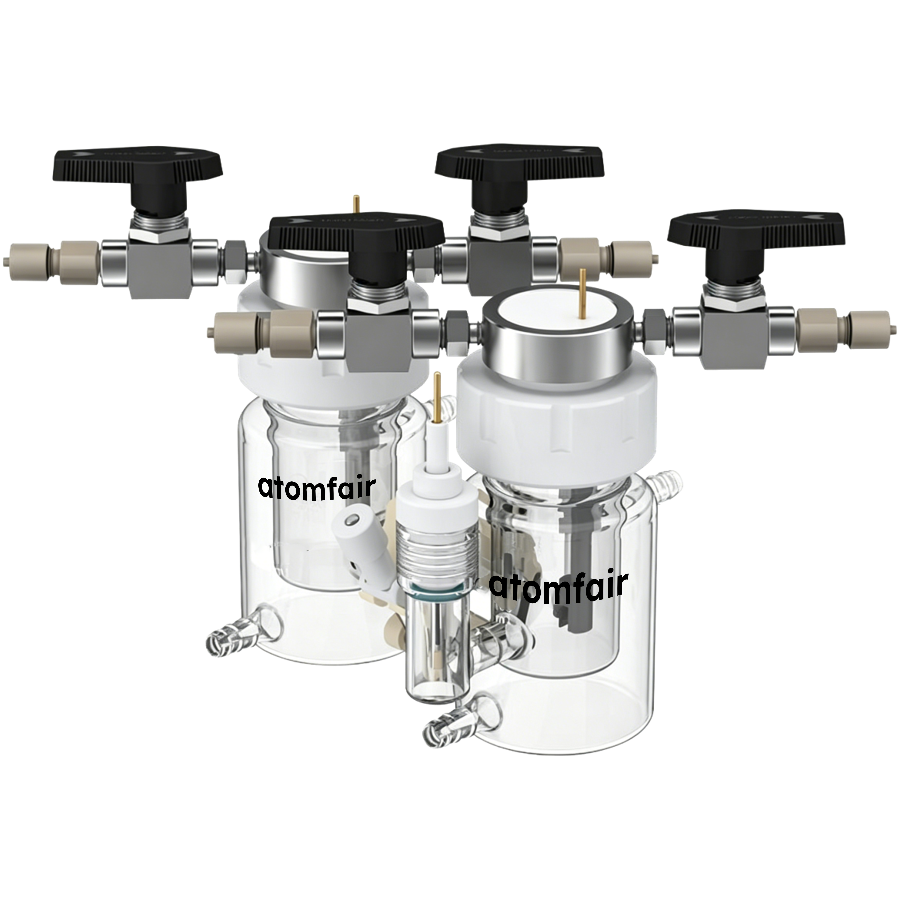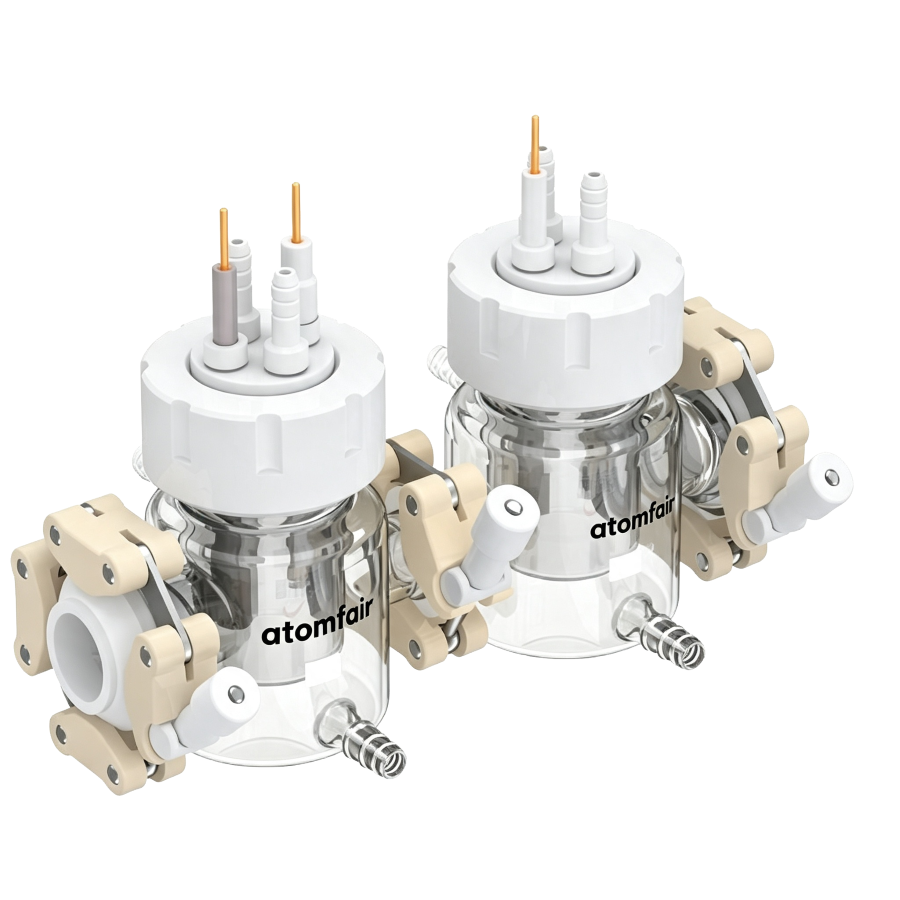
Double-Window H-Type Replaceable-Membrane Photoelectrochemical Cell, Relative Sealing, Double-Layer | ATOMFAIRProduct Type: Electrochemical cell
Research-grade laboratory product
|
|||||||||||||||||||||||||||||||||||
|
|||||||||||||||||||||||||||||||||||
|
LABORATORY PROCUREMENT SUPPORT
For model selection, accessory matching, platform compatibility or configuration confirmation, contact our technical sales team.
E-MAIL: inquiry@atomfair.com
|
|||||||||||||||||||||||||||||||||||
|
Manufacturer: Atomfair LLC
Brand: ATOMFAIR®
|
Manufacturer: Atomfair LLC
Brand: ATOMFAIR®
This cell requires careful handling of quartz windows and verification of membrane compatibility to prevent damage and contamination. All seals must be inspected and the water jacket leak-tested before operation to ensure proper function.
- Quartz Window Handling: Handle quartz windows with care to avoid scratches or breakage that could compromise optical performance.
- Membrane Compatibility: Verify membrane compatibility with the electrolyte and experimental conditions before use to prevent chemical degradation or failure.
- Seal Inspection: Inspect all seals, including the membrane gasket and chamber connections, before assembly to prevent leakage.
- Water Jacket Leak Test: Check the water jacket for leaks before operation to avoid thermal fluid contamination of the cell.
Before assembly, inspect the glass body, quartz windows, and seals for any damage. Verify membrane compatibility with the experimental system and leak-test the water jacket.
- Inspect Cell Components
Inspect the glass body, quartz windows, and all seals for cracks, chips, or debris before assembly. - Verify Membrane Compatibility
Verify that the user-supplied ion-exchange membrane is chemically compatible with the electrolyte and experimental conditions. - Install the Membrane
Install the membrane between the cathode and anode compartments using the galvanized connectors to ensure a tight seal. - Assemble and Seal the Cell
Assemble the cell chambers and tighten the galvanized connections to secure the membrane and prevent leakage. - Leak-Test the Water Jacket
Check the water jacket for leaks by filling with water and inspecting for drips before connecting to a thermostatic bath.
What is the advantage of the ≥95% transmittance quartz windows in this photoelectrochemical cell?
The dual quartz windows deliver ≥95% light transmittance, enabling superior photoelectrochemical and spectroscopic measurements with dual optical access. This high transmittance minimizes light loss and ensures accurate illumination of the working electrode for precise photo-response studies in applications such as CO₂/N₂ reduction and fuel cell research.
What type of ion-exchange membrane is required for this H-type cell and how is it installed?
The cell uses a user-supplied ion-exchange membrane to separate the cathode and anode chambers. The membrane is held between galvanized plate assemblies that allow quick replacement without tools. Compatibility must be verified before use, and the membrane is not included with the cell.
Why are extended-length electrodes necessary for the double-layer version of this H-cell?
The double-layer design adds a water bath jacket for temperature control, increasing the cell's overall height. Extended-length electrodes are required to reach the electrolyte while maintaining proper alignment via the 360° rotatable PTFE core, which minimizes iR drop by keeping the working and reference electrodes in the same compartment. Standard electrodes may not provide adequate immersion.
The ATOMFAIR Double-Layer Double-Window H-Type Replaceable-Membrane Photoelectrochemical Cell provides dual quartz optical access (≥95% transmittance) and a thermostatic water jacket for precise temperature control, enabling advanced photoelectrochemical and membrane-based studies with minimized iR drop. However, it requires extended-length electrodes and user-supplied membranes, and careful handling of fragile quartz windows and seals is necessary.
Positive
- Dual quartz windows with >95% transmittance: Two high-transparency quartz windows provide ≥95% light transmittance for superior photoelectrochemical and spectroscopic measurements with dual optical access.
- Integrated water bath for thermal control: The double-layer design includes a thermostatic water bath jacket, enabling precise temperature regulation for temperature-dependent photoelectrochemical studies.
Trade-offs
- Requires extended-length electrodes and user-supplied membrane: Extended-length electrodes are required for proper fit, and the ion-exchange membrane is not included, necessitating user procurement and compatibility verification.
- Careful handling of fragile components: Quartz windows and glass body are fragile; seals must be inspected before assembly, and the water jacket must be checked for leaks prior to operation to avoid damage.
Every advanced material, component, equipment, and instrument in our catalog is backed by rigorous testing. We maintain strict internal quality management frameworks and align with CE conformity metrics to deliver transparent, reproducible performance data via our public open-science repository.
To request raw batch performance data, submit formal vendor registration paperwork, or execute a fast-turnaround R&D manufacturing loop, contact us at inquiry@atomfair.com.
Item is dispatched under the Atomfair Shipping & Delivery Framework (Free worldwide shipping on orders over $59 USD excl. heavy equipment). Return is governed by the Atomfair Return & Refund Policy (7-day technical return window).