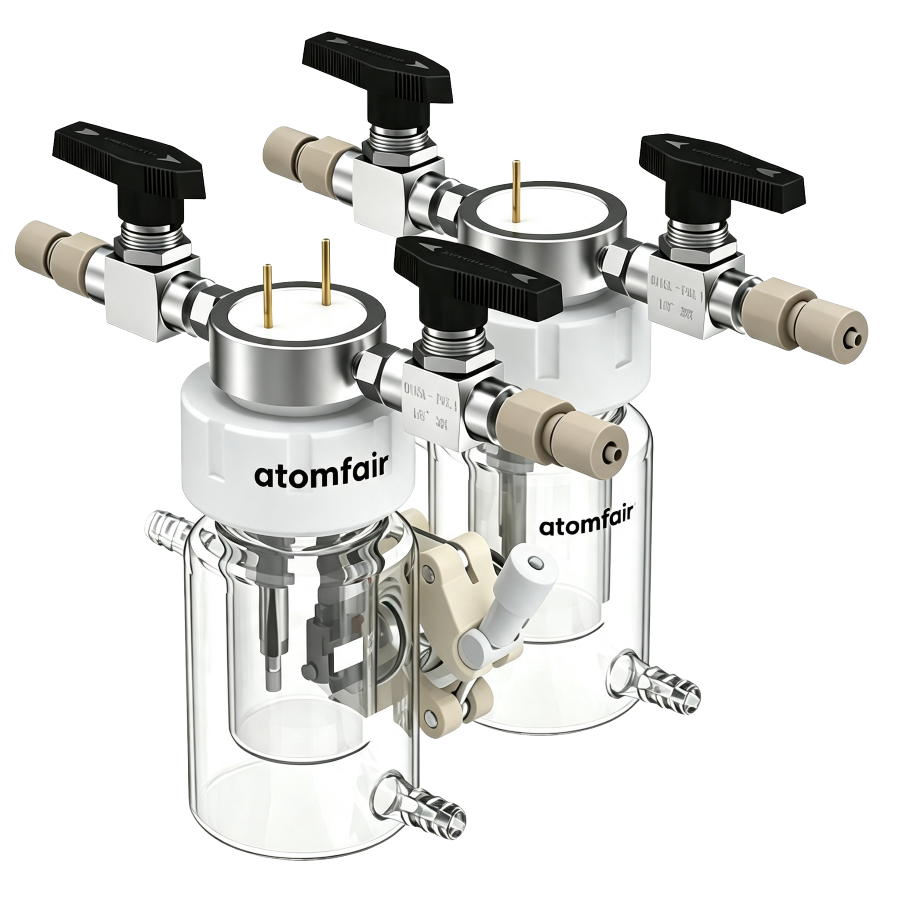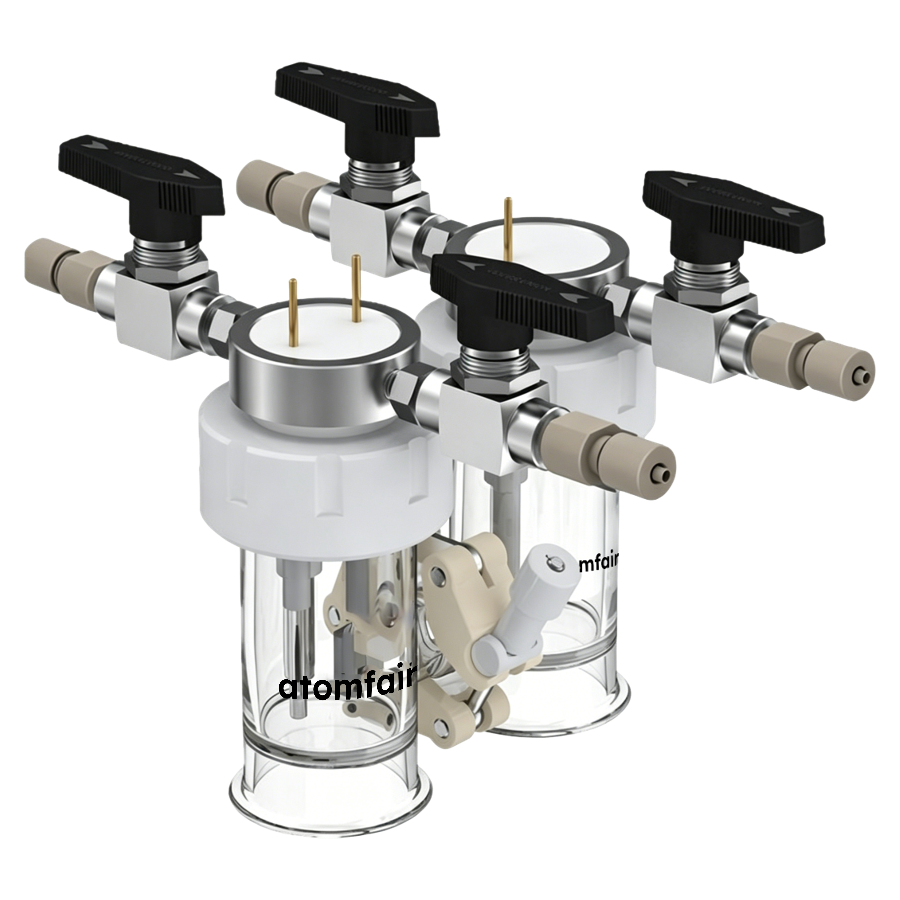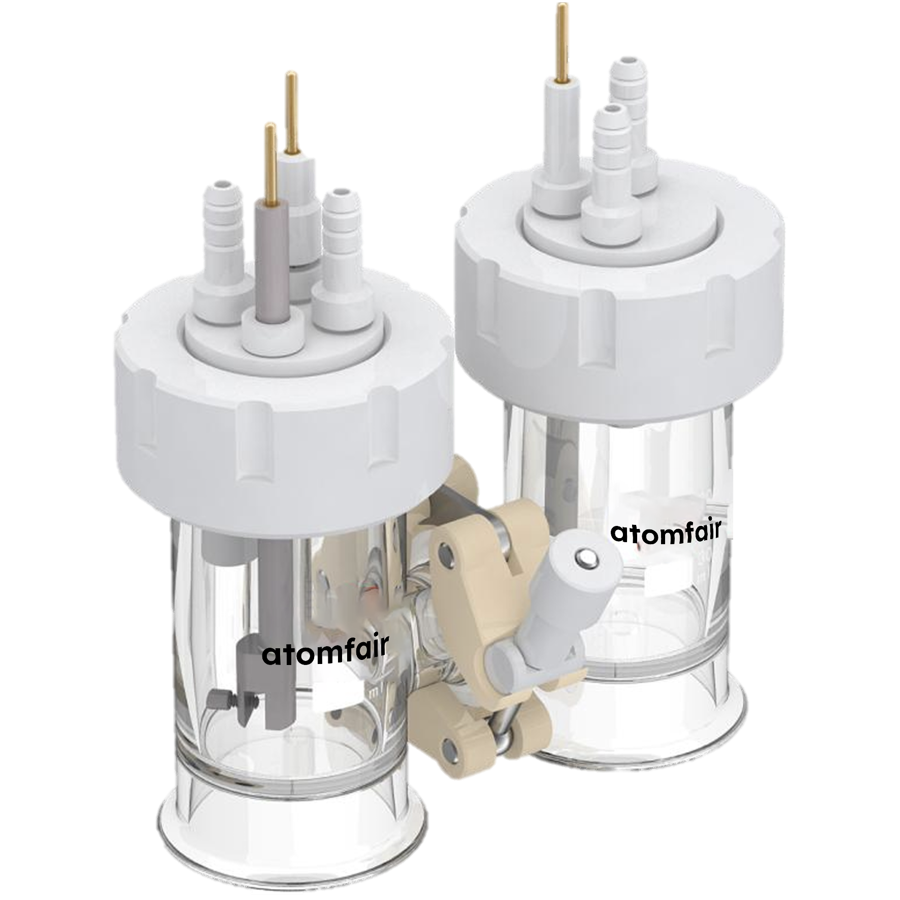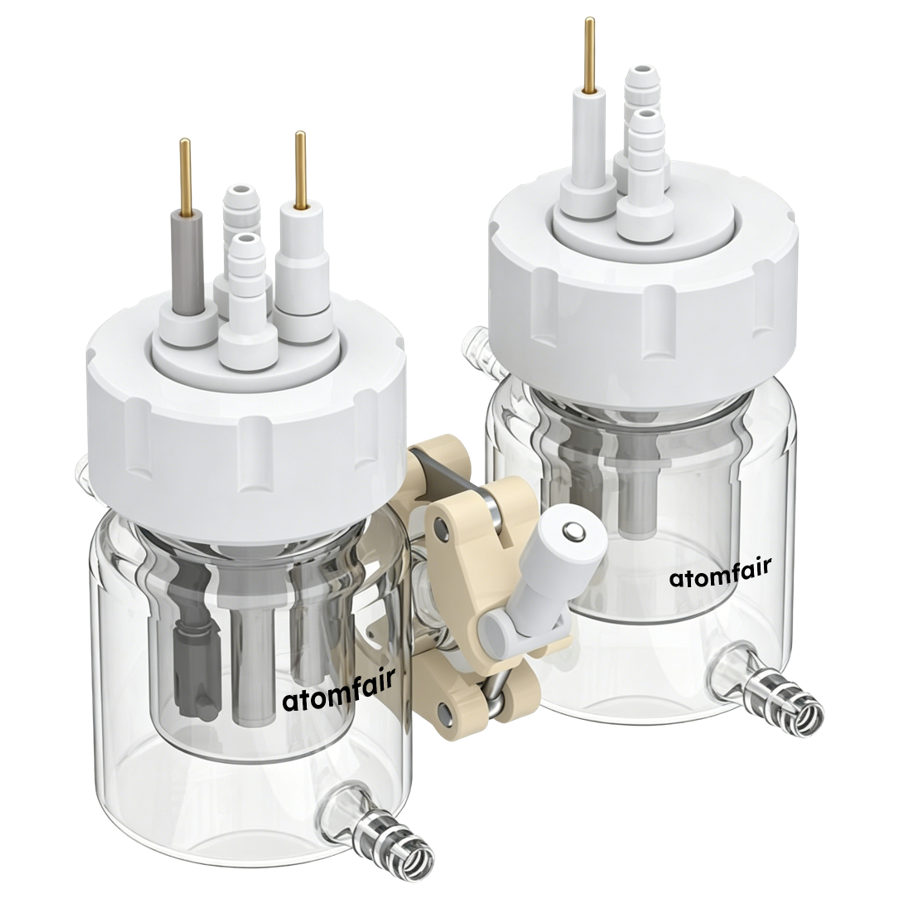
Sealed PTFE H-Type Replaceable-Membrane Photoelectrochemical Cell | ATOMFAIRProduct Type: Electrochemical cell
Research-grade laboratory product
|
|||||||||||||||||||
|
|||||||||||||||||||
|
LABORATORY PROCUREMENT SUPPORT
For model selection, accessory matching, platform compatibility or configuration confirmation, contact our technical sales team.
E-MAIL: inquiry@atomfair.com
|
|||||||||||||||||||
|
Manufacturer: Atomfair LLC
Brand: ATOMFAIR®
|
Manufacturer: Atomfair LLC
Brand: ATOMFAIR®
This cell requires user-supplied ion-exchange membrane and extended-length electrodes for operation. The quartz optical window is susceptible to scratches, and all seals must be inspected and verified for chemical compatibility before assembly.
- Quartz Window Care: Handle the quartz window with care to avoid scratches that could compromise optical clarity.
- Membrane Compatibility: Verify the ion-exchange membrane compatibility with the intended electrolyte before use.
- Seal Inspection: Inspect all O-ring seals and compression fittings before assembly to ensure proper sealing.
- Chemical Compatibility: Verify chemical compatibility of all cell components (PTFE, quartz, O-rings) with the intended electrolyte and reagents.
- Electrode Requirement: Use only extended-length electrodes designed for this cell to ensure proper positioning and sealing.
This procedure outlines the assembly and preparation steps for the photoelectrochemical cell. Follow these steps to ensure proper sealing and safe operation.
Required Equipment: Extended-length electrodes
- Inspect Seals
Inspect all O-ring seals and compression fittings before assembly to ensure they are clean and undamaged. - Verify Chemical Compatibility
Verify chemical compatibility of PTFE, quartz, and O-ring materials with the intended electrolyte and reagents. - Handle Quartz Window
Handle the quartz window with care and avoid touching the optical surface to prevent scratches. - Verify Membrane Compatibility
Verify the ion-exchange membrane compatibility with the intended electrolyte before installation. - Install Membrane
Install the ion-exchange membrane by securing it with the pin-sealed connections for proper isolation. - Insert Electrodes
Insert the extended-length electrodes into the compression fittings and tighten to achieve a proper seal. - Connect Gas Sparger
Connect a gas supply to the sub-surface sparger for purging the electrolyte if required.
How does the co-located working and reference electrode design in this PTFE H-cell minimize uncompensated resistance (iR drop) during photoelectrochemical measurements?
The working and reference electrodes are positioned in the same compartment, which effectively reduces uncompensated resistance (iR drop) by minimizing the distance and electrolyte path between them. This is explicitly stated in the product description as a design feature to ensure accurate potentiostatic control, particularly important in the two-compartment membrane-separated architecture of this 25–40 mL cell.
What electrode type and sealing mechanism does this cell require, and why must extended-length electrodes be used?
The cell requires extended-length electrodes because electrode seals are achieved via compression fittings with O-rings on the PTFE body, meaning standard-length electrodes may not reach the internal electrolyte volume. Extended-length electrodes are explicitly mandated in the product description and must be ordered separately; they are not included. The compression fitting design provides a gas-tight seal for the semi-sealed system.
What infrastructure and handling precautions are critical when using the removable quartz optical window in this sealed photoelectrochemical cell?
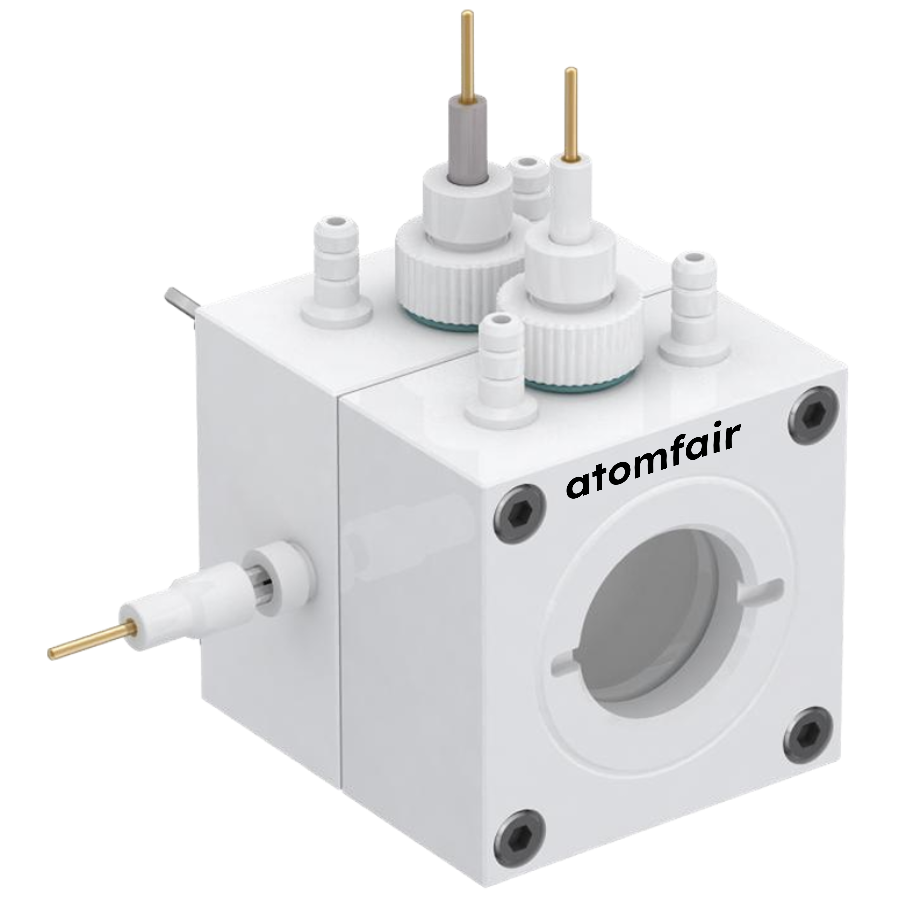
The 37 mm diameter quartz window is removable and replaceable but must be handled with care to avoid scratches that could compromise optical transmission and seal integrity. The product instructions explicitly warn to inspect seals before assembly and verify chemical compatibility with PTFE and quartz before use. The window is seated via the internal threaded lid design, requiring careful alignment to maintain the semi-sealed environment.
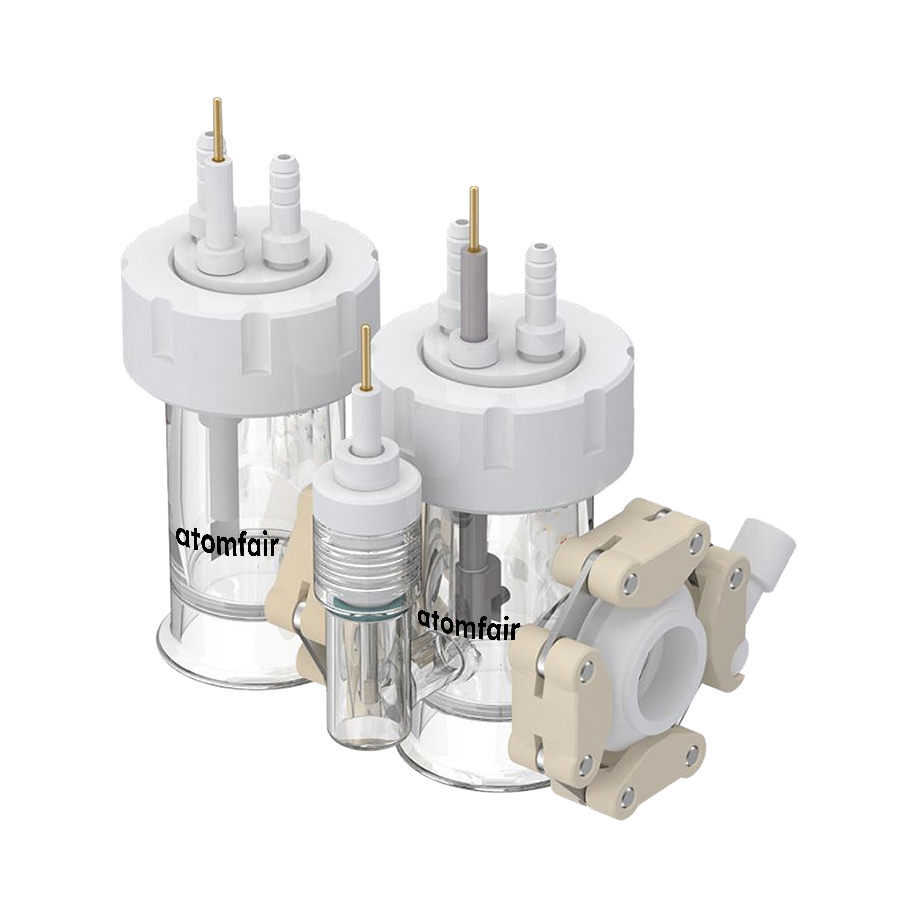
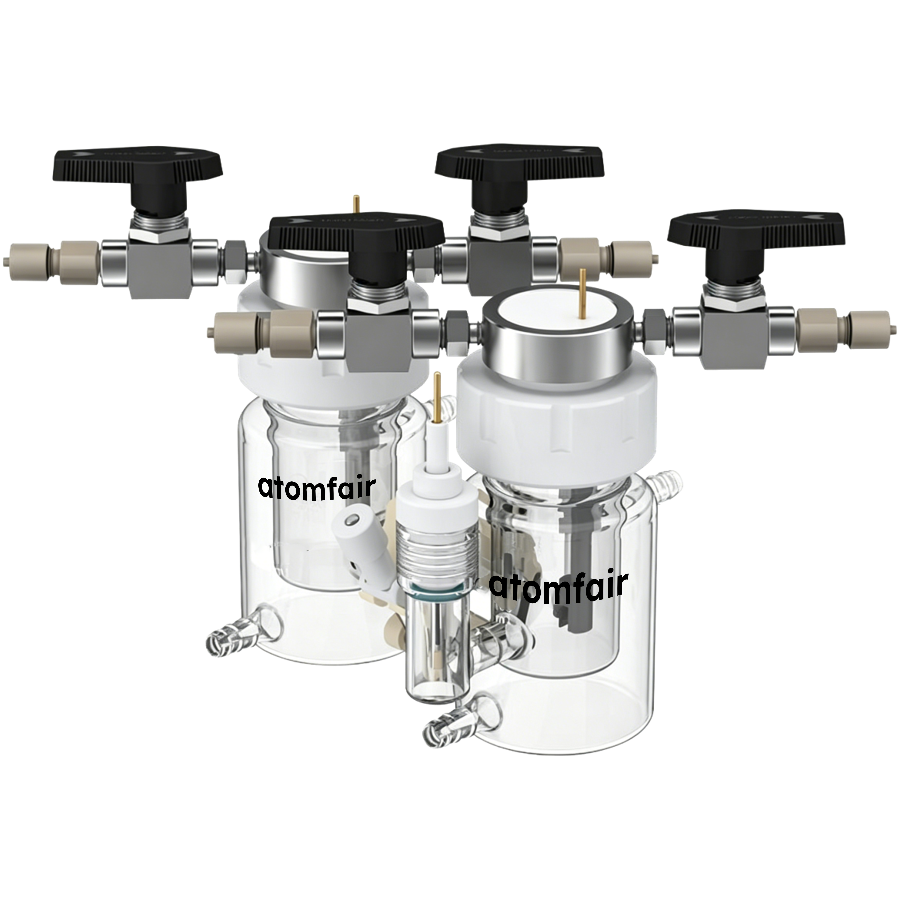
The ATOMFAIR Sealed PTFE H-Type Photoelectrochemical Cell provides a chemically inert PTFE body with a quartz optical window, co-located working and reference electrodes to minimize uncompensated resistance (iR drop), and a replaceable membrane design for versatile photoelectrochemical studies. It requires extended-length electrodes and user-supplied membranes, and the quartz window demands careful handling to avoid scratches.
Positive
- Full PTFE inertness: The PTFE body provides excellent chemical resistance and inertness, making it suitable for aggressive electrolytes and harsh conditions without contamination.
- Co-located electrodes reduce iR drop: Working and reference electrodes are positioned in the same compartment, minimizing uncompensated resistance for more accurate electrochemical measurements.
Trade-offs
- Extended-length electrodes required: Standard electrodes are not compatible; users must procure extended-length electrodes separately, adding to procurement and setup complexity.
- User-supplied membrane and quartz care: The ion-exchange membrane is not included and must be sourced and verified for compatibility; the quartz optical window is prone to scratches and requires careful handling.
Every advanced material, component, equipment, and instrument in our catalog is backed by rigorous testing. We maintain strict internal quality management frameworks and align with CE conformity metrics to deliver transparent, reproducible performance data via our public open-science repository.
To request raw batch performance data, submit formal vendor registration paperwork, or execute a fast-turnaround R&D manufacturing loop, contact us at inquiry@atomfair.com.
Item is dispatched under the Atomfair Shipping & Delivery Framework (Free worldwide shipping on orders over $59 USD excl. heavy equipment). Return is governed by the Atomfair Return & Refund Policy (7-day technical return window).