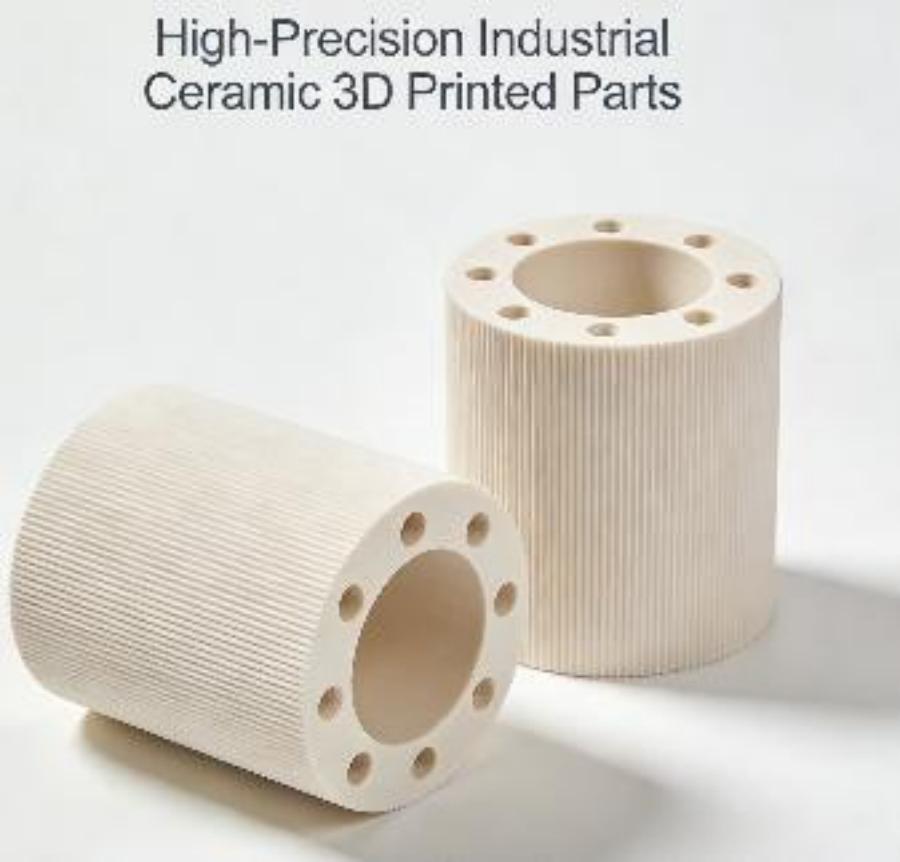
ATOMFAIR® ADVANCED TECHNICAL CERAMIC PRINTING SERVICE
|
|||||||||||||||||||
|
|||||||||||||||||||
|
REQUEST A CERAMIC PRINTING QUOTE
Contact our team to discuss your ceramic material, geometry, and application requirements.
|
|||||||||||||||||||
| Provider: Atomfair LLC | Brand: ATOMFAIR® |
This ceramic printing service requires careful selection of material formulation, printing method, and sintering cycle to achieve target properties. Final component dimensions, density, surface condition, and performance depend on these process parameters and the component geometry.
- Sintering Requirement: The printed green part must undergo controlled high-temperature sintering to develop the final ceramic structure.
- Parameter Dependence: Final dimensions, density, surface condition, and material performance depend on the selected ceramic formulation, printing method, sintering cycle, and component geometry.
- Material Selection: Alumina, zirconia, and other advanced ceramic powders are available, each offering different thermal stability and wear resistance.
- Application Suitability: The service is suitable for custom lab equipment, biomedical implants, microreactors, and high-temperature parts, but performance must be validated per application.
- Geometry Complexity: Complex geometries are achievable but may affect dimensional accuracy and require iterative optimization.
How does the sintering process affect the final density and dimensional accuracy of printed ceramic components?
The controlled high-temperature sintering step develops the final ceramic structure, but final dimensions, density, surface condition, and material performance depend on the selected ceramic formulation, printing method, sintering cycle, and component geometry. This means that while complex geometries are achievable, shrinkage and densification during sintering must be accounted for in the design, and the trade-off between shape complexity and final dimensional precision is critical.
What ceramic materials are available for this printing service, and what are the constraints on material selection?
The service uses primary materials such as alumina (Al2O3) and zirconia (ZrO2) along with other advanced ceramic powders, offering material flexibility. However, the final performance, including thermal stability and wear resistance, is application-specific, and the selected ceramic formulation must be compatible with both the printing method (binder jetting or LCM) and the sintering cycle. For biomedical or chemical applications, additional validation of biocompatibility or chemical resistance may be required.
What post-processing infrastructure is required to achieve the final ceramic properties after printing?
Printed parts require a controlled high-temperature sintering process to develop the final ceramic structure. This demands specialized high-temperature furnaces capable of precise temperature profiles and atmosphere control, as the sintering cycle directly influences density, surface condition, and material performance. The service provider typically manages this step, but users should be aware that final properties depend on the entire processing chain, including sintering parameters.
This ceramic printing service enables production of complex geometries in alumina and zirconia with high thermal stability and wear resistance, though final properties are dependent on process parameters and post-sintering conditions.
Positive
- Complex Ceramic Geometries: Binder jetting and lithography-based ceramic manufacturing produce intricate shapes that are difficult to achieve with conventional machining or molding.
- Material Flexibility: Supports multiple advanced ceramic formulations including alumina (Al2O3) and zirconia (ZrO2), allowing selection based on thermal, mechanical, or biomedical requirements.
Trade-offs
- Property Dependence on Process Parameters: Final dimensions, density, surface condition, and material performance depend on the selected ceramic formulation, printing method, sintering cycle, and component geometry, introducing variability that must be managed per application.
- Post-Processing Sintering Requirement: Controlled high-temperature sintering is mandatory to develop the final ceramic structure, adding time, energy, and infrastructure demands that may affect lead times and cost.
Every advanced material, component, equipment, and instrument in our catalog is backed by rigorous testing. We maintain strict internal quality management frameworks and align with CE conformity metrics to deliver transparent, reproducible performance data via our public open-science repository.
To request raw batch performance data, submit formal vendor registration paperwork, or execute a fast-turnaround R&D manufacturing loop, contact us at inquiry@atomfair.com.
Item is dispatched under the Atomfair Shipping & Delivery Framework (Free worldwide shipping on orders over $59 USD excl. heavy equipment). Return is governed by the Atomfair Return & Refund Policy (7-day technical return window).