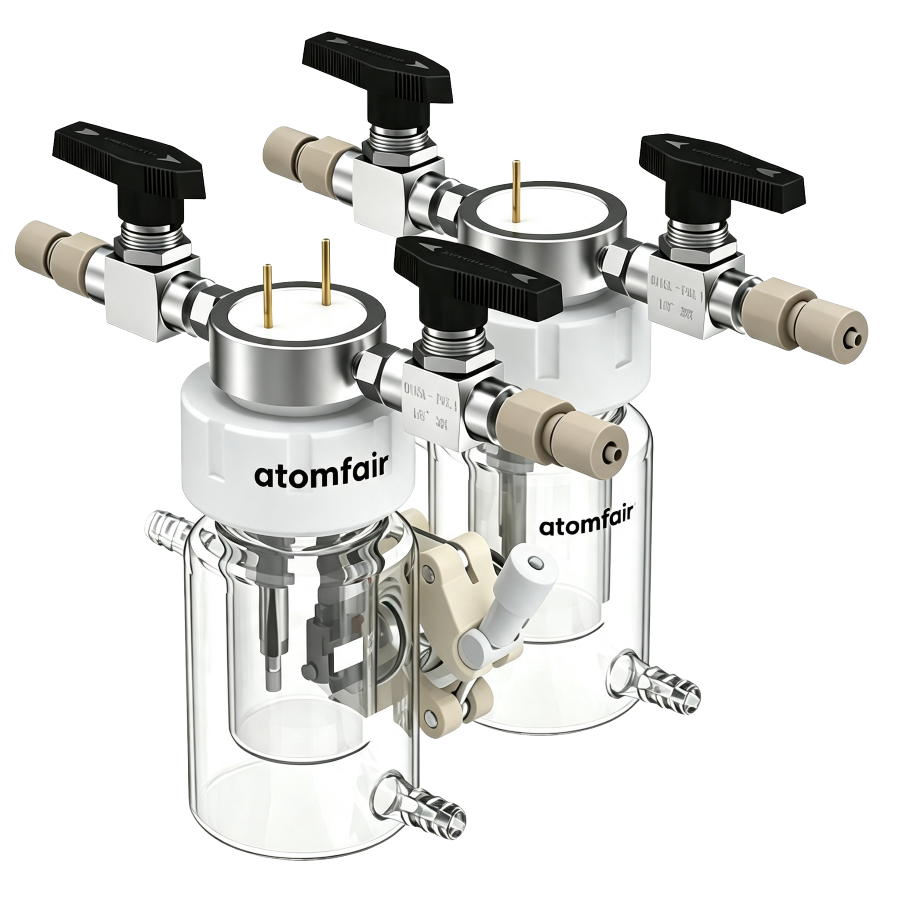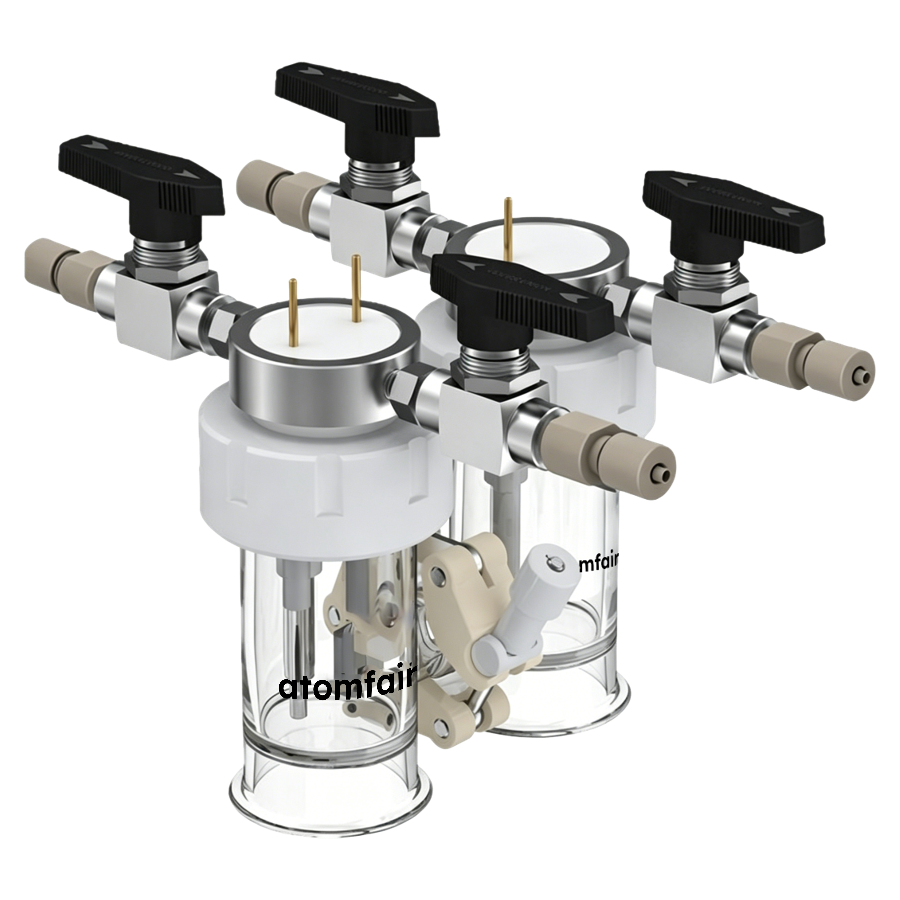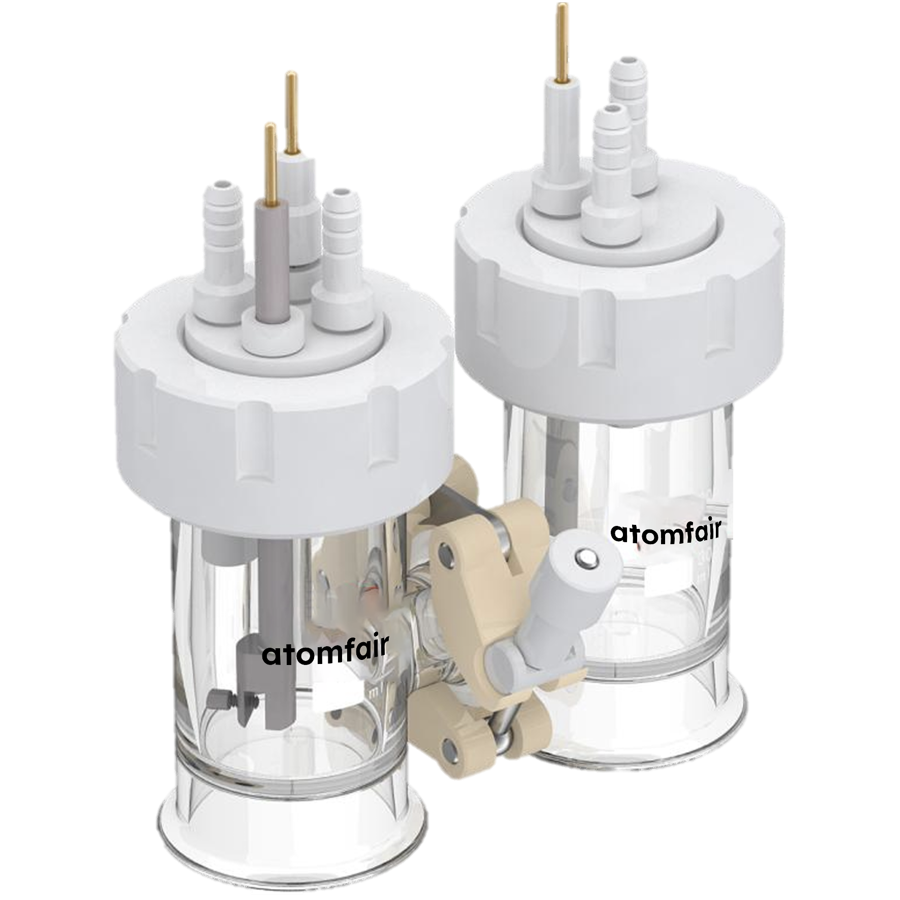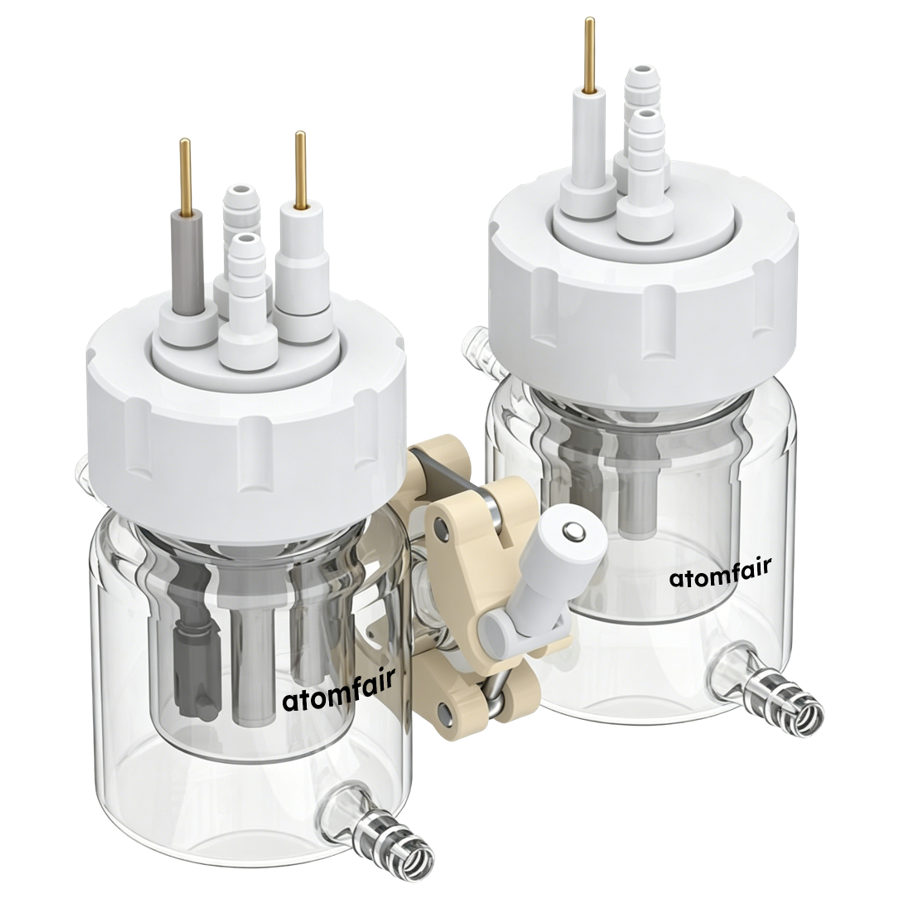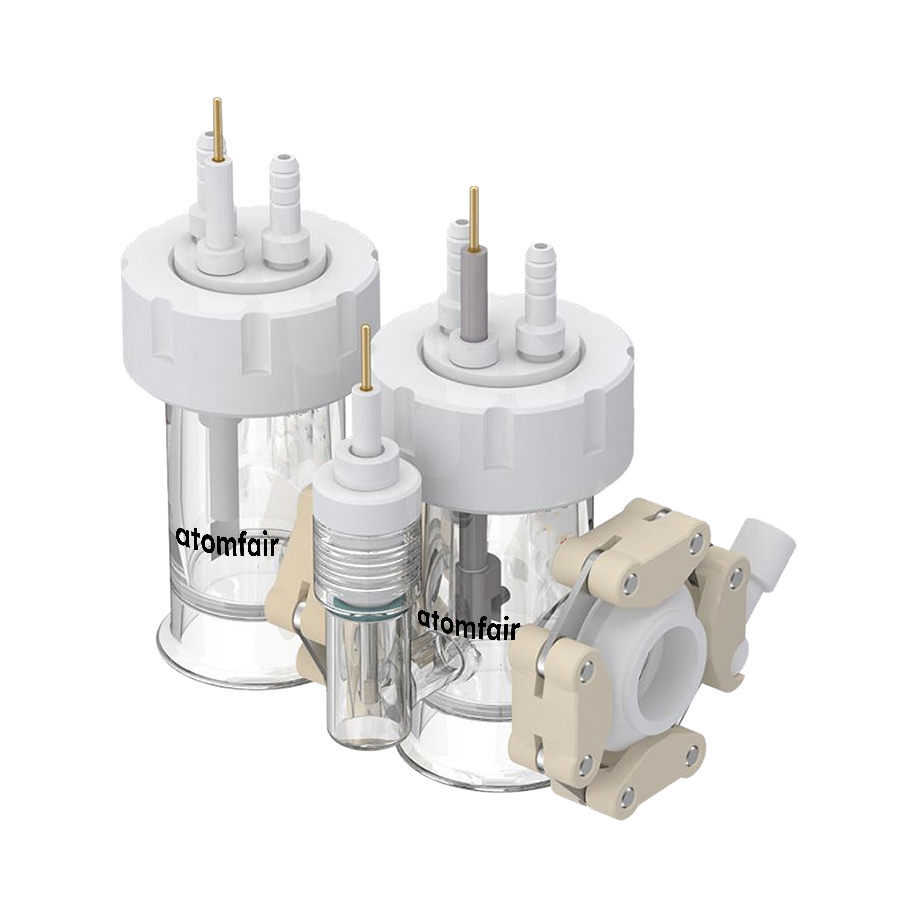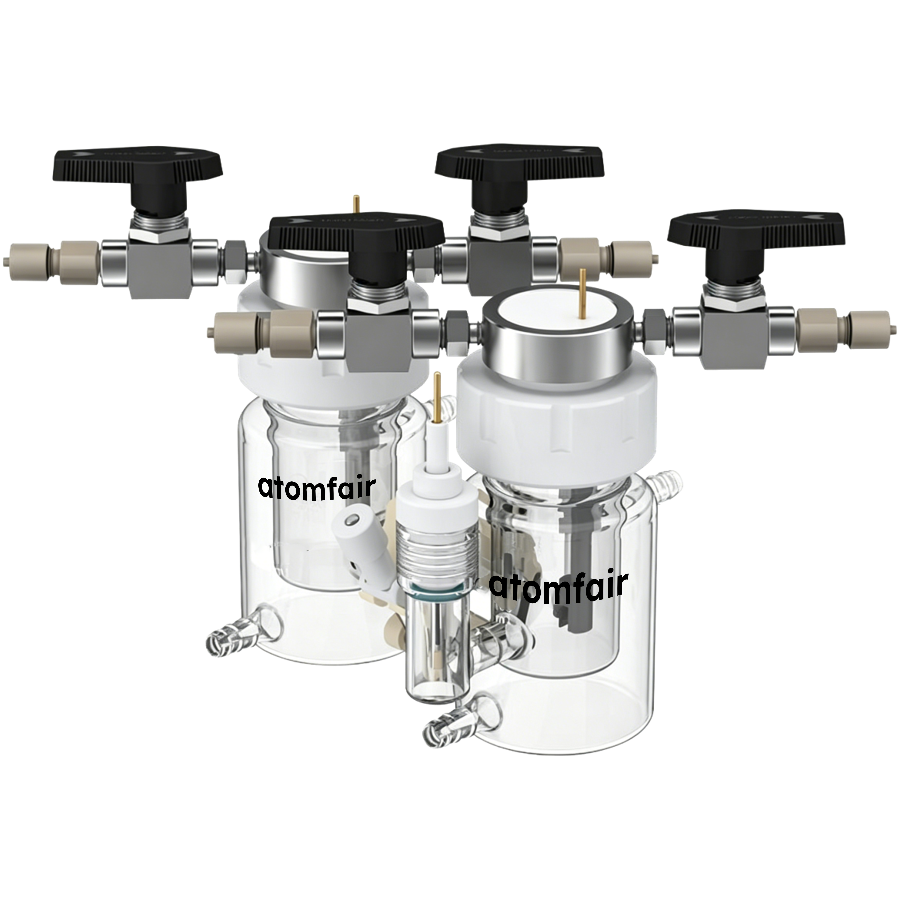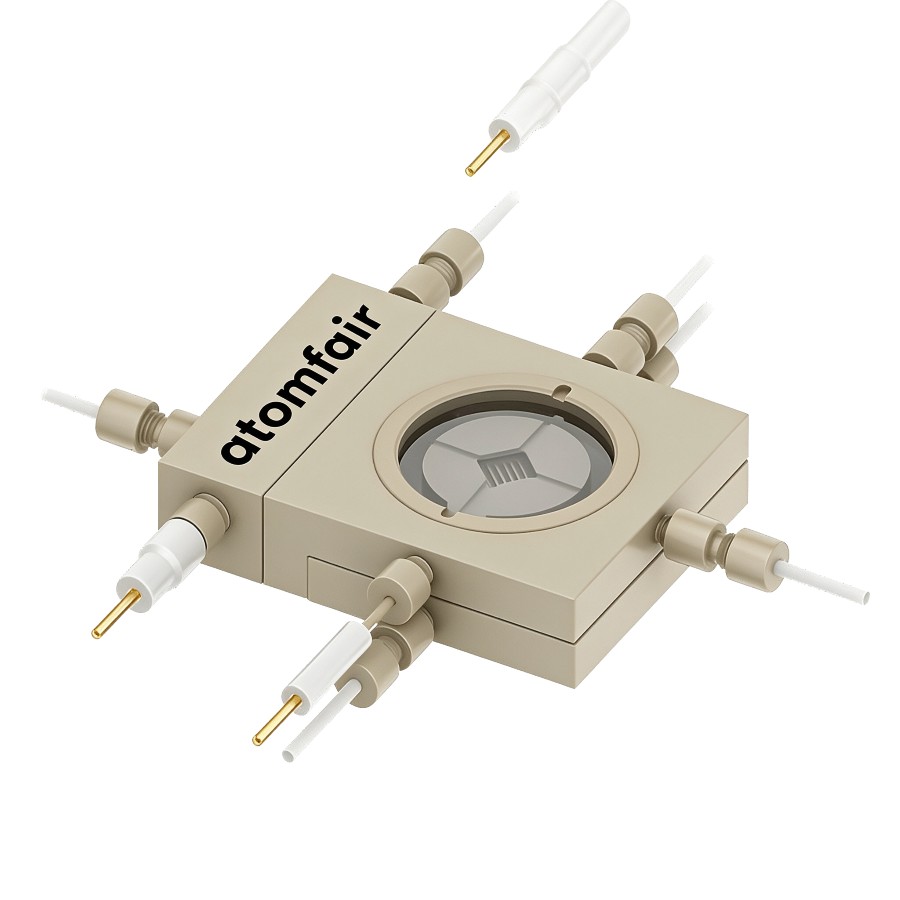
In-situ Raman Electrochemical Cell, Gas Diffusion Serpentine Flow Field TypeProduct Type: In-situ Raman electrochemical cell
Research-grade laboratory product
|
|||||||||||||||||||||||||||
|
|||||||||||||||||||||||||||
|
LABORATORY PROCUREMENT SUPPORT
For model selection, technical compatibility or configuration confirmation, contact our technical sales team.
E-MAIL: inquiry@atomfair.com
|
|||||||||||||||||||||||||||
|
Manufacturer: Atomfair LLC LLC
Brand: ATOMFAIR®
|
This in-situ Raman electrochemical cell imposes strict compatibility requirements for optical alignment, gas flow management, and electrode-membrane integration. Proper sealing of the three-chamber structure and correct positioning of the reference electrode are critical for accurate electrochemical measurements.
- Chamber Integrity: The three-chamber design requires intact seals between gas, working electrode, and counter electrode chambers to prevent cross-contamination and maintain electrochemical isolation.
- Optical Alignment: The flat sapphire window and short working distance (<3 mm) necessitate precise optical alignment to maintain Raman signal collection efficiency.
- Gas Flow Field Compatibility: The serpentine gas flow field requires a compatible gas diffusion electrode and adequate gas flow control to ensure uniform reactant distribution.
- Reference Electrode Positioning: The reference electrode must be placed in the working electrode chamber to minimize uncompensated resistance drop as per the cell design.
- Electrode and Membrane Selection: Separately purchased electrodes, membranes, and gas diffusion electrodes must be compatible with the cell's 1 cm² working electrode area and PEEK body material.
How does the three-chamber design with serpentine gas flow field affect signal-to-noise ratio in in-situ Raman measurements?
The three-chamber design isolates gas, working electrode, and counter electrode zones, minimizing cross-contamination and reducing background interference. The serpentine flow field ensures uniform gas distribution across the 1 cm² electrode, while the short optical distance (<3 mm) and >95% window transmittance maximize Raman signal collection, collectively improving signal-to-noise ratio.
What working electrode materials and dimensions are compatible with this in-situ Raman cell?
The cell is configured for a 1 cm² working electrode area. Standard electrode materials must be confirmed with the manufacturer. The PEEK body is chemically resistant but may limit use with aggressive electrolytes at elevated temperatures. The reference electrode is positioned in the working electrode chamber to reduce resistance drop, and custom electrode sizes are available upon request.
What gas handling and sealing precautions are required when using the serpentine flow field in this in-situ Raman cell?
The cell requires external gas supply connections to the dedicated gas chamber. The PEEK body and sapphire window provide broad chemical resistance, but gas seals must be verified for compatibility with the specific gas and operating pressure. The cell should be operated within the safe pressure and temperature limits of PEEK and sapphire; confirm with the manufacturer for aggressive conditions.
This in-situ Raman cell with serpentine gas flow field and three-chamber design offers a short optical path (<3 mm) and high-transmittance sapphire window (>95%) for broad Raman instrument compatibility; however, users must separately procure electrodes and membranes and may require customization for non-standard dimensions.
Positive
- Three-chamber gas separation design: Separates gas, working electrode and counter electrode zones to minimize cross-contamination and improve electrochemical measurement fidelity.
- Short optical path with sapphire window: Flat sapphire window with <3 mm distance to working electrode and >95% transmittance enables high-quality Raman signal collection across a broad range of instruments.
Trade-offs
- Separate accessory procurement required: Electrodes, membranes and gas diffusion electrodes are not included; users must confirm and purchase these items separately for the selected configuration.
- Customization needed for non-standard sizes: Non-standard electrode sizes or window materials require specification in advance; standard lead times may extend if custom dimensions are requested.
Every advanced material, component, equipment, and instrument in our catalog is backed by rigorous testing. We maintain strict internal quality management frameworks and align with CE conformity metrics to deliver transparent, reproducible performance data via our public open-science repository.
To request raw batch performance data, submit formal vendor registration paperwork, or execute a fast-turnaround R&D manufacturing loop, contact us at inquiry@atomfair.com.
Item is dispatched under the Atomfair Shipping & Delivery Framework (Free worldwide shipping on orders over $59 USD excl. heavy equipment). Return is governed by the Atomfair Return & Refund Policy (7-day technical return window).