
MAX Phase Ceramic Materials
MAX phase ceramic materials are a family of advanced layered ceramics composed of transition metals, A-group elements, and carbon and/or nitrogen. They combine characteristics commonly associated with ceramics, including high-temperature stability, wear resistance, and chemical durability, with useful electrical, thermal, and machining properties.
These materials support research and development in high-temperature structural components, conductive ceramics, functional coatings, thermal-management systems, composite materials, electronic materials, and energy-related applications. Their properties can be tailored through chemical composition, material form, phase composition, particle size, and processing conditions.
When selecting a MAX phase ceramic material, consider the material system, intended application, required form, purity, particle size, and compatibility with the planned processing route.
Show More: MAX Phase Ceramic Materials Selection Guide
Choose by Material System
| Material System | Common Element Directions | Typical Characteristics | Application Directions |
|---|---|---|---|
| Titanium-Based MAX Phases | Ti-Al-C, Ti-Si-C and related systems | Balanced structural and functional properties with broad research relevance | Conductive ceramics, composites, high-temperature materials, functional-material research |
| Chromium-Based MAX Phases | Cr-Al-C and related systems | Suitable for studies involving high-temperature stability and oxidation resistance | High-temperature coatings, thermal protection, corrosion-resistant material research |
| Niobium- and Vanadium-Based MAX Phases | Nb-Al-C, V-Al-C and related systems | Useful for exploring electrical behavior, structural stability, and functional applications | Electrochemical research, functional ceramics, advanced material development |
| Molybdenum- and Tantalum-Based MAX Phases | Mo-, Ta- and related systems | Appropriate for projects requiring high-temperature performance or specialized material behavior | Engineering ceramics, wear-resistant materials, specialty functional materials |
| Zirconium- and Hafnium-Based MAX Phases | Zr-, Hf- and related systems | Relevant to high-temperature, corrosion-resistance, and frontier material research | High-temperature ceramics, environmental-resistance materials, research applications |
Choose by Application
High-Temperature Structural Materials
MAX phase ceramics can be considered for high-temperature structural materials, thermal-protection systems, and heat-resistant component development. Material selection should take operating temperature, atmosphere, thermal cycling, loading conditions, and forming methods into account.
Conductive and Thermal-Management Materials
Selected MAX phase systems may be used in conductive ceramics, thermal-management materials, electronic functional components, and composite systems. Match the material composition and form to the electrical, thermal, and processing requirements of the project.
Coatings and Surface Engineering
MAX phase materials can support the development of functional, wear-resistant, and oxidation-resistant coatings. For coating or thin-film applications, confirm material form, particle size or target dimensions, substrate compatibility, and deposition-process requirements.
Composite Materials and Sintering
MAX phase materials may be used as functional phases, reinforcing phases, or matrix components in composite systems. Particle size, dispersion, sintering conditions, and compatibility with other material components are important selection factors.
Energy and Electrochemical Research
Certain MAX phase ceramic systems are relevant to energy storage, electrocatalysis, electrochemical interfaces, and functional electrode-material research. Select the composition, material form, and purity level according to the role of the material in the intended system.
Choose by Material Form
| Material Form | Common Uses | Selection Considerations |
|---|---|---|
| Powder | Sintering, pressing, blending, slurry preparation, composites, material synthesis | Particle size, purity, morphology, dispersion, phase composition, batch consistency |
| Granules or Coarse Powder | Pressing, controlled feeding, specific preparation processes | Granule size, flowability, packing behavior, equipment compatibility |
| Bulk Material or Sheet | Machining, cutting, structural testing, electrical and thermal characterization | Dimensions, thickness, density, surface condition, machining requirements |
| Target or Deposition Material | Sputtering, evaporation, thin-film and coating development | Dimensions, density, composition, bonding requirements, equipment compatibility |
| Custom Specification | Project-specific dimensions, compositions, particle sizes, and development work | Application, target parameters, quantity, and planned processing conditions |
Key Factors to Confirm
| Factor | Why It Matters |
|---|---|
| Material Composition | The element combination affects thermal stability, electrical behavior, thermal performance, oxidation resistance, and processing compatibility. |
| Purity and Phase Composition | Purity and phase composition can influence experimental reproducibility, sintering behavior, and final material performance. |
| Particle Size and Morphology | Powder characteristics affect blending, dispersion, pressing, sintering, and reaction behavior. |
| Material Form | Powders, bulk pieces, sheets, and targets are intended for different processing routes and equipment. |
| Service Environment | Temperature, atmosphere, thermal cycling, and contact materials should be considered before selecting a material system. |
Frequently Asked Questions
What are MAX phase ceramic materials?
MAX phase ceramic materials are advanced layered ceramics that can combine high-temperature stability, wear resistance, electrical conductivity, thermal conductivity, and useful machining characteristics.
What applications are MAX phase materials used for?
They are commonly selected for high-temperature structural materials, conductive ceramics, thermal-management systems, functional coatings, composite materials, electronic materials, and advanced research projects.
How do I choose the right MAX phase material system?
Start with your application target, such as high-temperature performance, electrical conductivity, thermal management, coating development, or composite processing. Then compare the chemical composition, required form, purity, particle size, and planned processing conditions.
Should I choose powder, bulk material, or a target?
Powders are generally suitable for sintering, blending, pressing, and composite preparation. Bulk materials are useful for machining and property testing. Targets and deposition materials are typically selected for thin-film and coating processes.
Which specifications are important when selecting MAX phase powders?
Important specifications commonly include chemical composition, purity, phase composition, particle size, morphology, dispersion behavior, packaging, and compatibility with the intended process.
Can MAX phase materials be used in high-temperature environments?
Many MAX phase systems are relevant to high-temperature applications, but suitability depends on the specific composition, operating temperature, atmosphere, thermal cycling conditions, and the overall material system.
Are MAX phase materials suitable for coatings and thin films?
Yes. They can be used in coating and thin-film development where the material form, composition, particle size or target dimensions, substrate compatibility, and deposition process are appropriately matched.
What information should I prepare before selecting a product?
Prepare the desired material system, application, required form, purity level, particle size or dimensions, quantity, and downstream processing conditions. This helps identify the most suitable specification for your project.
Showing 49–64 of 68 results
-
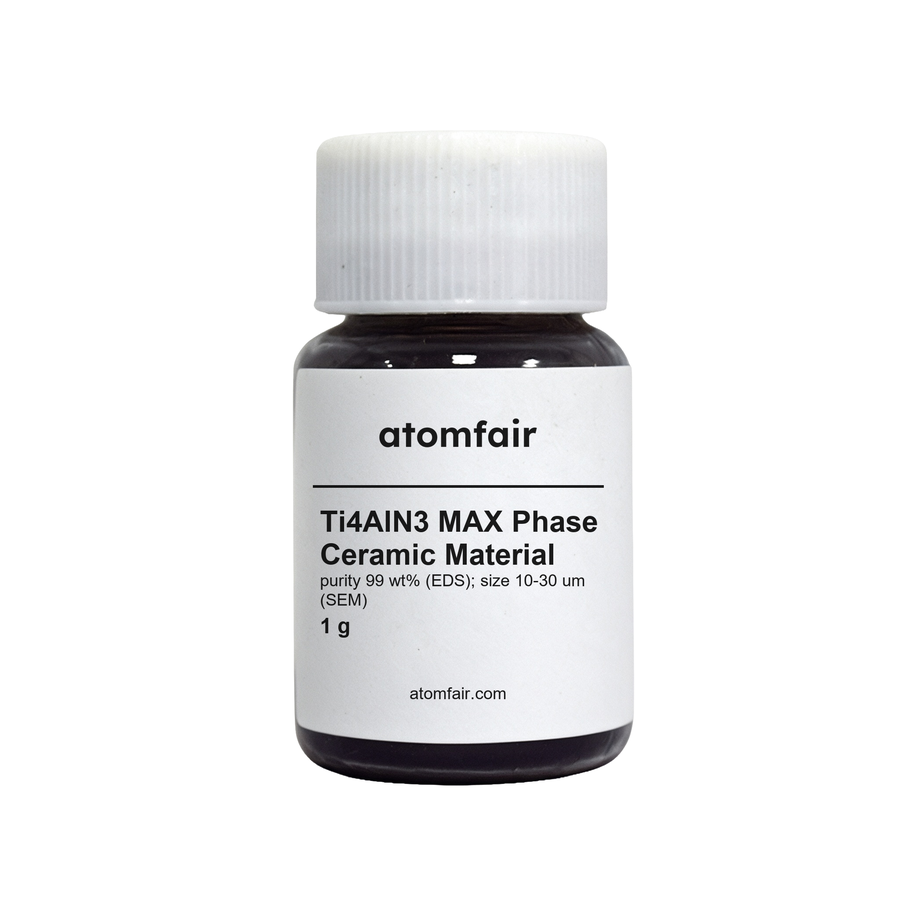
Ti4AlN3 MAX Phase Ceramic Powder 99 wt% 1 g ATOMFAIR®
$142.00 -
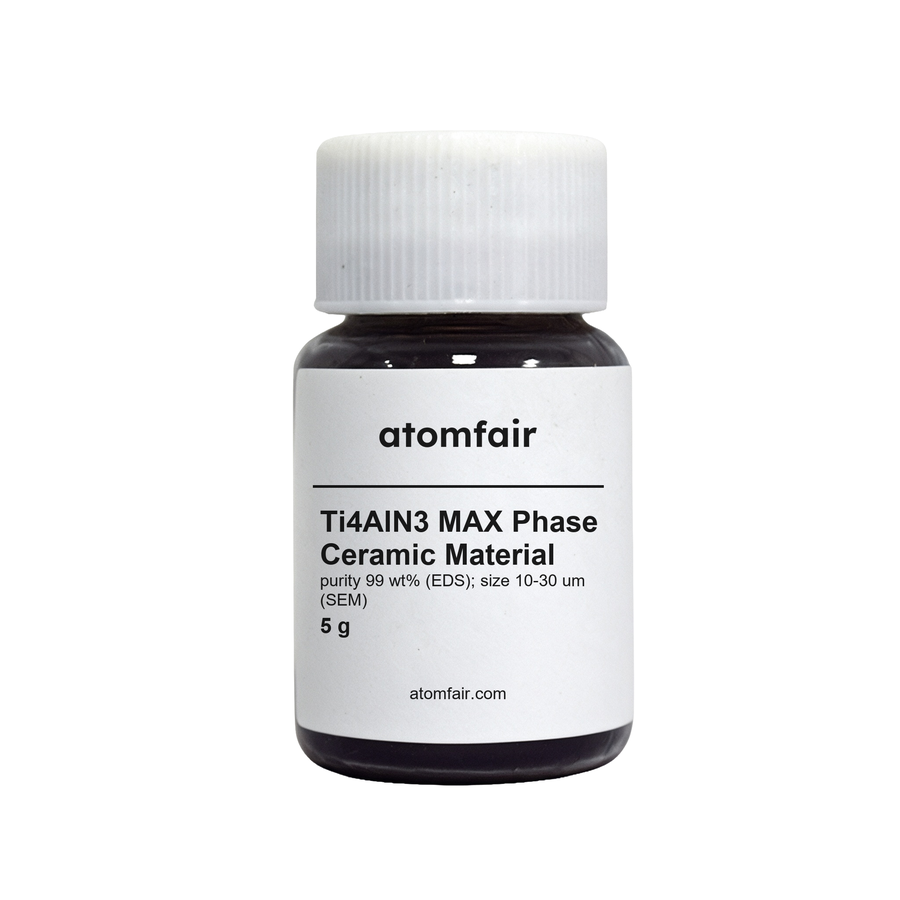
Ti4AlN3 MAX Phase Powder 99 wt% 10–30 μm 5 g ATOMFAIR®
$506.00 -
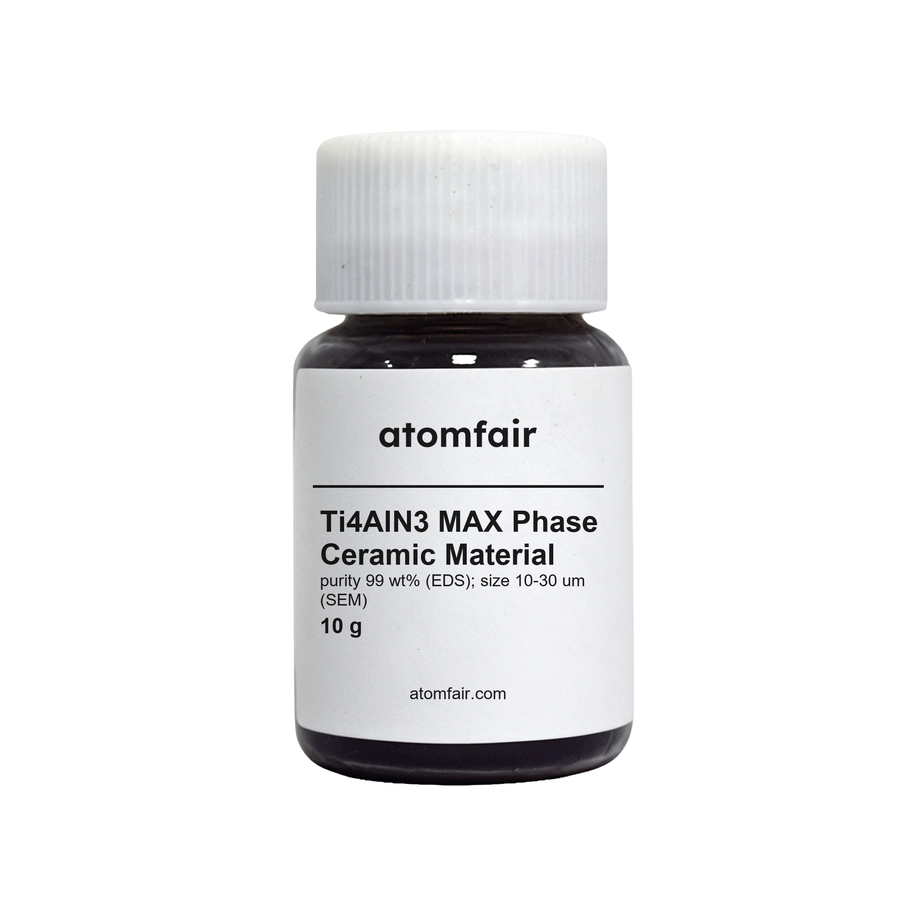
Ti4AlN3 MAX Phase Powder 99 wt% 10–30 μm, ATOMFAIR®
$896.00 -
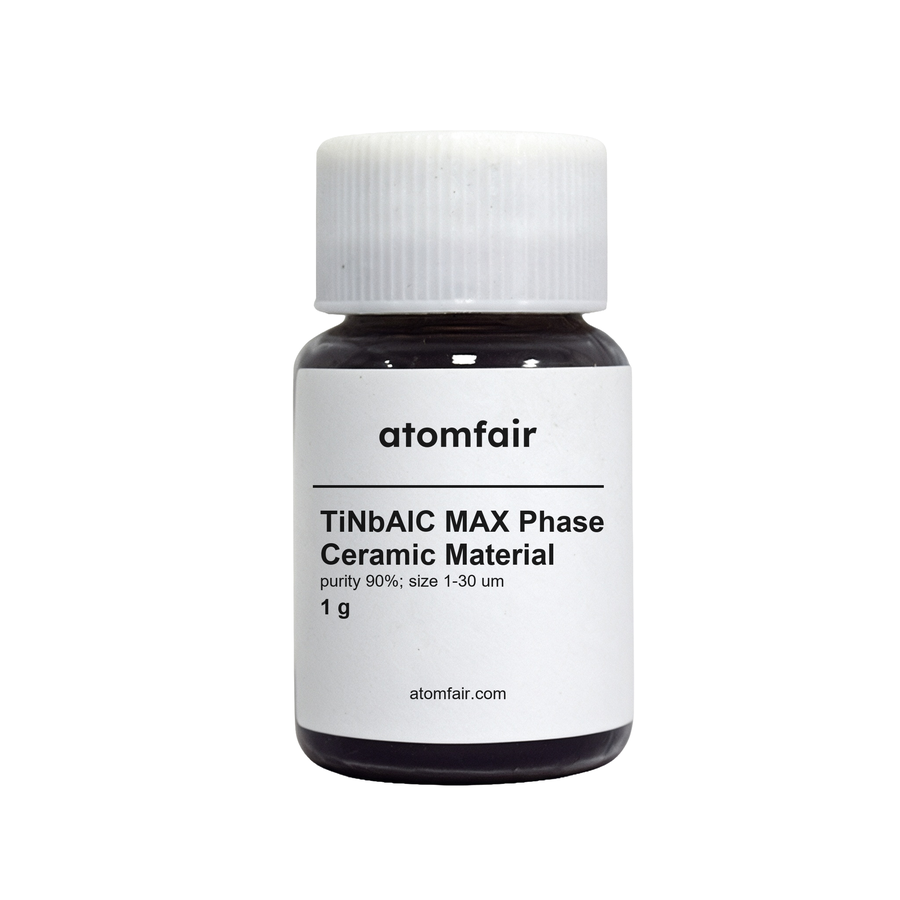
TiNbAlC MAX Phase Powder 90% 1-30 μm, 1 g ATOMFAIR®
$162.00 -
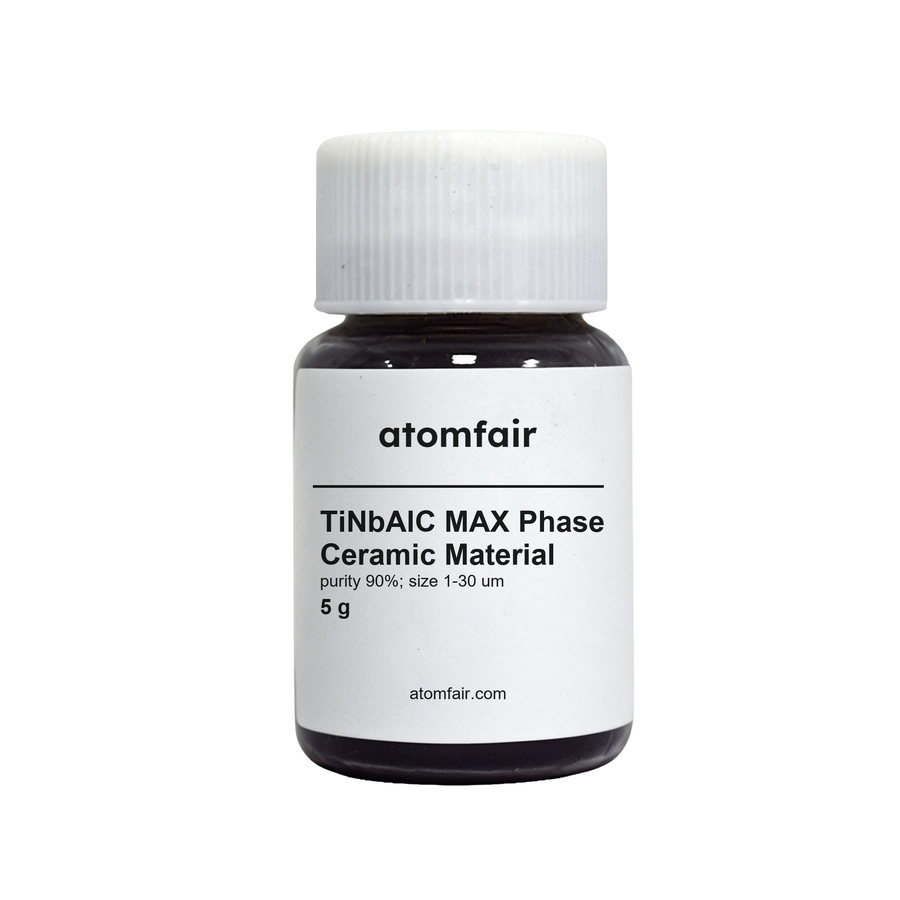
TiNbAlC MAX Phase Powder 90%, 1–30 μm, 5 g ATOMFAIR®
$600.00 -
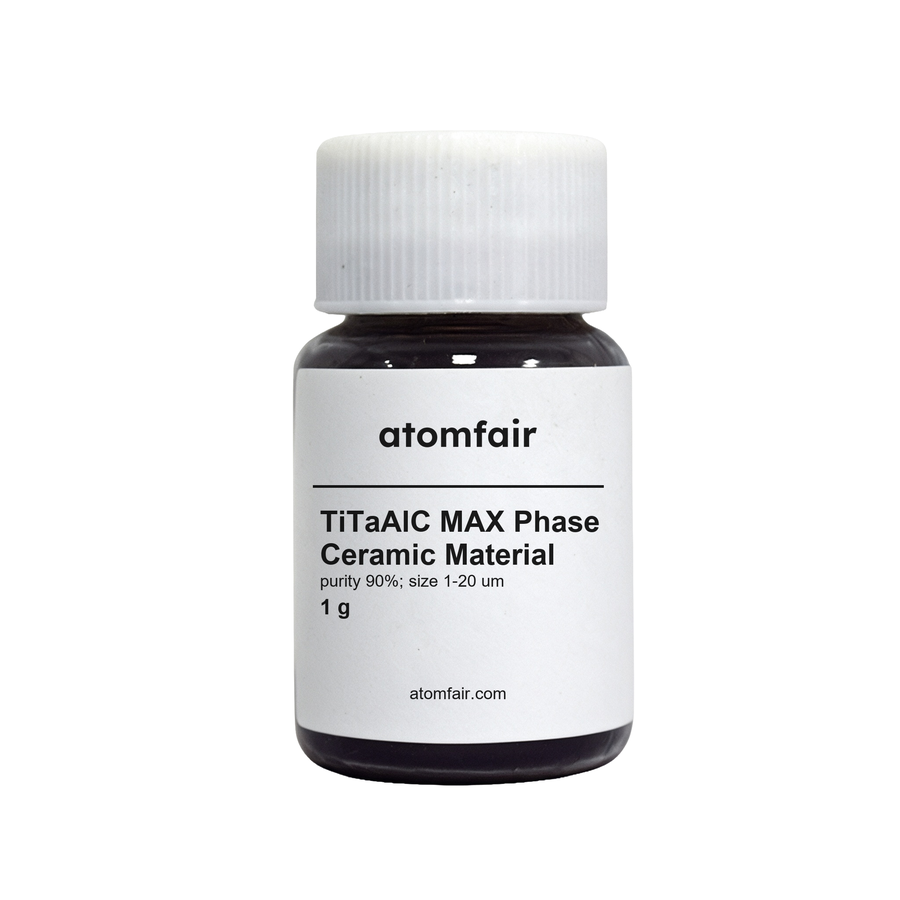
TiTaAlC MAX Phase Powder 90%, 1–20 μm, 1 g ATOMFAIR®
$182.00 -
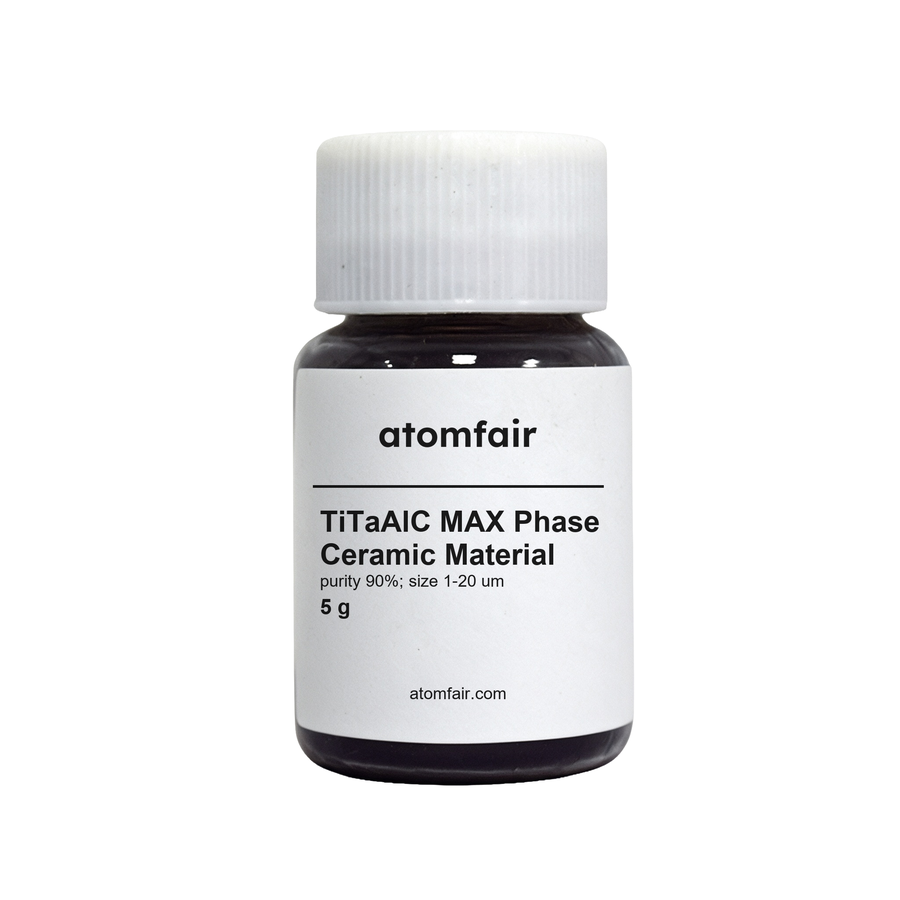
TiTaAlC MAX Phase Powder 90%, 1–20 μm, 5 g ATOMFAIR®
$669.00 -
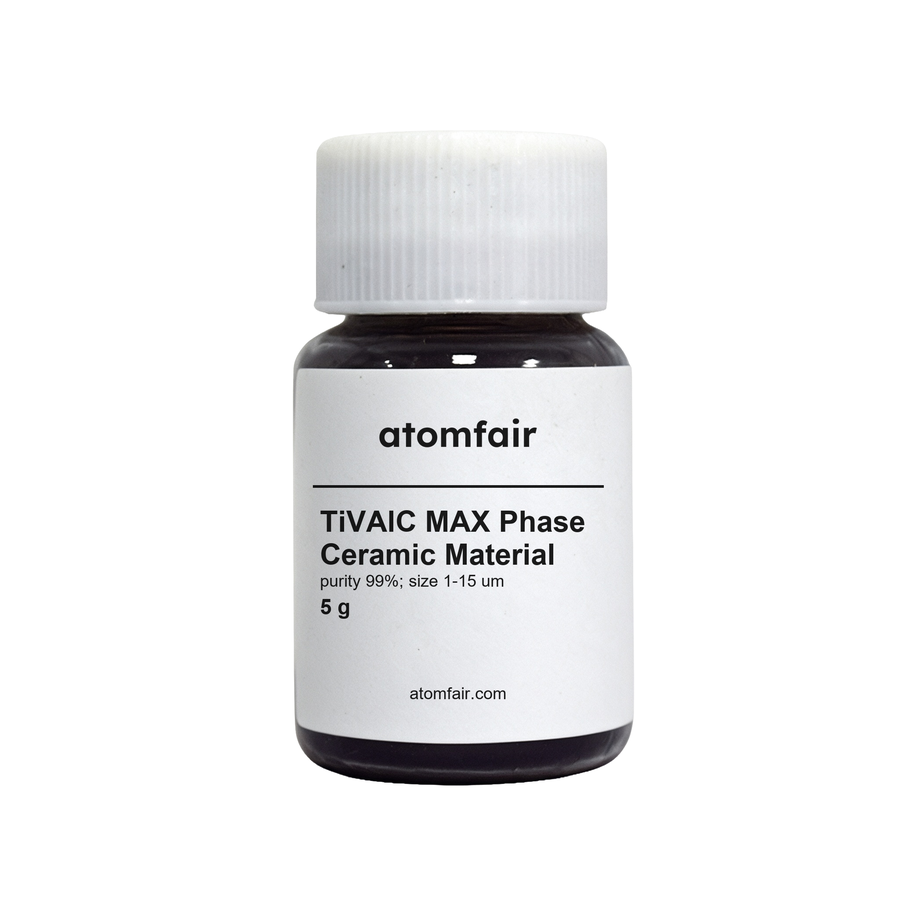
TiVAlC MAX Phase Ceramic Powder 99% 1-15 μm 5 g ATOMFAIR®
$600.00 -
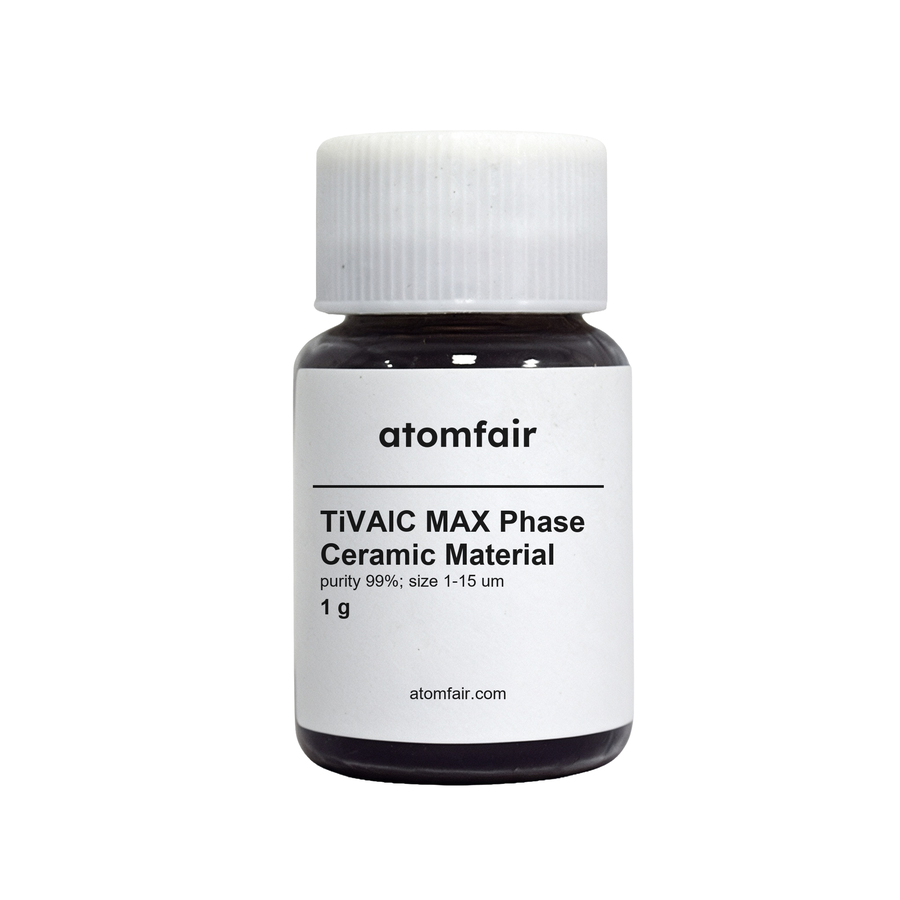
TiVAlC MAX Phase Ceramic Powder 99%, 1–15 μm, 1 g ATOMFAIR®
$162.00 -
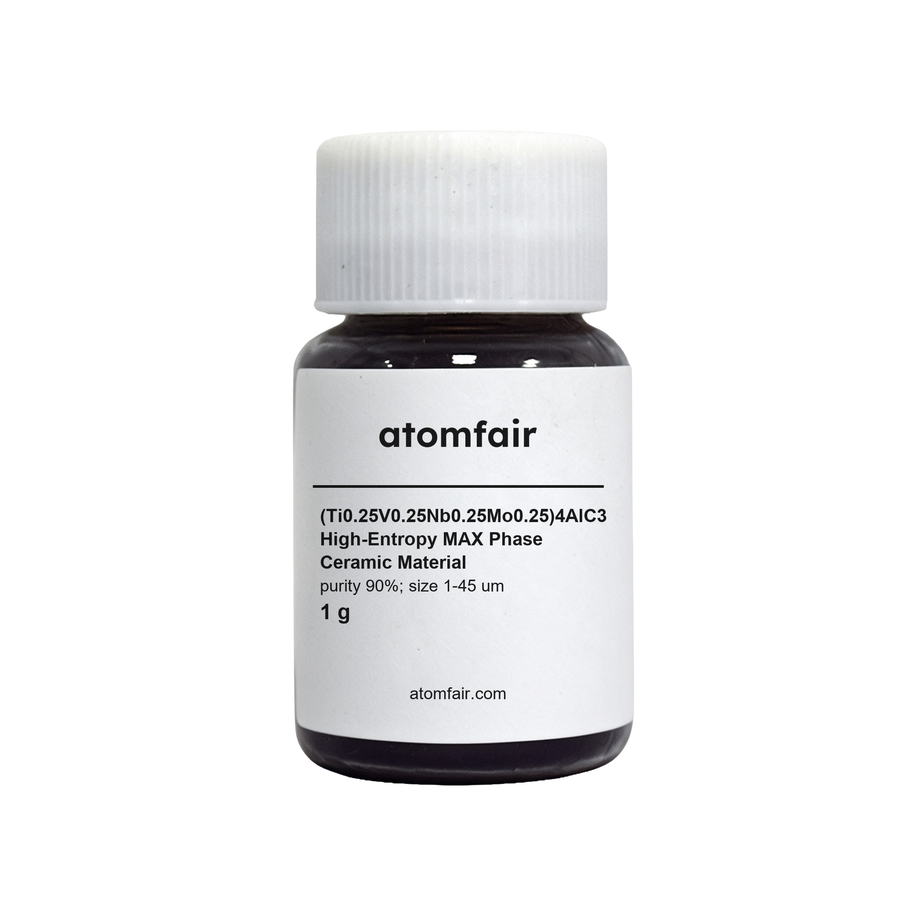
TiVNbMo High-Entropy MAX Phase Powder 90%, 1g ATOMFAIR®
$202.00 -
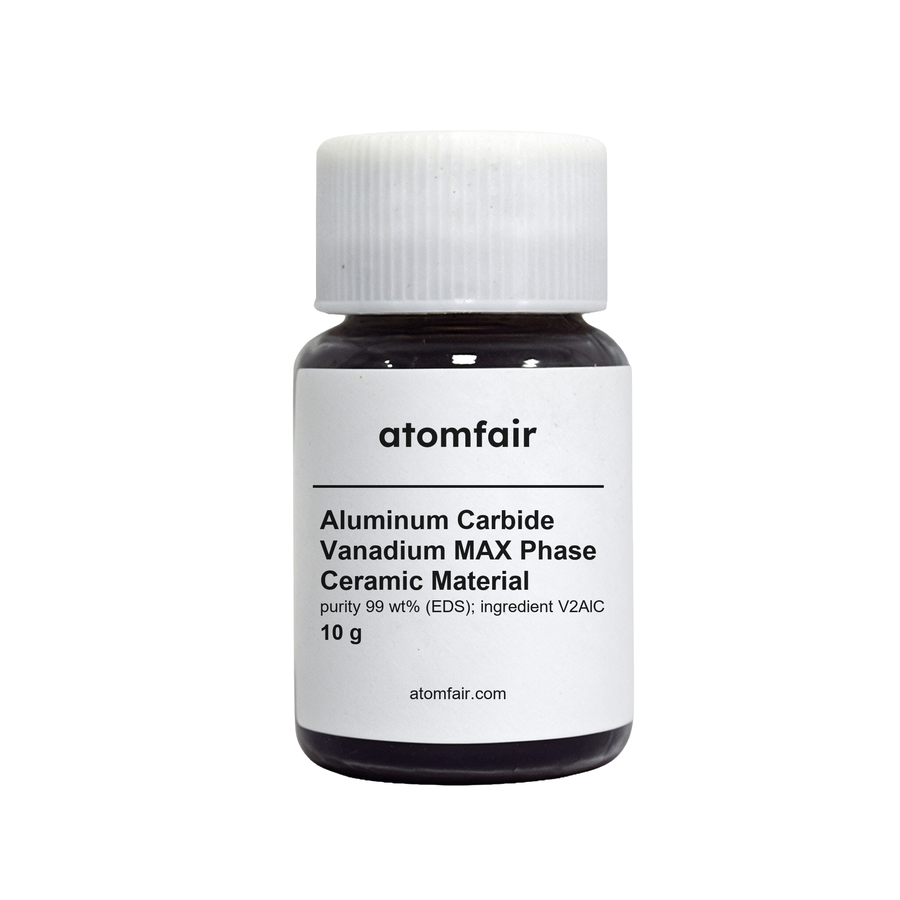
V2AlC Aluminum Vanadium Carbide MAX Powder 99% ATOMFAIR®
$50.00 -
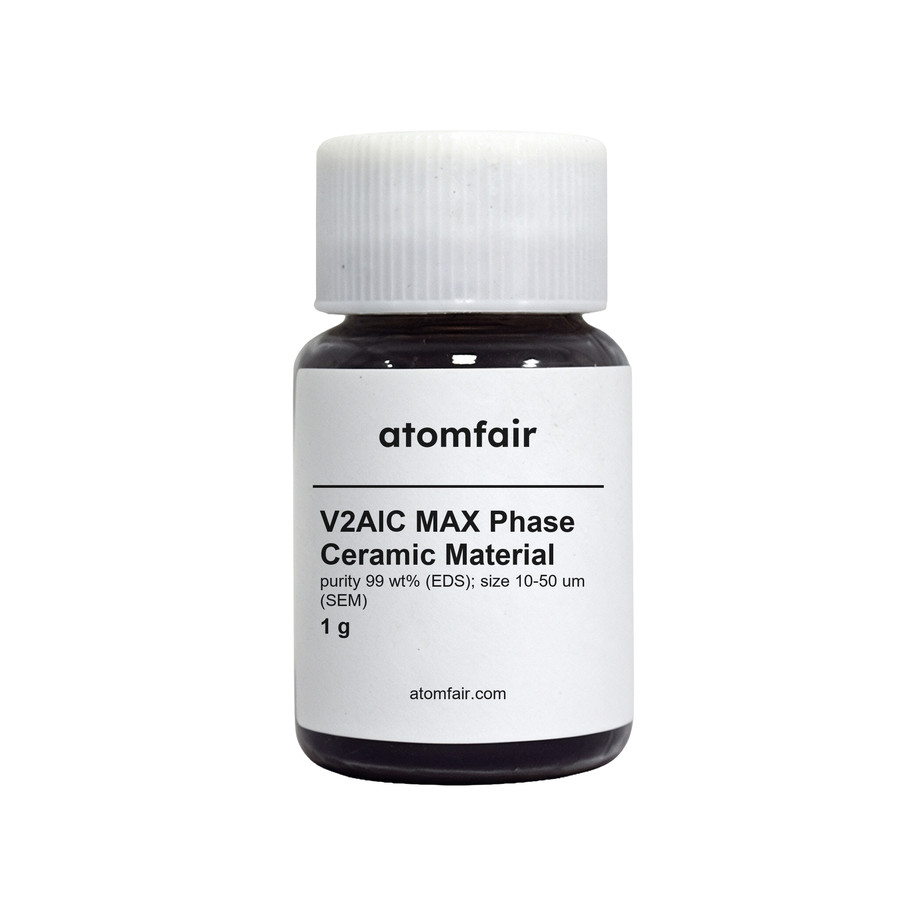
V2AlC MAX Phase Ceramic Powder 99 wt% 1 g ATOMFAIR®
$122.00 -
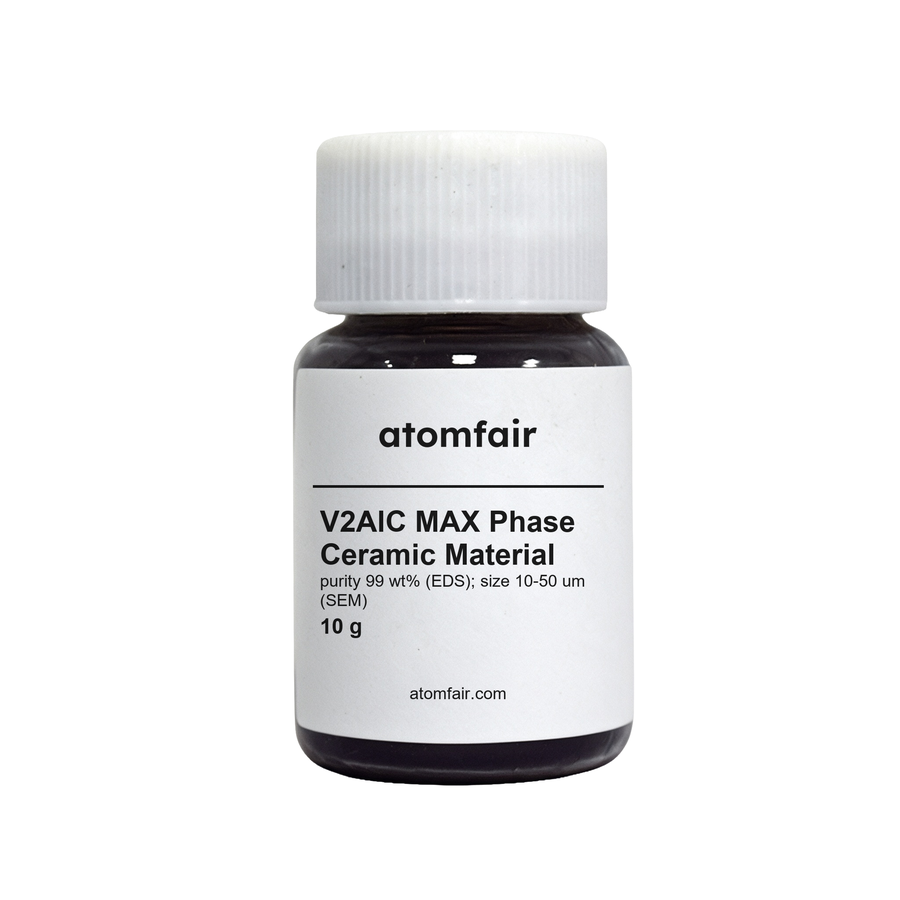
V2AlC MAX Phase Ceramic Powder 99 wt% 10 g ATOMFAIR®
$738.00 -
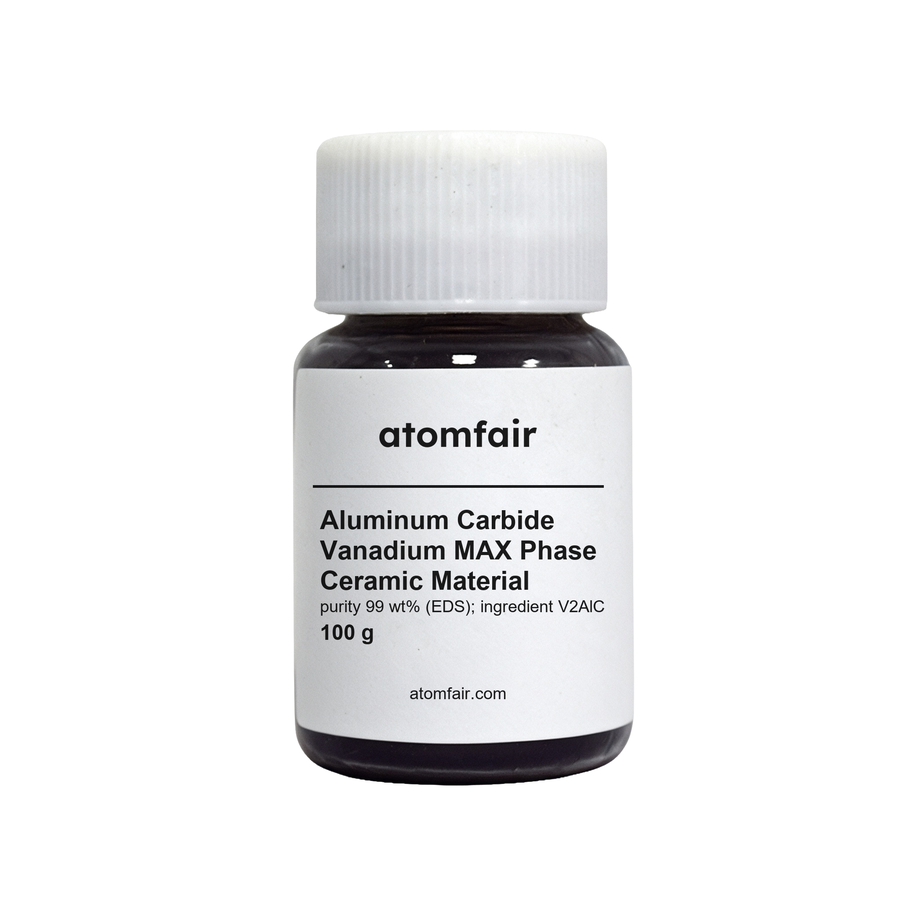
V2AlC MAX Phase Ceramic Powder 99 wt% 100 g ATOMFAIR®
$318.00 -
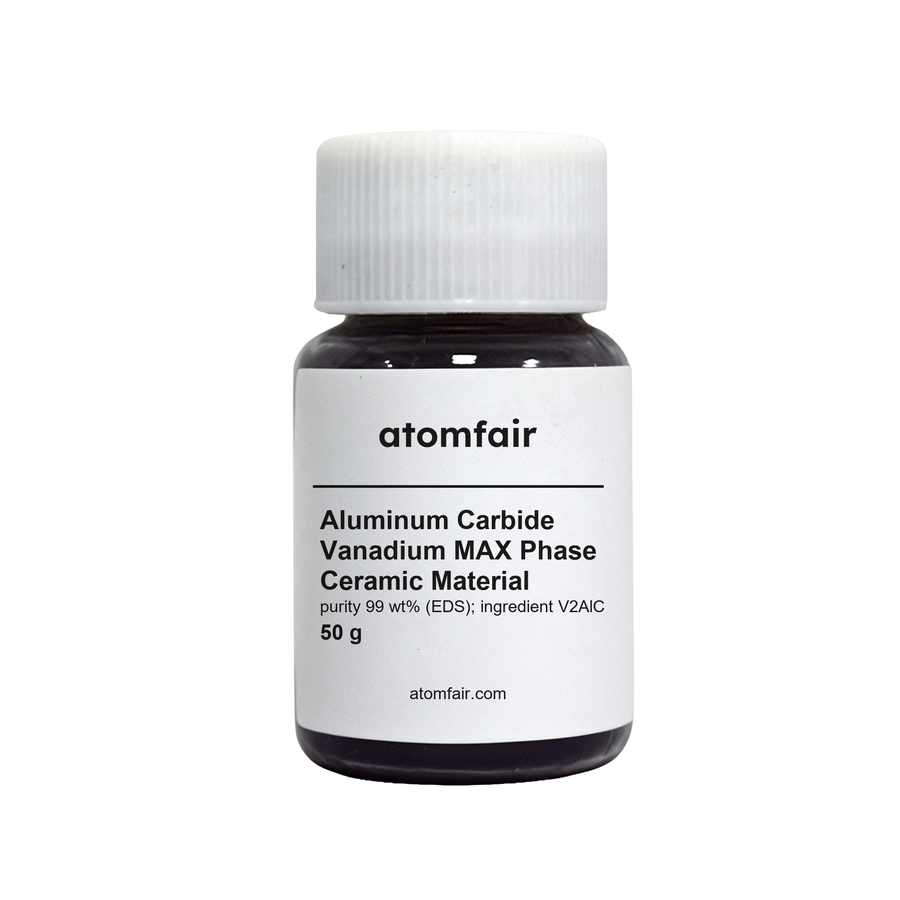
V2AlC MAX Phase Ceramic Powder 99 wt% 50 g ATOMFAIR®
$202.00 -
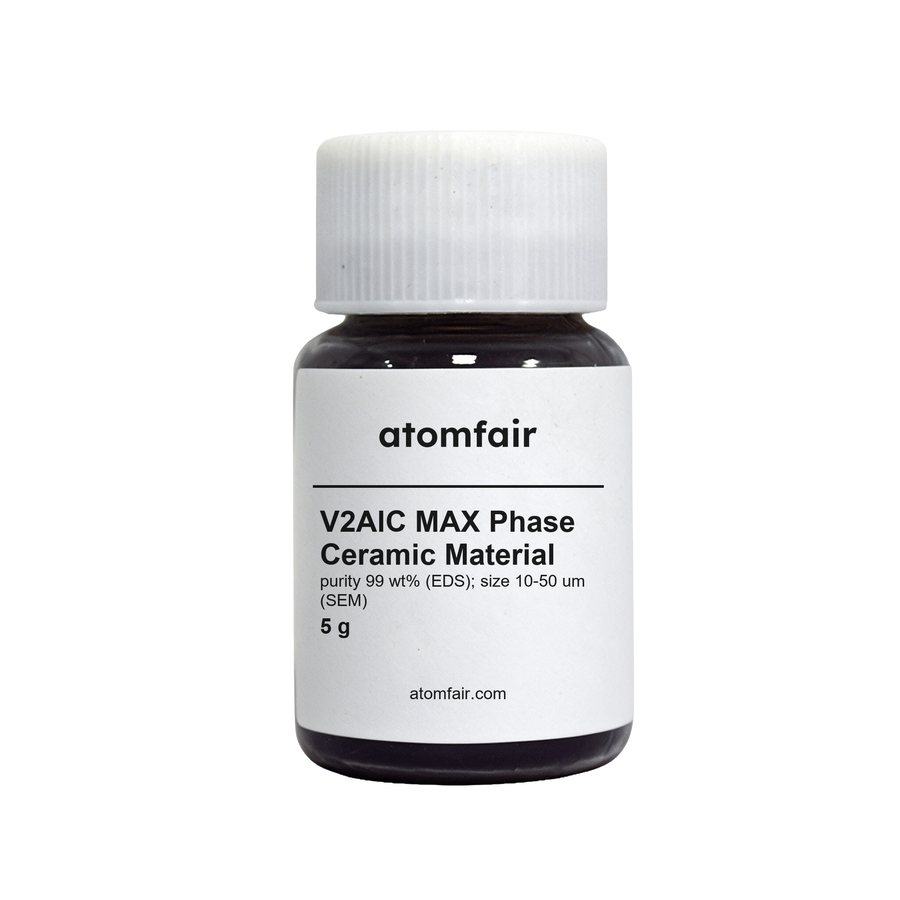
V2AlC MAX Phase Powder 99 wt% 10-50 μm, 5 g ATOMFAIR®
$421.00