
Nitrides
Nitrides are advanced inorganic materials formed from nitrogen and metallic, semi-metallic, or other elements. They are widely used in thermal management, structural ceramics, wear-resistant coatings, semiconductor devices, optoelectronics, catalysis, and materials research. Their thermal conductivity, electrical behavior, hardness, chemical stability, and processing requirements vary significantly by composition.
This category supports selection by nitride material system, purity, particle size, crystal phase, physical form, and application requirements. It covers ceramic, electronic, semiconductor, coating, and research-oriented nitride materials for both standard and specialized technical applications.
Show More About Nitrides
Select by Nitride Material System
| Material System | Representative Materials | Key Characteristics | Typical Applications |
|---|---|---|---|
| Boron Nitrides | h-BN, c-BN | Thermally stable; h-BN offers thermal conductivity, electrical insulation, and lubricity, while c-BN provides exceptional hardness. | Thermal fillers, insulating parts, crucibles, solid lubricants, abrasives, and cutting tools. |
| Aluminum Nitride | AlN | High thermal conductivity with electrical insulation and favorable thermal expansion behavior. | Heat-spreading ceramics, electronic packaging, thermal substrates, and thermal-management composites. |
| Silicon Nitride | Si3N4 | High strength, wear resistance, thermal-shock resistance, and chemical durability. | Structural ceramics, bearings, cutting tools, high-temperature parts, and technical ceramic components. |
| Group III Nitride Semiconductors | GaN, AlGaN, InGaN, InN | Wide-bandgap semiconductor behavior suitable for high-frequency, high-power, and optoelectronic devices. | Power electronics, RF devices, LEDs, lasers, sensors, and semiconductor research. |
| Transition Metal Nitrides | TiN, ZrN, CrN, VN, NbN, TaN, HfN, WN, MoN | High hardness, wear resistance, chemical stability, and, for some materials, electrical conductivity. | PVD and CVD coatings, sputtering targets, diffusion barriers, wear parts, and catalysis research. |
| Carbon and Functional Nitrides | g-C3N4 and related materials | Nitrogen-rich structures with useful photocatalytic and functional-material properties. | Photocatalysis, environmental remediation, energy storage, sensing, and catalyst development. |
| Rare-Earth and Specialty Nitrides | ScN, YN, LaN, GdN, EuN and related compounds | Specialized electronic, magnetic, optical, and thermoelectric behavior. | Thin films, magnetic materials, thermoelectrics, semiconductor studies, and advanced research. |
Choose by Application
Thermal Management and Electrical Insulation
For thermally conductive and electrically insulating systems, aluminum nitride and hexagonal boron nitride are widely considered. Compare thermal conductivity, insulation requirements, particle size, filler loading, thermal expansion, and the intended processing method.
Wear Resistance, Cutting, and Surface Coatings
Titanium nitride, chromium nitride, zirconium nitride, tantalum nitride, and cubic boron nitride are commonly selected for hard and wear-resistant applications. Consider the substrate, deposition process, coating thickness, friction conditions, and operating temperature.
Structural Ceramics and High-Temperature Components
Silicon nitride and aluminum nitride are used in demanding ceramic applications requiring strength, thermal-shock resistance, thermal management, or chemical durability. Powder characteristics, sintering route, oxygen content, density, and final geometry are important selection factors.
Semiconductor and Optoelectronic Materials
GaN, AlGaN, InGaN, InN, and related nitride systems are relevant to power devices, RF electronics, lighting, lasers, and thin-film research. Material selection should account for crystal phase, doping requirements, defect control, substrate compatibility, and fabrication route.
Choose by Form and Specification
| Material Form | Suitable Uses | Key Selection Factors |
|---|---|---|
| Powders | Sintering, composites, coatings, slurries, catalysis, and laboratory research. | Purity, particle size, particle-size distribution, morphology, surface area, and oxygen content. |
| Nanopowders | Functional materials, catalysis, fine dispersion, and high-surface-area applications. | Agglomeration behavior, dispersibility, surface treatment, and storage conditions. |
| Granules, Pieces, and Lumps | Evaporation, melting, specialized processing, and experimental preparation. | Size range, density, composition uniformity, phase, and handling requirements. |
| Targets | Magnetron sputtering, thin-film deposition, electronic, and optical coating applications. | Dimensions, purity, density, conductivity, bonding, and deposition compatibility. |
| Ceramic Parts | Insulating, thermal-management, wear-resistant, and high-temperature components. | Dimensions, tolerances, density, surface finish, thermal behavior, and mechanical requirements. |
Key Selection Parameters
| Parameter | Why It Matters |
|---|---|
| Composition and Crystal Phase | Directly affects thermal, electrical, mechanical, and chemical properties. |
| Purity and Trace Impurities | Especially important for electronic, optical, catalytic, and high-performance ceramic applications. |
| Particle Size and Morphology | Influences dispersion, packing, forming, sintering, coating quality, and reaction activity. |
| Moisture and Oxygen Sensitivity | Relevant to storage, handling, high-purity processing, and material stability. |
| Operating Environment | Temperature, vacuum, inert atmosphere, oxidation exposure, and corrosive media affect material suitability. |
Frequently Asked Questions
How do I choose between aluminum nitride, boron nitride, and silicon nitride?
For thermal conductivity with electrical insulation, aluminum nitride and hexagonal boron nitride are common choices. For high strength, wear resistance, and thermal-shock resistance, silicon nitride is often more suitable. The best option depends on the processing route and operating environment.
What is the difference between h-BN and c-BN?
Hexagonal boron nitride has a layered structure and is used for thermal management, electrical insulation, lubrication, and high-temperature applications. Cubic boron nitride is extremely hard and is mainly used in abrasives, grinding, and cutting tools.
Is a smaller powder particle size always better?
Not always. Fine powders can provide higher surface area and improved sintering activity, but they may also agglomerate more easily and require more careful dispersion. Select particle size according to the intended process.
Which nitrides are commonly used for hard coatings?
Titanium nitride, chromium nitride, zirconium nitride, tantalum nitride, and related transition metal nitrides are widely used in hard coatings. Substrate type, deposition method, friction conditions, and operating temperature should be considered together.
Do nitride powders require special storage?
Some nitride materials are sensitive to moisture or air. Store materials sealed and dry, and follow the relevant safety and technical documentation for handling, compatibility, and protective measures.
Are highly thermally conductive nitrides always electrically conductive?
No. Aluminum nitride and hexagonal boron nitride can provide useful thermal conductivity while remaining electrically insulating. Some transition metal nitrides, such as titanium nitride, are electrically conductive.
What should I consider when selecting a nitride sputtering target?
Confirm target composition, purity, density, dimensions, conductivity, bonding requirements, sputtering system compatibility, and the desired film properties.
What information is useful when selecting a nitride for a research project?
Define the target function first, such as thermal management, wear resistance, semiconducting behavior, catalysis, or magnetism. Then specify the required composition, purity, particle size, crystal phase, physical form, and experimental environment.
Showing 49–64 of 83 results
-
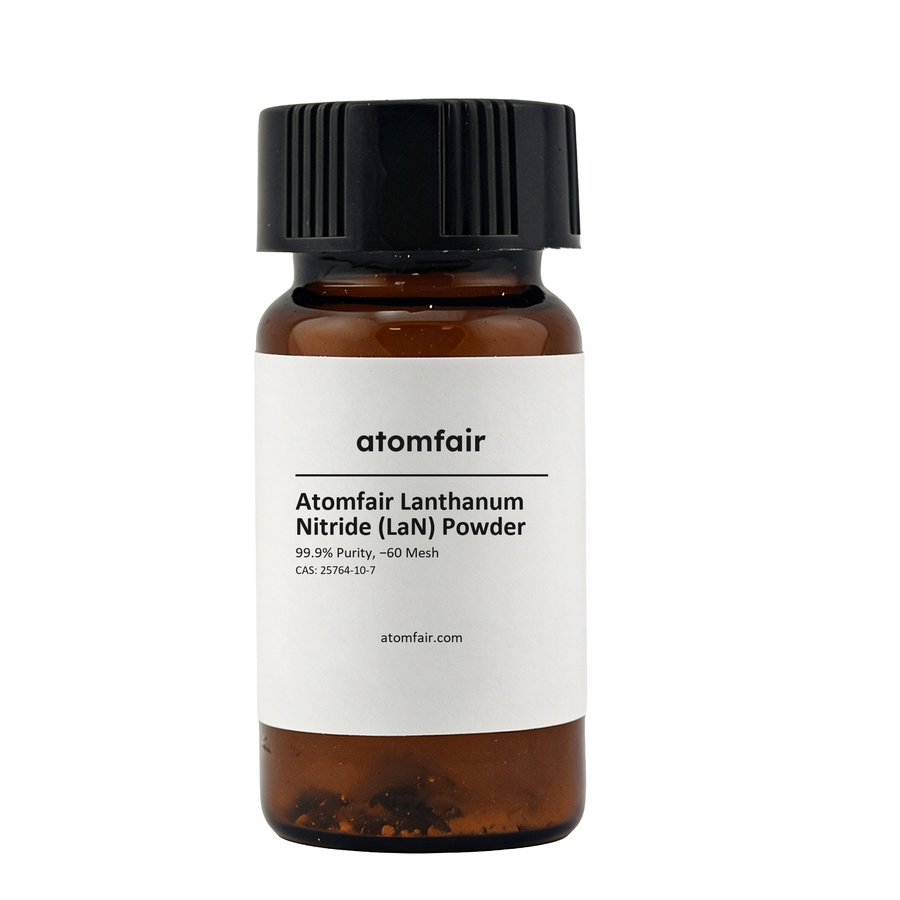
Lanthanum Nitride (LaN) Powder 99.9% −60 Mesh ATOMFAIR®
Price range: $159.00 through $449.00 -
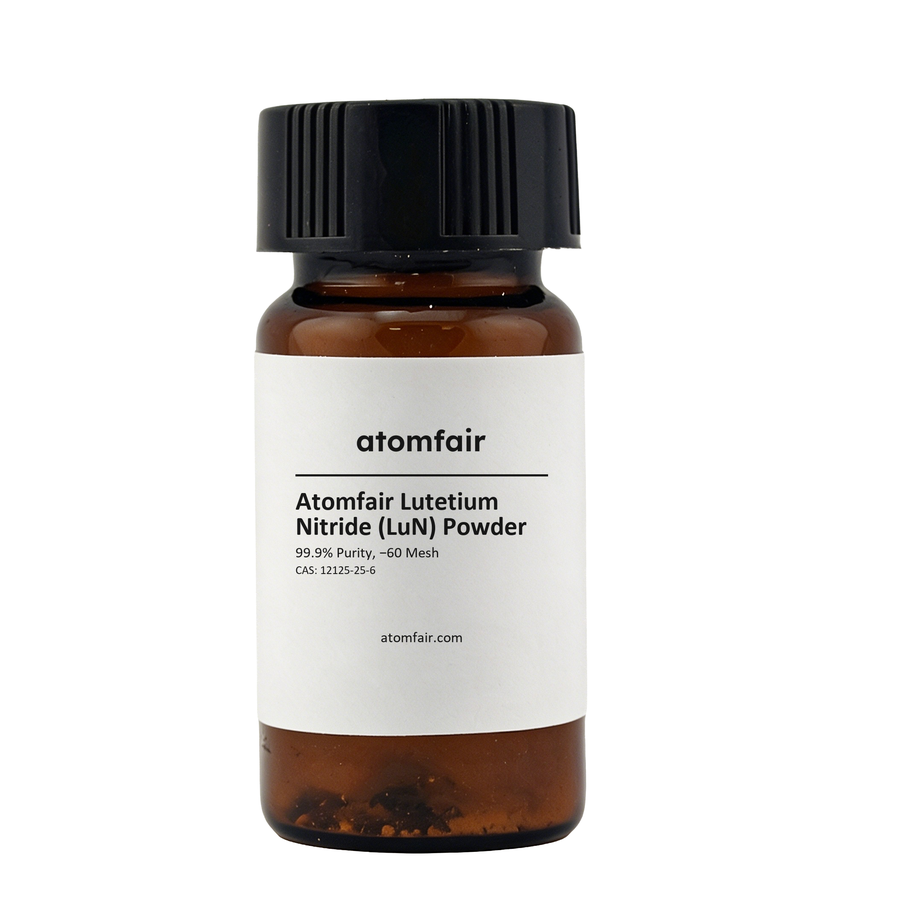
Lutetium Nitride LuN Powder 99.9% -60 Mesh ATOMFAIR®
Price range: $249.00 through $1,099.00 -
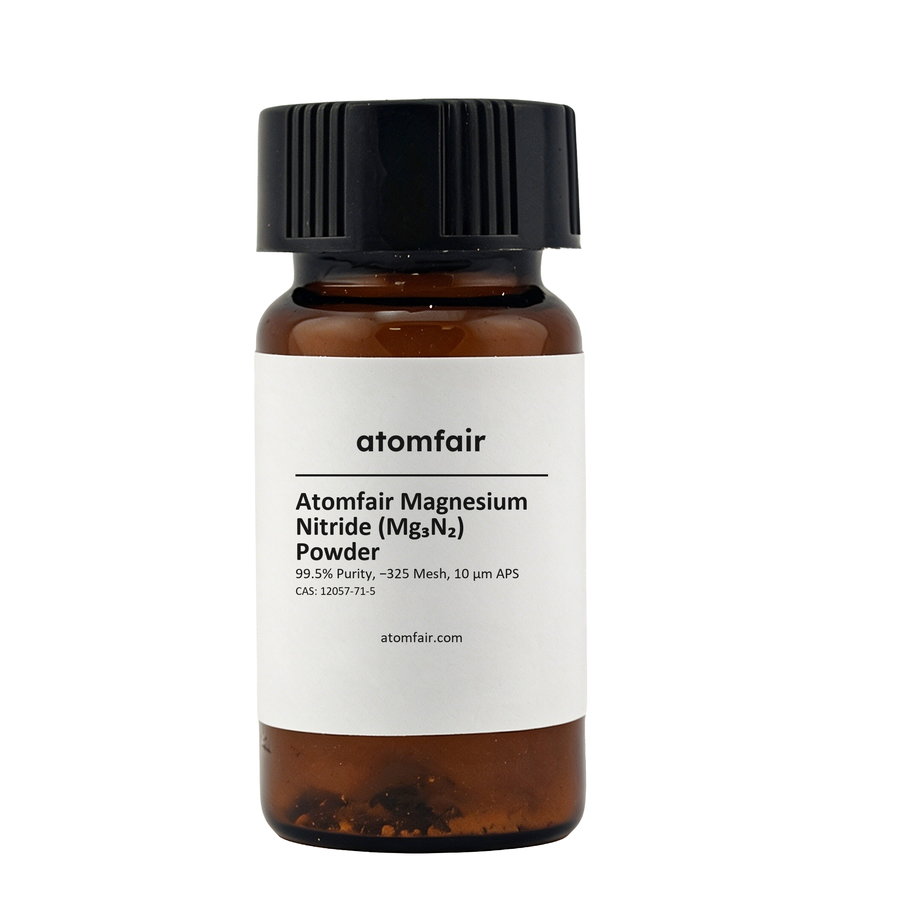
Magnesium Nitride Powder 99.5% -325 Mesh 10 μm APS ATOMFAIR®
Price range: $239.00 through $699.00 -
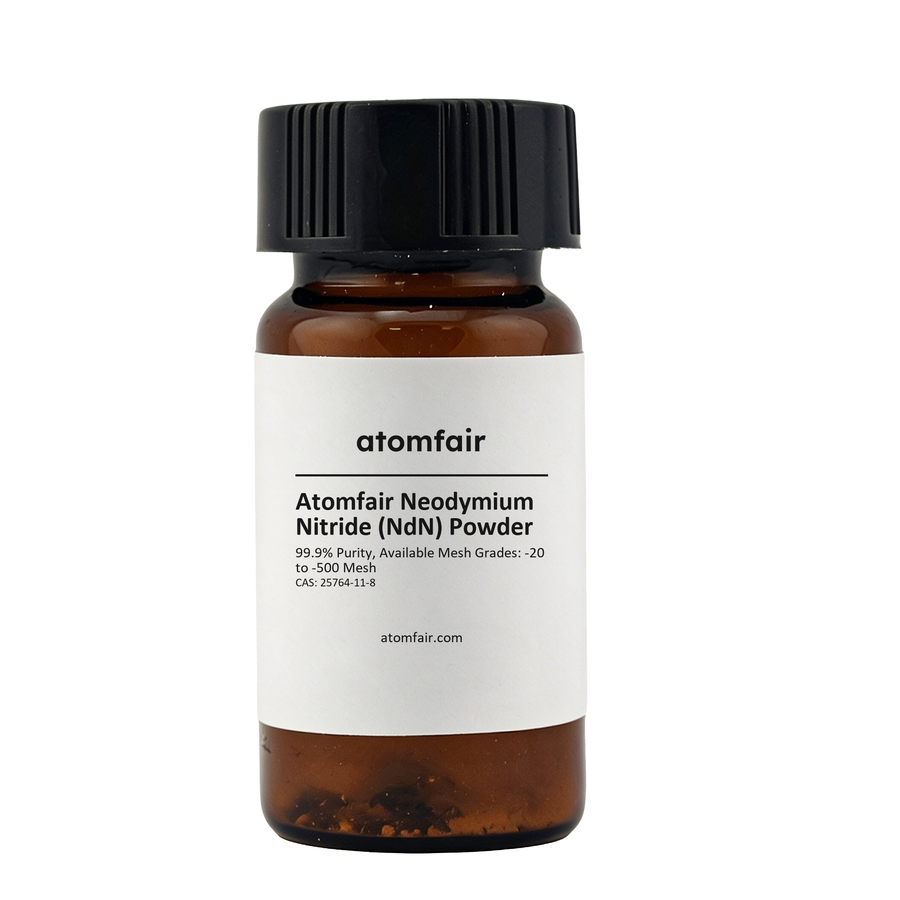
Neodymium Nitride NdN Powder 99.9% Purity ATOMFAIR®
Price range: $499.00 through $1,899.00 -
Niobium Nitride (NbN) Powder 99.5% -325 Mesh ATOMFAIR®
Price range: $299.00 through $829.00 -
Niobium Nitride (NbN) Powder 99.9% 15 μm APS ATOMFAIR®
Price range: $339.00 through $929.00 -
Niobium Nitride Powder 99.0% -325 Mesh 15 μm APS ATOMFAIR®
Price range: $269.00 through $749.00 -
Praseodymium Nitride Powder 99.9% -20 to -500 Mesh ATOMFAIR®
Price range: $159.00 through $1,199.00 -
Samarium Nitride (SmN) Powder 99.9% -325 Mesh ATOMFAIR®
Price range: $239.00 through $979.00 -
Scandium Nitride (ScN) Powder 99.9% -60 Mesh ATOMFAIR®
Price range: $479.00 through $1,799.00 -
Silicon Nitride (Si3N4) Powder 99.9% 10–15 μm ATOMFAIR®
Price range: $149.00 through $469.00 -
Silicon Nitride Ceramic Powder 4N α≥93% D50<0.9μm ATOMFAIR®
Price range: $355.00 through $1,519.00 -
Silicon Nitride Ceramic Powder 4N, D50 5–10 μm ATOMFAIR®
Price range: $299.00 through $1,269.00 -
Silicon Nitride Ceramic Powder D50 5–10 μm 3N ATOMFAIR®
Price range: $150.00 through $599.00 -
Silicon Nitride Ceramic Powder α≥93%, D50 <0.9 μm ATOMFAIR®
Price range: $155.00 through $689.00 -
Silicon Nitride Powder ≥99.99% Alpha Phase ATOMFAIR®
Price range: $379.00 through $1,599.00