|
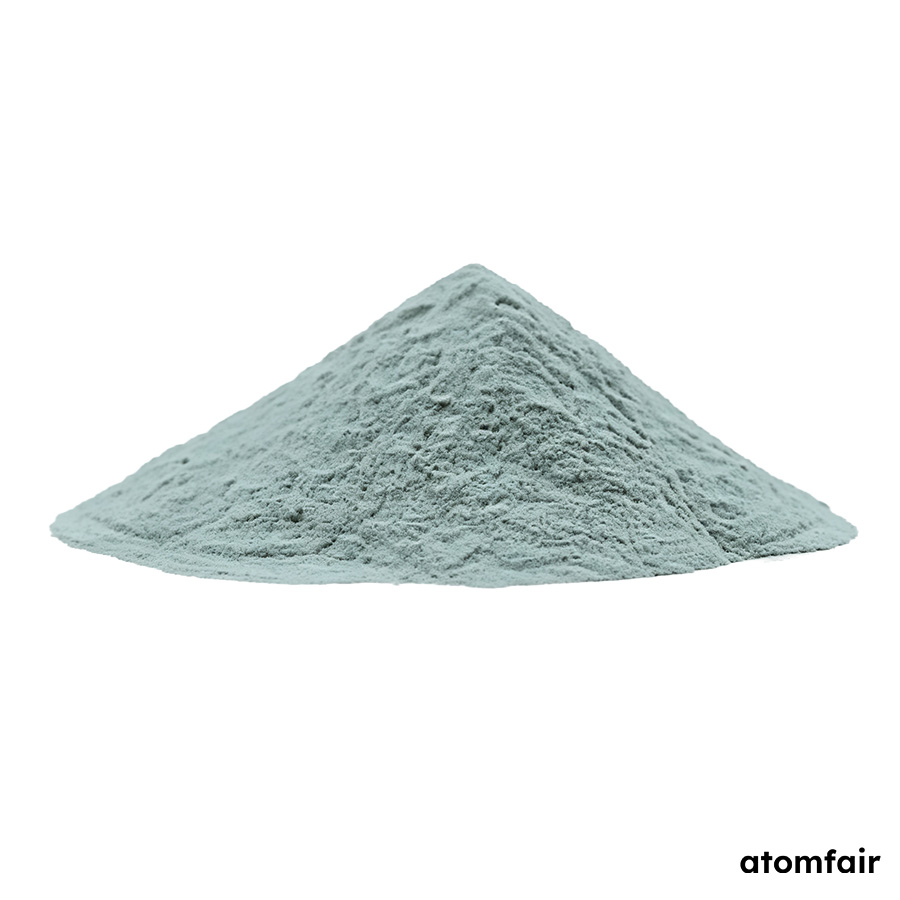
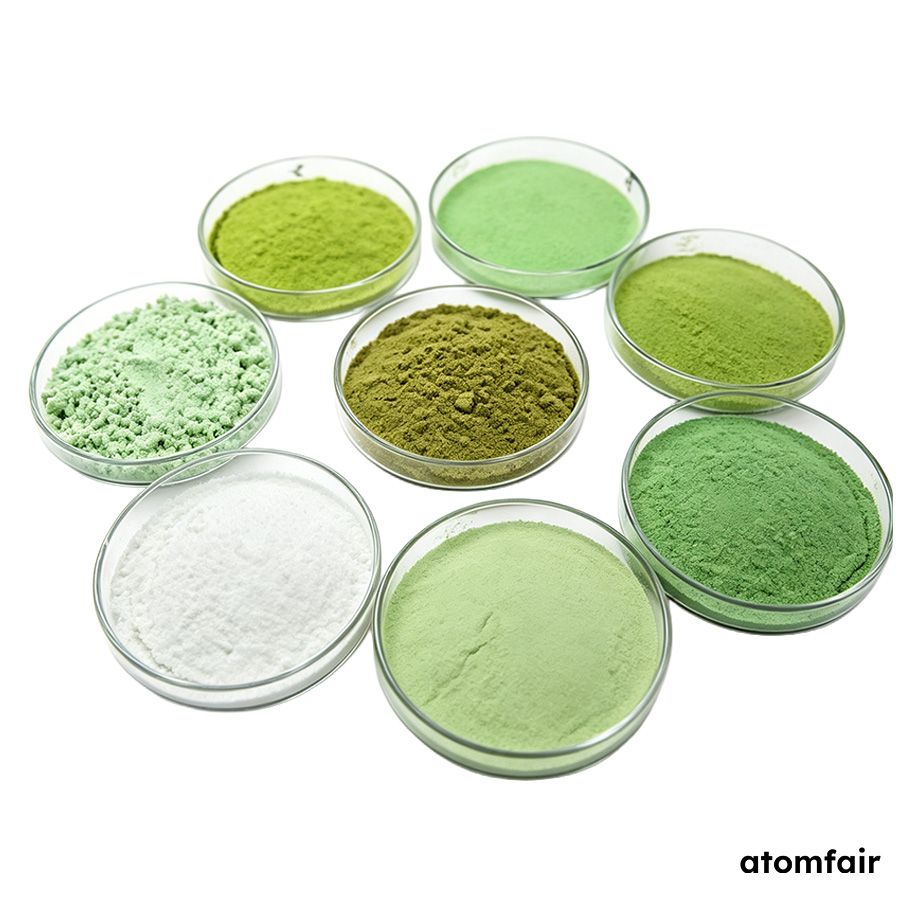
Tunable Near-Infrared-Emitting Phosphor Portfolio
Research-grade luminescent powder
|
|||||||||||||||||||||||||||
|
|||||||||||||||||||||||||||
|
PHOSPHOR SELECTION AND QUOTATION SUPPORT
For wavelength selection, particle-size confirmation and quotation support, contact our technical sales team.
E-MAIL: inquiry@atomfair.com
|
|||||||||||||||||||||||||||
|
Manufacturer: Atomfair LLC
Brand: ATOMFAIR®
|
The phosphor must remain sealed, dry, and protected from direct light to prevent moisture absorption and photodegradation. Airborne dust generation during transfer requires containment and the use of suitable laboratory protective equipment.
- Moisture Sensitivity: Exposure to ambient humidity can degrade phosphor quantum efficiency and emission performance.
- Light Sensitivity: Prolonged exposure to direct light, particularly UV-rich sources, may alter the phosphor's optical properties.
- Dust Control: Airborne phosphor dust poses inhalation and contamination risks that require local exhaust ventilation or a glovebox during handling.
Maintain the phosphor in its original sealed container within a dry, light-protected environment. When opening for use, transfer the required amount in a low-humidity area with dust control measures.
Required Equipment: Sealed, moisture-resistant container, Light-protective packaging or amber glassware, Laboratory protective equipment (gloves, safety glasses, dust mask)
- Inspect Container Integrity
Inspect the sealed container for any visible damage or moisture ingress before opening. - Transfer in Controlled Environment
Transfer the phosphor into a secondary light-protective container inside a low-humidity area equipped with dust extraction. - Conduct Particle-Size Verification
Verify the median particle size (d50) of the batch using laser diffraction or microscopy before integration. - Store After Use
Reseal the primary container immediately after use and return it to a dry, dark storage cabinet.
What is the recommended excitation range for the AF-NIR1550 tunable NIR phosphor portfolio, and how does it constrain system integration?
The recommended excitation range is 440–470 nm, which means the phosphor is optimized for blue LED or laser diode pumping within that narrow band. This constrains system integration to sources emitting in the blue region; using excitation outside this range will reduce quantum efficiency, which is specified at 40–55% across the portfolio.
Which emission grades are available in the AF-NIR1550 portfolio, and how should a researcher select the appropriate grade for spectroscopy or plant lighting?
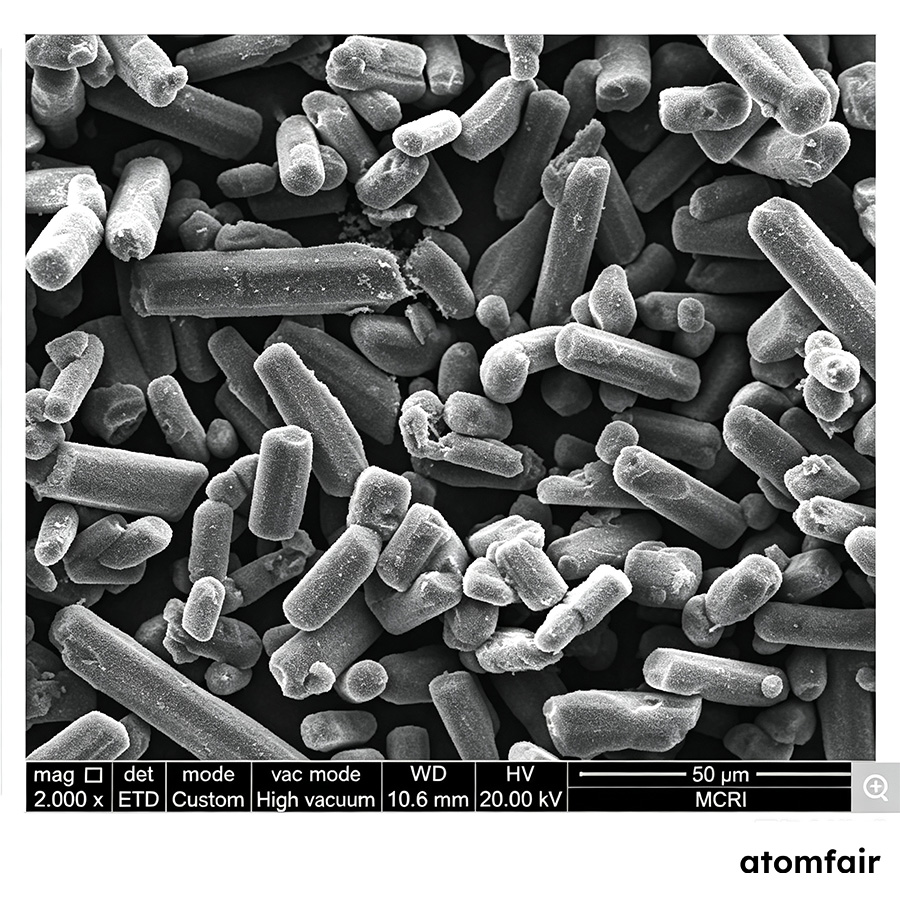
Available emission grades include approximately 726, 740, 760, 780, 798, 800, 820, 850, 900, 1000, 1280, 1300, and 1550 nm, covering 690–1550 nm. Selection should be based on the required emission wavelength or spectral distribution, excitation source, particle-size requirement (d50 15–28 µm), and final application such as spectroscopy or plant lighting.
What handling and storage precautions are required for this NIR phosphor powder to maintain performance?
The phosphor must be kept sealed, dry, and protected from direct light to prevent degradation. During transfer, minimize airborne dust and use suitable laboratory protective equipment. Atomfair can coordinate sealed, moisture-resistant packaging according to the confirmed optical grade and quantity.
This tunable NIR phosphor portfolio offers discrete emission grades from 690 to 1550 nm with 40-55% quantum efficiency and 15-28 µm particle size, suitable for spectroscopy and lighting applications under 440-470 nm excitation.
Positive
- Broad NIR wavelength coverage: Emission coverage from 690 to 1550 nm with multiple discrete grades enables precise wavelength selection for spectroscopy, plant lighting, and medical applications.
- Specified particle size and quantum efficiency: Median particle size (d50) of 15–28 µm and quantum efficiency of 40–55% provide defined ranges for process integration and optical performance prediction.
Trade-offs
- Strict storage and handling requirements: Phosphor must be kept sealed, dry, and protected from direct light; airborne dust must be minimized during transfer, requiring appropriate laboratory protective equipment.
- Selection requires application-specific matching: Optimal use depends on matching emission wavelength, excitation source, particle size, processing method, and final application, adding complexity to material selection.
Every advanced material, component, equipment, and instrument in our catalog is backed by rigorous testing. We maintain strict internal quality management frameworks and align with CE conformity metrics to deliver transparent, reproducible performance data via our public open-science repository.
To request raw batch performance data, submit formal vendor registration paperwork, or execute a fast-turnaround R&D manufacturing loop, contact us at inquiry@atomfair.com.
Item is dispatched under the Atomfair Shipping & Delivery Framework (Free worldwide shipping on orders over $59 USD excl. heavy equipment). Return is governed by the Atomfair Return & Refund Policy (7-day technical return window).