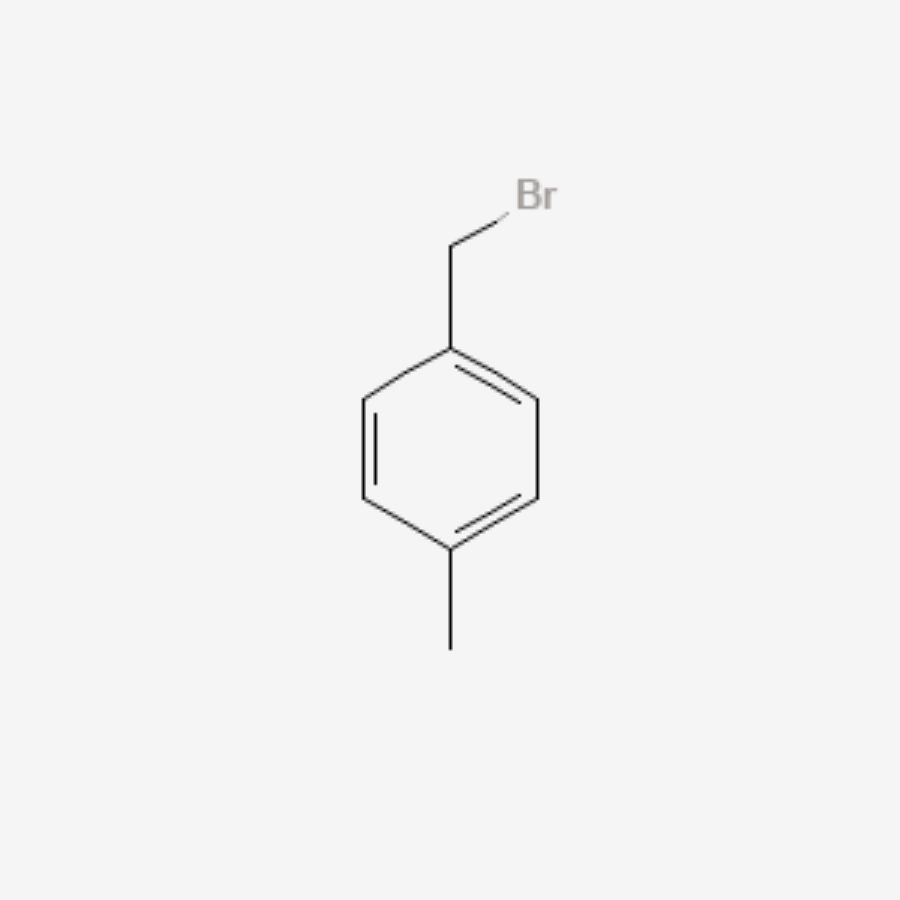
p-Xylyl bromide (CAS No. 104-81-4) is a high-purity organic compound with the molecular formula C8H9Br, widely utilized in synthetic chemistry and research applications. This crystalline solid, also known as 1-(bromomethyl)-4-methylbenzene, serves as a versatile alkylating agent and intermediate in the synthesis of pharmaceuticals, agrochemicals, and specialty materials. It exhibits excellent reactivity in nucleophilic substitution reactions, making it valuable for introducing the p-xylyl group into target molecules. Our product is rigorously tested to ensure ≥99% purity (GC), packaged under inert conditions to maintain stability.
Properties
-
- CAS Number: 104-81-4
- Complexity: 72.6
- IUPAC Name: 1-(bromomethyl)-4-methyl-benzene
- InChI: InChI=1S/C8H9Br/c1-7-2-4-8(6-9)5-3-7/h2-5H,6H2,1H3
- InChI Key: WZRKSPFYXUXINF-UHFFFAOYSA-N
- Exact Mass: 183.98876
- Molecular Formula: C8H9Br
- Molecular Weight: 185.06
- SMILES: CC1=CC=C(C=C1)CBr
- Monoisotopic Mass: 183.98876
- Physical Description: Needles from alcohol; White crystals, insoluble in water;
- Color/Form: Needles from alcohol
- Boiling Point: 220 °C
- Melting Point: 34 °C
- Flash Point: 98 °C – closed cup
- Solubility: Insoluble in water
- Density: 1.324 g/cu cm at 25 °C
- Vapor Pressure: 0.09 [mmHg]
- Stability/Shelf Life: Stable under recommended storage conditions.
- Synonyms: 4-Methylbenzyl bromide, 1-(Bromomethyl)-4-methylbenzene, P-XYLYL BROMIDE, alpha-Bromo-p-xylene, Benzene, 1-(bromomethyl)-4-methyl-, p-Xylyl alpha-bromide, .alpha.-Bromo-p-xylene, HSDB 2193, UNII-V2DIK2AP5I, V2DIK2AP5I, EINECS 203-240-6, 4methylbenzyl bromide, NSC-8050, P-XYLYL BROMIDE [MI], DTXSID7059305, P-XYLYL .ALPHA.-BROMIDE, omega-Bromo-p-xylene, alphaBromopxylol, alphaBromopxylene, pXylylalphabromide, pXylyl alphabromide, pXylene, alphabromo, pMethylbenzyl bromide, p(Bromomethyl)toluene, 4(bromomethyl)toluene, Q27291445
If you are interested or have any questions, please contact us at inquiry@atomfair.com.
Disclaimer: Sold exclusively for laboratory research. Prohibited for commercial use, diagnostics, or human/animal applications. Buyers assume all compliance liability.
This compound is a lachrymatory and corrosive alkylating agent that requires strict handling precautions. Storage must be under inert atmosphere to prevent degradation and moisture uptake.
- Stability and Storage: Store under inert conditions in a cool, dry, and well-ventilated area, away from direct sunlight and moisture.
- Containment and Handling: Handle only in a fume hood with appropriate personal protective equipment, including chemical-resistant gloves and safety goggles, to avoid contact with skin and eyes.
- Incompatibility: Avoid contact with strong oxidizing agents, strong bases, and nucleophiles, as violent reactions may occur.
This procedure outlines the safe handling, transfer, and storage of p-Xylyl bromide for laboratory research. It emphasizes the use of inert atmosphere and proper personal protective equipment.
Required Equipment: Chemical fume hood, Inert gas supply (e.g., nitrogen or argon), Chemical-resistant gloves and safety goggles
- Prepare the work area
Set up the work area in a fume hood and ensure an inert gas line is available for purging. - Purge the storage container
Purge the headspace of the storage container with inert gas before opening to minimize moisture and oxygen exposure. - Transfer the compound
Transfer the required amount of p-Xylyl bromide using a clean, dry spatula or cannula, avoiding any contact with air or moisture. - Seal and store
Seal the container tightly and store it under inert gas in a cool, dry place, protected from light.
What are the key physical properties and stability considerations for p-Xylyl bromide (CAS 104-81-4) in laboratory storage?
p-Xylyl bromide is a white crystalline solid (needles from alcohol) with a melting point of 34 °C and a boiling point of 220 °C. It is insoluble in water and has a vapor pressure of 0.09 mmHg. The compound is stable under recommended storage conditions, but due to its low melting point and potential lachrymatory nature, it should be stored in a cool, dry, inert atmosphere to prevent degradation and ensure safety.
How does the reactivity of p-Xylyl bromide in nucleophilic substitution reactions support its use as an alkylating agent in synthesis?
p-Xylyl bromide (C8H9Br) features a benzylic bromomethyl group that is highly susceptible to nucleophilic substitution (SN2) due to the electron-withdrawing effect of the aromatic ring and the stability of the resulting benzylic cation. This makes it an effective reagent for introducing the p-xylyl group into pharmaceuticals, agrochemicals, and specialty materials. The compound's high purity (≥99% GC) ensures consistent reactivity in sensitive synthetic pathways.
What safety and handling precautions are required when working with p-Xylyl bromide in a research laboratory?
p-Xylyl bromide is a lachrymator and skin/eye irritant; it should be handled in a fume hood with appropriate personal protective equipment (gloves, safety goggles, lab coat). Due to its low melting point (34 °C), it may be a liquid in warm environments, so containers should be kept tightly sealed and stored under inert gas to prevent moisture absorption and degradation. In case of contact, rinse immediately with water and seek medical attention if irritation persists.
Every advanced material, component, equipment, and instrument in our catalog is backed by rigorous testing. We maintain strict internal quality management frameworks and align with CE conformity metrics to deliver transparent, reproducible performance data via our public open-science repository.
To request raw batch performance data, submit formal vendor registration paperwork, or execute a fast-turnaround R&D manufacturing loop, contact us at inquiry@atomfair.com.
Item is dispatched under the Atomfair Shipping & Delivery Framework (Free worldwide shipping on orders over $59 USD excl. heavy equipment). Return is governed by the Atomfair Return & Refund Policy (7-day technical return window).