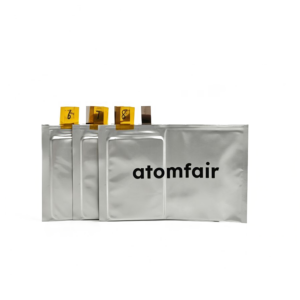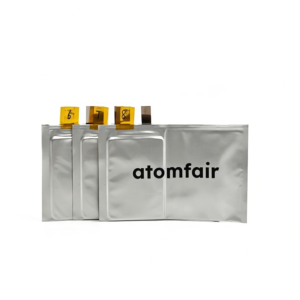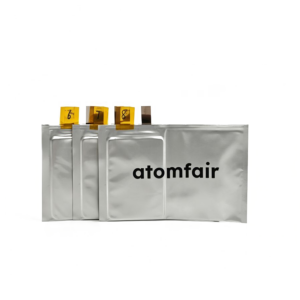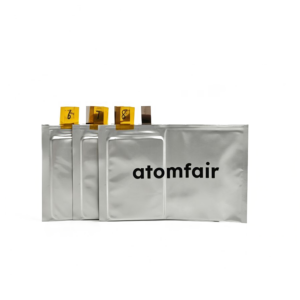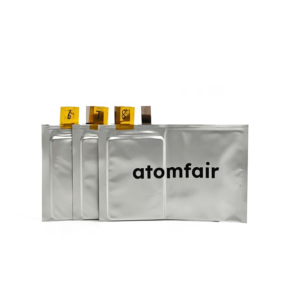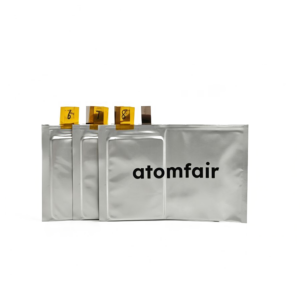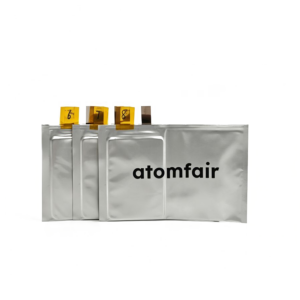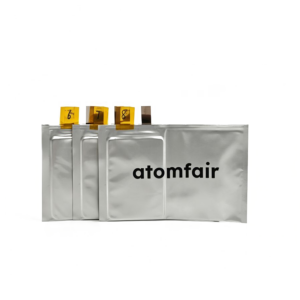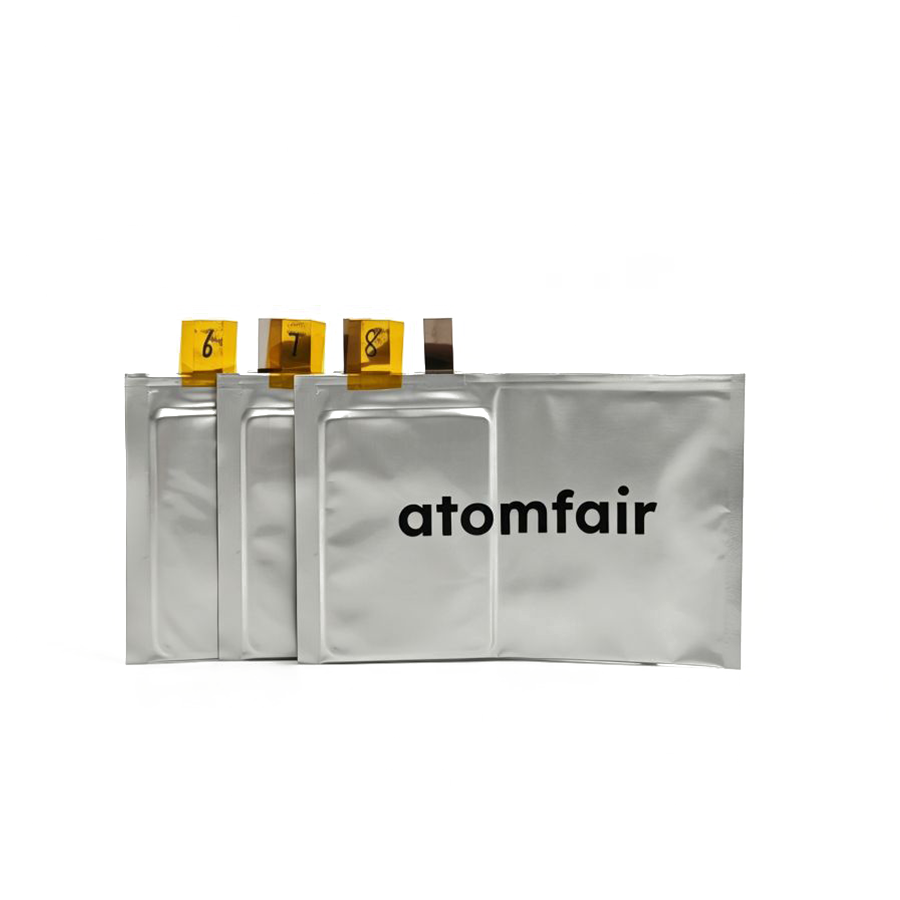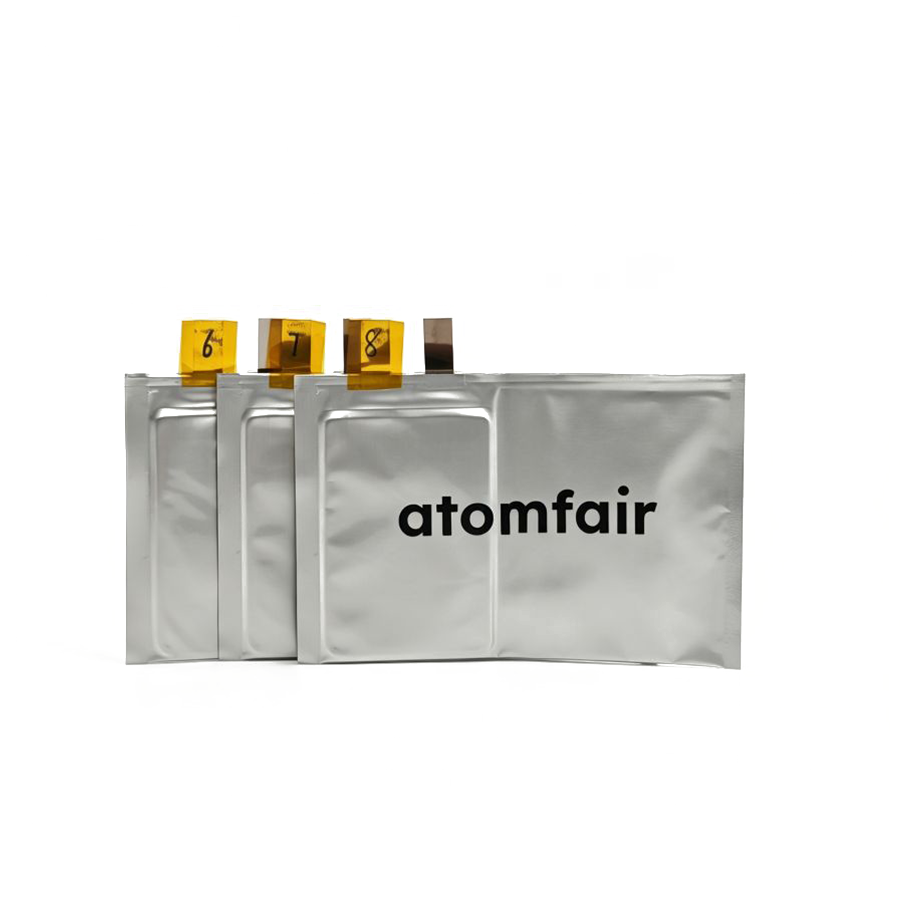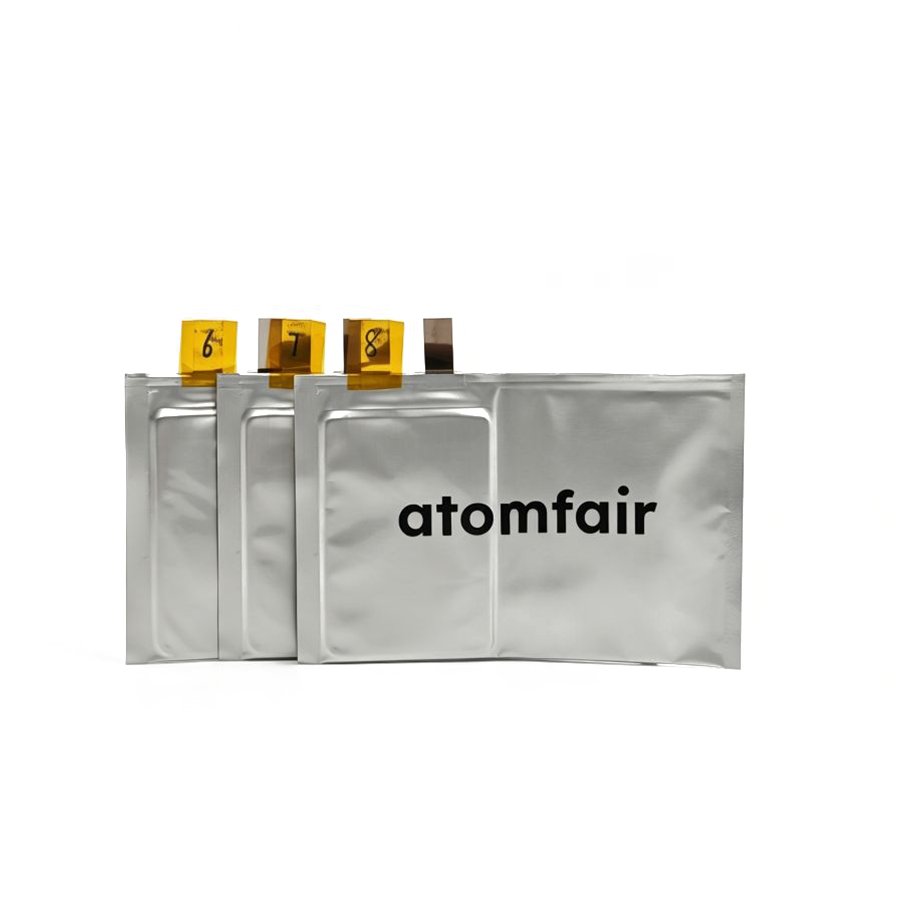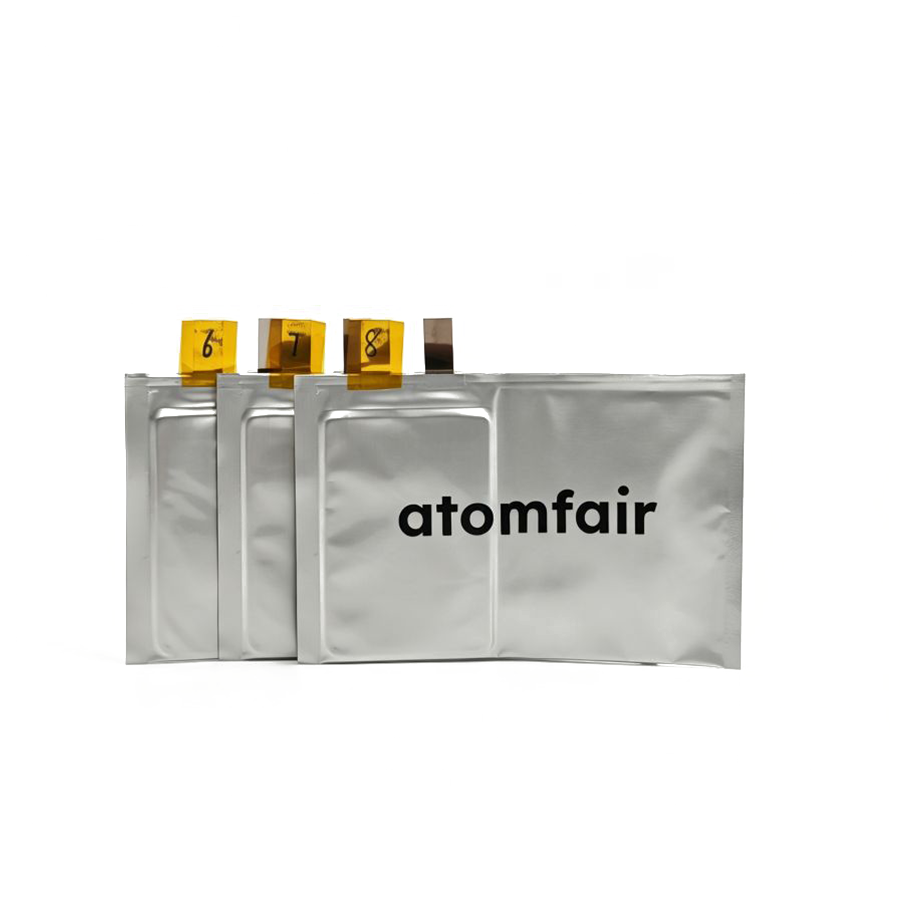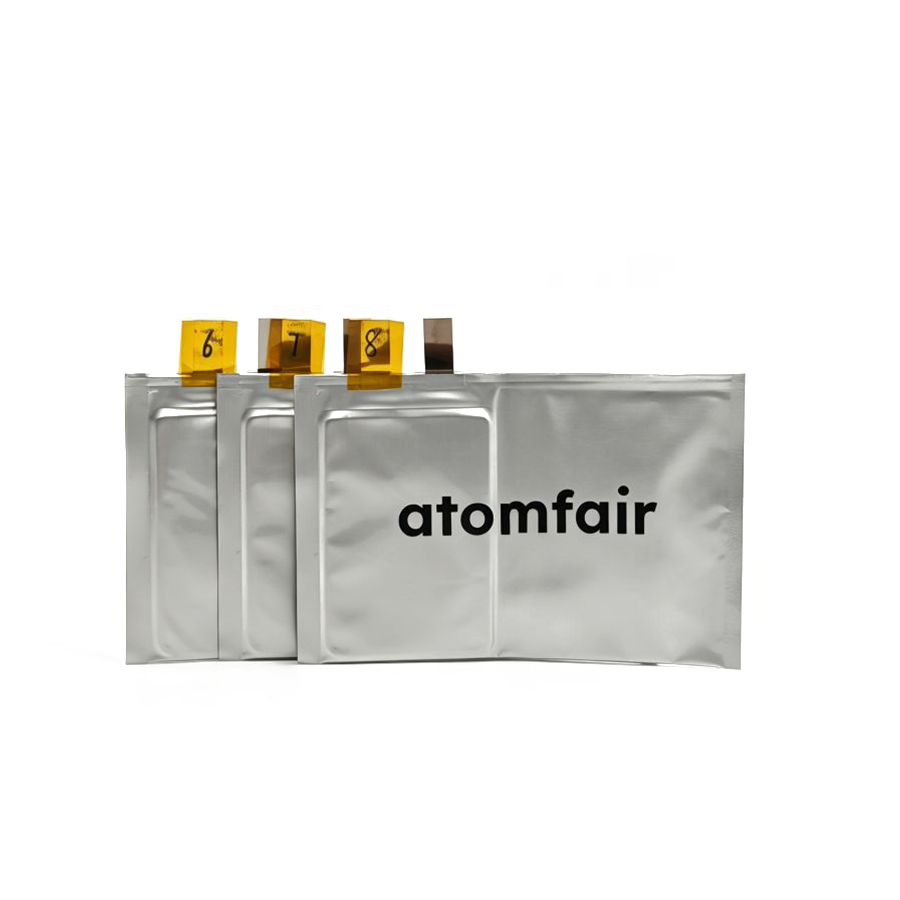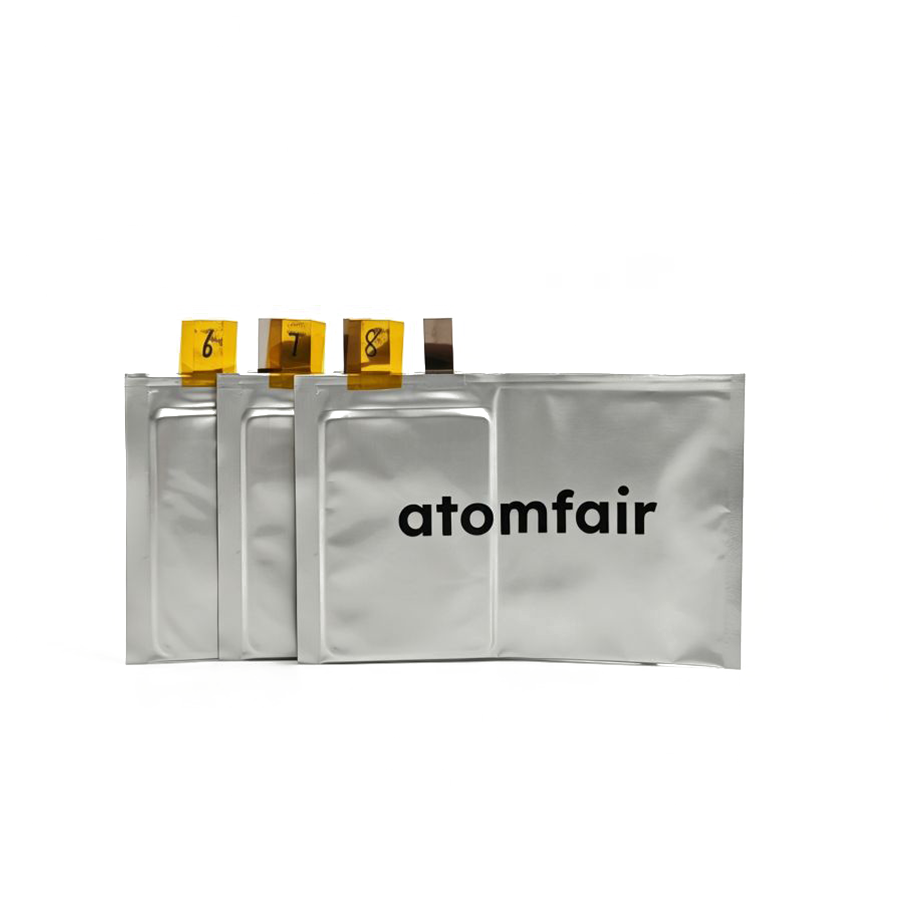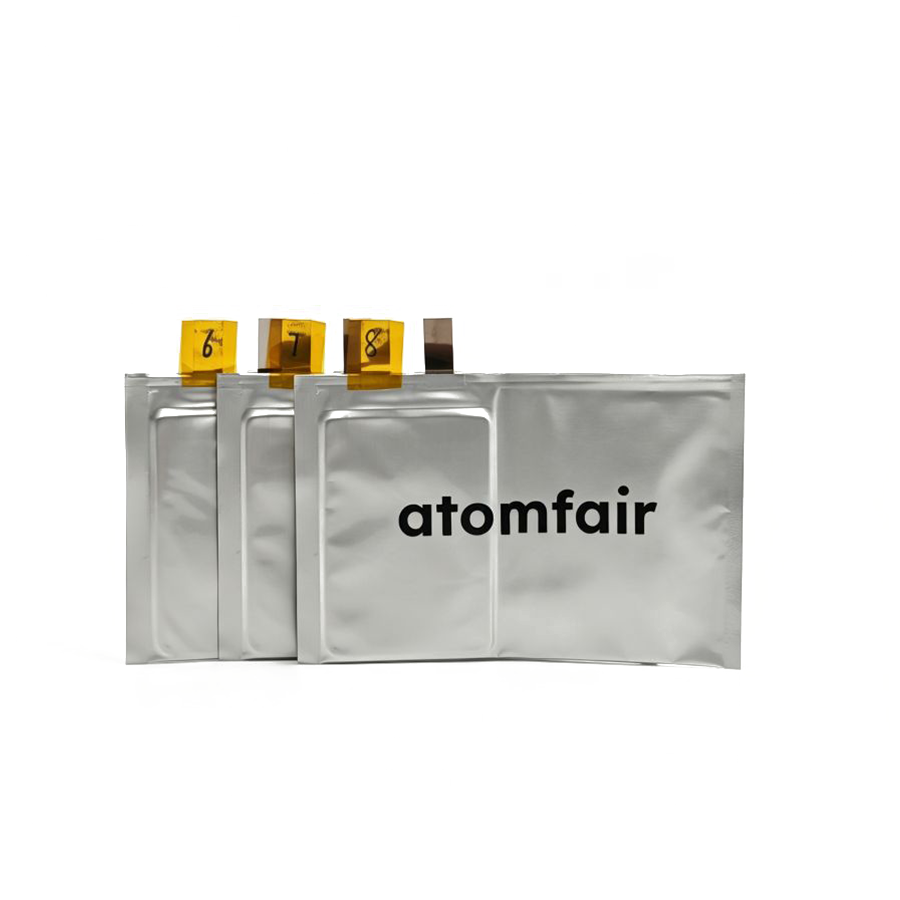
ATOMFAIR® 1AH NCA ANODE-FREE COATED CARBON COPPER FOIL DRY POUCH CELLLITHIUM-ION BATTERY | RESEARCH GRADE MATERIAL
|
|||||||||||||||||||||||||
|
|||||||||||||||||||||||||
|
SPECIALIZED RESEARCH SOLUTIONS
Contact our engineering team for design parameters, performance details, or custom requests.
EMAIL: inquiry@atomfair.com
|
|||||||||||||||||||||||||
|
Manufacturer: Atomfair LLC
Brand: ATOMFAIR®
|
|||||||||||||||||||||||||
Store the dry pouch cell in a dry, inert atmosphere (e.g., argon glovebox) with controlled humidity to prevent moisture absorption. Avoid mechanical stress, punctures, and short circuits by handling the cell with insulated tools and antistatic packaging.
- Moisture Absorption Risk: Exposure to ambient humidity can degrade the dry electrode components and compromise electrolyte compatibility upon filling.
- Temperature Degradation Risk: Prolonged exposure to elevated temperatures above 60°C may accelerate decomposition of the NCA cathode and separator materials.
- Physical Damage Risk: Punctures or crushing of the pouch can create internal short circuits and lead to thermal runaway.
- Electrostatic Discharge Sensitivity: Use grounded workstations and antistatic bags to prevent electrostatic discharge that could damage the carbon coating.
This procedure describes the safe filling and formation of the dry pouch cell for experimental use. Perform all steps in an argon-filled glovebox with oxygen and moisture levels below 0.1 ppm.
Required Equipment: Argon-filled glovebox, Heat sealer, Electrolyte dispensing syringe, Insulated tweezers
- Inspect Cell
Inspect the dry pouch cell for any visible defects, pinholes, or damage to the pouch or tabs. - Transfer to Glovebox
Transfer the cell into the argon glovebox and allow it to equilibrate for at least 30 minutes. - Inject Electrolyte
Inject the specified volume of electrolyte (e.g., 1 M LiPF6 in EC/DMC) into the pouch using a clean syringe. - Seal Pouch
Seal the pouch cell using a heat sealer, applying sufficient pressure and temperature to achieve a hermetic closure. - Perform Formation Cycling
Apply the recommended formation cycling protocol (e.g., 0.1 C charge/discharge) to activate the cell and stabilize the solid-electrolyte interphase.
How does the coated carbon layer on the copper foil current collector influence the rate capability and internal resistance compared to uncoated copper foil in this anode-free NCA cell?
The coated carbon composition enhances conductivity and improves charge/discharge rates, as specified in the product features. This reduces internal resistance and enables higher rate capability compared to uncoated copper foil. The specific impact depends on coating thickness and uniformity, which are default parameters available upon inquiry.
What are the key considerations for integrating this dry pouch cell into a battery testing system, particularly regarding electrolyte filling and formation cycling?
The cell is delivered as a dry core without electrolyte, providing flexibility for experimental customization. Electrolyte filling must be performed in a controlled environment to prevent contamination. The pouch cell dimensions of 45.5×64 mm positive and 46.5×65 mm negative are compatible with standard testing fixtures. Formation cycling should account for the anode-free design to ensure uniform lithium plating.
What are the recommended storage conditions for the dry pouch cell before electrolyte filling, and why are they necessary?
Store in a cool, dry environment as per the product's storage recommendation to maintain optimal performance and prevent degradation. This condition is necessary to avoid moisture or temperature-induced damage to the NCA cathode and coated carbon copper foil before electrolyte addition.
Atomfair's 1Ah anode-free NCA dry pouch cell with coated carbon copper foil provides a high-energy-density platform for battery R&D, but its dry-core design and undisclosed default parameters require pre-purchase consultation and electrolyte handling capabilities.
Positive
- High Energy Density NCA Chemistry: The NCA cathode combined with coated carbon on copper foil delivers exceptional energy storage density, enabling advanced battery R&D and prototype development for electric vehicles and portable electronics.
- Flexible Dry Cell Configuration: Delivered as a dry core without electrolyte, this pouch cell allows researchers full flexibility to select and inject custom electrolytes suited to their experimental design.
Trade-offs
- Requires Electrolyte Filling: The dry core configuration necessitates that end users procure and fill electrolyte independently, requiring appropriate lab infrastructure and expertise in electrolyte handling.
- Undisclosed Default Parameters: Critical design parameters such as areal density, load capacity, and NP ratio are set to defaults and not provided upfront; buyers must contact the supplier for details before customization.
Every advanced material, component, equipment, and instrument in our catalog is backed by rigorous testing. We maintain strict internal quality management frameworks and align with CE conformity metrics to deliver transparent, reproducible performance data via our public open-science repository.
To request raw batch performance data, submit formal vendor registration paperwork, or execute a fast-turnaround R&D manufacturing loop, contact us at inquiry@atomfair.com.
Item is dispatched under the Atomfair Shipping & Delivery Framework (Free worldwide shipping on orders over $59 USD excl. heavy equipment). Return is governed by the Atomfair Return & Refund Policy (7-day technical return window).