Description
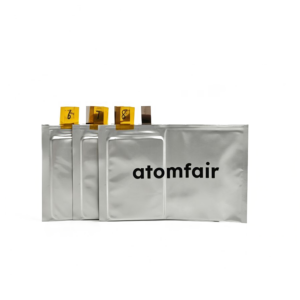
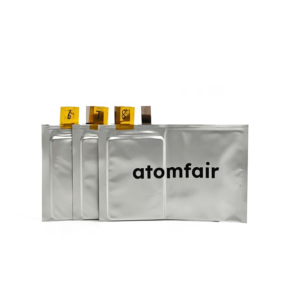
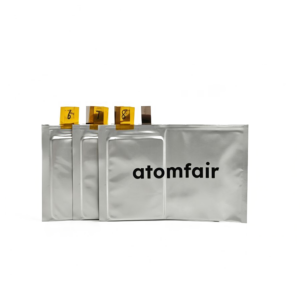
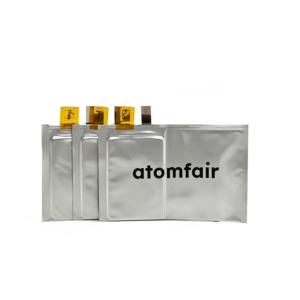
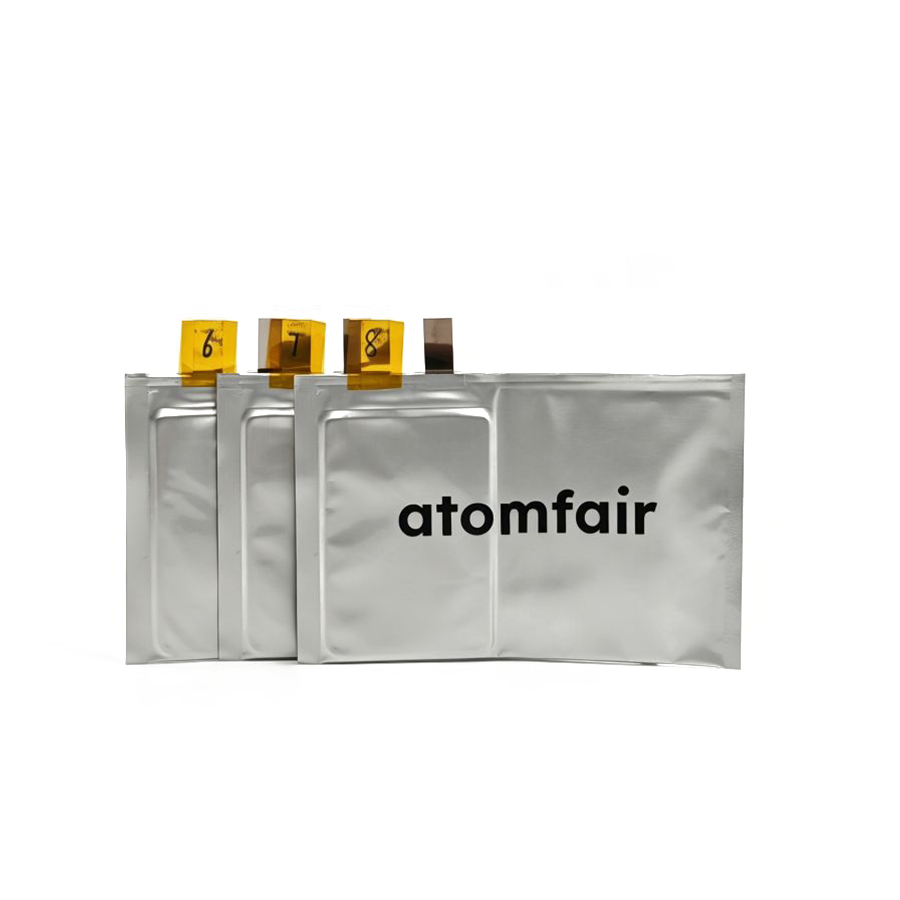
ATOMFAIR® 1AH NFPP/HC DRY POUCH CELLSODIUM (Na) ION TECHNOLOGY | 11/12 LAYERS
|
|||||||||||||||||||||||||||||||||||||||||||||||||||
|
|||||||||||||||||||||||||||||||||||||||||||||||||||
|
TAILORED SOLUTIONS FOR RESEARCH
Contact our engineering team for technical support or official institutional quotations.
EMAIL: inquiry@atomfair.com
|
|||||||||||||||||||||||||||||||||||||||||||||||||||
|
Manufacturer: Atomfair LLC
Brand: ATOMFAIR®
|
|||||||||||||||||||||||||||||||||||||||||||||||||||
This dry pouch cell must be stored and handled within an inert atmosphere to prevent atmospheric contamination of the reactive sodium-plating interface. Mechanical integrity of the pouch must be maintained to avoid internal short circuits that could lead to thermal runaway.
- Atmospheric Sensitivity: Exposure to ambient air will degrade the cell's performance and pose a fire hazard due to sodium's pyrophoric nature.
- Mechanical Integrity: Punctures or creases in the pouch can cause internal short circuits and must be avoided during handling.
- Electrical Safety: The cell presents a shock hazard when connected to test equipment and should be handled with insulated tools.
- Storage Environment: Store at stable room temperature in a dry, inert atmosphere to preserve electrolyte and electrode stability.
This procedure ensures safe handling and proper initialization of the anode-free pouch cell for electrolyte testing. Follow these steps to mitigate the risk of short circuits and chemical exposure.
Required Equipment: Argon-filled glovebox, Multimeter with insulated probes, Battery cycler with safety cutoff
- Inspect Packaging
Inspect the pouch cell for any visible dents, punctures, or electrolyte leakage before removing it from the protective packaging. - Transfer to Glovebox
Transfer the cell into an argon-filled glovebox to maintain a dry and oxygen-free environment during handling. - Measure Initial Voltage
Measure the open-circuit voltage with a multimeter to verify the cell's electrical integrity before connection. - Connect to Cycler
Connect the cell leads to a battery cycler, ensuring correct polarity and secure connections to prevent short circuits. - Set Charge Protocol
Set the charge/discharge protocol within the voltage and current limits recommended by the manufacturer for safe operation.
How does the anode-free configuration of the Atomfair 1Ah NFPP dry pouch cell affect sodium plating and stripping efficiency compared to conventional anode designs?
The anode-free configuration provides a controlled carbon-coated aluminum foil substrate for high-fidelity sodium deposition and stripping experiments, minimizing parasitic reactions from additional anode components. This enables direct evaluation of electrolyte behavior and interfacial dynamics, though as a dry core the cell requires electrolyte injection before testing, adding a preparation step not needed in conventional wet-process cells.
What electrolyte formulations are compatible with the Atomfair 1Ah anode-free dry pouch cell for sodium plating and stripping studies?
The cell is specifically designed for advanced electrolyte formulation research, with the dry-processed NFPP cathode and carbon-coated substrate optimized for evaluating electrolyte behavior during sodium plating and stripping cycles. However, as a dry core, electrolyte must be injected prior to testing; the manufacturer requires confirmation of specific electrolyte requirements via email before order finalization, as capacity and dimensions can be customized to match the intended electrolyte study.
What are the critical handling and storage requirements for the Atomfair 1Ah anode-free dry pouch cell before electrolyte injection?
The cells are individually packaged in moisture-resistant cushioning to maintain dry-core integrity during storage and transport. As a dry core, electrolyte injection is required before testing, and the dry-process architecture minimizes wet solvent handling steps. For projects requiring enhanced protection, high-protection packaging is available upon request, and all specific requirements should be confirmed via email before order finalization.
This dry-process, anode-free pouch cell with NFPP cathode and carbon-coated aluminum substrate is specifically designed for electrolyte formulation research and interfacial studies of sodium plating/stripping, offering a customizable platform that requires electrolyte injection by the end user prior to testing.
Positive
- Dry-Process Architecture: The specialized dry-process minimizes wet solvent steps during electrode preparation and assembly, enabling consistent and solvent-free fabrication for research reproducibility.
- Anode-Free Configuration: The carbon-coated aluminum foil substrate provides a controlled current-collector interface for high-fidelity sodium deposition and stripping experiments, ideal for electrolyte and interfacial dynamics studies.
Trade-offs
- Requires Electrolyte Injection: This is a dry core cell; electrolyte must be injected by the researcher before testing, adding a preparation step and requiring appropriate electrolyte handling infrastructure.
- Customization Requires Pre-Order Confirmation: Capacities and physical dimensions are adjustable, but specific requirements must be confirmed via email before finalizing the order, introducing a lead-time for tailored configurations.
Every advanced material, component, equipment, and instrument in our catalog is backed by rigorous testing. We maintain strict internal quality management frameworks and align with CE conformity metrics to deliver transparent, reproducible performance data via our public open-science repository.
To request raw batch performance data, submit formal vendor registration paperwork, or execute a fast-turnaround R&D manufacturing loop, contact us at inquiry@atomfair.com.
Item is dispatched under the Atomfair Shipping & Delivery Framework (Free worldwide shipping on orders over $59 USD). Return is governed by the Atomfair Return & Refund Policy (7-day technical return window).