|
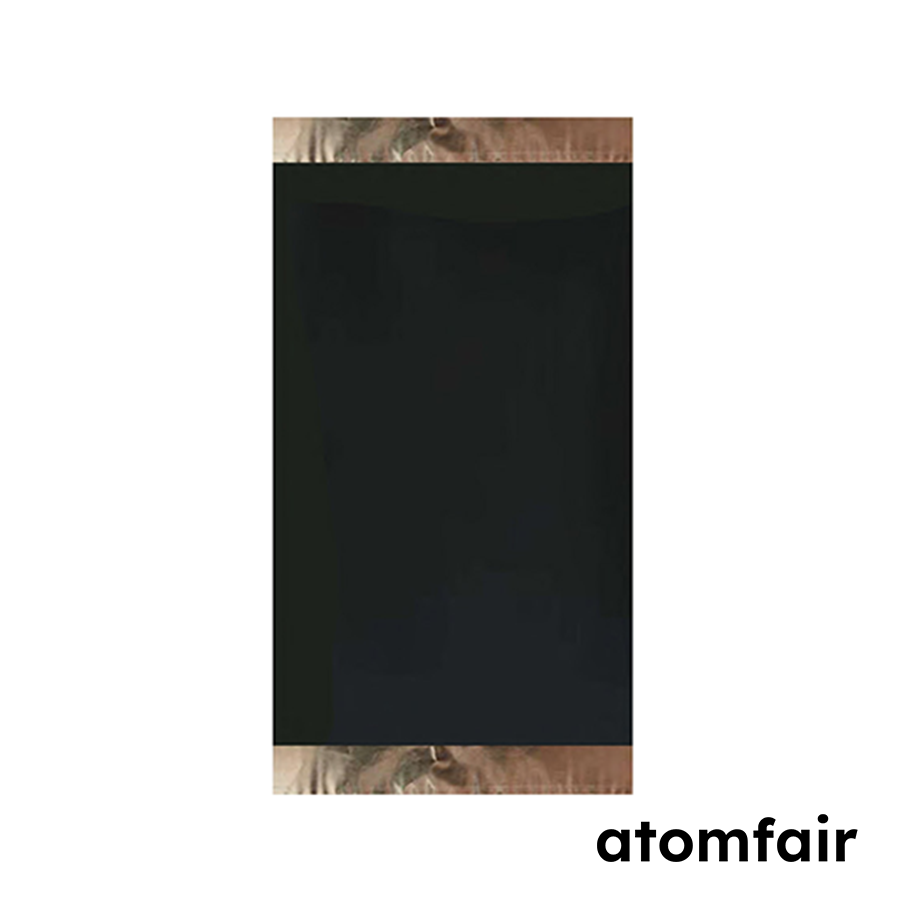
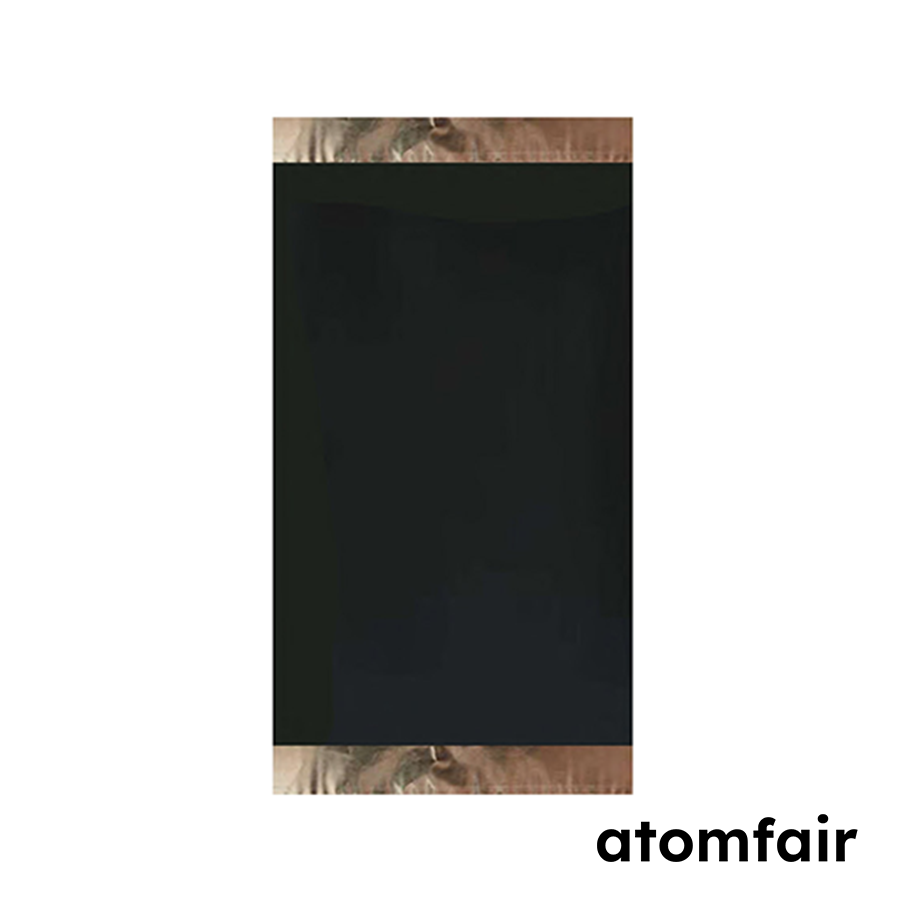
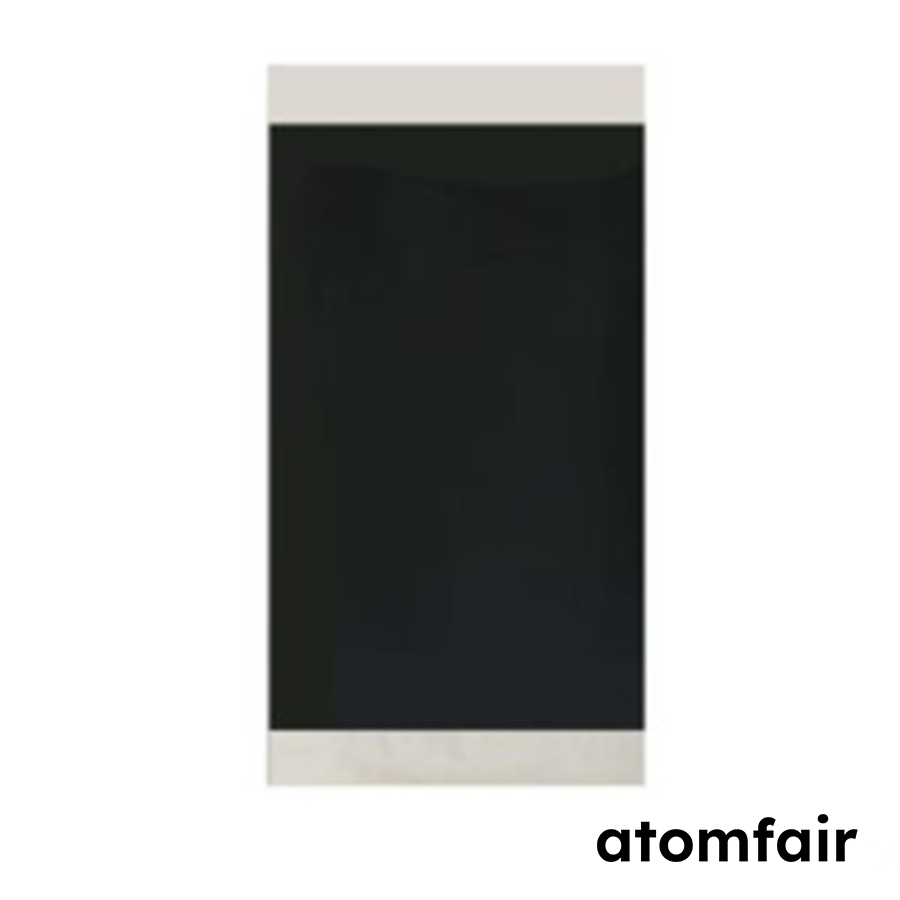
NVP Sodium Vanadium Phosphate Single-Sided Cathode, 13 mg/cm² per side
Single-Sided Cathode Sheet
|
||||||||||||||||||||||||||||||||||||||||||||
|
This document specifies the processing and handling constraints for the Atomfair NVP-S05 electrode sheet. The material requires controlled pre-conditioning to ensure electrochemical performance in sodium-ion cell assembly.
- Vacuum baking protocol: Bake the electrode sheet under vacuum at 100°C for 12 hours before cell integration to remove absorbed moisture.
- Handling environment: Handle the electrode sheet only in appropriate laboratory environments to maintain material integrity and prevent contamination.
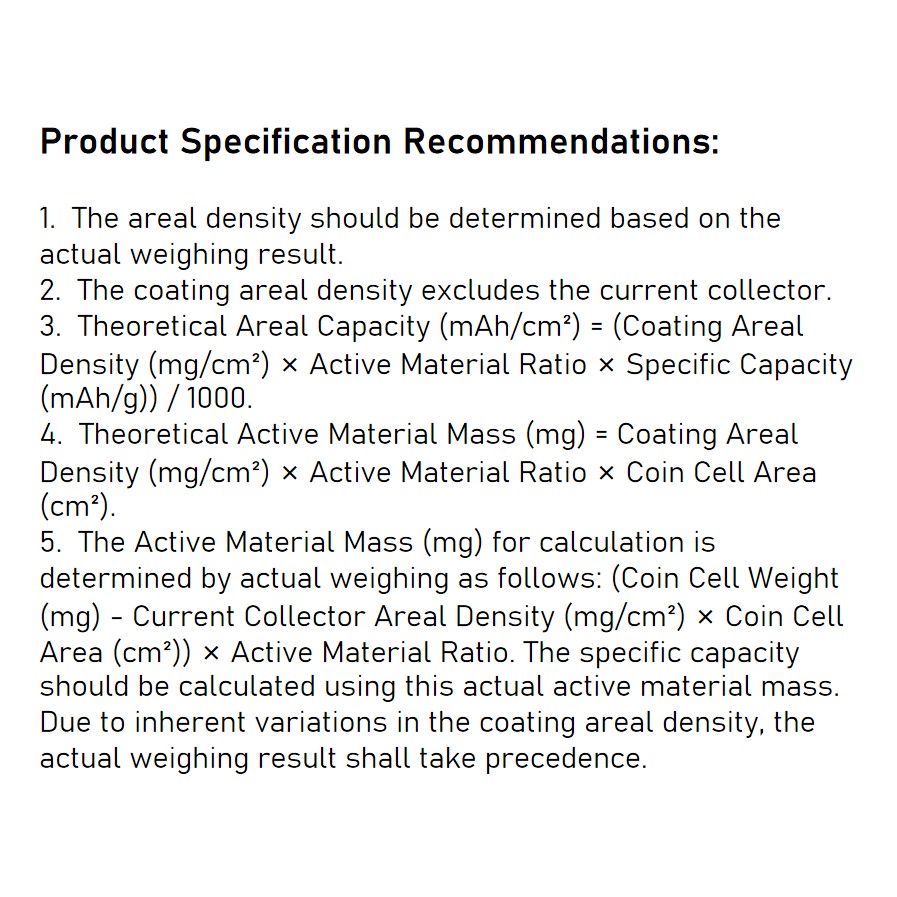
How does the 13 mg/cm² coating density and 1.8 g/cm³ compaction density affect the electrochemical performance of the NVP-S05 electrode?
The 13 mg/cm² coating density provides a balanced active material loading for consistent sodium-ion intercalation kinetics, while the 1.8 g/cm³ compaction density ensures optimal electrode porosity and mechanical integrity. Together, these parameters support a capacity of 110 mAh/g and minimize polarization, as stated in the product specifications. The single-sided coating on carbon-coated aluminum foil further reduces contact resistance.
What pre-treatment steps are necessary before using the NVP-S05 electrode sheet in a sodium-ion half-cell?
The manufacturer recommends baking the electrode sheets under vacuum at 100°C for 12 hours to remove environmental moisture before cell assembly. This is critical because the NVP material and carbon-coated aluminum substrate are sensitive to moisture, which can degrade performance. The product is supplied vacuum-sealed in packs of 5 sheets to maintain quality until use.
How should the NVP-S05 sodium vanadium phosphate electrode sheets be stored to preserve their properties?
The electrode sheets are vacuum-sealed in packs of 5 sheets to prevent moisture absorption and oxidation. Storage should be in a dry, inert atmosphere at room temperature. Prior to use, the baking protocol (100°C under vacuum for 12 hours) is mandatory to reactivate the material. The product is intended for laboratory research only and should be handled with appropriate glovebox techniques.
The Atomfair NVP-S05 electrode sheet delivers a 92% active material ratio on a carbon-coated aluminum foil substrate for reliable sodium-ion intercalation, but requires a 12-hour vacuum baking step at 100°C and moisture-safe storage prior to cell integration.
Positive
- High active material ratio: The 92.00% active material ratio maximizes electrochemically active composition, ensuring reliable sodium-ion intercalation kinetics for battery R&D.
- Carbon-coated aluminum foil substrate: The carbon-coated aluminum foil interlayer enhances electrical contact, minimizes polarization risk, and improves long-term cycling stability.
Trade-offs
- Pre-drying vacuum baking required: The electrode sheet must be baked under vacuum at 100°C for 12 hours prior to cell assembly to eliminate adsorbed moisture, adding processing time and equipment demands.
- Moisture-sensitive storage conditions: The material is vacuum-sealed and must be stored in a dry environment to maintain integrity; exposure to ambient moisture may compromise electrochemical performance.
Every advanced material, component, equipment, and instrument in our catalog is backed by rigorous testing. We maintain strict internal quality management frameworks and align with CE conformity metrics to deliver transparent, reproducible performance data via our public open-science repository.
To request raw batch performance data, submit formal vendor registration paperwork, or execute a fast-turnaround R&D manufacturing loop, contact us at inquiry@atomfair.com.
Item is dispatched under the Atomfair Shipping & Delivery Framework (Free worldwide shipping on orders over $59 USD excl. heavy equipment). Return is governed by the Atomfair Return & Refund Policy (7-day technical return window).