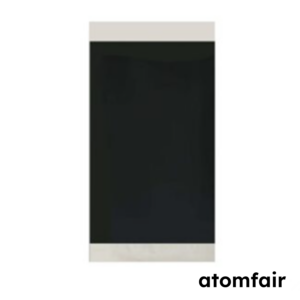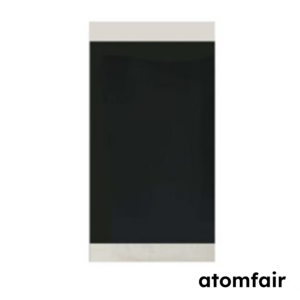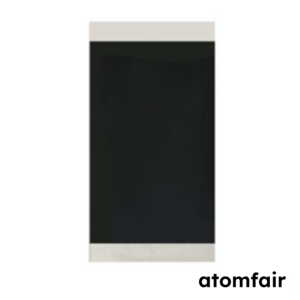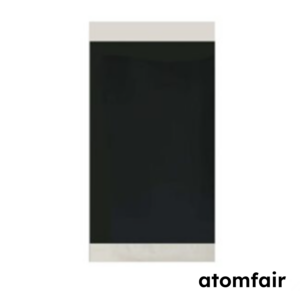
ATOMFAIR® NFM111-D05 SODIUM NICKEL IRON MANGANESE OXIDE (NFM111) ELECTRODE SHEETRESEARCH GRADE MATERIAL
|
|||||||||||||||||||||||||||||||||||||||||
|
|||||||||||||||||||||||||||||||||||||||||
|
TAILORED SOLUTIONS FOR RESEARCH
Contact our engineering team for technical support or customization requests.
EMAIL: inquiry@atomfair.com
|
|||||||||||||||||||||||||||||||||||||||||
|
Manufacturer: Atomfair LLC
Brand: ATOMFAIR®
|
|||||||||||||||||||||||||||||||||||||||||
Store electrode sheets in an inert atmosphere to prevent moisture and oxygen contamination. Avoid mechanical stress or electrical short circuits that could compromise the active coating integrity.
- Atmosphere Requirement: Maintain the electrode in a dry, inert gas environment (e.g., argon) with low oxygen and moisture levels throughout storage and handling.
- Mechanical Protection: Prevent bending, creasing, or puncturing of the double-side coated sheet to avoid delamination or cracking of the active material layer.
- Electrical Isolation: Keep the electrode isolated from conductive surfaces and other cell components to prevent unintended short circuits during preparation.
- Temperature Stabilization: Allow the electrode to equilibrate to glovebox temperature prior to cell assembly to minimize thermal effects on coating adhesion.
- Handling Tooling: Use non-marring, antistatic tools when manipulating the sheet to avoid contamination or electrostatic discharge damage.
These steps guide the researcher from receipt through coin cell assembly while preserving electrode integrity and ensuring reproducible performance. The procedure requires an inert atmosphere glovebox and standard coin cell hardware.
Required Equipment: Argon-filled glovebox with oxygen and moisture sensors, Ceramic scissors or precision cutter, Analytical balance with 0.01 mg resolution, Coin cell crimping press
- Visual Inspection
Inspect the electrode sheet under bright light for any visible defects such as pinholes, scratches, or edge fraying before opening the vacuum-sealed package. - Glovebox Transfer
Transfer the unopened package into an argon glovebox with oxygen and moisture levels below 0.1 ppm, then open only inside the glovebox. - Sheet Cutting
Cut the double-side coated sheet into the required electrode geometry using a ceramic scissor, ensuring clean edges and no delamination at the cut line. - Mass Confirmation
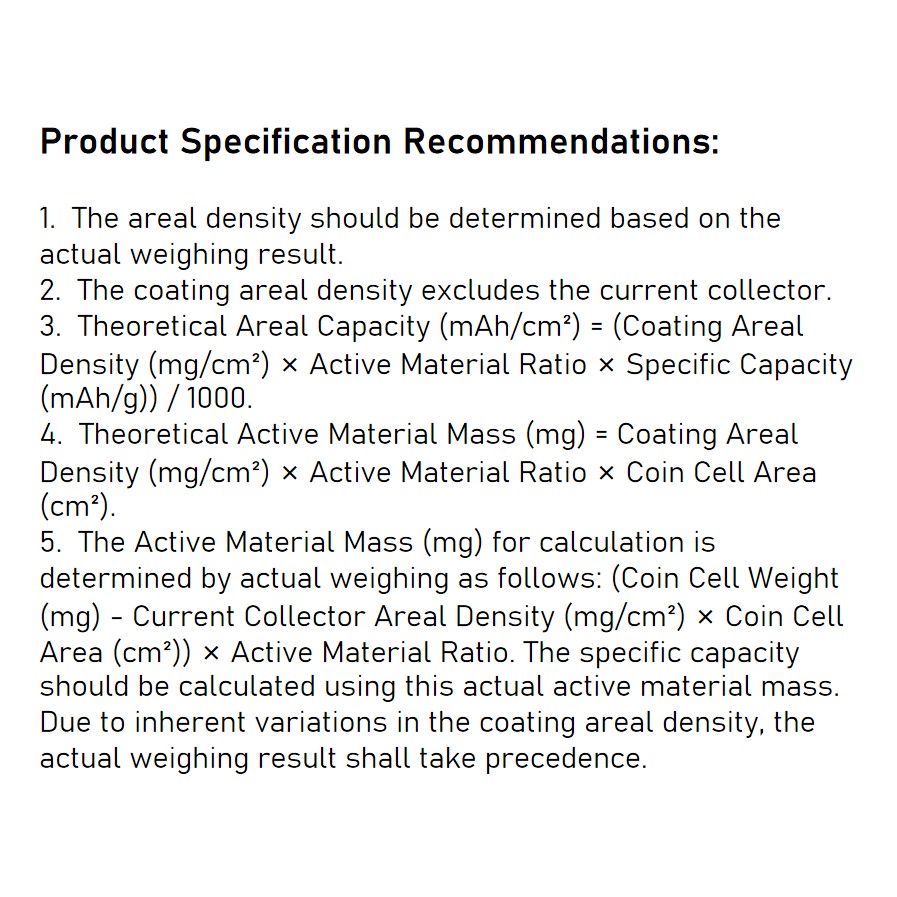
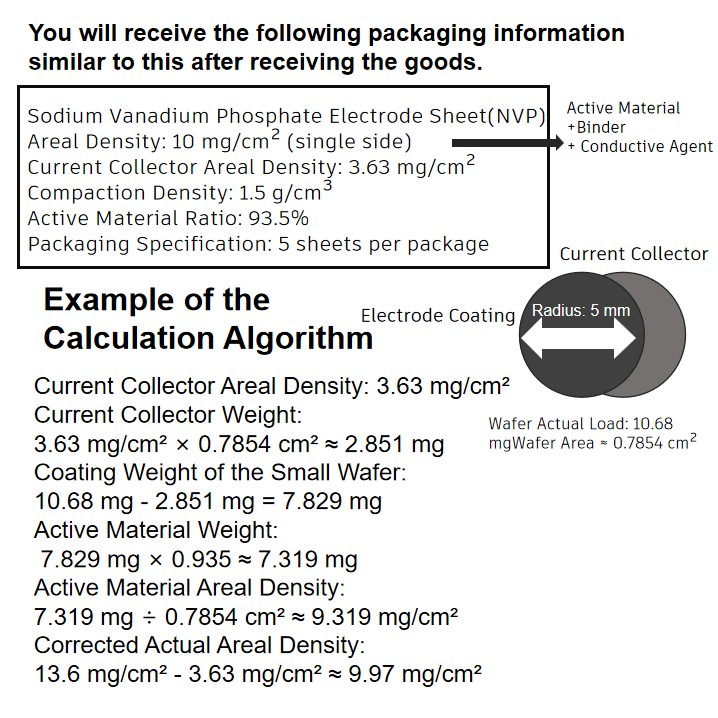
Weigh the cut electrode on a calibrated analytical balance to confirm the active material loading matches the expected 36 mg/cm² specification. - Coin Cell Assembly
Assemble the electrode into a standard coin cell with a sodium anode, glass fiber separator, and appropriate electrolyte, applying gentle pressure to ensure uniform wetting. - Crimping and Sealing
Crimp the cell using a pneumatic press at the manufacturer recommended force to achieve a hermetic seal without crushing the electrode. - Resting Period
Allow the assembled cell to rest at open circuit for at least 12 hours inside the glovebox before performing any electrochemical measurements.
What specific capacity can be expected from the NFM111-D05 electrode given its 95.30% active material ratio and double-sided 36 mg/cm² loading?
The NFM111-D05 electrode delivers a rated capacity of 125 mAh/g, as specified in the product sheet. This performance is supported by a high active material ratio of 95.30%, which minimizes inactive binder and conductive additive content, enabling reliable and reproducible electrochemical testing for sodium-ion battery R&D.
What cell assembly constraints should be considered when using the NFM111-D05 double-side coated electrode with its carbon-coated aluminum substrate?
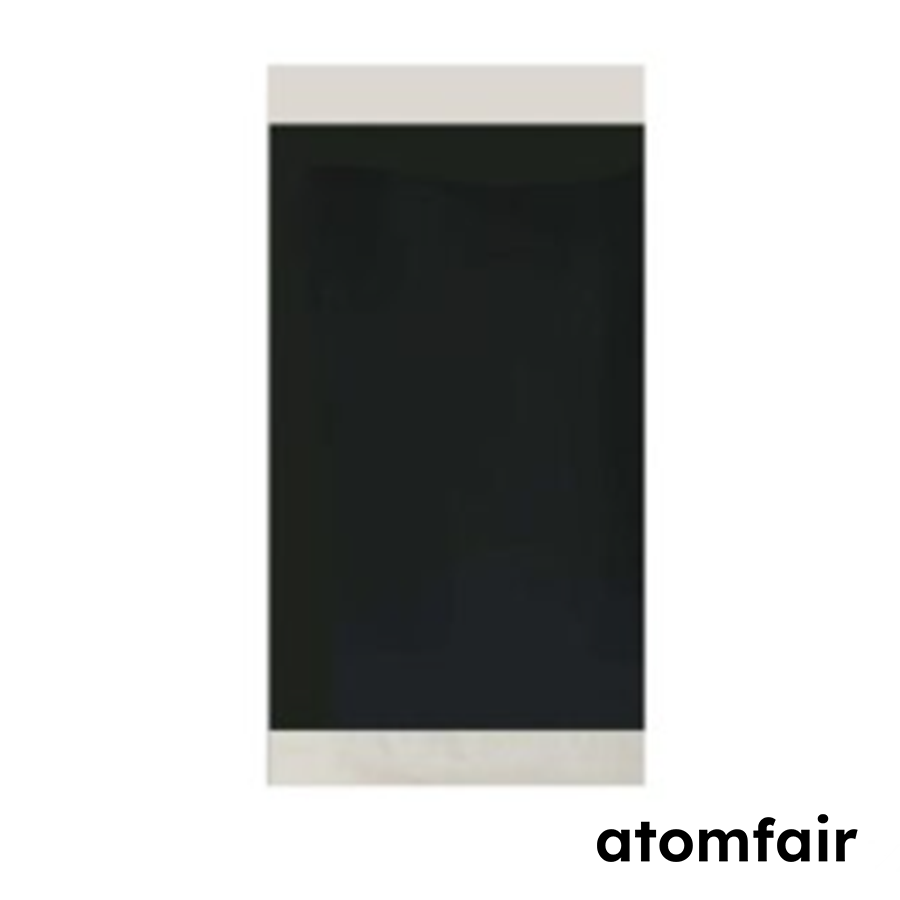
The electrode uses a carbon-coated aluminum foil substrate with a total thickness of 13 µm (12 µm base + 0.5 µm coatings on each side) and a substrate size of 184×110 mm. The double-sided coating area is 150×110 mm, leaving a 34 mm uncoated margin on one side for current collector tab attachment. The carbon coating enhances electrical conductivity and cycling stability, but the full electrode must be handled carefully to avoid delamination during coin cell or pouch cell assembly.
What vacuum baking conditions are required for the NFM111-D05 electrode before electrochemical testing?
The manufacturer recommends a precision vacuum baking protocol: 12 hours at 100°C. This pre-treatment is critical for removing residual moisture and solvent traces from the wet-process coating, ensuring optimal electrochemical performance. Sodium-ion cathode materials are particularly moisture-sensitive, and this step helps maintain material integrity and cell reliability.
This double-side coated NFM111 electrode sheet offers a high active material loading of 36 mg/cm² and 95.3% active ratio on a carbon-coated aluminum substrate, designed for sodium-ion battery research. It requires vacuum baking at 100°C for 12 hours prior to use, and standard dimensions may need customization for certain cell formats.
Positive
- High active material loading: With 36 mg/cm² coating density and 95.3% active material ratio, the electrode provides high areal capacity for sodium-ion battery testing.
- Carbon-coated aluminum substrate: The carbon-coated aluminum foil current collector enhances electrical contact and cycling stability, as specified in the product features.
Trade-offs
- Requires vacuum baking protocol: The electrode must be vacuum baked at 100°C for 12 hours before use to ensure optimal material performance, adding preparation time.
- Standard dimensions may limit compatibility: The fixed coating area (150×110 mm) and substrate size (184×110 mm) may not fit all cell configurations, requiring custom sizing.
Every advanced material, component, equipment, and instrument in our catalog is backed by rigorous testing. We maintain strict internal quality management frameworks and align with CE conformity metrics to deliver transparent, reproducible performance data via our public open-science repository.
To request raw batch performance data, submit formal vendor registration paperwork, or execute a fast-turnaround R&D manufacturing loop, contact us at inquiry@atomfair.com.
Item is dispatched under the Atomfair Shipping & Delivery Framework (Free worldwide shipping on orders over $59 USD excl. heavy equipment). Return is governed by the Atomfair Return & Refund Policy (7-day technical return window).