ATOMFAIR® HC-S04 HARD CARBON (HC) ELECTRODE SHEETRESEARCH GRADE MATERIAL
|
||||||||||||||||||||||||||||||||||||||||||||||
|
||||||||||||||||||||||||||||||||||||||||||||||
|
|||
|
TAILORED SOLUTIONS FOR RESEARCH
Contact our engineering team for technical support or official institutional quotations.
EMAIL: inquiry@atomfair.com
|
|||
|
Manufacturer: ATOMFAIR LLC
Brand: ATOMFAIR®
Disclaimer: Sold exclusively for laboratory research.
|
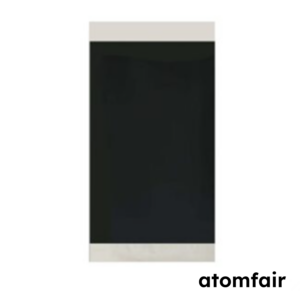
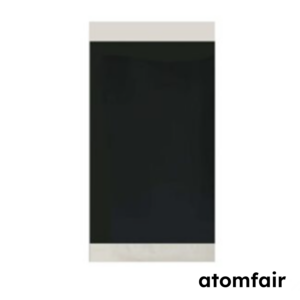
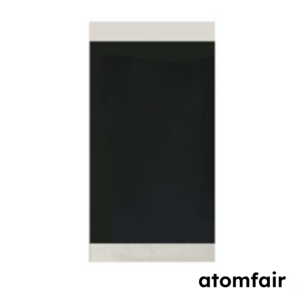
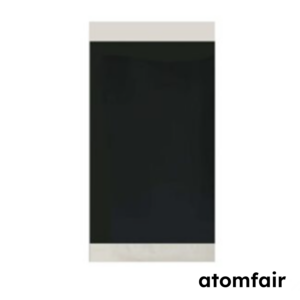
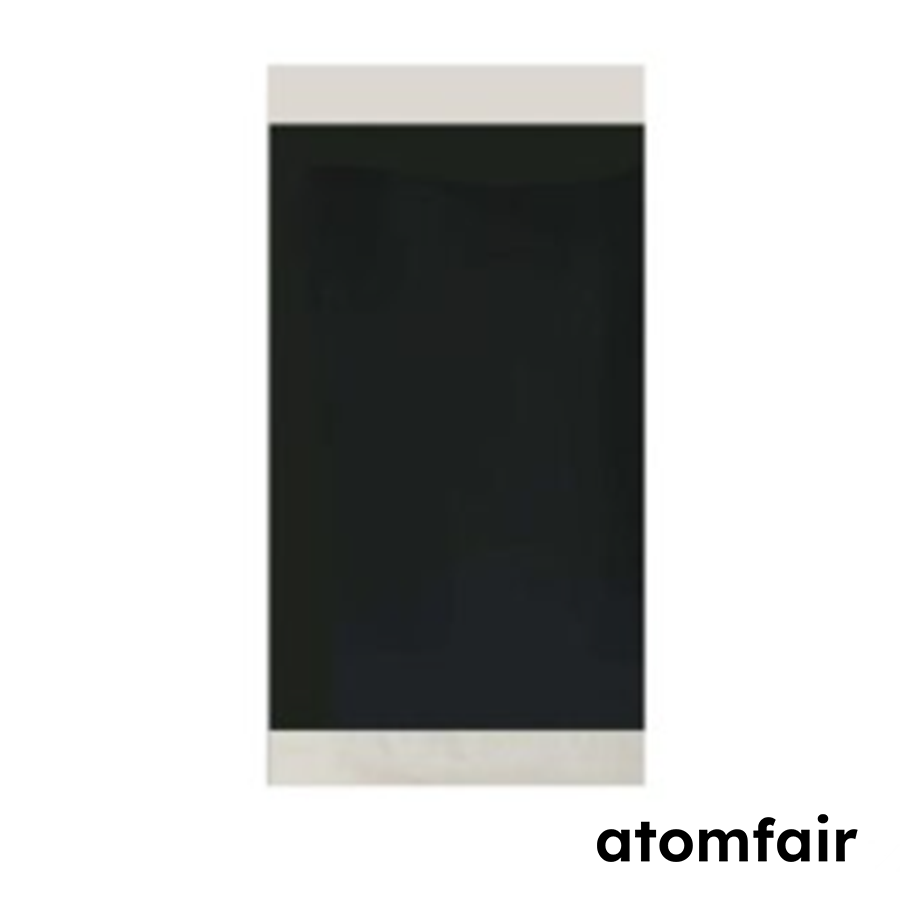
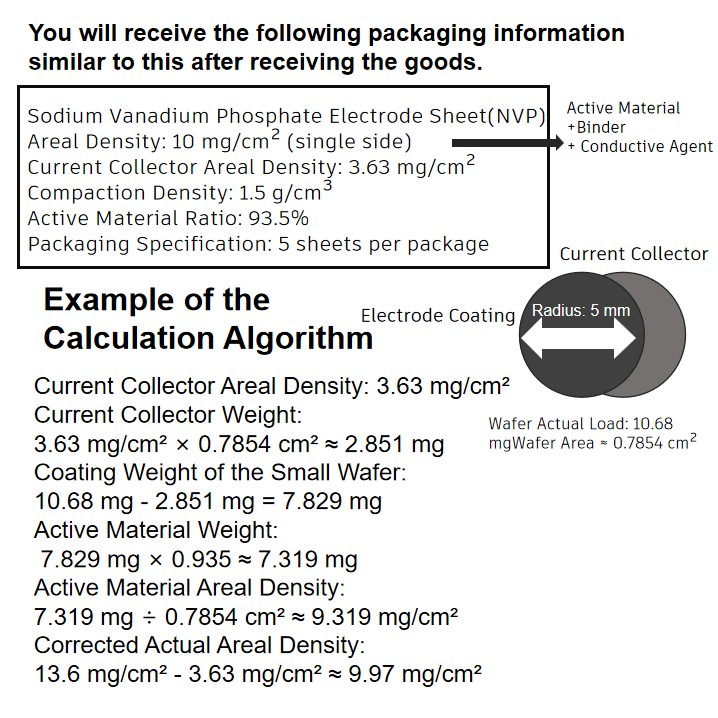
This hard carbon electrode is single-side coated, requiring careful orientation during cell assembly to prevent short circuits. It is designed for sodium-ion battery research using compatible electrolytes and assembly conditions.
- Orientation Requirement: Orient the electrode with the coated side facing the separator and the bare aluminum substrate contacting the current collector to avoid internal short circuits.
- Electrolyte Compatibility: Select electrolytes that are formulated for hard carbon anodes in sodium-ion cells to ensure electrochemical stability and performance.
How does the high active material ratio of 94.5% in this hard carbon electrode affect coating adhesion and long-term cycling stability?
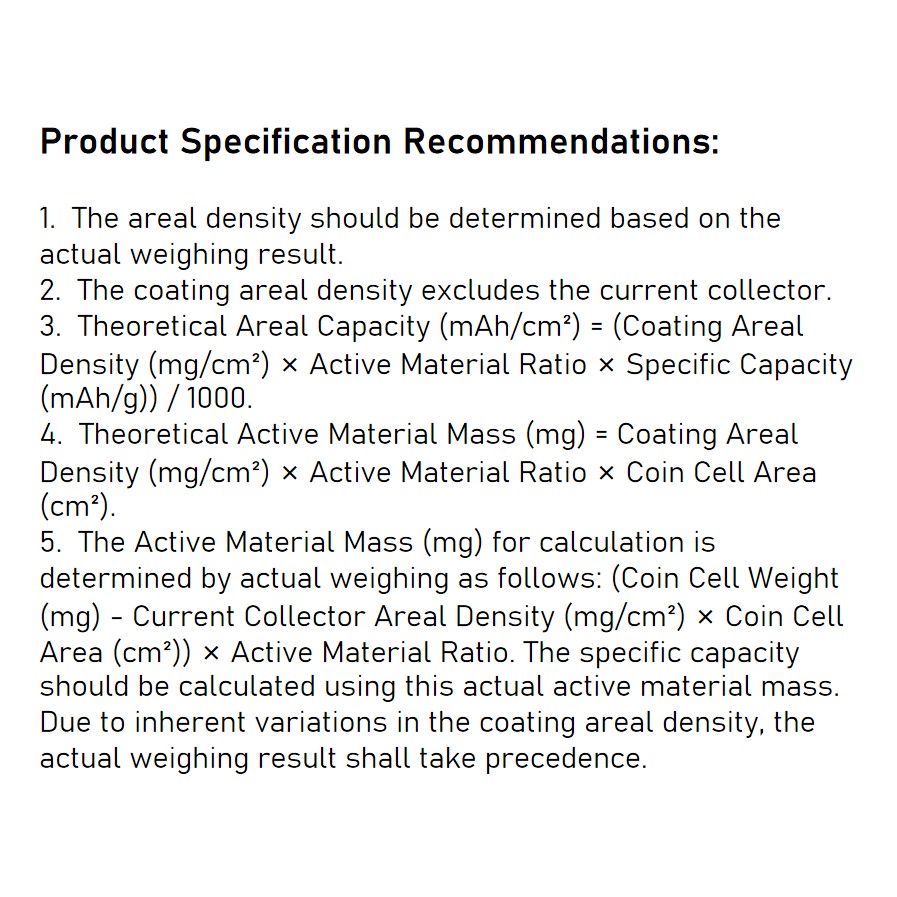
The 94.5% active material ratio maximizes areal capacity from the 9.4 mg/cm² loading and 300 mAh/g rated capacity, but reduces binder content, which may compromise mechanical integrity. The carbon-coated aluminum foil substrate (12+0.5+0.5 μm) provides enhanced adhesion and reduced contact resistance, enabling stable cycling under standard sodium-ion battery test conditions.
Is this single-sided hard carbon electrode compatible with both coin cell and pouch cell formats for sodium-ion battery testing?
Yes, the coating area of 110×80 mm on a 130×80 mm substrate allows punching multiple coin cell electrodes (e.g., 16 mm diameter discs) or cutting to pouch cell dimensions. The single-sided coating on carbon-coated aluminum foil with a collector areal density of 3.3 mg/cm² is designed for standard sodium-ion cell assembly and electrochemical evaluation.
What storage and preconditioning steps are required for these hard carbon electrodes to ensure consistent electrochemical performance?
Store electrodes in a dry, inert atmosphere (e.g., argon-filled glovebox) to prevent moisture adsorption that can degrade performance. Prior to use, perform vacuum baking at 100°C for 12 hours as specified in the product preparation to remove residual solvents and ensure reproducible data during sodium-ion battery testing.
This hard carbon anode sheet offers a 94.5% active material ratio and 300 mAh/g capacity on a carbon-coated aluminum current collector, ideal for sodium-ion coin cell R&D. The single-sided wet-coated format requires careful handling and alignment during cell assembly.
Positive
- High active material loading ratio: 94.5% active material ratio maximizes specific capacity per unit area, reducing inactive mass in the electrode.
- Carbon-coated aluminum substrate: Carbon-coated foil reduces contact resistance and improves adhesion, enhancing cycling stability over uncoated current collectors.
Trade-offs
- Single-sided coating geometry: Single-sided coating necessitates careful cell assembly alignment and limits use in stacked configurations, typically requiring a single-sided counter electrode.
- Wet process handling requirements: Wet-coated electrodes require controlled drying and solvent management to avoid cracking or delamination during lab-scale processing.
Every advanced material, component, equipment, and instrument in our catalog is backed by rigorous testing. We maintain strict internal quality management frameworks and align with CE conformity metrics to deliver transparent, reproducible performance data via our public open-science repository.
To request raw batch performance data, submit formal vendor registration paperwork, or execute a fast-turnaround R&D manufacturing loop, contact us at inquiry@atomfair.com.
Item is dispatched under the Atomfair Shipping & Delivery Framework (Free worldwide shipping on orders over $59 USD excl. heavy equipment). Return is governed by the Atomfair Return & Refund Policy (7-day technical return window).