Description
ATOMFAIR® HC-D02 HARD CARBON (HC) ELECTRODE SHEETRESEARCH GRADE MATERIAL
|
|||||||||||||||||||||||||||||||||||||||||
|
|||||||||||||||||||||||||||||||||||||||||
|
TAILORED SOLUTIONS FOR RESEARCH
Contact our engineering team for technical support or custom fabrication inquiries.
EMAIL: inquiry@atomfair.com
|
|||||||||||||||||||||||||||||||||||||||||
|
Manufacturer: Atomfair LLC
Brand: ATOMFAIR®
|
|||||||||||||||||||||||||||||||||||||||||
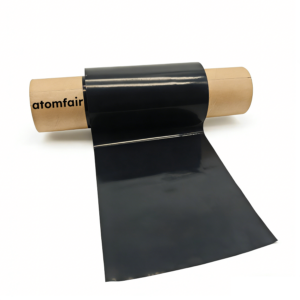
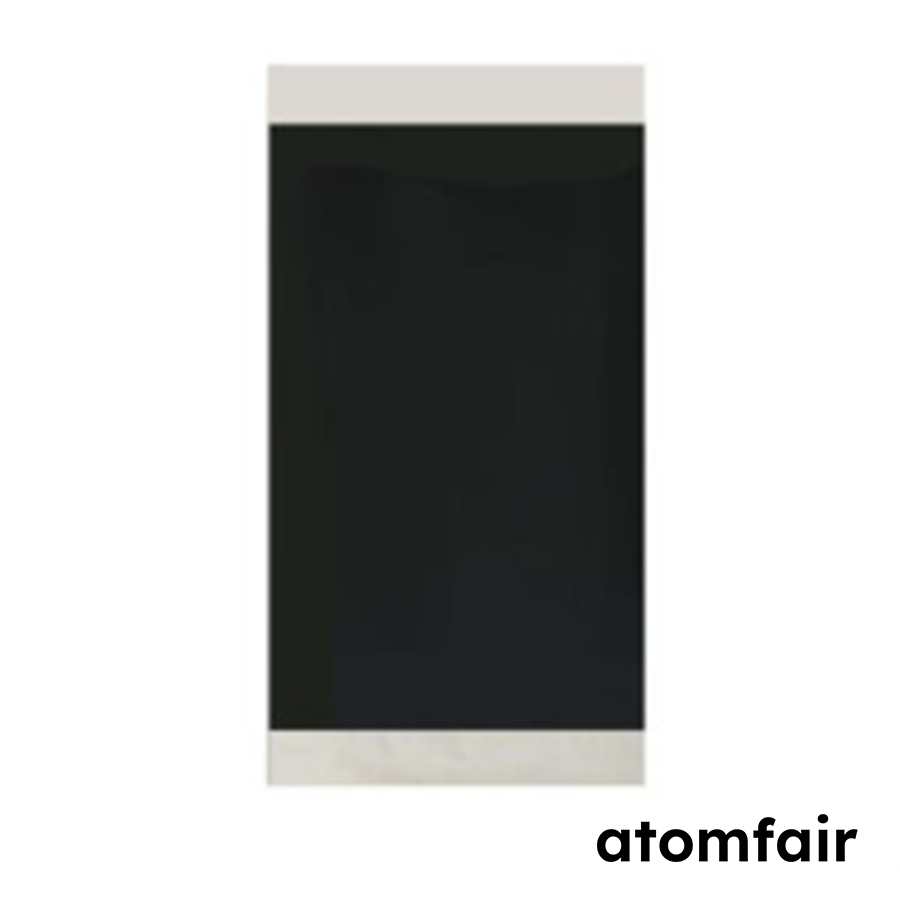
This document outlines handling constraints for the double-side coated hard carbon anode sheet. The electrode requires careful handling to prevent delamination and contamination during cell assembly.
- Coating Delamination Risk: The double-sided coating is susceptible to delamination if subjected to bending or excessive mechanical stress.
This procedure describes the steps to prepare the hard carbon electrode sheet for use in sodium-ion coin cells. Proper handling ensures minimal contamination and optimal electrochemical performance.
Required Equipment: Precision cutter, Argon-filled glovebox
- Inspect
Inspect the electrode sheet for any visible defects, tears, or uneven coating before cutting. - Cut
Cut the electrode sheet to the required dimensions using a clean, sharp precision cutter to avoid edge fraying. - Transfer
Transfer the cut electrode to an argon-filled glovebox for storage and subsequent cell assembly to prevent moisture exposure.
How does the 17 mg/cm² areal loading trade off against achievable capacity in full sodium-ion cells using the HC-D02 hard carbon anode?
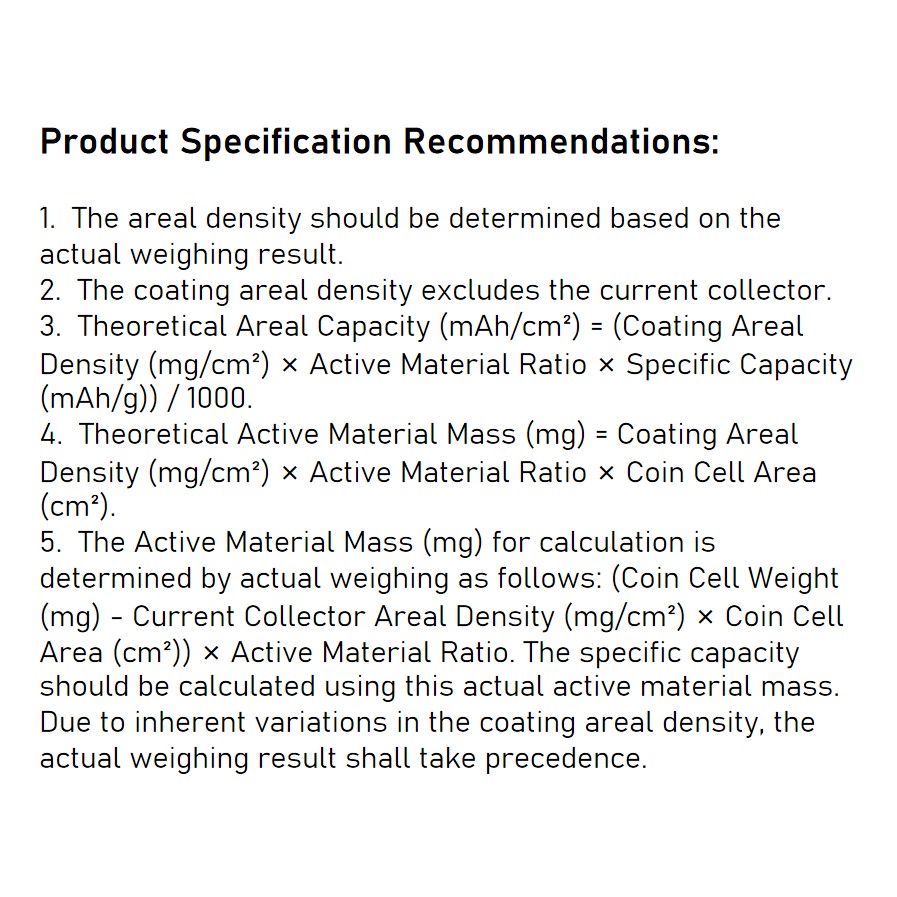
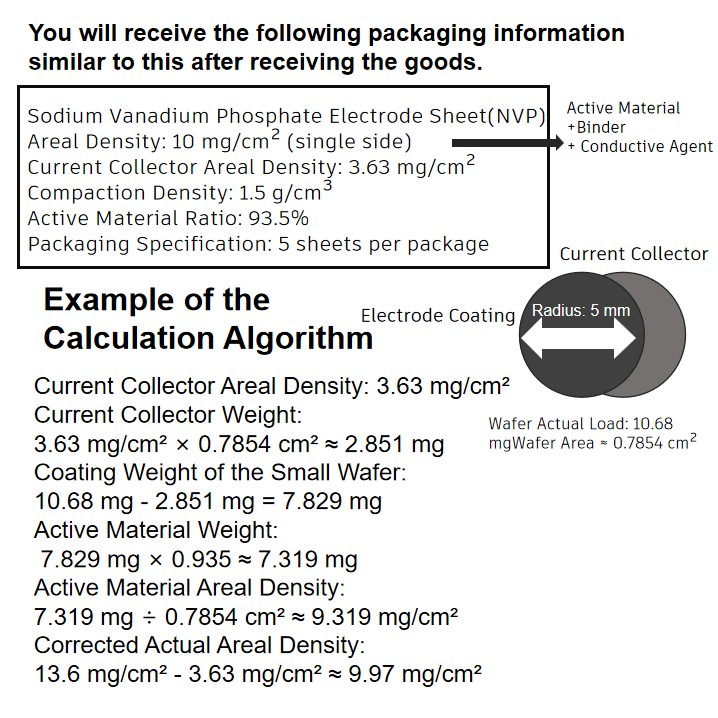
At 17 mg/cm² areal loading, the HC-D02 delivers a reversible capacity of 300 mAh/g based on the active material ratio of 93.50%. This loading density balances high mass loading with uniform coating via wet processing, but it may require optimized cell balancing to avoid anode limitation. The compaction density of 0.96 g/cm³ provides structural integrity while maintaining electrolyte wetting properties.
Is the carbon-coated aluminum foil current collector on the HC-D02 compatible with both aqueous and organic solvent-based electrode binder systems?
The HC-D02 substrate is explicitly carbon-coated aluminum foil designed to decrease interfacial polarization and improve mechanical adhesion. While the standard product uses a wet process with unspecified binder, the carbon coating layer is optimized for organic carbonate electrolyte systems typically used in sodium-ion cells. Aqueous binders like CMC/SBR may be compatible but require verification of coating adhesion after vacuum baking at 100°C.
What pre-conditioning protocol is required for the HC-D02 hard carbon anode before cell assembly?
The recommended conditioning standard is 12 hours of vacuum baking at 100°C. This removes adsorbed moisture from the hard carbon and carbon-coated foil, preventing parasitic side reactions in sodium-ion cells. The vacuum baking also stabilizes the compaction density of 0.96 g/cm³ for consistent electrochemical performance.
This double-sided hard carbon anode on carbon-coated aluminum foil delivers a 93.5% active material ratio and a 300 mAh/g reversible capacity, but requires 12-hour vacuum baking at 100°C and careful handling due to the 12 μm substrate thickness.
Positive
- High active material yield: 93.50% active hard carbon ratio with a 300 mAh/g reversible capacity provides reliable electrochemical performance for sodium-ion anode R&D.
- Uniform wet process coating: Standardized 17 mg/cm² double-side wet coating ensures consistent mass loading across the electrode surface for reproducible testing.
Trade-offs
- Vacuum baking preconditioning: The electrode requires 12 hours of vacuum baking at 100°C before use, adding a mandatory processing step and time constraint.
- Thin substrate handling: The 12 μm carbon-coated aluminum foil current collector is mechanically delicate and may require careful handling during cell assembly to avoid damage.
Every advanced material, component, equipment, and instrument in our catalog is backed by rigorous testing. We maintain strict internal quality management frameworks and align with CE conformity metrics to deliver transparent, reproducible performance data via our public open-science repository.
To request raw batch performance data, submit formal vendor registration paperwork, or execute a fast-turnaround R&D manufacturing loop, contact us at inquiry@atomfair.com.
Item is dispatched under the Atomfair Shipping & Delivery Framework (Free worldwide shipping on orders over $59 USD). Return is governed by the Atomfair Return & Refund Policy (7-day technical return window).