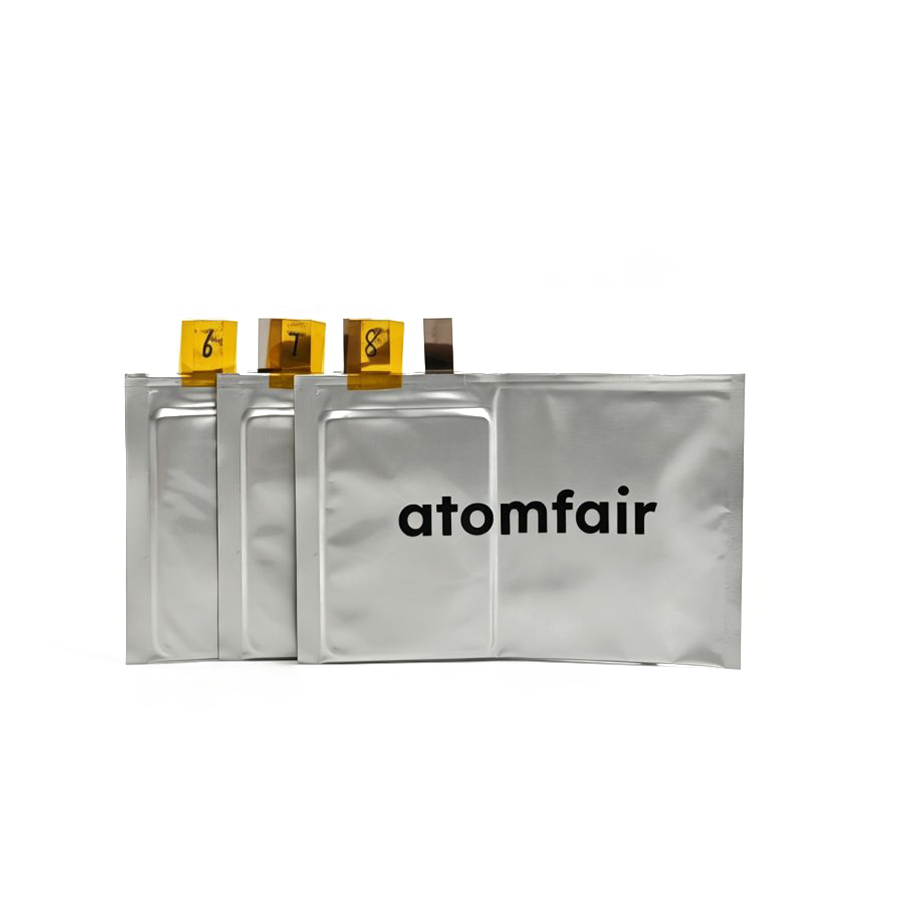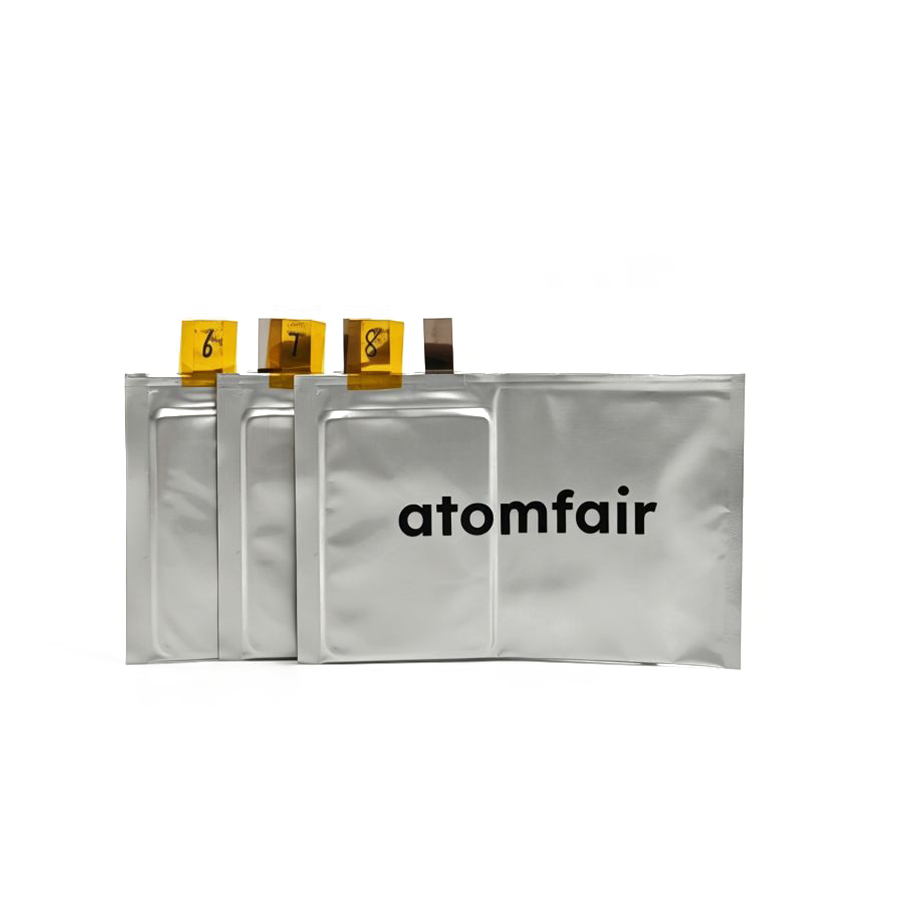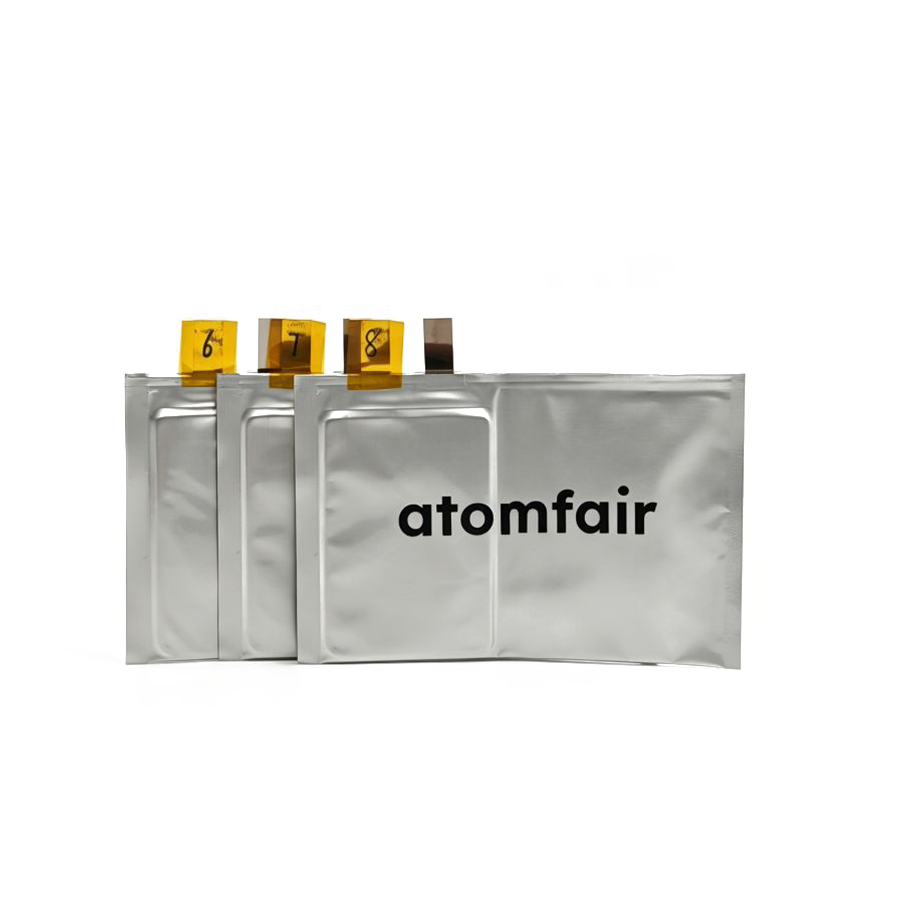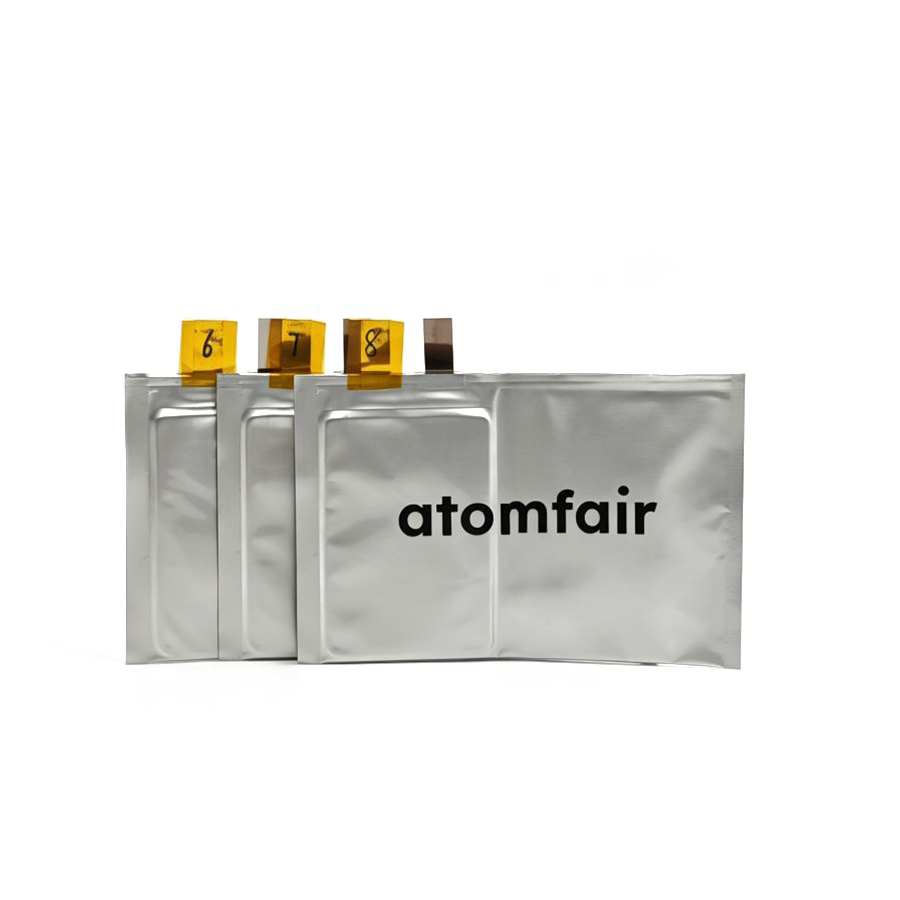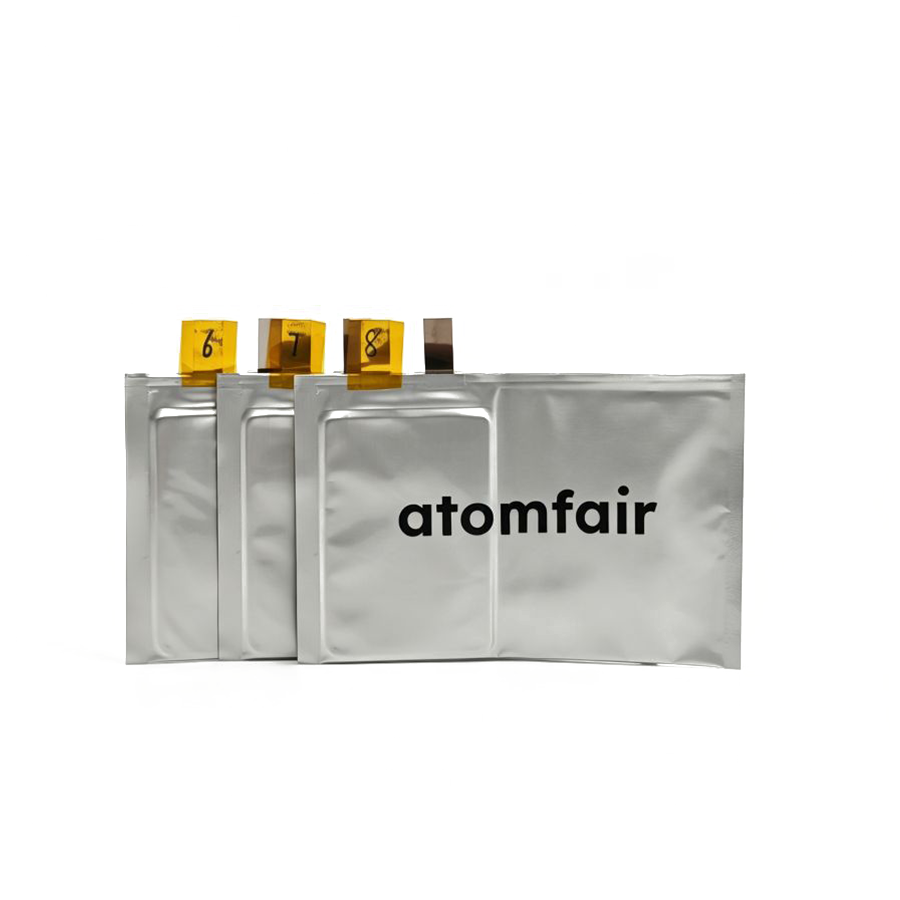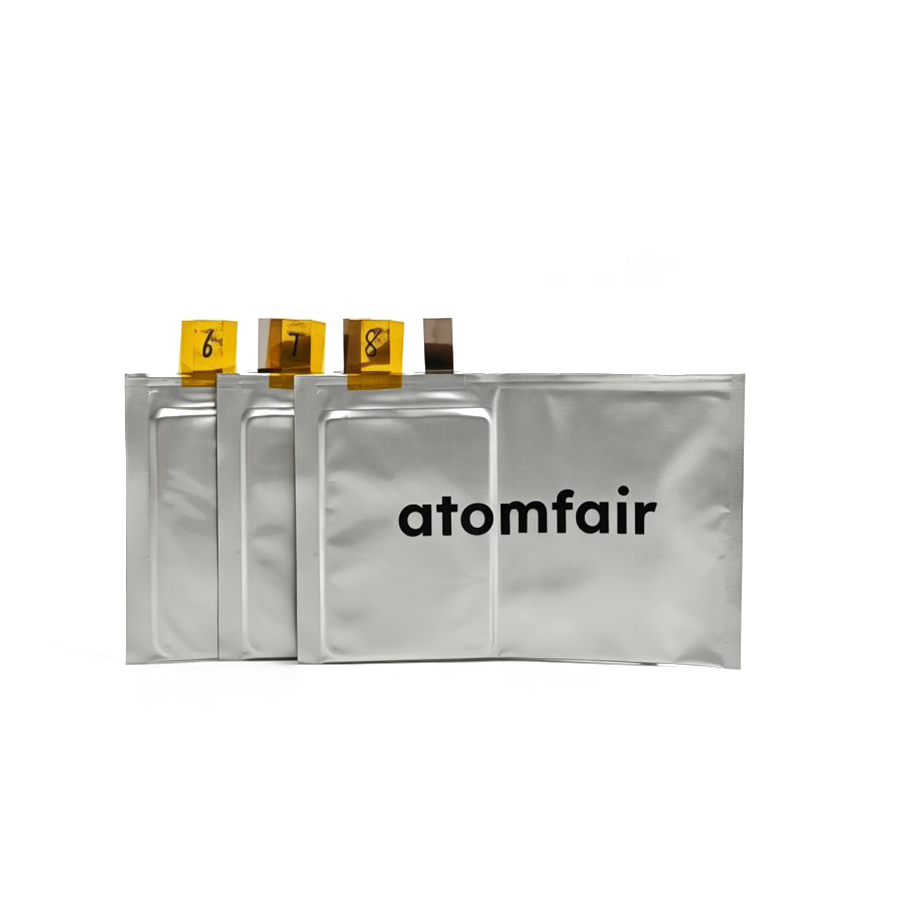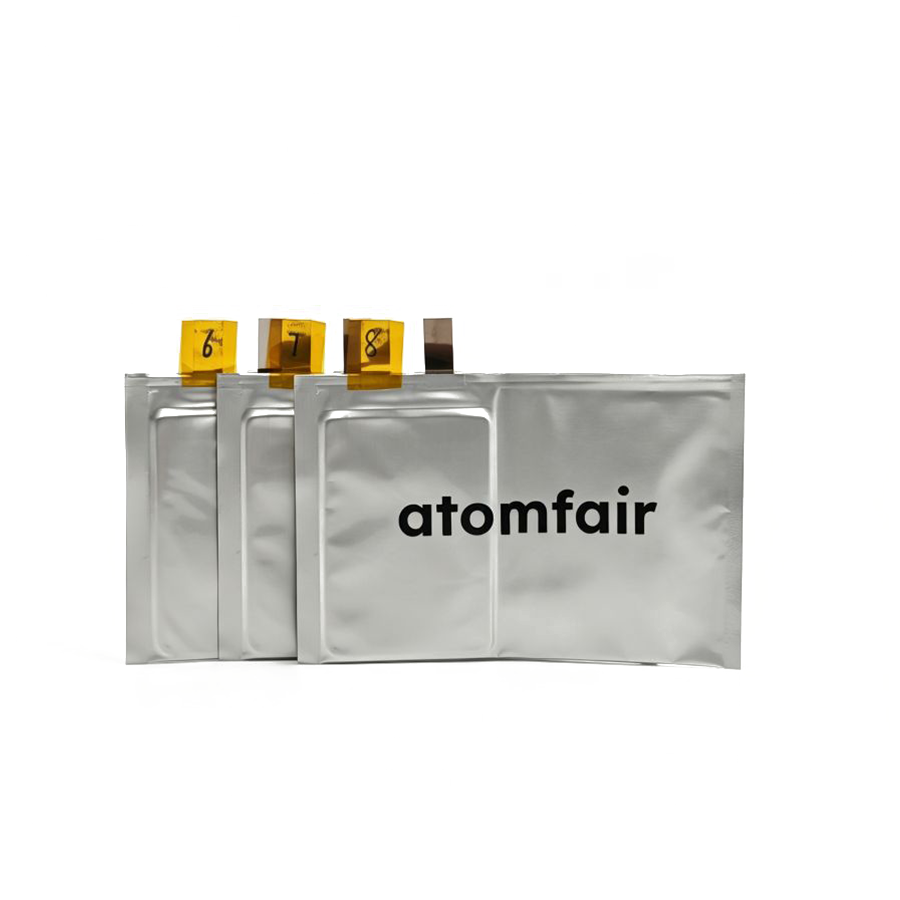
ATOMFAIR® 1AH LNMO || GRAPHITE DRY POUCH CELLLITHIUM-ION BATTERY | RESEARCH GRADE MATERIAL
|
|||||||||||||||||||||||||
|
|||||||||||||||||||||||||
|
TAILORED SOLUTIONS FOR RESEARCH
Contact our engineering team for technical support or official institutional quotations.
EMAIL: inquiry@atomfair.com
|
|||||||||||||||||||||||||
|
Manufacturer: Atomfair LLC
Brand: ATOMFAIR®
|
|||||||||||||||||||||||||
This dry pouch cell is shipped without electrolyte and must be stored in a low-humidity, inert gas environment to prevent moisture absorption and electrode oxidation. Avoid mechanical damage, short circuits, and exposure to air to maintain cell integrity and operational safety.
- Storage Atmosphere: Store the dry pouch cell in an inert gas environment, such as argon, with low moisture and oxygen content to minimize degradation of the LNMO and graphite electrodes.
- Temperature Control: Keep the cell at stable ambient temperature away from heat sources and direct sunlight to avoid thermal stress and material degradation.
- Handling Precautions: Handle the cell with care using insulated tools and antistatic measures to prevent physical damage, punctures, and electrostatic discharge that could cause short circuits.
This procedure describes the initial preparation and activation of the dry pouch cell by electrolyte filling and sealing. Proper execution in an inert atmosphere is critical to prevent contamination and ensure cell performance.
Required Equipment: Inert atmosphere glovebox, Heat sealer
- Inspect Cell
Inspect the dry pouch cell for any physical damage, pinholes, or contamination on the pouch exterior and electrode tabs. - Transfer to Glovebox
Transfer the cell into an inert atmosphere glovebox with controlled moisture and oxygen levels for all subsequent processing steps. - Add Electrolyte
Inject the desired electrolyte formulation into the cell through the fill port, ensuring complete wetting of the separator and electrodes. - Seal Pouch
Seal the pouch using a heat sealer at the appropriate temperature and pressure for the pouch material to achieve a hermetic closure.
How does the dry pouch cell configuration affect the electrochemical performance characterization compared to a pre-filled cell?
The dry configuration of the 1AH LNMO||Graphite pouch cell allows researchers to introduce their own electrolyte formulation, enabling precise control over the electrochemical environment. This trade-off means that while the cell cannot be tested as-received, it offers the flexibility to optimize electrolyte chemistry for specific LNMO cathode studies. The cell's design parameters (areal density, NP ratio) are set to default unless customized upon inquiry.
What are the critical compatibility considerations when integrating this 1AH LNMO||Graphite dry pouch cell into a battery test setup?
Researchers must account for the cell's dry state, requiring in-house electrolyte filling and vacuum sealing before testing, which demands a compatible electrolyte filling system and pouch sealing equipment. The default areal density, load capacity, and NP ratio are predetermined unless specified by the buyer, so test protocols must align with these or be adjusted via pre-order customization. Additionally, the 1AH capacity and electrode dimensions (60×80 mm LNMO, 63×84 mm graphite) impose constraints on fixture design and current collector tab alignment.
What storage and handling precautions are necessary for the 1AH LNMO||Graphite dry pouch cell before electrolyte filling?
The dry pouch cell must be stored in a cool, dry environment to prevent degradation of the electrodes and separator before electrolyte filling. As a dry core, the cell does not contain electrolyte, so it poses no immediate leakage hazard, but it is sensitive to moisture and should be handled in a dry room or argon-filled glovebox to avoid cathode material contamination. Improper storage can lead to performance loss and invalidate the default design parameters.
This 1Ah LNMO || Graphite dry pouch cell is designed for advanced battery R&D, offering high energy density and flexibility via a dry-core configuration that requires user-supplied electrolyte. The cell ships with fixed default design parameters (areal density, NP ratio, etc.), which must be confirmed prior to ordering to ensure alignment with experimental protocols.
Positive
- High Energy Density Chemistry: The LNMO || Graphite formulation provides exceptional energy storage capability, making the cell suitable for high-performance battery research and prototype development.
- Dry Core Customization Flexibility: Delivered without electrolyte filling, the dry pouch cell allows researchers to select and optimize electrolyte composition, enabling tailored experimentation and process control.
Trade-offs
- Electrolyte Not Included: The cell is shipped as a dry core; electrolyte must be sourced and filled by the user, requiring wet-lab infrastructure and expertise in electrolyte handling and filling procedures.
- Fixed Default Design Parameters: Unless otherwise specified, the cell is manufactured using default values for areal density, load capacity, number of layers, active material formula, and NP ratio, which may not match every experimental requirement without prior inquiry.
Every advanced material, component, equipment, and instrument in our catalog is backed by rigorous testing. We maintain strict internal quality management frameworks and align with CE conformity metrics to deliver transparent, reproducible performance data via our public open-science repository.
To request raw batch performance data, submit formal vendor registration paperwork, or execute a fast-turnaround R&D manufacturing loop, contact us at inquiry@atomfair.com.
Item is dispatched under the Atomfair Shipping & Delivery Framework (Free worldwide shipping on orders over $59 USD excl. heavy equipment). Return is governed by the Atomfair Return & Refund Policy (7-day technical return window).