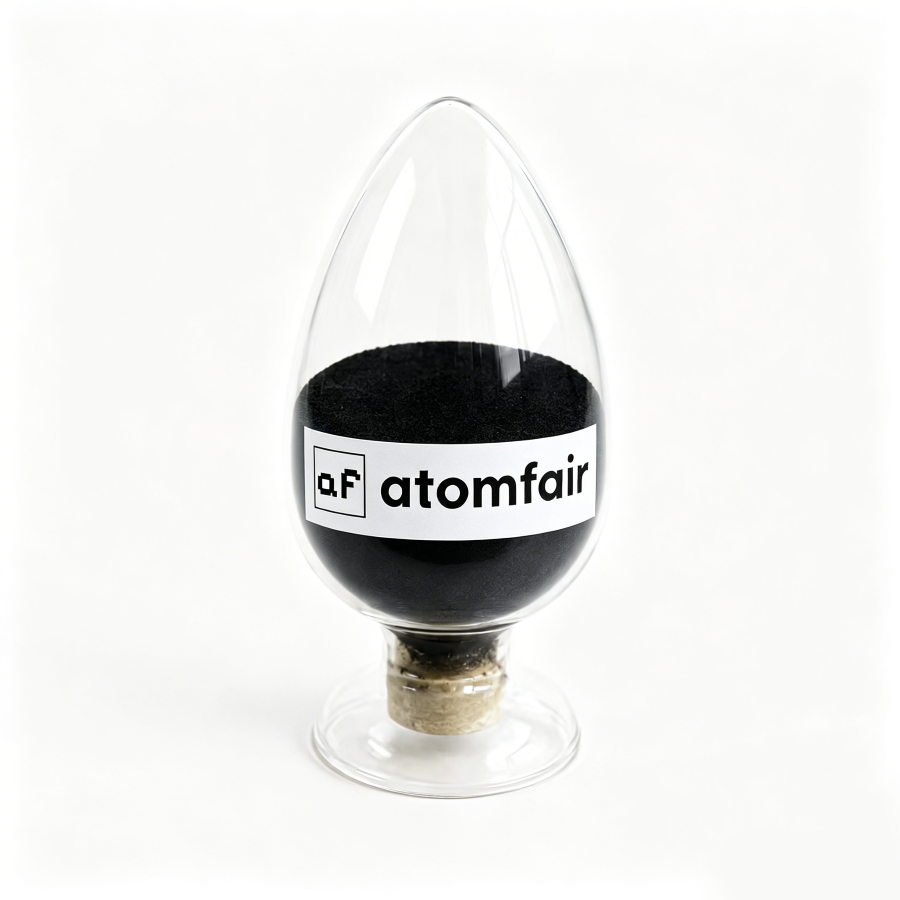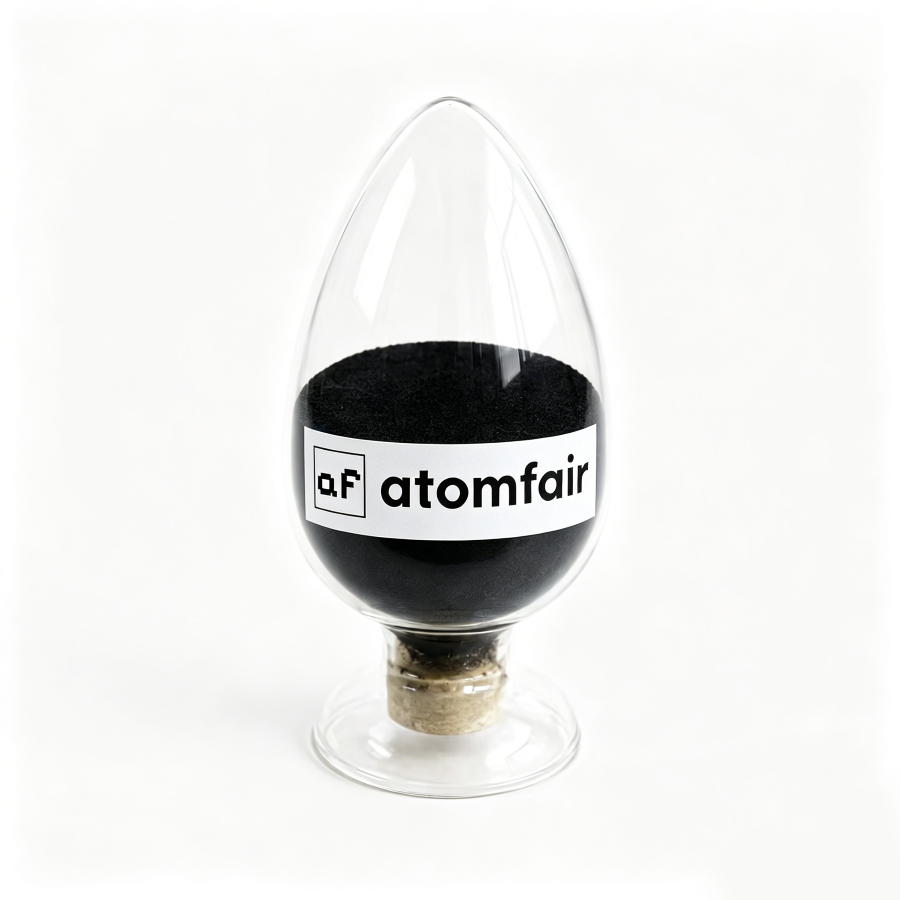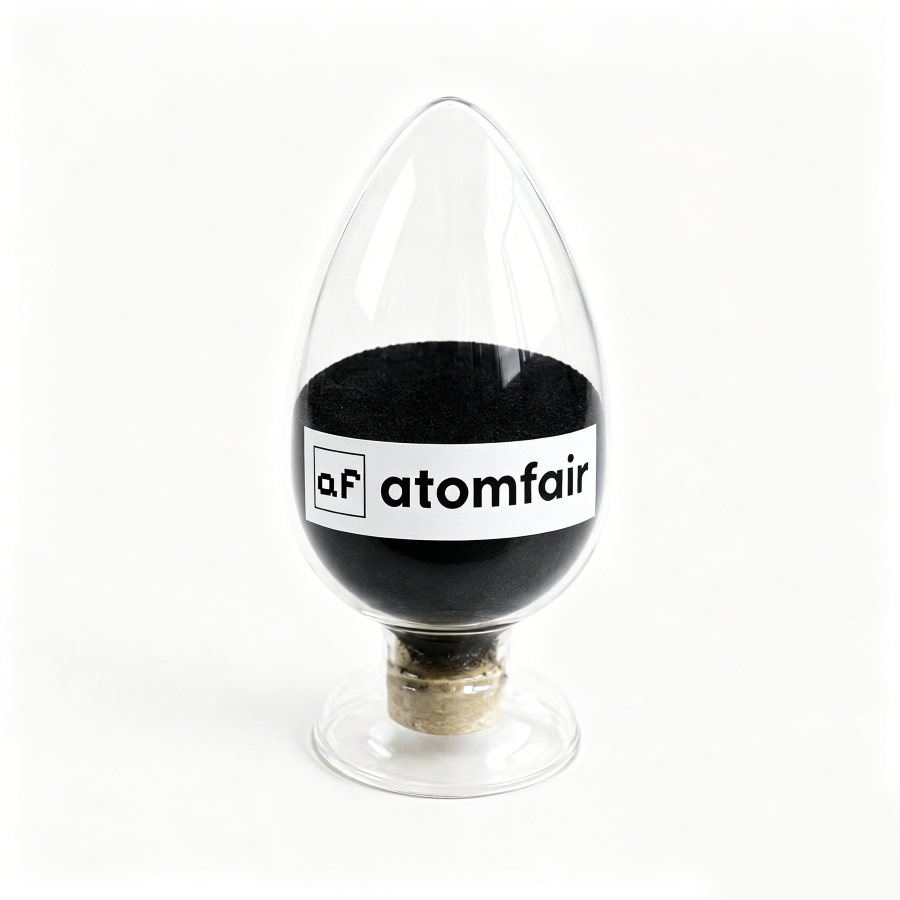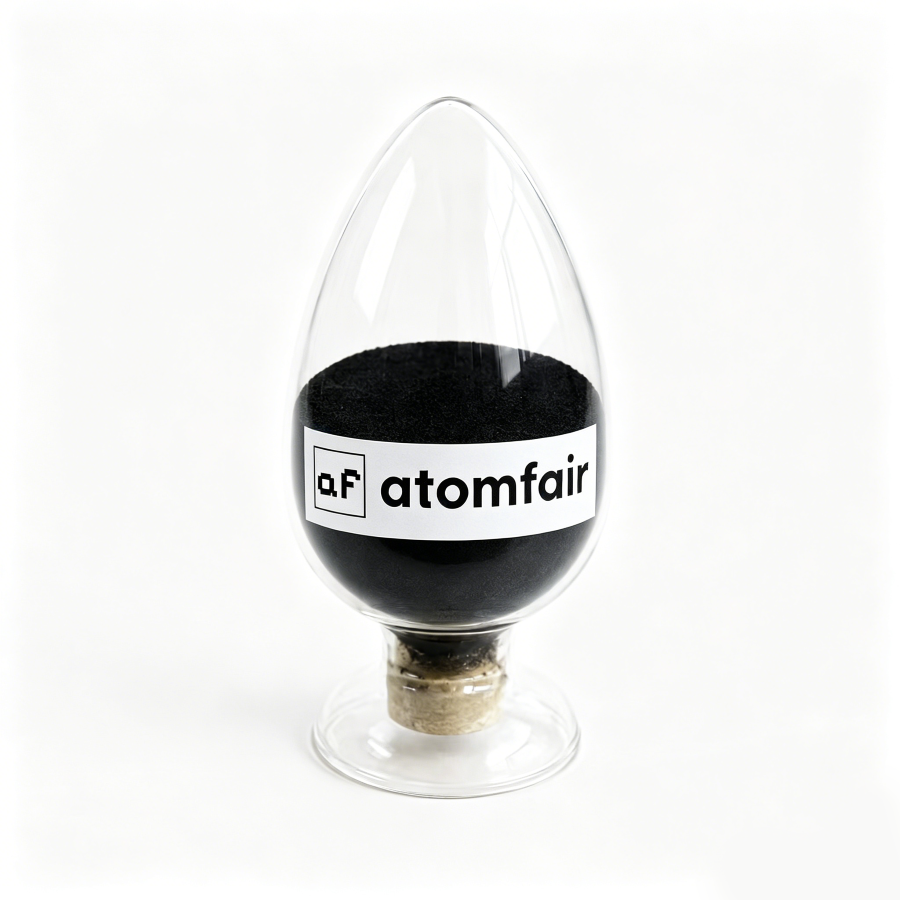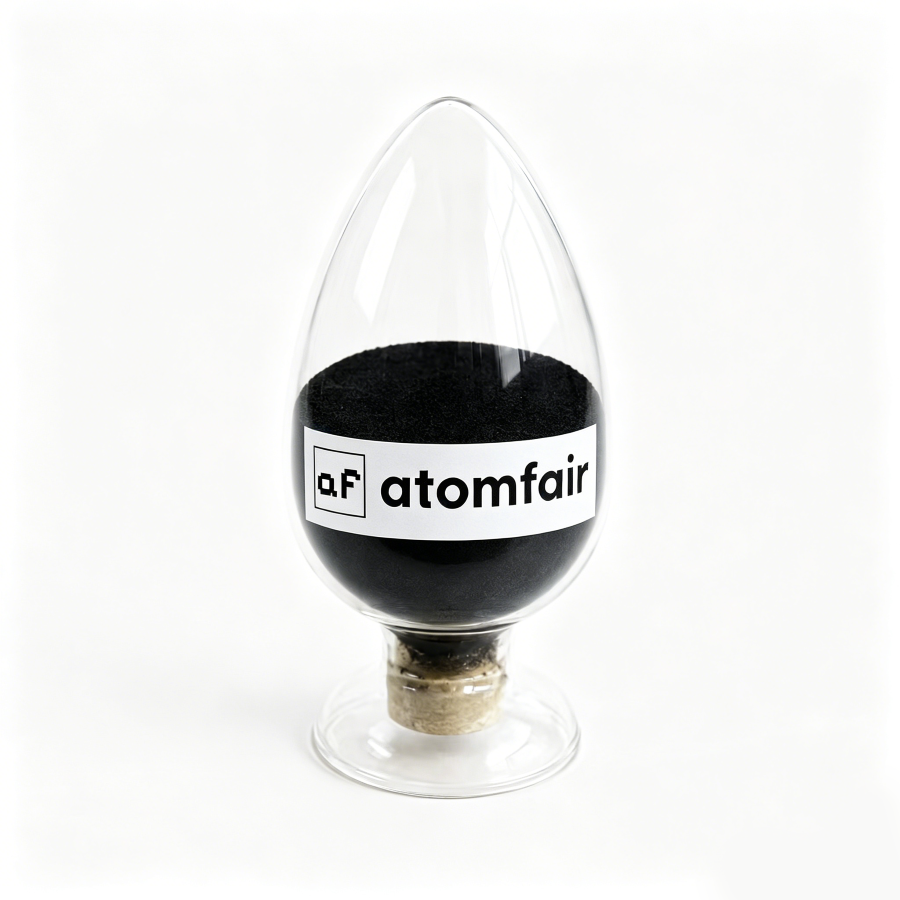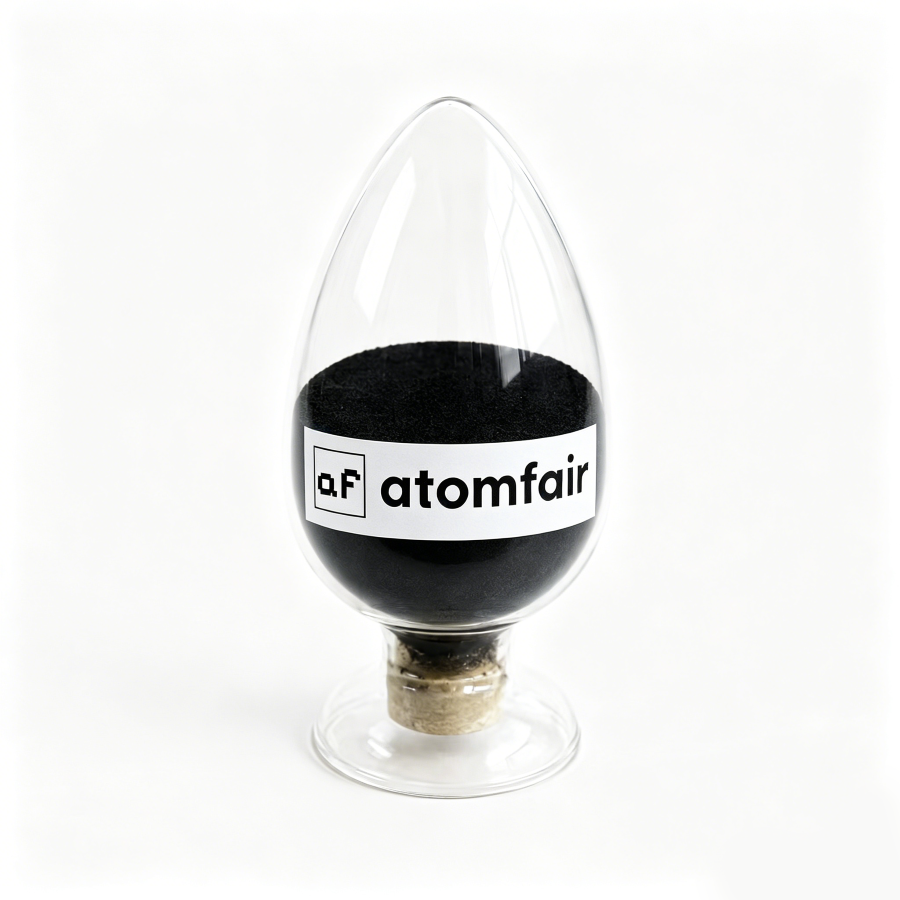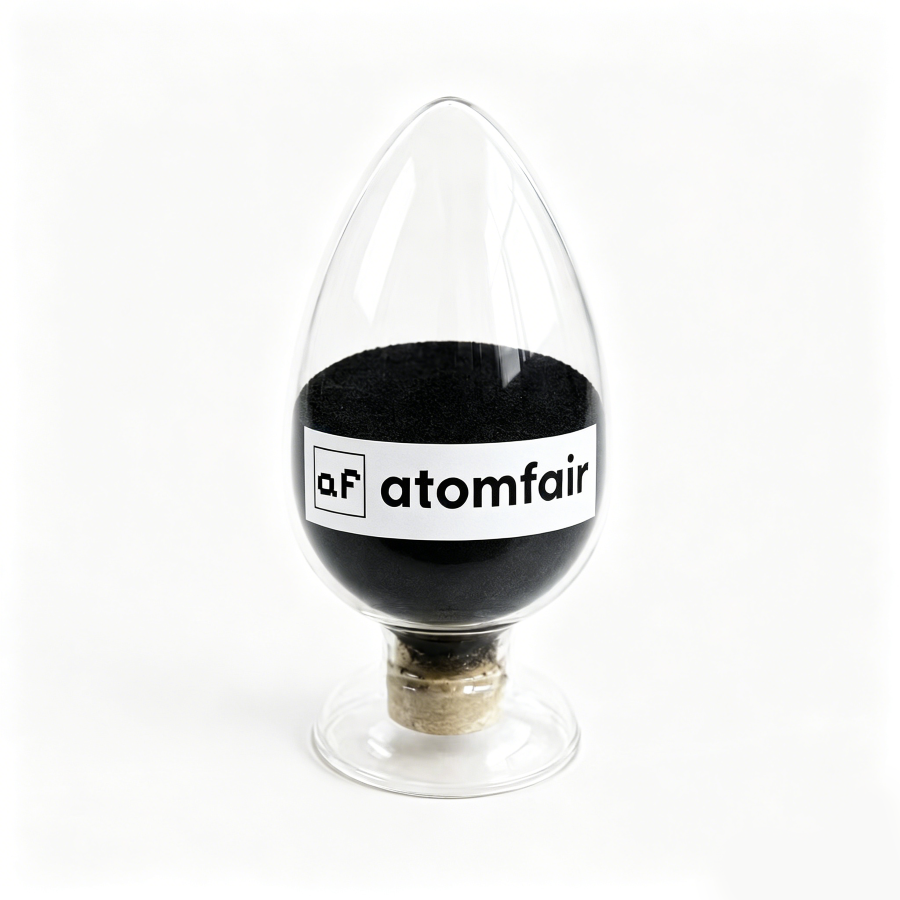
P2 Layered Sodium Nickel Manganese Oxide Cathode MaterialCOMMERCIAL GRADE · PRODUCTION
|
|||||||||||||||||||||||||||||
|
|||||||||||||||||||||||||||||
|
TAILORED SOLUTIONS FOR PRODUCTION
Contact our engineering team for technical support or official commercial quotations.
EMAIL: INQUIRY@ATOMFAIR.COM
|
|||||||||||||||||||||||||||||
|
Manufacturer: Atomfair LLC
Brand: ATOMFAIR®
|
This material contains residual alkaline components that can cause skin and eye irritation upon prolonged contact. It must be stored in an airtight container within a dry, inert atmosphere to prevent moisture uptake and surface degradation.
- Moisture Sensitivity: The moisture content must not exceed 0.1 wt% to avoid hydrolysis of the residual alkaline species.
- Residual Alkalinity Limits: Residual NaOH and Na₂CO₃ levels are controlled at ≤0.02 wt% and ≤0.75 wt%, respectively, to minimize slurry gelation and electrode corrosion.
- pH Constraint: The material pH is maintained at ≤12.5 to reduce the risk of skin and eye irritation during handling.
- Storage Conditions: Store in an airtight, moisture-proof container inside a dry room or glovebox with ≤0.1 ppm H₂O and O₂ to preserve surface chemistry.
This procedure outlines the safe handling and slurry processing of the sodium cathode material in a controlled environment. Steps include material transfer, slurry mixing, coating, and drying to maintain material integrity.
Required Equipment: Inert atmosphere glovebox, Vacuum mixer, Slot-die coater, Vacuum oven
- Material Transfer
Transfer the cathode powder into an argon-filled glovebox with moisture and oxygen levels below 0.1 ppm. - Weighing
Weigh the required amount of powder and add to a mixing vessel containing the solvent and binder solution. - Slurry Mixing
Mix the slurry under vacuum at a moderate speed until a homogenous dispersion is achieved. - Electrode Coating
Coat the slurry onto an aluminum foil current collector using a doctor blade or slot-die coater. - Drying
Dry the coated electrode at 80–120°C under vacuum for 12 hours to remove residual solvent. - Electrode Storage
Store the dried electrode in an airtight container within the glovebox until cell assembly.
How does the BET surface area of 0.923 m²/g influence the electrochemical utilization and slurry rheology of the P2-layered sodium cathode?
The BET specific surface area of 0.923 m²/g falls within the standard range of 1.0 ± 0.3 m²/g, providing sufficient active sites for sodium intercalation while minimizing parasitic side reactions. This surface area supports the first discharge capacity of 110.46 mAh/g measured at 0.1C and contributes to uniform binder distribution during NMP-based slurry preparation, reducing gelation risk due to the material's low moisture content of 0.036 wt%.
What electrolyte and anode compatibility constraints should be evaluated when integrating this P2-layered sodium nickel manganese oxide cathode into full cells?
The cathode operates at a high voltage platform up to 4.3V vs Na/Na⁺, requiring an electrolyte with oxidative stability beyond this potential. Its low residual alkaline content (NaOH 0.0012 wt%, Na₂CO₃ 0.49 wt%) minimizes parasitic reactions and slurry gelation, ensuring compatibility with standard sodium-ion electrolyte formulations. For full-cell integration, the cathode is validated for sodium-ion coin cells, pouch cells, and laminated systems; anode pairing must balance the cathode's initial coulombic efficiency of 96.41% to avoid sodium inventory mismatch.
What storage and handling protocols are necessary to maintain the ultra-low moisture and residual alkali specifications of this P2-layered sodium cathode material?
The material is packed in vacuum-sealed polyethylene bags to preserve its moisture content at 0.036 wt%, well below the 0.1 wt% threshold. Storage in a dry room or desiccator is required to prevent moisture uptake, which could elevate the residual alkaline levels beyond the specified thresholds (NaOH ≤0.02 wt%, Na₂CO₃ ≤0.75 wt%). Glovebox handling is recommended during cell assembly to maintain the material pH of 11.74 and avoid contamination.
This P2-layered sodium nickel manganese oxide cathode demonstrates a high initial coulombic efficiency of 96.41% and ultra-low residual alkali levels for stable slurry processing, but its tap density (1.13 g/cm³) and BET surface area (0.923 m²/g) fall below nominal targets, which may slightly reduce electrode packing density and rate capability.
Positive
- High Initial Coulombic Efficiency: Delivers 96.41% initial coulombic efficiency at 0.1C in half-cell testing, minimizing sodium loss during first cycle and maximizing usable capacity in the active matrix.
- Low Residual Alkali for Slurry Stability: Residual NaOH at 0.0012 wt% and Na₂CO₃ at 0.49 wt% are well below thresholds, protecting against gelation during slurry fabrication and blade coating for consistent electrode preparation.
Trade-offs
- Slightly Below-Target Tap Density: Measured tap density of 1.13 g/cm³ falls below the standard target of 1.2 g/cm³, which may reduce electrode packing density and volumetric energy density in cell builds.
- Sub-Nominal BET Surface Area: BET specific surface area of 0.923 m²/g is below the standard target of 1.0 m²/g, potentially lowering rate capability due to reduced electrode/electrolyte interface area.
Every advanced material, component, equipment, and instrument in our catalog is backed by rigorous testing. We maintain strict internal quality management frameworks and align with CE conformity metrics to deliver transparent, reproducible performance data via our public open-science repository.
To request raw batch performance data, submit formal vendor registration paperwork, or execute a fast-turnaround R&D manufacturing loop, contact us at inquiry@atomfair.com.
Item is dispatched under the Atomfair Shipping & Delivery Framework (Free worldwide shipping on orders over $59 USD excl. heavy equipment). Return is governed by the Atomfair Return & Refund Policy (7-day technical return window).