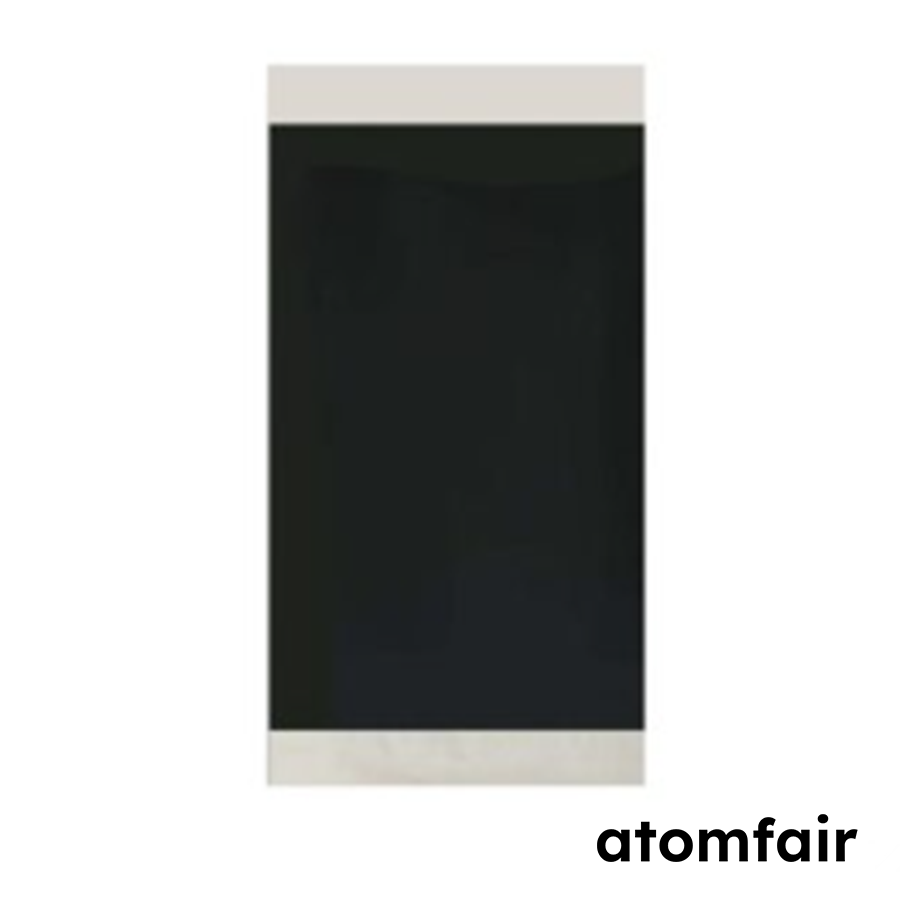
ATOMFAIR® NVP-S02 SODIUM VANADIUM PHOSPHATE (NVP) ELECTRODE SHEETRESEARCH GRADE MATERIAL
|
||||||||||||||||||||||||||||||||||||||||||||||
|
||||||||||||||||||||||||||||||||||||||||||||||
|
|||
|
TAILORED SOLUTIONS FOR RESEARCH
Contact our engineering team for technical support or official institutional quotations.
EMAIL: inquiry@atomfair.com
|
|||
|
Manufacturer: ATOMFAIR LLC
Brand: ATOMFAIR®
|
Store and handle NVP electrode sheets under inert atmosphere to prevent moisture-induced degradation. Use within a dry glovebox environment during cell assembly to avoid contamination and maintain electrochemical performance.
- Moisture Sensitivity: This electrode sheet is sensitive to ambient moisture and must be stored in a sealed container with desiccant or under argon.
- Mechanical Handling: Avoid bending, creasing, or applying excessive force to prevent delamination of the coating from the carbon-coated aluminum foil substrate.
- Electrolyte Compatibility: Select electrolytes that are compatible with NVP cathode chemistry to avoid side reactions that could degrade performance.
- Cutting Procedure: Use sharp, clean tools to cut sheets to size, and ensure cutting is performed in a dry environment to minimize contamination.
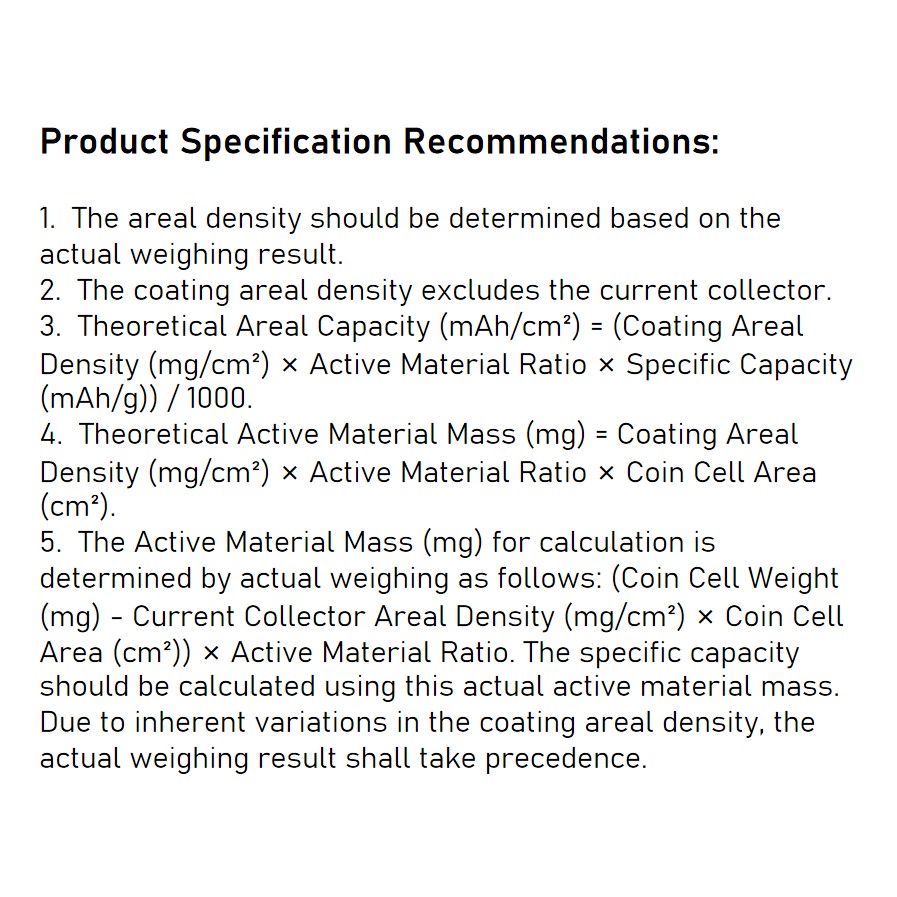
What is the theoretical areal capacity of the NVP-S02 electrode given its coating density and specific capacity?
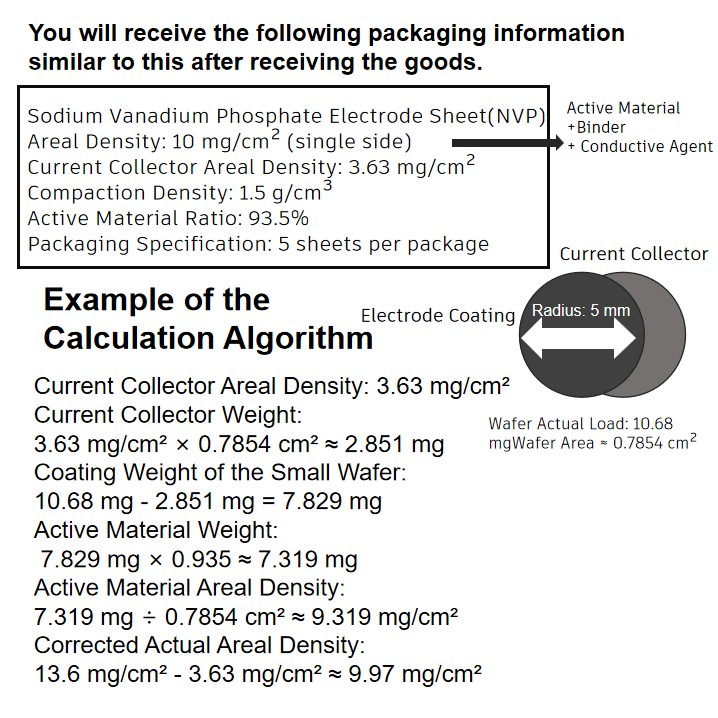
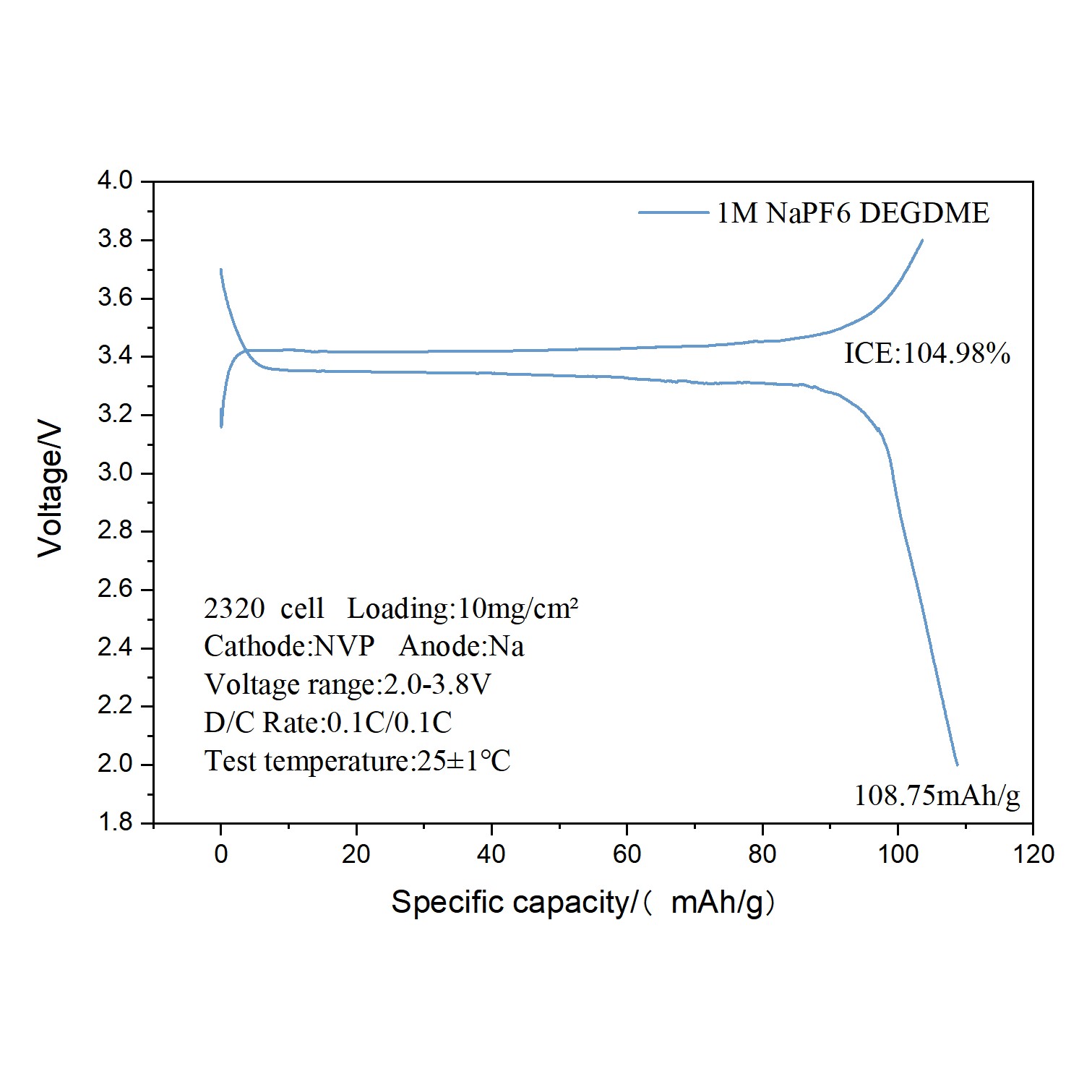
The theoretical areal capacity is approximately 1.1 mAh/cm², derived from the coating density of 10 mg/cm² and the specific capacity of 110 mAh/g. This calculation assumes full utilization of the active material at the stated capacity, which is typical for rate-independent testing in sodium-ion R&D.
How does the carbon-coated aluminum substrate in the NVP-S02 electrode affect compatibility with electrolyte solvents and cell assembly?
The carbon-coated aluminum foil current collector (12 μm thickness, 3.63 mg/cm² areal density) provides enhanced adhesion for the NVP coating and reduces electronic contact resistance, improving compatibility with standard carbonate-based electrolytes used in sodium-ion research. This configuration is designed for single-sided coating, enabling direct use in coin or pouch cell assembly without additional substrate modifications.
What are the recommended vacuum baking conditions for the NVP-S02 electrode before cell assembly?
The electrode sheet must be vacuum baked at 100°C for 12 hours to remove residual moisture and solvents from the wet coating process. This step is critical to prevent parasitic reactions and ensure reproducible electrochemical performance in sodium-ion battery tests.
This NVP-S02 electrode sheet delivers a high active material loading of 93.5% with a consistent 10 mg/cm² areal density via wet coating, enabling reproducible sodium-ion battery R&D. Its single-sided configuration and mandatory 12-hour vacuum baking at 100°C impose specific cell assembly and processing infrastructure requirements.
Positive
- High active material loading: With 93.5% active material ratio, the electrode maximizes capacity per unit mass, improving cell-level energy density for sodium-ion battery testing.
- Precision wet coating process: The 10 mg/cm² coating via wet process ensures uniform areal loading across the 152×100 mm coated area, supporting consistent electrochemical evaluation.
Trade-offs
- Extended vacuum baking needed: The electrode requires 12 hours vacuum drying at 100°C before use, demanding a vacuum oven and adding processing time to experimental workflows.
- Single-sided coating limitation: Single-side coating restricts cell assembly to configurations using only one active face (e.g., half-cells), limiting design flexibility for full cells or bipolar stacks.
Every advanced material, component, equipment, and instrument in our catalog is backed by rigorous testing. We maintain strict internal quality management frameworks and align with CE conformity metrics to deliver transparent, reproducible performance data via our public open-science repository.
To request raw batch performance data, submit formal vendor registration paperwork, or execute a fast-turnaround R&D manufacturing loop, contact us at inquiry@atomfair.com.
Item is dispatched under the Atomfair Shipping & Delivery Framework (Free worldwide shipping on orders over $59 USD excl. heavy equipment). Return is governed by the Atomfair Return & Refund Policy (7-day technical return window).