
Conductive Agents, Binders & Processing Additives
Serving as the indispensable non-active components within energy storage architectures, advanced battery conductive agents, high-adhesion lithium-ion battery binders, and specialized slurry processing additives directly dictate electrode microstructure quality and electrochemical performance. ATOMFAIR’s premium portfolio features research-grade electronic conductors and specialized polymers engineered to optimize slurry rheology, enhance roll-to-roll coating uniformity, and stabilize charge-transfer kinetics. From premium carbon blacks and high-purity CNT dispersion lines to high-voltage PVDF binder formulations (such as Solvay Solef and Arkema Kynar) and aqueous silicon anode binders, our materials eliminate critical processing variables. Whether you are scaling up institutional cell prototyping or mitigating active material delamination in thick-electrode configurations, our comprehensive matrix provides the pristine chemical baseline required for modern battery R&D, advanced electrode manufacturing, and next-generation energy storage innovation.
Show More Customization Specs
I. Advanced Conductive Agents, Binders & Processing Additives Matrix
Optimize your electrode microstructure and charge-transfer kinetics with ATOMFAIR’s full-spectrum portfolio of advanced conductive agents, tailored binders, and rheology modifiers:
| Category | Product Name, Brand & Chemistry (Abbr.) | Grade & Typical Formats | Industrial Benchmarking | Target Advanced R&D Focus |
|---|---|---|---|---|
| Conductive Agent | Super P conductive carbon black (Super P / SP) | 0D Spherical Nanoparticles (Dry Powder) | BET ~62 m²/g, high purity baseline conductive filler | Standard baseline cell validation, point-to-point short-range transport |
| Conductive Agent | Ketjenblack EC-600JD (Highly Porous Carbon) | 0D Branched Aggregates (Dry Powder) | Ultra-high BET >1400 m²/g, high oil absorption, low percolation threshold | Sulfur-carbon cathodes (Li-S), high-rate LFP systems, extreme fast-charging |
| Conductive Agent | Single-Walled Carbon Nanotubes (SWCNT Dispersion) | 1D Long-range Bundles (NMP or Aqueous Slurry) | Diameter ~1.5-2.0 nm, Aspect ratio >10,000, high G/D ratio | High-nickel NCM811/Ni96, buffering severe volume expansion in Silicon Anodes |
| Conductive Agent | Multi-Walled Carbon Nanotubes (MWCNT Powder/Dispersion) | 1D Medium-range Tubes (Purified Electronic Grade) | Diameter 8-15 nm, Purity >98.5%, balanced cost-performance matrix | Standard industrial LIB benchmarking, cathode matrix reinforcement |
| Conductive Agent | Few-Layer Graphene Nanoflakes (FLG Matrix) | 2D Planar Highly Crystalline Flakes | Thickness 2-5 nm, exceptional basal plane electronic conductivity | Face-to-point electronic contact, thermal dissipation optimization |
| Advanced Binder | Solef 5130 PVDF (Solvay Functional Grade) | Ultra-High Molecular Weight Homopolymer (Powder) | Polar modification, extreme adhesion at low dosing, high voltage safety | High-nickel NCM811 cathodes, long-cycle high-compaction density cells |
| Advanced Binder | Kynar HSV 900 PVDF (Arkema High-Purity Grade) | High Molecular Weight Powder (~900,000 Da) | Excellent slurry rheology control, minimal swelling in carbonate solvents | Standard high-voltage LCO consumer electronics, automotive pouch baseline |
| Advanced Binder | Polytetrafluoroethylene (PTFE Dry Powder) | Fibrillizable High Molecular Weight Matrix | Excellent mechanical self-fibrillation under solvent-free shear | Solvent-free Dry Electrode manufacturing, All-Solid-State Battery (ASSB) sheets |
| Advanced Binder | Styrene-Butadiene Rubber (SBR Emulsion) | Aqueous Core-Shell Elastomeric Latex (~50% Solid Content) | High flexibility, balanced elasticity, low swelling in organic electrolytes | Graphite and hard carbon anode pairing, flexible electrode roll-to-roll testing |
| Advanced Binder | Sodium Carboxymethyl Cellulose (CMC-Na Thickener) | High Degree of Substitution Aqueous Polymer Powder | Optimized D.S. (0.9-1.2), high shear-thinning pseudo-plastic rheology | Co-binder with SBR for water-based anode suspension and dispersion stabilization |
| Advanced Binder | Cross-linked Polyacrylic Acid Sodium (Na-PAA Matrix) | High-Adhesion Polycarboxylic Hydrogel (Aqueous) | Abundant -COONa anchoring sites, high tensile modulus against deformation | Pure Silicon, SiOx, and Silicon-Carbon composite anodes optimization |
| Process Additive | Hyper-Dispersant for Carbon Nanotubes (CNT Ultra-Dispersant) | Aromatic Conjugated Polymer / Pyrrolidone-Modified Agent | Strong pi-pi anchoring, destroys CNT bundles without slicing lengths | Preventing 1D conductive tube re-agglomeration in high-solids mixing |
| Process Additive | Electrode Plasticizer & Softener (Flexibility Modifier) | Low-Swelling Polymeric Soft Segment Elastomer | Lowers glass transition temperature (Tg) of PVDF/PAA matrix, blocks edge microcracking | High mass-loading ultra-thick electrodes (>5 mAh/cm²), prevents foil cracking during roll-pressing |
| Process Additive | Slurry De-foaming & Leveling Agent (Anti-Pinhole Surfactant) | Trace-level Polymeric Non-ionic Polyether Agent | Reduces dynamic surface tension, zero-residue volatile decomposition under vacuum drying | Eliminating carbon black pinholes and micro-bubbles in fast slot-die coating lines |
| Process Additive | Aqueous Slurry pH Buffer & Anti-Gelation Agent (NCM Stable-Shield) | High-Compatibility Organic Weak Acid Matrix | Neutralizes free-lithium (LiOH/Li2CO3) on nickel surfaces, locks slurry viscosity stability | Water-based/aqueous processing of NCM or LMFP cathodes, preventing PVDF gelation transitions |
Technical FAQ for Conductive Networks, Advanced Binders & Slurry Processing
Why do high-molecular-weight PVDF resins like Solvay Solef 5130 or Kynar HSV 900 provide superior high-voltage chemical safety compared to low-tier alternatives?
High-voltage operations (especially above 4.5V vs Li/Li+) expose binders to severe oxidative environments, triggering dehydrofluorination side-reactions in regular PVDF grades. Premium functional grades like Solef 5130 are structural homopolymers engineered with precise polar functional group modifications along the fluorinated backbone. This unique structure dramatically increases chemical resistance to nascent oxygen radical attack while retaining robust mechanical anchoring forces between active cathode particles and current collectors, even under severe electrolyte immersion and swelling conditions.
How do professional Electrode Softeners / Plasticizers prevent the detachment of high-mass-loading thick electrodes during high-compaction roll pressing?
When engineering ultra-thick energy density electrodes (>4.5 mAh/cm²), the extreme mechanical stress during calendering (roll-pressing) easily exceeds the elastic limit of highly crystalline binders like PVDF. This leads to brittle micro-cracking across the electrode layer and macroscopic peeling from the current collector foil. Introducing a low-swelling polymeric flexibility modifier works by embedding soft amorphous segments inside the hard binder chains. This significantly increases the relaxation capability and toughness of the composite polymeric network, effectively distributing stress concentrations and ensuring intact, high-density electrodes without sacrificing electrochemical stability.
Showing 1–16 of 35 results
-
A30 Multi-Walled Carbon Nanotubes 99.5% 25g ATOMFAIR®
$982.00 -
Activated Carbon, 1670 m²/g, 50g, Research Grade – ATOMFAIR®
$364.00 -
AH Carbon Nanotubes 75nm 100g >99.95% Purity ATOMFAIR®
$299.00 -
BH Carbon Nanotubes Powder ≥99.95% Purity 100g ATOMFAIR®
$299.00 -
Boron Trioxide (B₂O₃) Powder 5N-Grade 99.999% ATOMFAIR®
$369.00 -
Carboxymethyl Cellulose (CMC) 100g Research Grade ATOMFAIR®
$350.00 -
Cellulose Nanofibers (CNF) 5-100nm 100g ATOMFAIR®
$393.00 -
CH Carbon Nanotubes 60nm 99.95% Research Grade ATOMFAIR®
$311.00 -
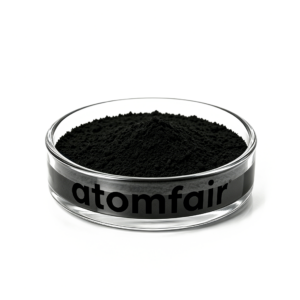
CNTs Carbon Nanotubes 5-10nm Diameter 250g ATOMFAIR®
$466.00 -
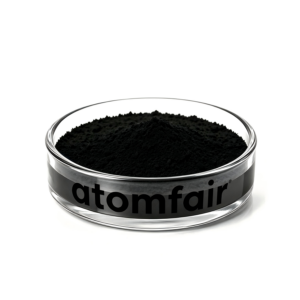
Conductive Carbon Black Powder 45 m²/g BET 400g ATOMFAIR®
$300.00 -
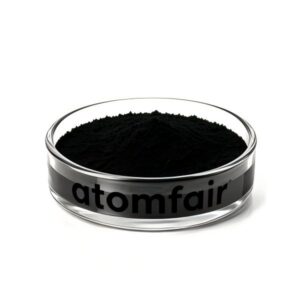
Conductive Carbon Black Powder 62 m²/g BET 400g ATOMFAIR®
$220.00 -
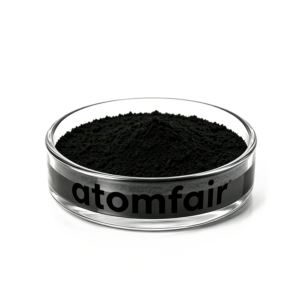
Conductive Carbon Black Super P 400g 30nm Research ATOMFAIR®
$300.00 -
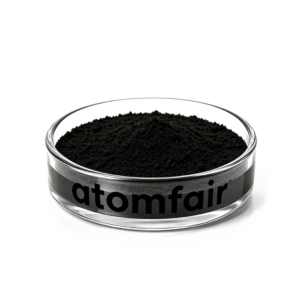
EC600-JD Conductive Carbon Black 1270 m²/g BET ATOMFAIR®
$248.00 -
Graphene Nanoplatelets 1-10nm 25g Research Grade ATOMFAIR®
$3,463.00 -
Graphitized Multi-Walled Carbon Nanotubes 50g 99.9%ATOMFAIR®
$369.95 -
Graphitized SWCNTs 10g >99.9% Research Grade ATOMFAIR®
$359.95