
Dry Pouch Cell
Our high-fidelity dry pouch cells are engineered specifically as a standardized, commercial-grade hardware platform for advanced electrolyte evaluation, materials screening, and deep tech energy storage research. While our catalog offers separate categories for raw materials and standalone components, this platform focuses entirely on fully assembled, customized dry pouch cell configurations. Strictly manufactured on an automated pilot production line under ultralow-dewpoint conditions, our processing eliminates mechanical assembly variables to guarantee hyper-reproducible electrochemical baselines for complex testing protocols.
Show More Customization Specs
Custom Matrix & Technical Specifications
| Parameter | Capability / Range | Technical Implementation / Engineering Control |
|---|---|---|
| Cell Scale & Capacity | 10 mAh to 300 Ah | From ultra-low capacity single-layer pouch prototyping scale up to massive multi-layer, high-capacity pouch cell architectures. |
| Manufacturing Style | Wet-Processed and Dry-Processed (Solvent-Free) Coating | Next-gen solvent-free dry powder film process available for high-loading, binder-optimized, and solvent-sensitive matrix structures. |
| Form Factors | Customized Pouch Frameworks Only | Full layout versatility across multiple soft-packaging frameworks including tailored multi-layer pouch stacks, custom geometric footprint designs, varying aluminum laminated foil thicknesses, and specialized multi-tab positioning arrangements. |
| Anode Modalities | Anode-Free / Extreme Metal Formats | Regular Graphite, Silicon-Carbon (Si-C), High-Capacity Silicon Oxide, Tin, Hard/Soft Carbon, Lithium Metal, Sodium Metal, Aluminum Metal. |
| Cell Stacking Architecture | Full Structural Customization | Z-folding, mono-stacking, or continuous winding with tailored tab positioning and internal dimensions. |
| Electrode Engineering & Architecture | Custom Loading, Compaction, and Formulations | Fully tailored areal mass loadings (mg/cm²), precise volumetric compaction densities (g/cm³), variable binder/conductive additive weight ratios, customized active material blending profiles, and continuous roll-to-roll electrode architectural adjustments. |
| Process Options | Dry Pouch Cells, Electrolyte Filling, and Formation | Delivered as un-filled pure dry pouch cells for user-side formulation screening, or completed on-site via custom vacuum electrolyte injection, degas-resealing loops, and tailored multi-step electrochemical formation protocols. |
Comprehensive Active Materials Customization Portfolio
We engineer, coat, and assemble virtually any active chemistry combination requested for your specific benchmarking targets:
| Classification | Chemistry / Modality Group | Available Active Material Formats & Formulations |
|---|---|---|
| Cathode Chemistries | Lithium-Based Frameworks | NCM111, NCM532, NCM622, NCM811, NCM90505 (ultra-high nickel platforms), LFP (Standard/High Compaction), LFMP, LCO (Standard/High Voltage), LMO (Lithium Manganese Oxide), LMNO (High-Voltage Spinel), LMR (Lithium-Manganese-Rich), LVP (Lithium Vanadium Phosphate), LVPF, LiFeSO₄F, Lithium-Rich Layered Oxides (LRLO), Li2S (Lithium Sulfide Conversion), C₆O₆Li₂ (Organic Carbonyls), and SPAN (Sulfurized Polyacrylonitrile). |
| Sodium-Based Frameworks | P2-type Sodium Nickel Manganese Oxide (Na₀.₆₇Ni₀.₅Mn₀.₅O₂), P2-type Sodium Nickel Iron Manganese Oxide (Na₀.₆₇Ni₀.₂₅Fe₀.₂₅Mn₀.₅O₂), NFM, NFPP, NVP, NVPF, NFSO4, NCuTiO, Iron-based Prussian Blue Analogs (Na₂Fe[Fe(CN)₆]), Manganese-based Prussian Blue Analogs (Na₂Mn[Mn(CN)₆]), C₆O₄Na₂, C₆O₆Na₂, Tunnel-type Manganese Oxides (Na₀.₄₄MnO₂), and Transition Metal Sulfides/Selenides (Na₂S, Na₂Se, MoS₂, Sb₂S₃). | |
| Anode Chemistries & Modalities | Intercalation & Alloy Formats | High-purity Natural/Synthetic Graphite, Silicon-Carbon (Si-C) composites, structured Silicon Oxides (SiOx), Lithium Titanate (LTO), High-Capacity Tin (Sn), Antimony (Sb), and high-performance Phosphorus-Carbon (P-C) composites. |
| Carbon Frameworks | Optimized Hard Carbon and Soft Carbon configurations engineered explicitly for fast-charging profiles, Sodium-ion performance alignment, and variable structural d-spacing targets. | |
| Conversions & Metal Oxides | Titanium Dioxide (TiO₂), Iron Oxide (Fe₃O₄), Cobalt Oxide (Co₃O₄), Lithium-Sulfur supportive nodes (LiS), and Iron Fluoride (FeF₃) custom parameters. | |
| Polymeric & Carbonyl Systems | Conductive networks featuring (C₆H₅N)ѕ Polyaniline (PANI), and customized organic Carbonyl Compounds (C₆O₆Li₂). | |
| Extreme Performance Formats | Pure Lithium Metal foils, Sodium Metal matrices, High-Purity Aluminum Metal Foils (tailored for multivalent systems), and advanced Anode-Free (Zero-Anode) current collector preparation protocols with specialized interfacial functional coatings. | |
| Pre-Lithiation Additives | Sacrificial Additives | Precision-metered sacrificial cathode additives for irreversible initial capacity compensation: Li5FeO4 (LFO), Li2NiO2, and Li6CoO4. |
Current Collector & Separator Customization Matrix
We offer complete structural customization of all passive and supportive layers to match extreme current density or unique chemical compatibility profiles:
| Component Type | Substrate Framework | Engineering Specifications & Custom Options |
|---|---|---|
| Current Collectors | Anode Substrates | Standard Copper Foil, Carbon-Coated Copper (for enhanced mechanical adhesion and lower contact resistance), Nickel Foil (critical for Sodium-ion/Solid-state processing), Stainless Steel Foil, localized Mesh current collectors, and next-gen Composite Current Collectors (polymer-core metallized substrates). |
| Cathode Substrates | Standard Aluminum Foil, Carbon-Coated Aluminum, specialized Corrosion-Resistant Alloys for extreme high-voltage testing, and lightweight Composite Aluminum films. | |
| Functional Separators | Base Polymeric Frameworks | Single-layer or multi-layer Polypropylene (PP), Polyethylene (PE), and co-extruded trilayer PP/PE/PP configurations available across a broad spectrum of thickness profiles (e.g., 9μm to 25μm) and porous distributions. |
| Thermal & Safety Coatings | Sub-micron single-sided or double-sided Alumina Ceramic (Al₂O₃) coatings, Aramid-coated matrices, PVDF/ceramic hybrids, and custom functionalized polymeric safety shut-down barriers. | |
| Solid-State Separation Support | Integrated support matrices and customized porous skeletons optimized for oxide-based, sulfide-based, and polymer-based solid or gel electrolyte integration. |
Solid-State & Hybrid Electrolyte Frameworks
Our pouch cell platforms are explicitly optimized to interface with advanced solid-state and liquid-alternative matrices:
| Electrolyte Class | Technical Implementations & Chemical Library Compatibility |
|---|---|
| Oxide-Based Solid | Garnet-type (LLZO), Perovskite-type (LLTO), and NASICON-type (LATP/LAGP). |
| Sulfide-Based Solid | High-conductivity Glass-Ceramics (Li₂S-P₂S₅), Argyrodites (Li₆PS₅Cl), and thio-LISICON structures. |
| Polymer & Composite | PEO-based matrices, gel polymer electrolytes (GPE), and inorganic-organic hybrids. |
| Specialty Liquid & Ionic | High-voltage formulations (>4.4V functional stabilization), ultra-low gassing configurations, specialized Aluminum-targeted chloroaluminate ionic liquids (e.g., AlCl₃-[EMIM]Cl blends), and a broad internal high-purity salt library including LiFSI, LiTFSI, NaBOB, NaFSI, and custom alternative ionic liquids. |
Next-Generation / Beyond-Lithium Chemistries
Advanced, high-density experimental system support architectures:
| Chemistry System | Hardware Matrix Capabilities & Structural Adjustments Focus |
|---|---|
| Lithium-Sulfur (Li-S) | High-loading sulfur/carbon matrices matched precisely with tailored lithium metal protection layers. |
| Lithium-Air (Li-O₂) | Open-palette porous carbon gas-diffusion architectures. |
| Aluminum-Ion (Al-ion) | High-purity aluminum metal anodes paired with targeted carbonaceous or oxide hosts, engineered explicitly for chemical compatibility with reactive room-temperature chloroaluminate ionic liquids. |
| Alternative Modalities | Multivalent systems including Calcium-ion (Ca²⁺) and high-energy Aqueous / Non-Aqueous Zinc-based (Zn) battery architecture testing development platforms. |
Showing 1–16 of 58 results
-
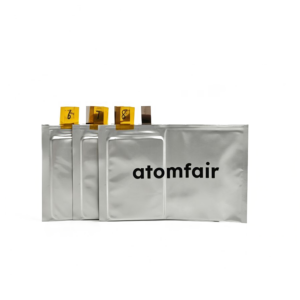
0.2 Ah NCM811 Li-Cu Composite Anode Dry Pouch Cell ATOMFAIR®
$89.00 -
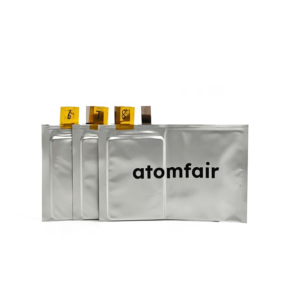
1 Ah NCM811 Si/C 1100 Anode Dry Pouch Cell ATOMFAIR®
$400.00 -
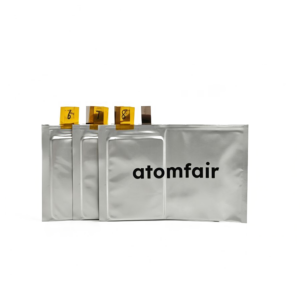
1.0 Ah NCM811 Graphite Anode Dry Pouch Cell ATOMFAIR®
$89.00 -
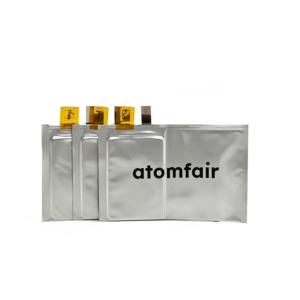
1.0 Ah Ni90 SiC1100 Anode Dry Pouch Battery Cell ATOMFAIR®
$70.00 -
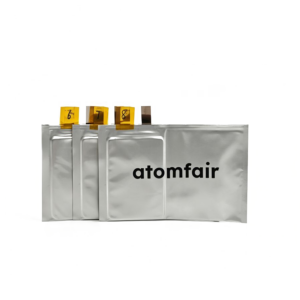
1.12 Ah NCM811 Fast-Charging Graphite Dry Pouch Cell
$60.00 -
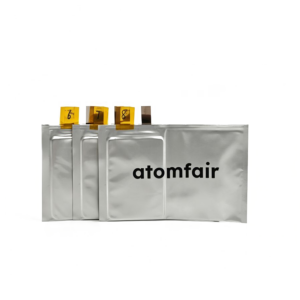
1.12Ah NCM811 Fast-Charge Graphite Dry Pouch Cell ATOMFAIR®
$1,497.00 -
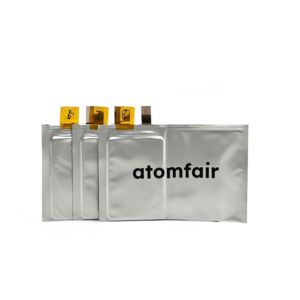
14.5 Ah Ni90 Si/C 1350 Anode Dry Pouch Cell ATOMFAIR®
$400.00 -
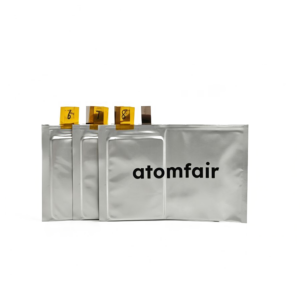
15 Ah Ni90 SiC1100 Dry Pouch Cell Research Grade ATOMFAIR®
$600.00 -
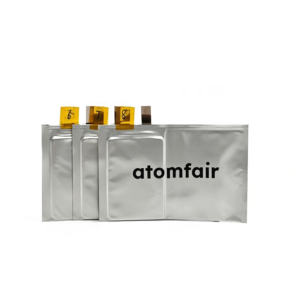
1Ah NCA Li-Metal Pouch Cell Research Grade ATOMFAIR®
$99.00 -
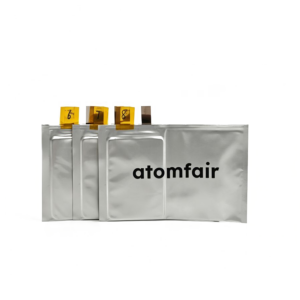
1Ah NCM622 Anode-Free Battery Coated Carbon Cu Foil ATOMFAIR®
$89.00 -
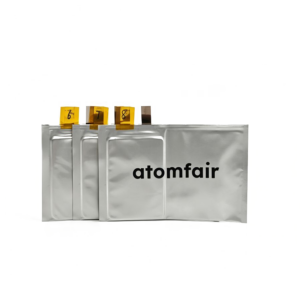
1AH NFM Hard Carbon Dry Pouch Cell Sodium-Ion ATOMFAIR®
$70.00 -
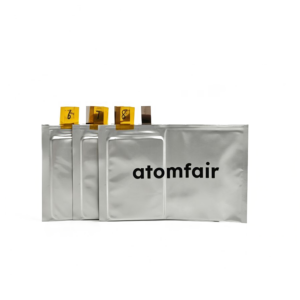
1Ah NFPP Anode-Free Dry Pouch Cell Research Grade ATOMFAIR®
$70.00 -
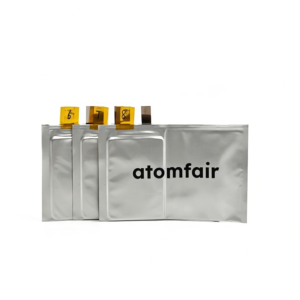
1Ah NFPP Anode-Free Sodium-Ion Dry Pouch Cell ATOMFAIR®
$70.00 -
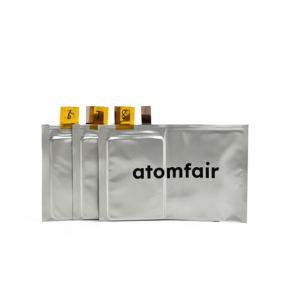
1AH NFPP Hard Carbon Dry Pouch Cell Sodium Ion ATOMFAIR®
$70.00 -
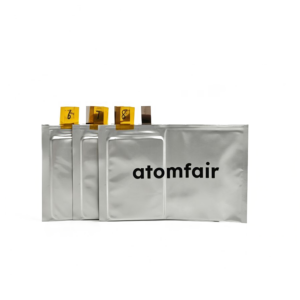
1Ah NFS Hard Carbon Dry Pouch Cell Na-Ion ATOMFAIR®
$70.00 -
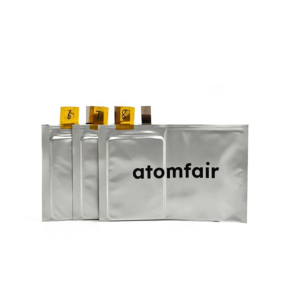
1Ah NMO Hard Carbon Dry Pouch Cell Sodium-Ion ATOMFAIR®
$70.00