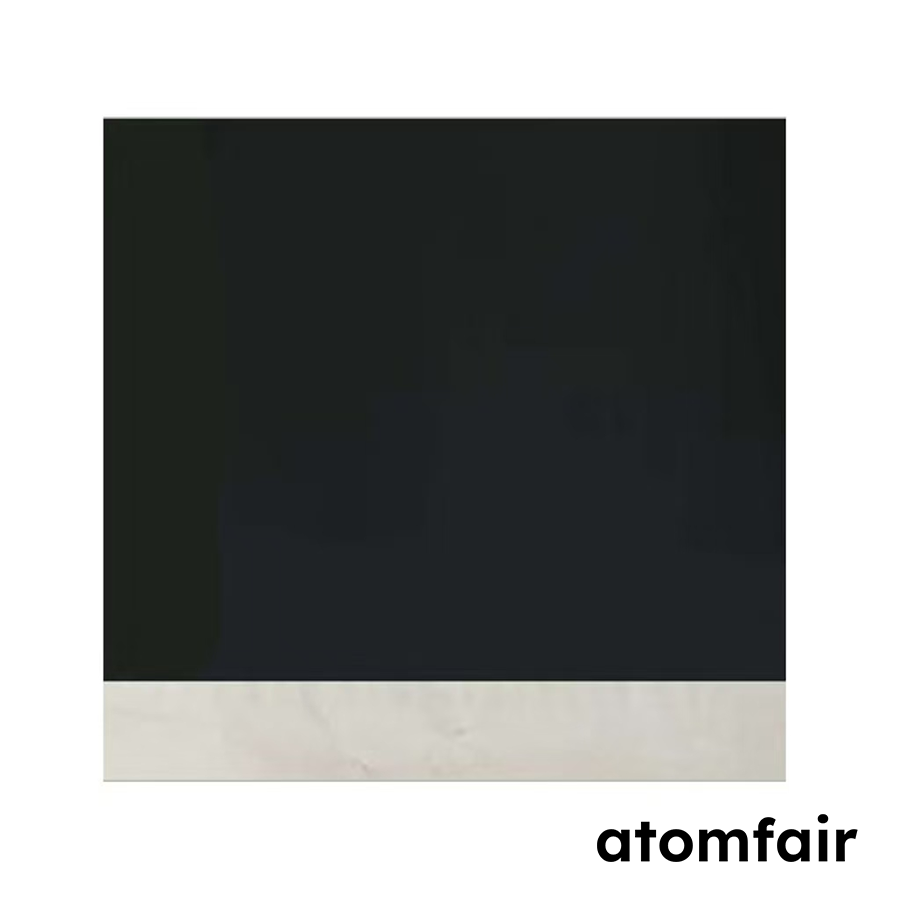
ATOMFAIR® NFM111-D04 SODIUM NICKEL IRON MANGANESE OXIDE ELECTRODE SHEETRESEARCH GRADE MATERIAL
|
||||||||||||||||||||||||||||||||||||||||||||
|
||||||||||||||||||||||||||||||||||||||||||||
|
|||
|
TAILORED SOLUTIONS FOR RESEARCH
Contact our engineering team for technical support or official institutional quotations.
EMAIL: inquiry@atomfair.com
|
|||
|
Manufacturer: ATOMFAIR LLC
Brand: ATOMFAIR®
|
This electrode sheet is moisture-sensitive and requires vacuum drying at 100°C for 12 hours before use. Phase degradation may occur if the recommended baking protocol is not followed.
- Moisture Sensitivity: The electrode sheet must be stored in a dry environment to prevent moisture contamination.
- Recommended Drying Protocol: Bake the electrode sheet under vacuum at 100°C for 12 hours to remove residual moisture.
How does the dry process coating density of 118.7 mg/cm² affect the electrochemical performance of the NFM111-D04 electrode?
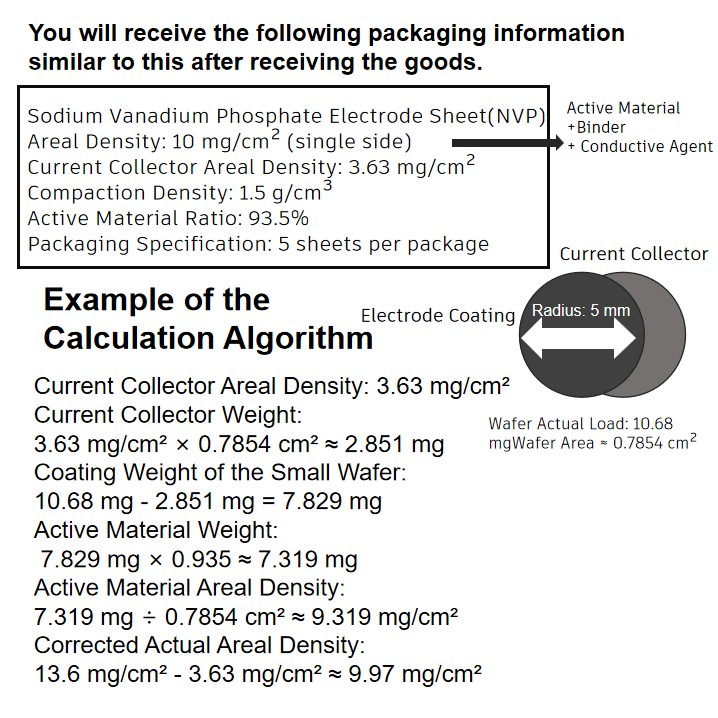
The dry process enables uniform ultra-high loading of 118.7 mg/cm² across both sides of the 152×100 mm active area, preventing localized parameter variation. The compaction density of 2.85 g/cm³ and nominal capacity of 125 mAh/g are achieved through the solvent-free coating execution, optimizing interface mechanics and cycle life stability on carbon-coated aluminum foil substrates.
What is the recommended pre-treatment protocol for the NFM111-D04 electrode sheet before electrochemical testing?
The recommended protocol is to bake the electrode sheets under vacuum at 100°C for 12 hours to prevent moisture contamination or phase degradation before thermal validation testing workflows. This step is critical for maintaining consistent quality parameters in laboratory diagnostics.
What is the active material composition and ratio in the NFM111-D04 electrode sheet?
The cathode material is NFM111 (Sodium Nickel Iron Manganese Oxide) with an active material ratio of 96.25%. This high purity ensures excellent electrochemical kinetics and half-cell foils testing control, as stated in the product description.
The Atomfair NFM111-D04 sodium nickel iron manganese oxide electrode sheet offers an ultra-high coating density of 118.7 mg/cm² via dry processing and 96.25% active material purity, but requires careful moisture control with a mandatory 12-hour vacuum baking protocol and is restricted to research applications.
Positive
- High Active Material Purity (96.25%): The optimized active phase ratio of 96.25% ensures excellent electrochemical kinetics and half-cell testing control, reducing variability in baseline measurements.
- Ultra-High Loading Density via Dry Process: The dry-process coating achieves 118.7 mg/cm² double-sided loading, enabling uniform electrode architecture and preventing localized parameter variation for high-energy density evaluation.
Trade-offs
- Mandatory Vacuum Baking Protocol: Electrodes require strict 12-hour vacuum drying at 100°C before use to prevent moisture contamination and phase degradation, adding preprocessing time and infrastructure requirements.
- Research-Use Only Restriction: This product is explicitly limited to laboratory R&D; it is not certified for commercial production or clinical applications, constraining its deployment in scale-up or translational studies.
Every advanced material, component, equipment, and instrument in our catalog is backed by rigorous testing. We maintain strict internal quality management frameworks and align with CE conformity metrics to deliver transparent, reproducible performance data via our public open-science repository.
To request raw batch performance data, submit formal vendor registration paperwork, or execute a fast-turnaround R&D manufacturing loop, contact us at inquiry@atomfair.com.
Item is dispatched under the Atomfair Shipping & Delivery Framework (Free worldwide shipping on orders over $59 USD excl. heavy equipment). Return is governed by the Atomfair Return & Refund Policy (7-day technical return window).