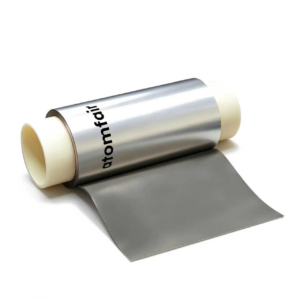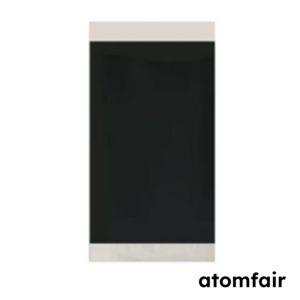
ATOMFAIR® NCM811-S02 LITHIUM NICKEL COBALT MANGANESE OXIDE (NCM811) ELECTRODE SHEETRESEARCH GRADE MATERIAL
|
||||||||||||||||||||||||||||||||||||||||||||||
|
||||||||||||||||||||||||||||||||||||||||||||||
|
|||
|
TAILORED SOLUTIONS FOR RESEARCH
Contact our engineering team for technical support or official institutional quotations.
EMAIL: inquiry@atomfair.com
|
|||
|
Manufacturer: ATOMFAIR LLC
Brand: ATOMFAIR®
Disclaimer: Sold exclusively for laboratory research.
|
This electrode sheet requires storage in an inert atmosphere to prevent moisture and oxygen exposure that degrades electrochemical performance. Avoid physical damage and short circuits by handling with insulated tools and storing in anti-static packaging.
- Moisture Sensitivity: Prolonged exposure to ambient humidity can cause lithium loss and capacity fade.
- Oxygen Sensitivity: Contact with oxygen at elevated temperatures may accelerate surface degradation.
- Static Discharge Hazard: Electrostatic discharge can ignite the active material; ground all handling equipment.
This procedure outlines safe unpacking and preparation of the NCM811 cathode sheet for coin cell assembly. All steps must be performed under an inert atmosphere to avoid material degradation.
Required Equipment: Inert atmosphere glovebox, Ceramic cutting blade
- Inspect
Inspect the electrode sheet for any visible defects such as cracks or delamination. - Cut
Cut the electrode sheet into the desired geometry using a sharp, clean blade on a non-conductive cutting mat. - Assemble
Assemble the electrode into a coin cell with a lithium counter electrode, separator, and electrolyte within the glovebox. - Test
Perform electrochemical cycling after allowing the cell to rest for several hours to ensure electrolyte wetting.
How does the 96.5% active material ratio affect the areal capacity and compaction density of this NCM811 electrode?
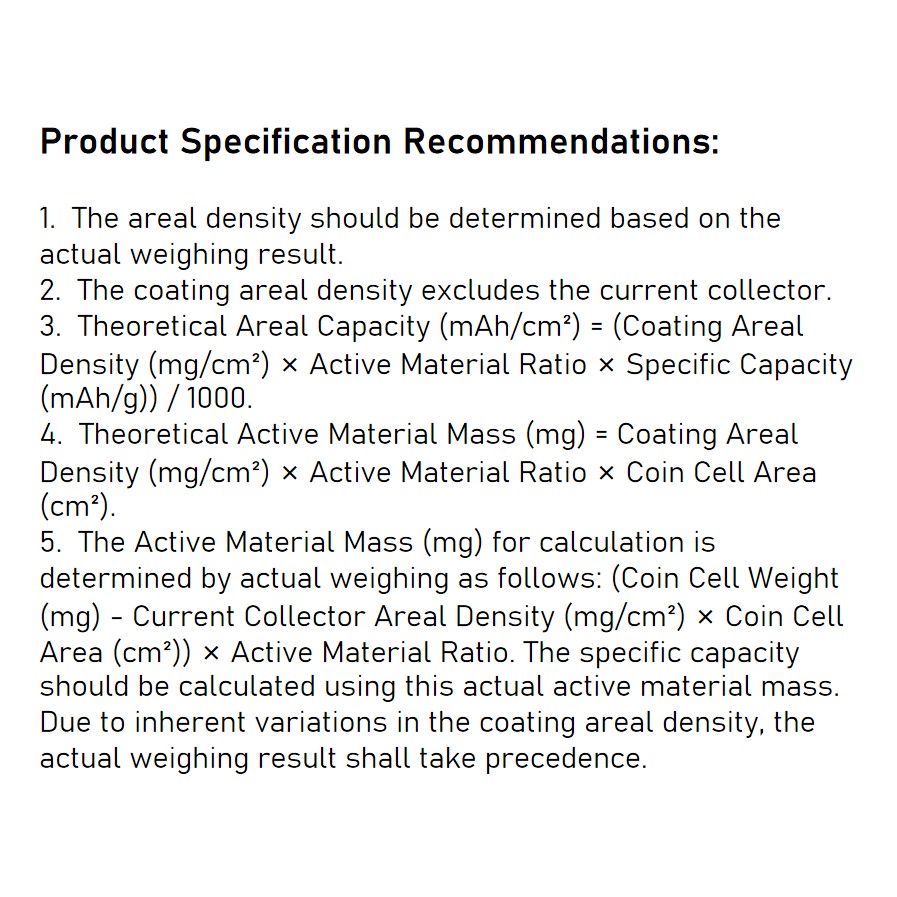
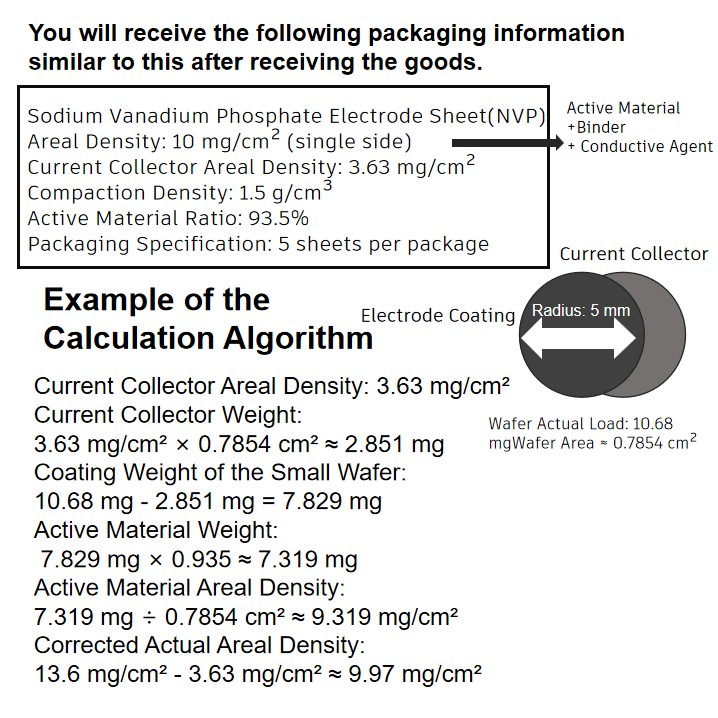
The 96.5% active material ratio maximizes electrochemical density per unit area. With a coating density of 24 mg/cm² and a specific capacity of 200 mAh/g, the electrode delivers an areal capacity of approximately 4.8 mAh/cm². The compaction density of 3.2 g/cm³ sets the theoretical maximum for calendaring without particle fracture.
What assembly constraints arise from the single-sided coating and carbon-coated aluminum substrate?
The single-sided coating on a 152×100 mm area leaves a 186×100 mm substrate for tab welding, requiring accurate alignment to avoid shorts with double-sided anodes. The carbon-coated aluminum foil, with an areal density of 3.63 mg/cm² and thickness of 12 μm, minimizes contact resistance but is fragile and must be handled in a dry environment to prevent oxidation.
What are the standard electrode activation and storage requirements before cell assembly?
The product notice mandates vacuum baking at 100°C for 12 hours to remove residual moisture from the wet process. No additional activation is specified. The electrode should be stored in a dry room or glovebox to preserve the NCM811 structure and carbon coating integrity.
This NCM811 single-sided cathode offers a 96.5% active material loading on a carbon-coated aluminum substrate with 24 mg/cm² areal density, tailored for Li-ion battery R&D. It requires a 12-hour vacuum bake at 100°C for activation and is restricted to laboratory research only.
Positive
- High active material ratio: The 96.50% active material matrix ensures maximum electrochemical density and accurate data output for benchmarking and characterization.
- Carbon-coated substrate interface: The carbon-coated aluminum foil minimizes contact resistance and supports high-rate cycle capability, enhancing performance consistency.
Trade-offs
- Requires vacuum baking activation: Standard electrode activation requires 12 hours under vacuum baking at 100°C, adding processing time and infrastructure demands.
- Exclusive laboratory use restriction: Sold exclusively for laboratory research, limiting deployment to R&D settings and precluding commercial or production applications.
Every advanced material, component, equipment, and instrument in our catalog is backed by rigorous testing. We maintain strict internal quality management frameworks and align with CE conformity metrics to deliver transparent, reproducible performance data via our public open-science repository.
To request raw batch performance data, submit formal vendor registration paperwork, or execute a fast-turnaround R&D manufacturing loop, contact us at inquiry@atomfair.com.
Item is dispatched under the Atomfair Shipping & Delivery Framework (Free worldwide shipping on orders over $59 USD excl. heavy equipment). Return is governed by the Atomfair Return & Refund Policy (7-day technical return window).