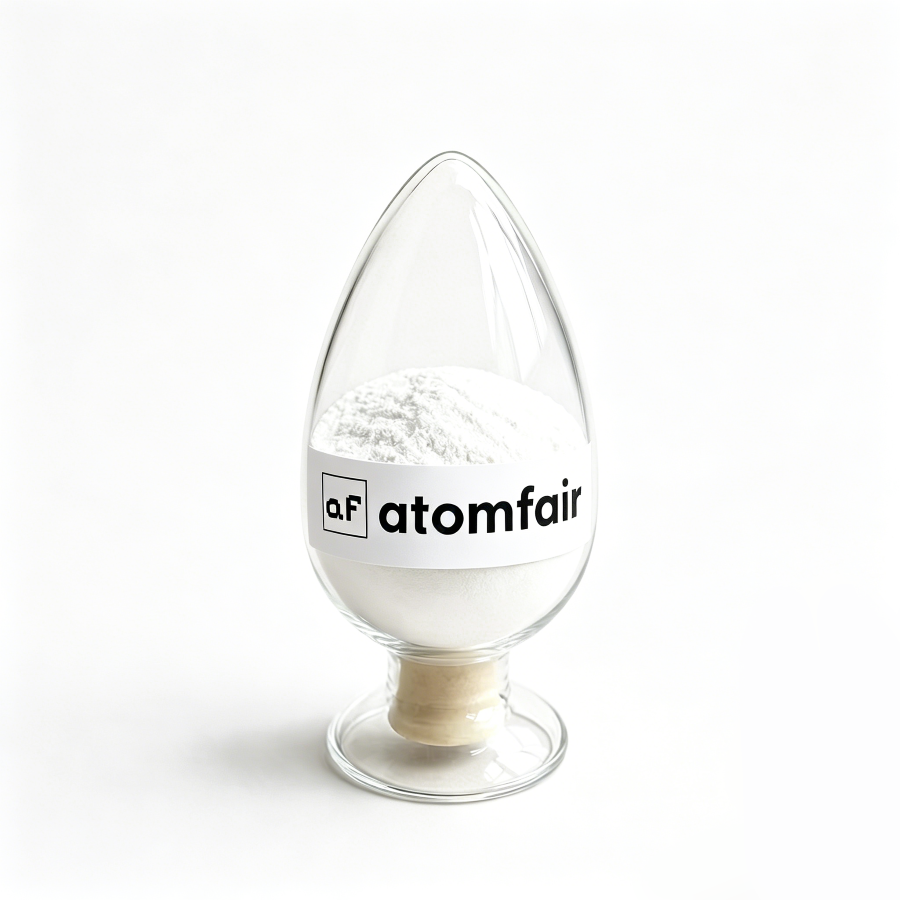
ATOMFAIR NCM (83:12:5) Large Particle Cathode PrecursorRESEARCH GRADE MATERIAL
|
|||||||||||||||||||||||||||||||||||||||||||
|
|||||||||||||||||||||||||||||||||||||||||||
This hydroxide precursor powder is moisture-sensitive and must be stored under inert atmosphere to prevent contamination. Processing requires lithiation and calcination under controlled atmosphere to form the active cathode material.
- Atmosphere Sensitivity: Exposure to ambient moisture or CO2 degrades the hydroxide precursor, requiring storage in a dry, inert gas environment.
- Calcination Requirement: The precursor must be mixed with a lithium source and calcined at controlled temperatures (typically 700–900°C) under oxygen flow to obtain the layered oxide cathode.
- Particle Integrity: Mechanical agitation during handling can cause particle breakage, so gentle transfer using antistatic tools is recommended to preserve morphology.
How does the 83.10 mol% nickel content affect the balance between energy density and structural stability in this NCM83 cathode precursor?
The 83.10 mol% nickel content maximizes volumetric energy density but increases surface reactivity. The gradient concentration engineering and multi-layer structural coatings are specifically designed to suppress side reactions, maintaining structural stability as described in the product overview.
Which battery application architectures are optimized for this large particle NCM83 precursor with a D50 of 10.30 μm?
This precursor is specifically targeted for high energy density EV cells, long-endurance consumer electronics, and drone batteries, as listed in the downstream target application configurations of the technical specifications.
What trace impurity thresholds must be maintained during handling of this NCM83 hydroxide precursor to ensure electrochemical performance?
Sodium must be kept below 300 ppm (actual 232 ppm) and sulfur below 2500 ppm (actual 1645 ppm) according to the trace contaminant limits. Exceeding these boundaries could degrade electrochemical properties, requiring contamination-free handling.
This large-particle NCM83 cathode precursor features a tap density of 2.14 g/cm³ and a D50 of 10.30 μm, with gradient concentration engineering and multi-layer coatings to mitigate surface side reactions. It is designed for high-energy-density applications such as EV cells and drone batteries, but requires careful handling due to its precursor status and coating sensitivity.
Positive
- High Tap Density for Volumetric Energy: With a tap density of 2.14 g/cm³ exceeding the standard minimum of 1.50 g/cm³, this precursor enables higher volumetric energy density in final electrodes.
- Gradient Engineering Suppresses Side Reactions: The structural concentration gradient and multi-layer coatings reduce surface reactivity, enhancing cycle stability in high-nickel NCM cathodes.
Trade-offs
- Precursor Requires Additional Processing: This hydroxide precursor must be lithiated and calcined to form the active cathode material; it is not a drop-in ready cathode powder.
- Coating Integrity Sensitive to Handling: The multi-layer surface coatings that suppress side reactions can be compromised by mechanical abrasion or improper storage, demanding careful handling protocols.
Every advanced material, component, equipment, and instrument in our catalog is backed by rigorous testing. We maintain strict internal quality management frameworks and align with CE conformity metrics to deliver transparent, reproducible performance data via our public open-science repository.
To request raw batch performance data, submit formal vendor registration paperwork, or execute a fast-turnaround R&D manufacturing loop, contact us at inquiry@atomfair.com.
Item is dispatched under the Atomfair Shipping & Delivery Framework (Free worldwide shipping on orders over $59 USD excl. heavy equipment). Return is governed by the Atomfair Return & Refund Policy (7-day technical return window).